When you are trying to conceive, it is easy to focus only on timing and supplements. But your body is also doing quiet, daily work in the background. It is building hormones, supporting egg quality, and keeping ovulation stable.
That is why a “fertility menu” can be powerful. In Traditional Chinese Medicine (TCM) terms, the goal is to rebuild blood, nourish Yin, and anchor Qi. In modern nutrition language, that often overlaps with supporting iron status, protein intake, anti-inflammatory fats, antioxidants, and steady blood sugar.
Most people never realize this works because fertility nutrition is rarely about one “magic” food. It is about repeating the basics consistently enough that your cycle becomes more resilient.
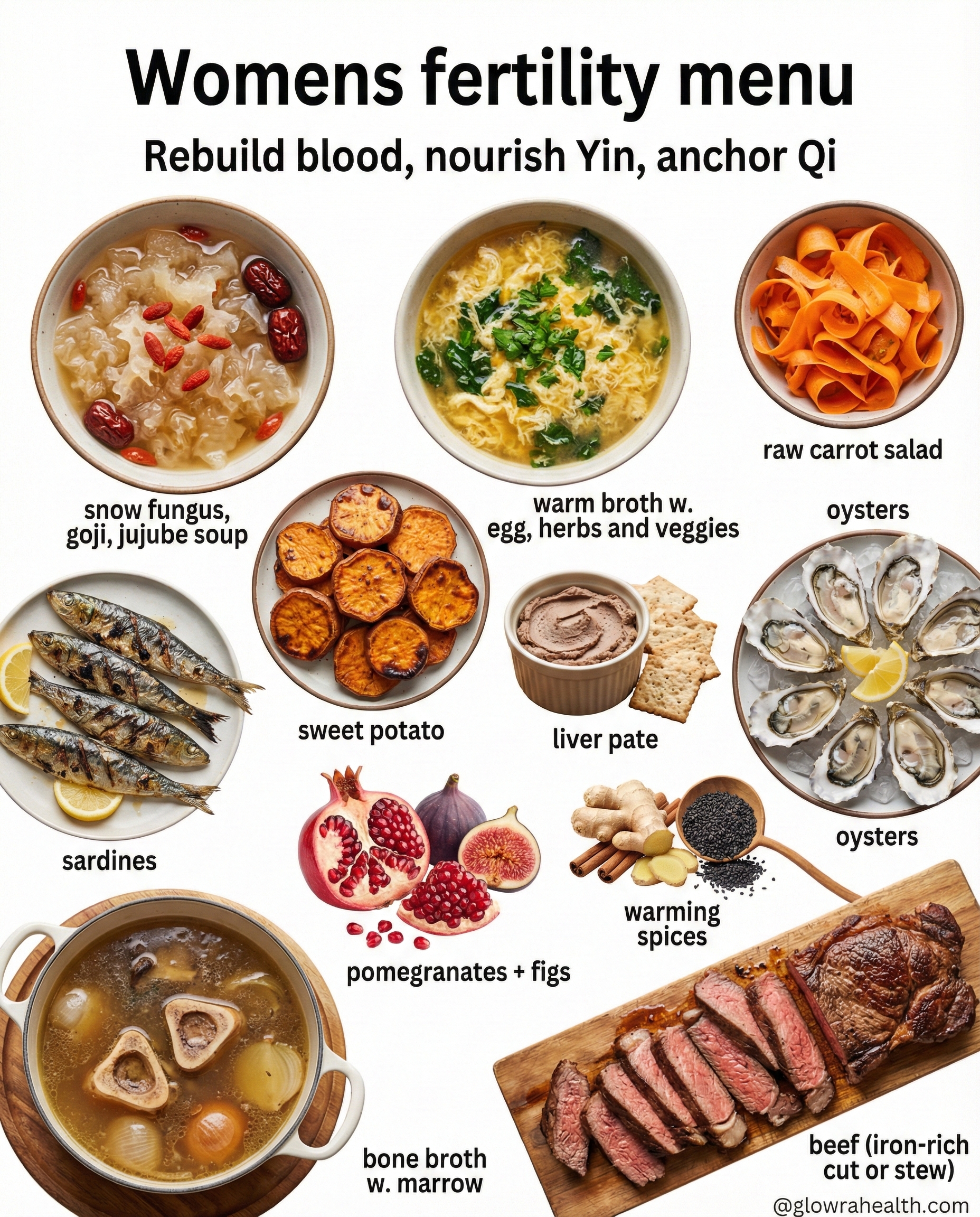
Snow fungus, goji, jujube soup
This classic nourishing soup is often used to support Yin and blood in TCM-style fertility eating.
From a wellness standpoint, it can be a gentle way to increase hydration and add plant compounds. It is also easy to digest, which matters when stress or low appetite affects cycle regularity.
How to enjoy it:
- Warm, as a dessert soup in the evening.
- Keep it lightly sweet if you add sweetener.
Warm broth w. egg, herbs and veggies
Warm broths are comforting for the nervous system and easy on digestion. Adding egg boosts protein and provides nutrients that support overall reproductive health.
Best way to use it:
- Have it for breakfast or lunch on days you feel cold, depleted, or low-energy.
- Make sure eggs are fully cooked for safety, especially if you might be pregnant.
Raw carrot salad
Raw carrot salad is often used in hormone-supportive meal plans because it is simple, fiber-rich, and can help keep digestion moving.
Why digestion matters:
- Your gut and liver play major roles in how hormones are processed and cleared.
- Fiber supports regular elimination, which can help overall hormone balance.
How to eat it:
- As a small side with lunch.
- Pair it with protein so it does not spike hunger later.
Oysters
Oysters are famous for being extremely rich in zinc, a mineral linked to reproductive health and normal hormone function.
How to use oysters safely:
- Choose cooked oysters if you are actively trying to conceive or could be pregnant soon.
- Raw oysters carry higher food safety risk (bacteria, parasites).
Sardines
Sardines are a fertility-friendly choice because they provide protein and omega-3 fats, and many small fish options tend to be lower in mercury compared with large fish.
Why that matters:
- Omega-3s support inflammation balance, which can support a healthier reproductive environment.
How to add sardines:
- With lemon and herbs.
- In a warm rice bowl or salad-style plate.
Sweet potato
Sweet potato is gentle, grounding, and supportive for steady energy.
Fertility angle:
- Stable blood sugar supports steadier hormone signaling.
- Sweet potatoes also add fiber and slow-burning carbs, which can be especially helpful in the luteal phase (after ovulation).
How to eat it:
- Roasted slices as a side.
- Mashed with a protein-focused meal.
Liver pate
Liver is extremely nutrient-dense, especially for iron and vitamin A. That can support “rebuilding blood,” but it also comes with an important caution.
Safety note:
- Liver and liver products can be very high in vitamin A (retinol), and many health authorities advise avoiding high retinol intake during pregnancy or when you might be pregnant. (nhs.uk)
If you are trying to conceive:
- Keep portions small and occasional.
- If pregnancy is possible, ask your clinician for guidance.
Pomegranates + figs
This pairing is rich in plant antioxidants and natural sweetness, which can feel supportive when you are reducing processed snacks.
Why it can help:
- Antioxidants support cells from oxidative stress, which is one reason fruit is often emphasized in preconception nutrition.
How to use:
- Add to yogurt or oatmeal.
- Make it a “sweet plate” after dinner instead of dessert.
Warming spices
Warming spices are a TCM-style fertility staple because they can support circulation and digestion.
Practical tip:
- Use them daily in small amounts.
- Focus on consistency instead of intensity.
This is especially helpful if you often feel cold, bloated, or low appetite around your cycle.
Bone broth w. marrow
Bone broth with marrow is often used for “deep nourishment,” and it can be a gentle way to add minerals and protein to your day.
How to use it:
- Sip between meals.
- Use as a base for soups and stews.
Food safety reminder:
- Cool leftovers quickly and store properly to reduce foodborne risk, which becomes more important if pregnancy occurs.
Beef (iron-rich cut or stew)
Iron is a key fertility nutrient because low iron status can contribute to fatigue and may affect overall reproductive wellness.
Best way to use beef:
- Choose iron-rich cuts.
- Stews are especially helpful when digestion is sensitive.
Aim for fully cooked beef for safety, especially when pregnancy is possible.
How to Build a Daily Plate Using This Fertility Menu
Keep it simple:
- 1 protein anchor: oysters (cooked), sardines, beef, or egg broth
- 1 steady carb: sweet potato
- 1 hormone-friendly side: raw carrot salad
- 1 antioxidant add-on: pomegranates + figs
- Warm support: bone broth w. marrow + warming spices
When You’ll Notice Changes
- 3–7 days: Better warmth, appetite, and energy stability from warm broths, protein, and steady carbs.
- 2–6 weeks: Many people notice less PMS volatility and steadier mood when meals are consistent.
- 2–3 cycles: This is when nutrition support tends to feel more obvious, because egg development is influenced over time.
Quick Notes and Safety (Important)
- Avoid raw or undercooked animal foods if pregnancy is possible.
- Be cautious with liver pate due to vitamin A (retinol) concerns during pregnancy.
- This is supportive nutrition, not a fertility treatment. If cycles are irregular, very painful, or absent, it is worth checking in with a clinician.
Final Takeaway
A fertility menu does not need to be complicated. These foods focus on steady nourishment: iron, zinc, omega-3s, antioxidants, warmth, and digestion support. When repeated consistently, they help your body feel more stable and supported from cycle to cycle.
Source Science
ACOG: Prepregnancy nutrition and key nutrient adequacy (ACOG)
WHO: Iron and folic acid guidance in pregnancy (nutrient importance)
https://www.who.int/tools/elena/interventions/daily-iron-pregnancy
FDA/EPA: Choosing lower-mercury fish (US EPA)
CDC + FoodSafety.gov: Pregnancy food safety and avoiding raw oysters/undercooked foods (Cdc)
NHS + UK COT: Vitamin A (retinol) caution and avoiding liver products in pregnancy (nhs.uk)