Pregnancy changes everything. Digestion slows, energy fluctuates, and the body works nonstop to nourish new life. Many traditional food systems and modern nutrition principles overlap on one simple idea: warmth, steadiness, and mineral-rich foods support pregnancy best, while overly cold, raw, or draining foods can feel harder on the body.
Most people never realize this works because pregnancy nutrition is often reduced to nutrients alone. In reality, how food feels in the body matters just as much as what it contains.
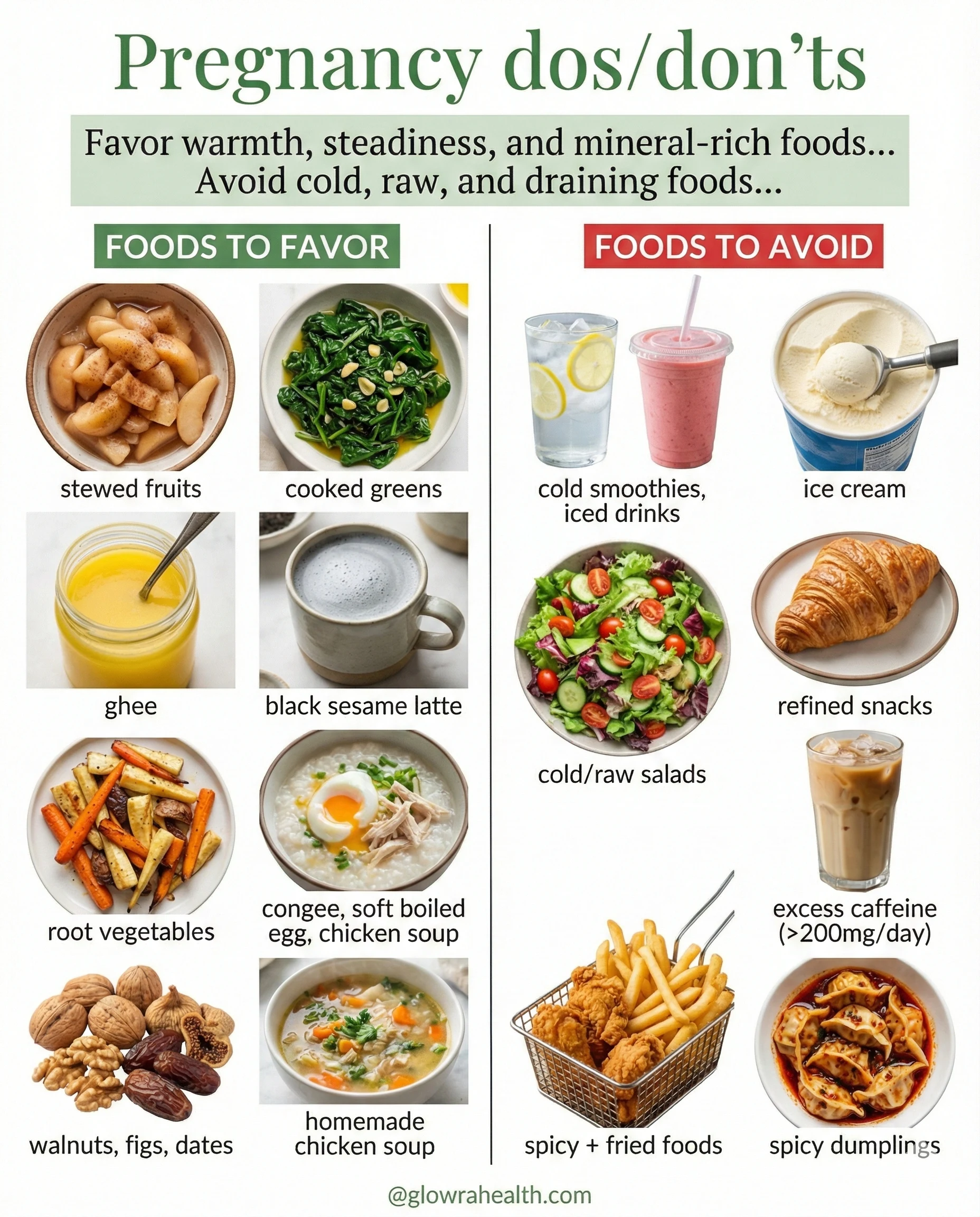
Foods to Favor During Pregnancy
These foods emphasize warmth, digestibility, and steady nourishment.
1. Stewed Fruits
Stewed fruits are gentler than raw fruit and easier to digest, especially if you experience bloating or nausea.
Why they help:
- Warm and soft texture supports digestion.
- Naturally sweet without blood sugar spikes.
- Helpful when appetite is low.
How to use:
- Lightly stew apples, pears, or peaches with water and a pinch of cinnamon.
- Eat warm as breakfast or a snack.
2. Cooked Greens
Cooking greens reduces rough fiber and makes minerals easier to absorb.
Why they help:
- Provide iron, magnesium, and folate.
- Gentler on digestion than raw salads.
How to use:
- Sauté spinach or leafy greens with olive oil or ghee.
- Add to soups, congee, or rice bowls.
3. Ghee
Ghee is a clarified fat traditionally used to support nourishment and warmth.
Why it helps:
- Adds calories when appetite is small.
- Supports absorption of fat-soluble vitamins.
- Makes meals more satisfying.
How to use:
- Add a small spoon to vegetables, rice, or soups.
- Use as a low-heat cooking fat.
4. Black Sesame Latte
Black sesame is valued for minerals like calcium and iron, especially in warming preparations.
Why it helps:
- Mineral-dense.
- Comforting and grounding.
- Easier to digest when blended or warm.
How to use:
- Blend black sesame powder with warm milk or plant milk.
- Sweeten lightly if needed.
5. Root Vegetables
Root vegetables are grounding, filling, and steady.
Why they help:
- Provide complex carbohydrates for energy.
- Support satiety and reduce cravings.
- Easy to digest when cooked.
How to use:
- Roast carrots, sweet potatoes, or parsnips.
- Add to soups and stews.
6. Congee, Soft-Boiled Egg, Chicken Soup
These are classic pregnancy-supportive meals across many cultures.
Why they help:
- Warm, hydrating, and protein-rich.
- Easy on the stomach.
- Helpful during nausea or fatigue.
How to use:
- Eat congee with egg or shredded chicken.
- Sip chicken soup throughout the day.
7. Walnuts, Figs, Dates
These foods provide healthy fats, gentle sweetness, and minerals.
Why they help:
- Support energy without heaviness.
- Easy to snack on.
- Often used to support digestion and regularity.
How to use:
- Add to oatmeal or congee.
- Eat small portions as snacks.
8. Homemade Chicken Soup
Homemade soup is deeply nourishing and customizable.
Why it helps:
- Provides protein, fluids, and minerals.
- Supports recovery and hydration.
- Easier to digest than processed soups.
How to use:
- Make large batches and freeze portions.
- Add vegetables and grains for balance.
Foods to Avoid or Limit During Pregnancy
These foods are not “bad,” but many pregnant people find they feel worse with frequent intake.
1. Cold Smoothies and Iced Drinks
Cold foods can slow digestion during pregnancy.
Why to limit:
- May worsen bloating or nausea.
- Can reduce appetite for nourishing meals.
Better option:
- Choose room-temperature or warm drinks instead.
2. Ice Cream
Ice cream is cold, sugary, and heavy.
Why to limit:
- Can upset digestion.
- High sugar without much nourishment.
Better option:
- Warm stewed fruit or yogurt at room temperature.
4. Cold or Raw Salads
Raw vegetables can be harder to digest during pregnancy.
Why to limit:
- Increase bloating or discomfort.
- Less supportive when digestion is already slowed.
Better option:
- Lightly cooked or sautéed vegetables.
5. Refined Snacks
Highly refined snacks offer calories without nourishment.
Why to limit:
- Can spike blood sugar.
- Often increase fatigue and cravings later.
Better option:
- Choose whole-food snacks like nuts, dates, or soup.
6. Excess Caffeine (More Than 200 mg Per Day)
Caffeine crosses the placenta and should be moderated.
Why to limit:
- High intake is linked to pregnancy risks.
- Can worsen anxiety and sleep disruption.
Better option:
- Limit coffee and choose warm, low-caffeine drinks.
7. Spicy and Fried Foods
These foods are stimulating and heavy.
Why to limit:
- Can worsen heartburn and nausea.
- Increase digestive strain.
Better option:
- Opt for gently seasoned, lightly cooked meals.
8. Spicy Dumplings
Spicy, oily, and heavy combinations can be difficult during pregnancy.
Why to limit:
- May aggravate reflux and bloating.
Better option:
- Choose milder, broth-based versions.
How to Build a Pregnancy-Supportive Plate
You do not need perfection. Focus on patterns.
- Choose warm meals most of the time.
- Prioritize cooked foods over raw.
- Combine protein, fat, and carbohydrates at each meal.
- Eat small, frequent meals if large meals feel uncomfortable.
When You’ll Notice a Difference
- Within days: Less bloating and digestive discomfort.
- Within 1–2 weeks: More stable energy and fewer cravings.
- Over time: Meals feel more satisfying and supportive rather than draining.
Important Safety Notes
- Pregnancy nutrition is individual. Always follow guidance from your healthcare provider.
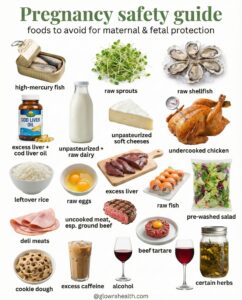
- Avoid foods that are unsafe during pregnancy, such as unpasteurized dairy or undercooked meats.
- If nausea, reflux, or fatigue are severe, seek professional support.
Final Takeaway
Pregnancy is a time to slow down and nourish deeply. Favoring warm, cooked, mineral-rich foods while limiting cold, raw, and overly stimulating meals can make pregnancy feel steadier and more comfortable. Listen to your body – it often knows exactly what it needs.