Low sodium headaches are often mistaken for dehydration. Many people drink more water when head pressure builds, but the real issue may be an imbalance between fluid and electrolytes. Sodium plays a key role in blood volume, nerve signaling, and hydration balance, and when levels drop too low, headaches can appear even when you are well hydrated.
 What Are Low Sodium Headaches?
Sodium helps regulate the movement of water between cells and the bloodstream. When sodium levels are too low, fluid can shift into cells, including brain cells, which may contribute to pressure-related headaches.
Low sodium availability can also interfere with:
-
Nerve impulse transmission
-
Muscle contraction and relaxation
-
Maintenance of stable blood volume
This is why headaches are commonly reported in people who:
-
Drink large amounts of water without electrolytes
-
Follow very low-salt or restrictive diets
-
Sweat heavily through exercise or heat exposure
Foods That Help Relieve Low Sodium Headaches
Not all sodium comes from processed foods. Many whole foods contain naturally occurring sodium, often paired with protein, fats, or micronutrients that support hydration and nervous system stability.
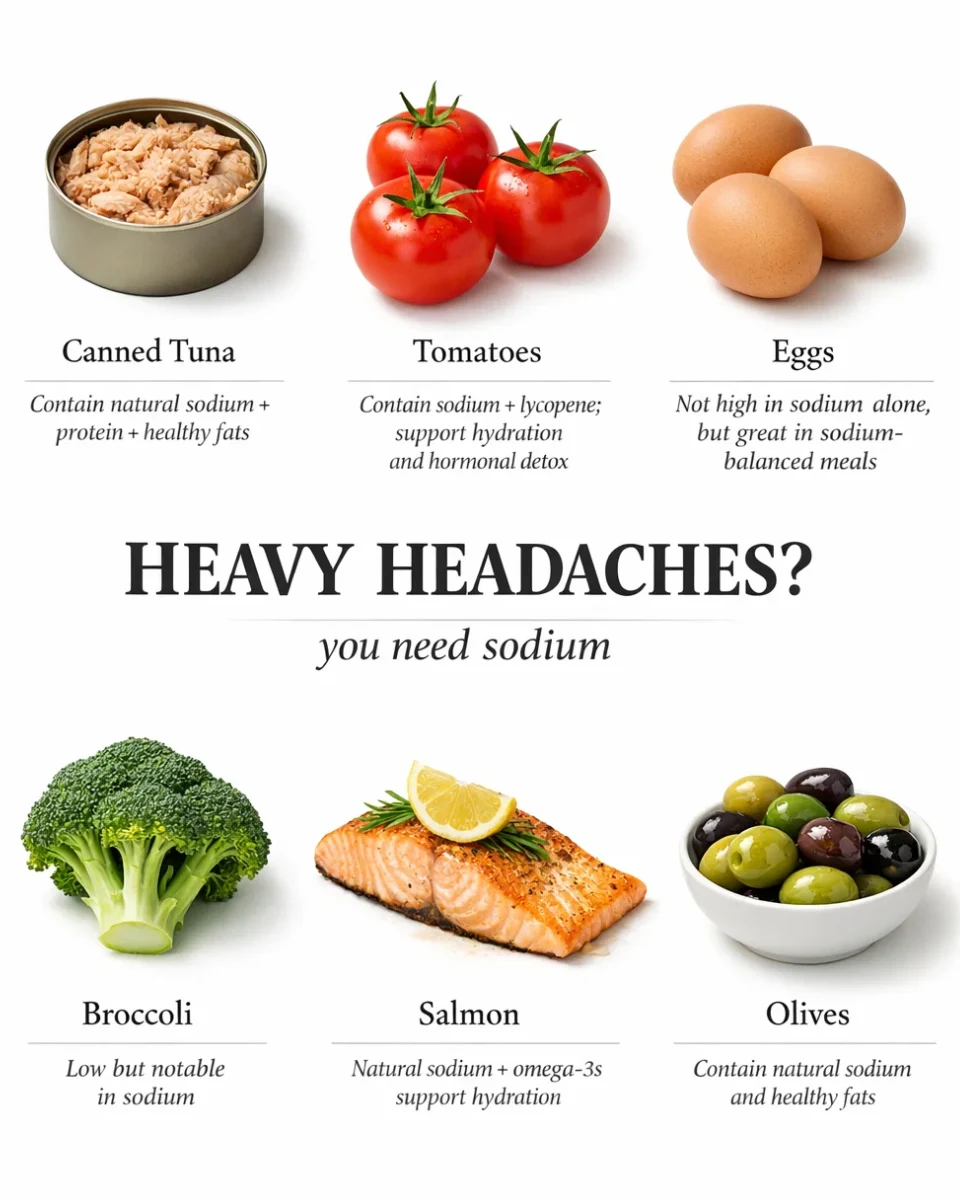
Canned Tuna
Canned tuna contains natural sodium along with protein and healthy fats. When consumed in balanced meals, it can help support electrolyte levels without excessive salt intake.

Tomatoes
Tomatoes provide sodium in small amounts and are rich in lycopene and potassium. This combination supports hydration and cellular balance rather than causing fluid loss.
Eggs
Eggs are not high in sodium on their own, but they work well in sodium-balanced meals. Their protein content supports stable blood sugar, which can indirectly reduce headache frequency.
Broccoli
Broccoli contains modest amounts of sodium and potassium. While low in sodium overall, it contributes to mineral diversity in meals that already include a sodium source.
Salmon
Salmon provides natural sodium along with omega-3 fatty acids, which may support vascular function and inflammation balance. This makes it a supportive food for people prone to tension or dehydration-related headaches.
Olives
Olives are one of the richest natural sources of sodium among whole foods. They also contain healthy fats that slow digestion and help stabilize fluid absorption.

When Low Sodium Can Become a Problem
Low sodium intake becomes an issue when combined with:
-
High fluid intake without electrolytes
-
Endurance exercise or excessive sweating
-
Very low-carbohydrate or restrictive eating patterns
In these cases, headaches may occur even when hydration appears adequate. Adding sodium-rich whole foods back into meals can sometimes improve symptoms without increasing processed food intake.
Sodium vs. Dehydration: A Common Misunderstanding
Drinking more water does not always resolve headaches. In some cases, it can worsen symptoms by further diluting sodium levels in the bloodstream.
Balanced hydration means water plus electrolytes, not water alone. Sodium helps your body retain and properly distribute fluids rather than flushing them out too quickly.
A Balanced Approach to Sodium Intake
This does not mean increasing salt indiscriminately. Excess sodium intake can be problematic for certain individuals, especially those with specific medical conditions.
Instead, focus on:
-
Including natural sodium sources in meals
-
Pairing sodium with protein and fats
-
Avoiding extremes of restriction or excess
If headaches persist or worsen, medical evaluation is always recommended.
Scientific References
-
National Institutes of Health (NIH). Sodium and Fluid Balance in the Human Body.
-
Harvard T.H. Chan School of Public Health. The Role of Electrolytes in Hydration.
-
Cleveland Clinic. Hyponatremia and Its Symptoms.
-
Institute of Medicine. Dietary Reference Intakes for Water, Potassium, Sodium, Chloride, and Sulfate.