Gentle carbs are often misunderstood and blamed for blood sugar spikes, crashes, and energy swings. But carbs themselves are not the problem.
The real issue is how carbohydrates are structured, prepared, and combined.
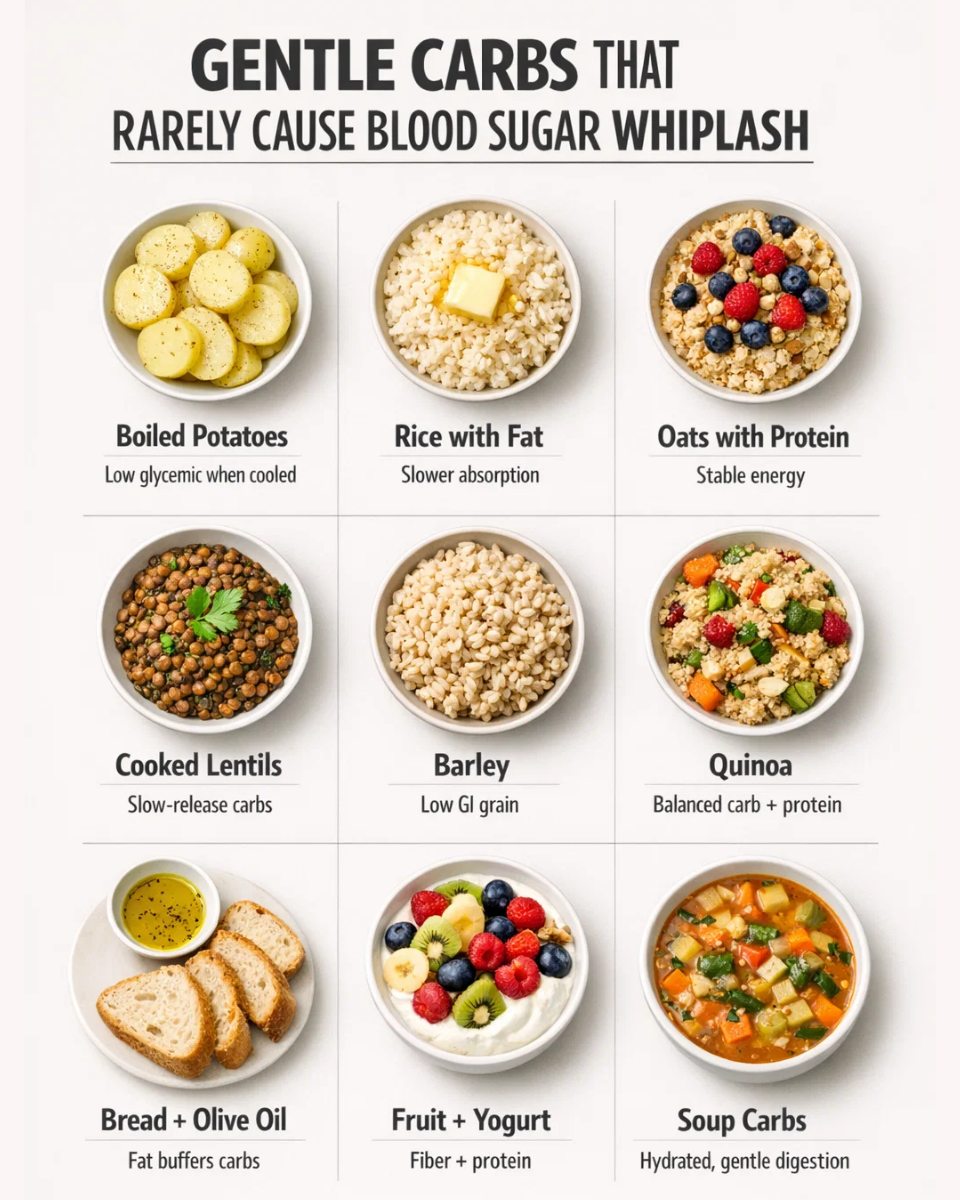
This infographic highlights a group of gentle carbs that tend to move blood sugar forward smoothly instead of sending it sharply up and down. Let’s break down why these foods behave differently, and how to use them in daily meals.
What Is Blood Sugar Whiplash and How Gentle Carbs Help
Blood sugar whiplash refers to a pattern where glucose rises quickly after eating, then drops just as fast. This often leads to:
-
Sudden fatigue
-
Strong hunger shortly after meals
-
Cravings for more carbs or sugar
-
Difficulty feeling satisfied
This effect is more about speed of digestion and absorption than carbs alone.
Why Gentle Carbs Behave Differently
Gentle carbs tend to share at least one of these characteristics:
-
Slower digestion
-
Added fat, protein, or fiber
-
Lower glycemic impact due to preparation
-
More water or volume
These factors help slow glucose release into the bloodstream and reduce sharp insulin responses.
Gentle Carbs Shown in the Infographic (And Why They Work)
Boiled Potatoes (Especially When Cooled)
When potatoes are cooked and cooled, part of their starch becomes resistant starch, which lowers their glycemic impact. This helps slow glucose absorption and supports steadier energy.
Rice With Fat
Rice on its own digests quickly. When eaten with fat (such as butter or oil), digestion slows, leading to more gradual blood sugar rise.
Oats With Protein
Oats are naturally rich in soluble fiber. Adding protein further stabilizes digestion, making oats a reliable option for longer-lasting energy.
Cooked Lentils
Lentils release carbohydrates slowly due to their high fiber and protein content. They are often described as slow-release carbs.
Barley
Barley contains beta-glucan fiber, which slows carbohydrate absorption and supports a lower glycemic response compared to many grains.
Quinoa
Quinoa provides a balanced mix of carbohydrates and protein, helping blunt rapid blood sugar spikes.
Bread With Olive Oil
Adding olive oil introduces fat that buffers carbohydrate absorption, reducing sharp glucose rises compared to bread alone.
Fruit With Yogurt
Fruit paired with yogurt combines fiber and protein, slowing sugar absorption and improving satiety.
Soup-Based Carbs
Carbohydrates eaten in soups digest more gently due to added fluid, volume, and slower gastric emptying.
Why Gentle Carbs Work Better Than Unsupported Carbs
A common misconception is that controlling blood sugar means eliminating carbohydrates. In reality, unsupported carbs cause problems more often than carbs themselves.
Carbs paired with:
-
Fat
-
Protein
-
Fiber
-
Water
tend to feel calmer in the body.
How to Use Gentle Carbs in Everyday Meals
Instead of removing carbohydrates, try these simple shifts:
-
Pair grains with protein or fat
-
Choose whole or minimally processed carbs
-
Use cooling, soaking, or cooking methods that slow digestion
-
Favor meals that feel steady, not rushed
These small changes often improve energy, focus, and appetite regulation without strict rules.
A Calm Reframe to Remember
Carbs are not meant to be eaten alone in isolation.
They are meant to be supported.
When carbohydrates are structured well, they rarely cause blood sugar whiplash.
Want to Learn More?
You may also want to explore our guides on oats, lentils, and food structure in the Food & Nutrition section.
-
How food structure affects blood sugar stability
-
Why oats and lentils feel more satisfying than refined carbs
-
How combining carbs with fat and protein changes digestion
👉 Explore more guides in the Food & Nutrition section of the blog.
Understanding carbs doesn’t require fear.
It requires context, structure, and listening to how your body responds.