Not all fruit salads work the same way.
Fruit salad is often seen as a “healthy default,” but many people feel hungry, bloated, or experience blood sugar crashes after eating it.
The reason isn’t fruit itself — it’s how fruits are combined and when they’re eaten.
Below are 6 functional fruit salad recipes, each designed for a specific goal, with clear reasoning so you know why it works.
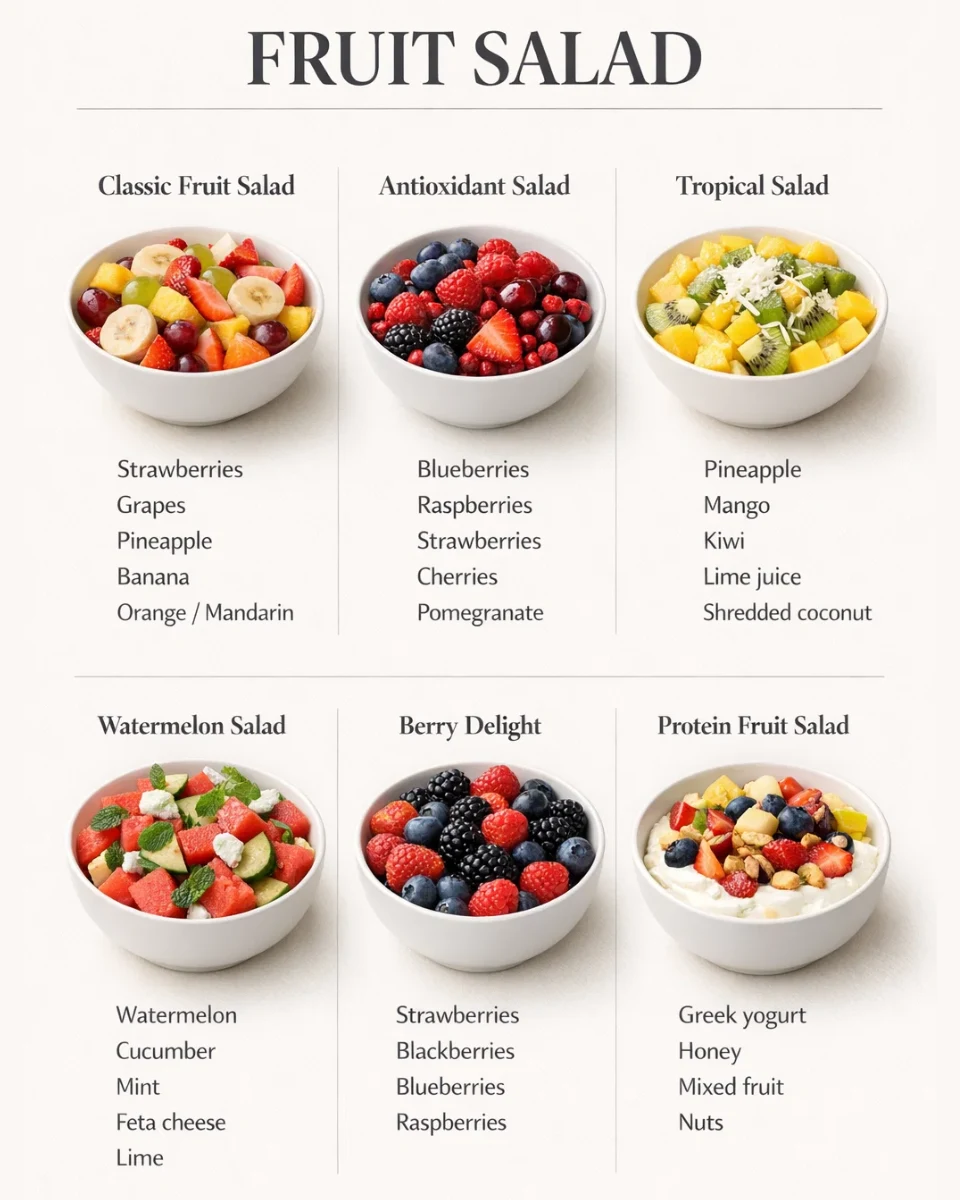
1. Classic Fruit Salad – Everyday Balance
Best for: hydration, general nutrition, light digestion
Ingredients
-
Strawberries
-
Grapes
-
Pineapple
-
Banana
-
Orange or mandarin
Why this combination works
This mix balances high-water fruits with enzyme-rich pineapple, helping digestion while providing quick energy and vitamin C. It’s light enough for daily use without overwhelming the gut.
Best time to eat: morning or mid-afternoon
Avoid: late night (natural sugars digest faster than your metabolism at night)
2. Antioxidant Fruit Salad – Cellular Protection
Best for: skin health, inflammation support, recovery
Ingredients
-
Blueberries
-
Raspberries
-
Strawberries
-
Cherries
-
Pomegranate
Why this combination works
Berries are rich in polyphenols and anthocyanins, compounds linked to reduced oxidative stress and inflammation. This is one of the most research-supported fruit groups for long-term health.
Related search naturally used: antioxidant fruits, berries for inflammation, fruits for skin health
3. Tropical Fruit Salad – Energy & Digestion Support
Best for: digestion, physical energy, post-meal comfort
Ingredients
-
Pineapple
-
Mango
-
Kiwi
-
Fresh lime juice
-
Shredded coconut
Why this combination works
Pineapple and kiwi contain natural digestive enzymes. Coconut adds fat, which slows sugar absorption and helps prevent energy crashes often caused by tropical fruits.
Best time to eat: after light activity or as a midday meal
4. Watermelon Salad – Hydration & Bloating Relief
Best for: hot weather, water retention, digestive cooling
Ingredients
-
Watermelon
-
Cucumber
-
Fresh mint
-
Feta cheese
-
Lime juice
Why this combination works
Watermelon and cucumber are highly hydrating. Mint supports digestive comfort, while feta adds sodium and protein, preventing electrolyte imbalance from water-heavy fruits.
5. Berry Delight – Blood Sugar Friendly
Best for: glucose control, light meals, weight management
Ingredients
-
Strawberries
-
Blackberries
-
Blueberries
-
Raspberries
Why this combination works
Berries have a lower glycemic load than most fruits and are high in fiber. This makes them one of the safest fruit choices for people sensitive to blood sugar spikes.
6. Protein Fruit Salad – Longer Fullness
Best for: breakfast, post-workout, appetite control
Ingredients
-
Greek yogurt
-
Mixed fruits (berries or apple)
-
Nuts or seeds
-
Small drizzle of honey (optional)
Why this combination works
Protein and healthy fats slow digestion and stabilize blood sugar. This prevents the “hungry again in 30 minutes” effect common with fruit-only meals.
Final takeaway
Fruit salad isn’t automatically healthy — context matters.
When fruits are paired correctly, they support digestion, energy, and metabolic balance. When they’re not, they can cause hunger, bloating, or crashes.
The difference isn’t calories.
It’s combination, timing, and purpose.