If there’s one lesson I’ve learned after years of gardening and running a small farm, it’s this:
Healthy plants begin with living soil.
You can buy all the fancy fertilizers in the world, but nothing compares to natural, homemade organic fertilizers that feed the soil ecosystem — not just the plant.
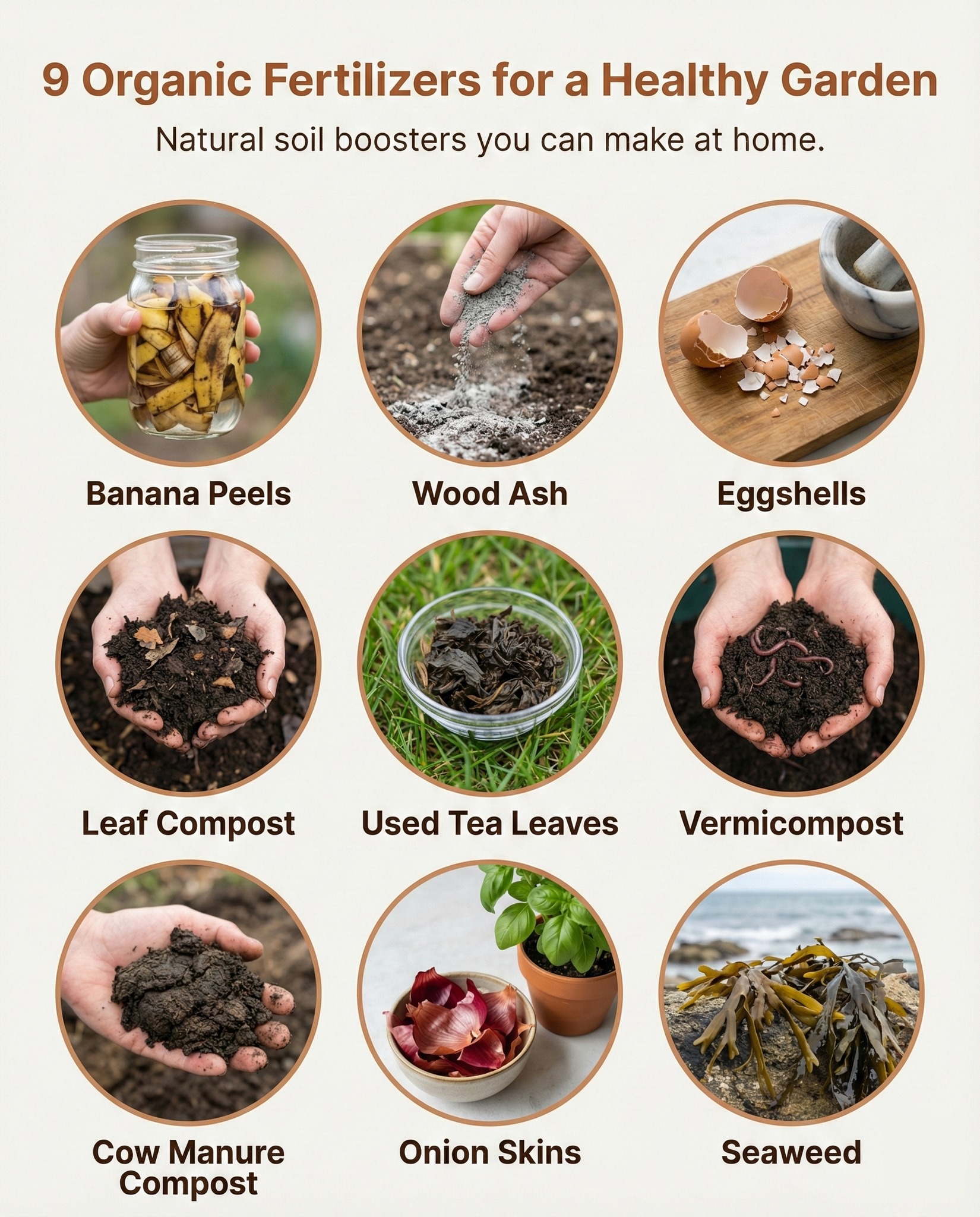
There highlights nine powerful organic soil boosters that most gardeners overlook. Some come from your kitchen scraps. Some from your farm. All of them can transform tired soil into a thriving, productive garden.
Let’s break them down — not just what they are, but why they work and how to use them properly.
Why Organic Fertilizers Work Better in the Long Run
Chemical fertilizers feed plants quickly but weaken soil over time. Organic fertilizers:
- Improve soil structure
- Encourage beneficial microbes
- Increase water retention
- Reduce long-term input costs
- Create sustainable nutrient cycles
On our farm, we focus on feeding the soil first. When soil life thrives, plants follow naturally.
1. Banana Peels – Potassium Powerhouse
What It Does
Banana peels are rich in potassium, essential for flowering and fruiting plants like tomatoes, peppers, and roses.
Potassium strengthens cell walls and improves disease resistance.
How to Use It
- Chop peels and bury near plant roots
- Soak peels in water for 2–3 days to create banana peel tea
- Add to compost
💡 Tip: Avoid placing whole peels on the surface — they attract pests.
2. Wood Ash – Natural Soil Sweetener
What It Does
Wood ash raises soil pH and adds calcium and potassium.
Ash contains trace minerals left behind after burning untreated wood.
Best for: Brassicas, Garlic, Onions
How to Use It
- Sprinkle lightly in acidic soil
- Mix into compost
⚠️ Do not overuse. Too much ash can raise pH excessively.
3. Eggshells – Calcium Boost
What It Does
Prevents blossom end rot in tomatoes and peppers.
Eggshells are mostly calcium carbonate.
How to Use It
- Rinse and dry shells
- Crush into fine powder
- Mix into planting holes
The finer the grind, the faster it breaks down.
4. Leaf Compost – Black Gold of the Garden
What It Does
Improves soil structure and moisture retention.
Decomposed leaves create humus, feeding soil microbes.
How to Use It
- Collect fall leaves
- Shred and pile
- Turn occasionally
After 6–12 months, you’ll have crumbly, rich compost.
On our farm, leaf compost is the foundation of every raised bed.
5. Used Tea Leaves – Gentle Nitrogen Boost
What It Does
Adds small amounts of nitrogen and organic matter.
Tea leaves decompose quickly and support microbial life.
How to Use It
- Dry used tea leaves
- Mix lightly into topsoil
- Add to compost
Avoid flavored or sweetened tea.
6. Vermicompost – The Microbial Miracle
What It Does
Provides balanced nutrients and beneficial bacteria.
Worm castings are biologically active and improve nutrient availability.
How to Use It
- Mix into potting soil
- Top-dress around plants
- Brew worm casting tea
This is one of the most powerful natural fertilizers available.
If you keep chickens, worms thrive under coops where organic matter accumulates.
7. Cow Manure Compost – Farm Classic
What It Does
Adds nitrogen, phosphorus, and organic matter.
Composted manure feeds soil slowly and steadily.
How to Use It
- Only use well-aged composted manure
- Mix into soil before planting
- Avoid fresh manure — it burns plants
On small farms, manure recycling closes the nutrient loop.
8. Onion Skins – Mineral-Rich Boost
What It Does
Provides trace minerals and mild antifungal properties.
Onion skins contain sulfur compounds beneficial to soil health.
How to Use It
- Soak skins in water for 24–48 hours
- Use water as mild fertilizer
- Add dried skins to compost
Excellent for leafy greens.
9. Seaweed – Ocean Mineral Elixir
What It Does
Enhances root growth and stress resistance.
Seaweed contains micronutrients, hormones, and growth stimulants.
How to Use It
- Rinse salt thoroughly
- Chop and bury
- Make seaweed extract
Seaweed strengthens plants against drought and temperature stress.
How to Combine These for Maximum Impact
Instead of using just one, layer them strategically:
- Start beds with cow manure compost
- Add leaf compost for structure
- Boost flowering plants with banana peels
- Use vermicompost for high-value crops
- Supplement with seaweed during stress periods
This creates balanced, living soil.
The Farm Mindset: Nothing Goes to Waste
On a small farm, waste doesn’t exist — only resources waiting to be reused.
- Eggshells from the kitchen
- Manure from livestock
- Leaves from autumn
- Kitchen scraps
Everything feeds the soil.
When you adopt this mindset, gardening becomes regenerative, not consumptive.
🌿 Final Thoughts: Feed the Soil, Not Just the Plant
Organic fertilizers don’t act instantly like chemical salts. They work gradually, building a resilient soil ecosystem that supports plants naturally.
It’s slower. But it’s stronger. And over time, you’ll notice something remarkable:
Healthier plants.
Fewer diseases.
Richer harvests.
Lower costs.
That’s the power of feeding your soil the way nature intended.