Many people don’t realize that supporting heart health often starts with simple, everyday food choices—especially vegetables.
Vegetables that help keep arteries clear are not a quick fix or a replacement for medical care. Instead, they provide nutrients like fiber, antioxidants, and plant compounds that are commonly associated with cardiovascular support when included regularly in the diet.
Rather than focusing on one “superfood,” the goal is to build meals around a variety of vegetables that work together over time.
What “Keeping Arteries Clear” Really Means
The phrase sounds dramatic, but in practical terms, it refers to supporting:
- Healthy blood flow
- Balanced cholesterol levels
- Reduced oxidative stress
- Overall vascular function
Dietary patterns rich in vegetables are often associated with better long-term heart health outcomes—not because of one ingredient, but because of consistent intake.
Leafy Greens Rich in Nitrates
These vegetables are often highlighted for their natural nitrate content, which the body can convert into compounds that support blood vessel function.
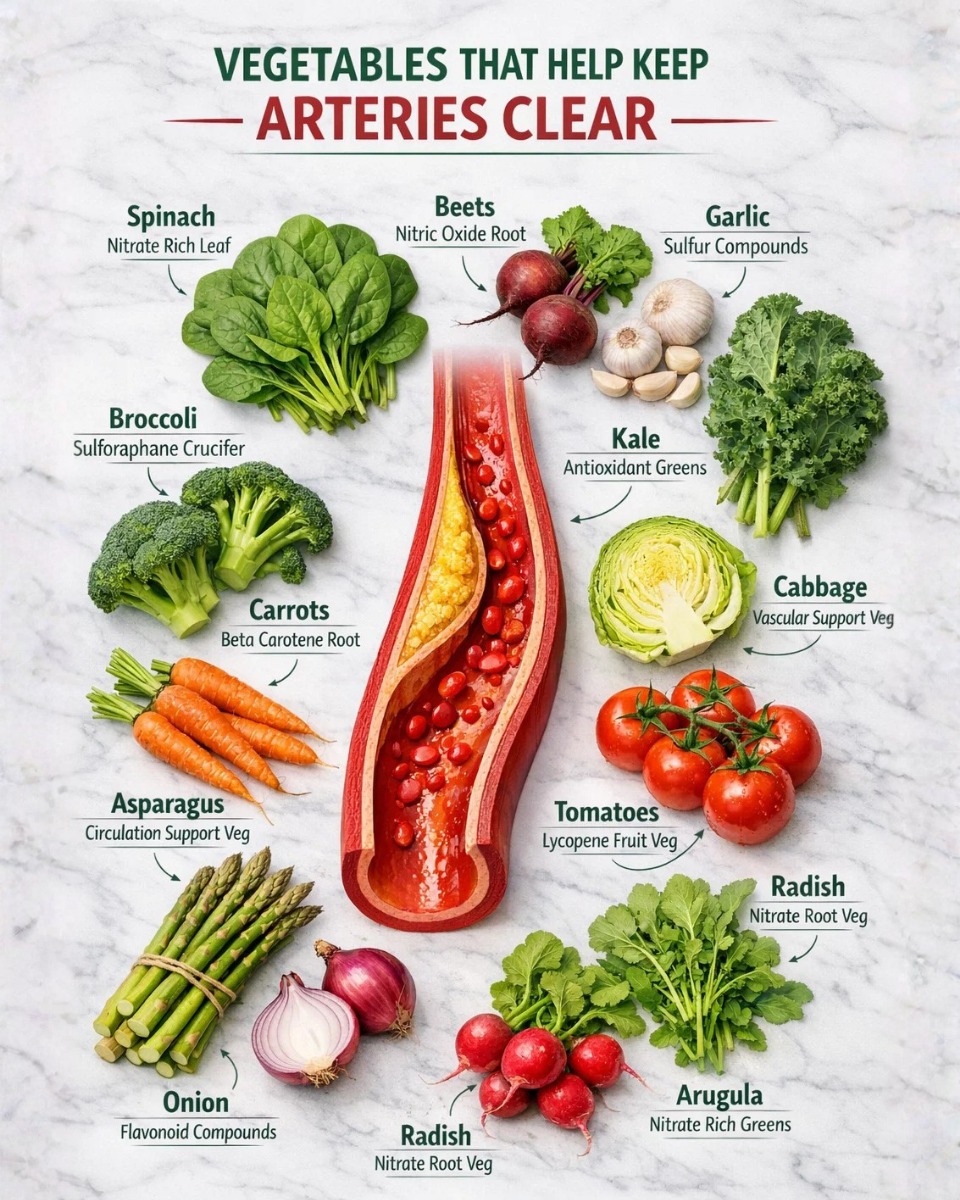
Spinach
Spinach is a nitrate-rich leafy green commonly included in heart-friendly diets.
How it may help:
Supports normal blood flow and vascular function.
How to use:
- Add to smoothies
- Toss into salads or sauté lightly
Arugula
Arugula has a slightly peppery taste and is also rich in natural nitrates.
How to use:
- Mix into salads
- Add to sandwiches or wraps
Radish
Radishes provide a crisp texture and also contain nitrate compounds.
How to use:
- Slice into salads
- Eat as a crunchy side
Root Vegetables That Support Circulation
Beets
Beets are one of the most well-known nitrate-rich vegetables.
How it may help:
Often associated with improved blood flow in dietary patterns.
How to use:
- Roast or juice
- Add to salads
Carrots
Carrots contain beta-carotene, an antioxidant linked to overall health.
How to use:
- Eat raw as snacks
- Add to soups or roasted dishes
Cruciferous Vegetables for Antioxidant Support
Broccoli
Broccoli contains compounds like sulforaphane.
How it may help:
Associated with antioxidant support in the body.
How to use:
- Steam or roast
- Add to bowls
Kale
Kale is a nutrient-dense leafy green with antioxidant compounds.
How to use:
- Use in salads
- Blend into smoothies
Cabbage
Cabbage is another cruciferous vegetable that provides fiber and plant compounds.
How to use:
- Add to slaws
- Stir-fry or steam
Vegetables with Protective Plant Compounds
Garlic
Garlic contains sulfur compounds that are often studied in relation to heart health.
How it may help:
May support normal cardiovascular function as part of a balanced diet.
How to use:
- Add to cooking
- Use in sauces or dressings
Onion
Onions provide flavonoids, which are plant compounds linked to overall health.
How to use:
- Cook into meals
- Add raw to salads
Tomatoes
Tomatoes contain lycopene, an antioxidant associated with heart health.
How to use:
- Eat fresh or cooked
- Add to sauces or salads
Additional Vegetables That Support Circulation
Asparagus
Asparagus provides fiber and nutrients that support overall dietary balance.
How to use:
- Roast or steam
- Serve as a side dish
How to Combine These Vegetables Into Simple Meals
The real benefit comes from variety and consistency, not single ingredients.
Example 1: Heart-Friendly Salad
- Spinach
- Arugula
- Tomatoes
- Onion
- Olive oil
→ Combines nitrates, antioxidants, and healthy fats
Example 2: Roasted Vegetable Bowl
- Beets
- Carrots
- Broccoli
- Garlic
→ Simple way to include multiple compounds
Example 3: Warm Vegetable Plate
- Kale
- Cabbage
- Asparagus
- Tomato
→ Balanced fiber and nutrients
Featured Recipe: Simple Heart-Support Vegetable Bowl
Description:
A balanced vegetable bowl that combines multiple nutrients associated with cardiovascular support.
Ingredients:
- 1 cup spinach or kale
- ½ cup roasted beets
- ½ cup roasted carrots
- ½ cup broccoli
- 1 tablespoon olive oil
- 1 clove garlic (minced)
Instructions:
- Roast beets, carrots, and broccoli until tender
- Add spinach or kale to a bowl
- Top with roasted vegetables
- Drizzle olive oil and garlic
- Mix lightly and serve
Why this works:
This combination includes a variety of plant compounds that support overall dietary patterns linked to heart health.
Practical Tips for Daily Use
- Rotate different vegetables throughout the week
- Combine raw and cooked options
- Add healthy fats like olive oil to improve absorption
- Focus on consistency rather than perfection
Final Thoughts
Vegetables that help keep arteries clear are best understood as part of a broader eating pattern—not a quick solution.
By regularly including a variety of leafy greens, cruciferous vegetables, and antioxidant-rich foods, you can support overall cardiovascular health in a steady, sustainable way.
Small, consistent choices over time often matter more than any single meal.