Foods that balance digestion speed can help your body process meals more smoothly without feeling too heavy or too fast. When digestion is out of balance, you may experience bloating, low energy, or unstable hunger throughout the day.
Many people focus on what they eat, but not how quickly their body digests it. In reality, combining the right foods can help regulate digestion speed and support a more comfortable, steady rhythm.
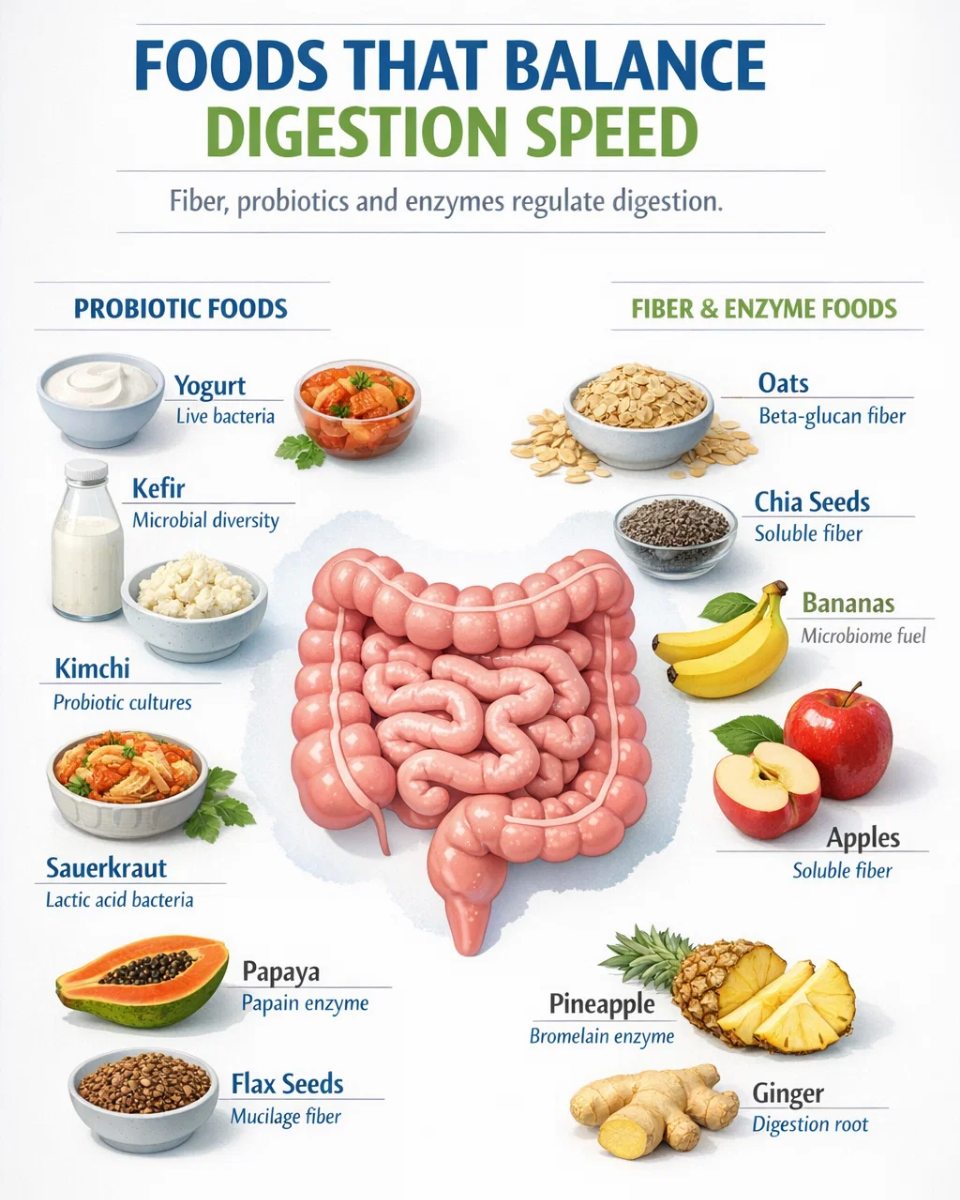
The foods in this guide include fiber-rich ingredients, probiotic foods, and natural enzymes that work together to support a balanced digestive process.
What “Balancing Digestion Speed” Actually Means
Your digestive system works best when food moves at a steady pace.
Three main factors influence this:
- Fiber → slows and regulates digestion
- Probiotics → support gut bacteria balance
- Enzymes → help break down food more efficiently
The foods in this guide are grouped based on these roles.
Probiotic Foods That Support Gut Rhythm
Probiotic foods introduce beneficial bacteria that may help regulate digestion over time.
Yogurt
Yogurt with live cultures is one of the easiest ways to support gut balance.
How it helps:
Provides beneficial bacteria that may support digestion consistency.
How to use:
- Breakfast bowls with fruit and seeds
- As a base for smoothies
Kefir
Kefir is a fermented drink with a more diverse microbial profile than yogurt.
How it helps:
May support microbial diversity in the gut.
How to use:
- Drink on its own
- Blend with banana or oats
Kimchi
Kimchi is a fermented vegetable dish rich in probiotic cultures.
How it helps:
Adds both bacteria and flavor, making it easy to include regularly.
How to use:
- Add to rice or grain bowls
- Use as a side dish
Sauerkraut
Fermented cabbage that contains lactic acid bacteria.
How it helps:
Supports microbial balance and digestion environment.
How to use:
- Add small portions to meals
- Pair with protein-rich dishes
Fiber Foods That Slow and Stabilize Digestion
Fiber helps regulate how quickly food moves through your system.
Oats
Oats contain beta-glucan, a soluble fiber that forms a gel-like texture.
How it helps:
Slows digestion and supports steady energy.
How to use:
- Oatmeal for breakfast
- Add to yogurt bowls
Chia Seeds
Chia seeds absorb water and create a gel that slows digestion.
How it helps:
Supports fullness and steadier digestion speed.
Important tip:
Always soak before eating.
Flax Seeds
Flax seeds provide soluble fiber that supports gut fermentation.
How it helps:
Helps regulate digestion rhythm.
How to use:
- Add to smoothies or oats
- Sprinkle on yogurt
Apples
Apples contain pectin, a soluble fiber that may support digestion.
How it helps:
Adds gentle fiber that supports balance.
How to use:
- Eat with nuts for better balance
- Add to oatmeal
Enzyme-Rich Foods That Help Break Down Food
These foods contain natural enzymes that assist digestion.
Bananas
Bananas provide both fiber and compounds that support gut bacteria.
How it helps:
Acts as a gentle “fuel” for the microbiome.
Papaya
Papaya contains papain, an enzyme linked to protein digestion.
How it helps:
May help break down food more efficiently.
Pineapple
Pineapple contains bromelain, an enzyme associated with digestion.
How it helps:
Supports the breakdown of certain nutrients.
Ginger
Ginger is often used to support digestive comfort and movement.
How it helps:
May support how food moves through the digestive system.
How to Combine These Foods for Better Digestion
The real benefit comes from combining these categories.
Example 1: Balanced Breakfast
- Yogurt
- Oats
- Banana
- Chia seeds
→ Combines probiotics + fiber + gentle energy
Example 2: Gut-Friendly Smoothie
- Kefir
- Banana
- Flax seeds
- Ginger
→ Easy to digest and balanced
Example 3: Simple Lunch Bowl
- Rice or grains
- Kimchi
- Cooked vegetables
- Ginger dressing
→ Combines fermentation and fiber
Featured Recipe: Digestion Balance Bowl
Description:
A simple bowl designed to support steady digestion using fiber and probiotic foods.
Ingredients:
- ½ cup oats (cooked)
- ½ banana (sliced)
- 1 tablespoon chia seeds (soaked)
- ½ cup yogurt
- 1 teaspoon flax seeds
Instructions:
- Cook oats until soft
- Add yogurt on top
- Add banana slices
- Sprinkle chia and flax seeds
- Mix gently and serve
Why this works:
This bowl combines slow-digesting fiber with probiotics, helping create a more stable digestion pattern.
Practical Tips to Keep Digestion Balanced
- Combine fiber and probiotics in the same meal
- Avoid relying on one “superfood”
- Introduce fiber gradually if intake is low
- Stay consistent with meal timing
- Focus on overall patterns, not quick fixes
Final Thoughts
Foods that balance digestion speed are not complicated—they are simple, familiar ingredients used in the right combinations.
By including probiotic foods, fiber sources, and enzyme-rich ingredients together, you can support a more stable digestive rhythm.
Over time, these small adjustments may help you feel more comfortable after meals and maintain more consistent energy throughout the day.