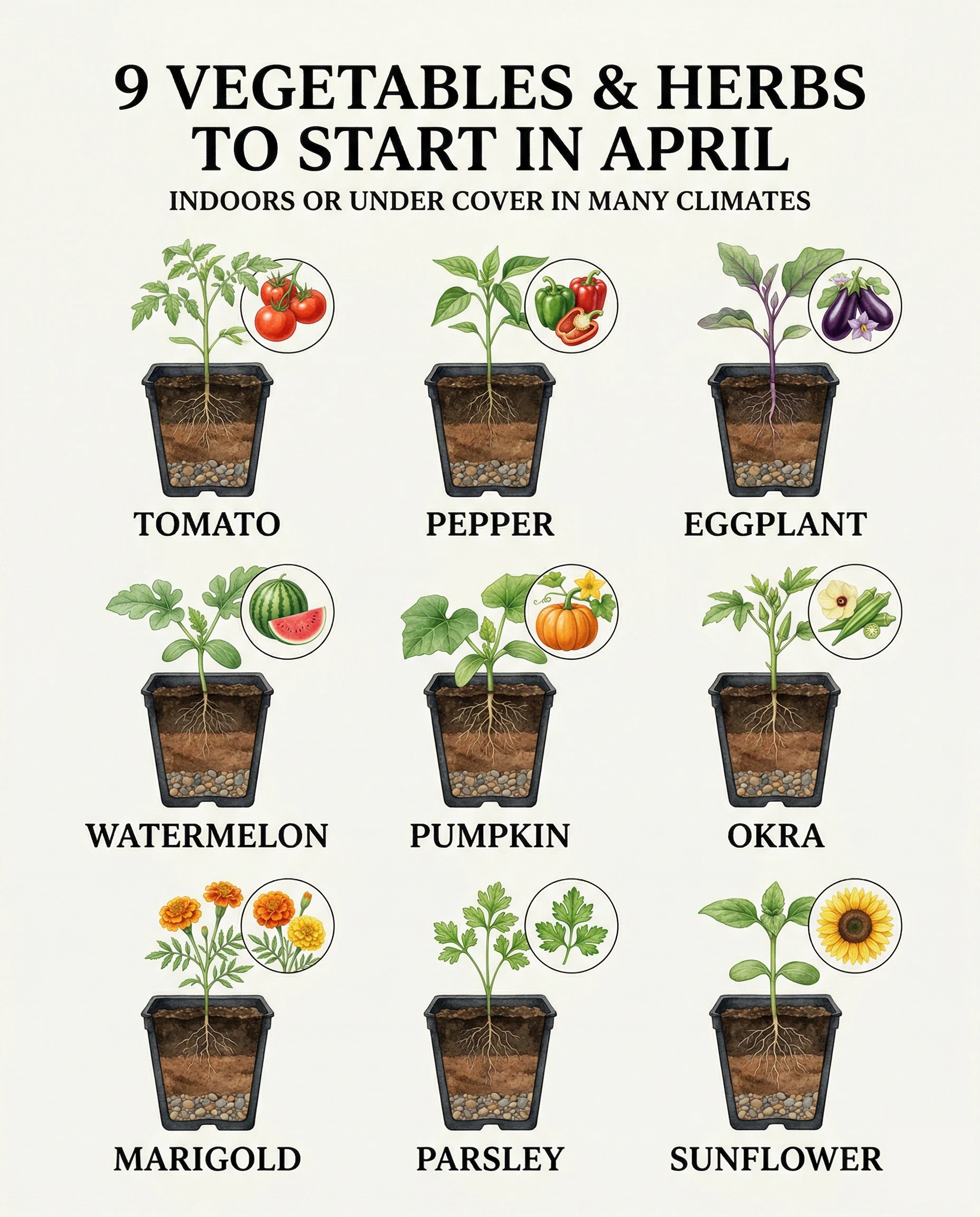
April is one of the most hopeful months in the gardening year. The days are getting longer, the soil is beginning to warm, and the urge to grow something useful becomes hard to ignore. There are 9 vegetables and herbs to start in April indoors or under cover in many climates: tomato, pepper, eggplant, watermelon, pumpkin, okra, marigold, parsley, and sunflower.
That list is a smart one. It brings together warm-season crops that benefit from an early start, plus a few companion plants that make the whole garden work better. If you start them well now, you set yourself up for healthier transplants, steadier growth, and better harvests later.
This is where gardening becomes less about guessing and more about rhythm. A few careful steps in April can turn a short growing season into a productive one.
Why April is such an important month for seed starting
April sits in that useful middle ground. It is early enough to give heat-loving plants a head start, but close enough to outdoor planting time that seedlings are less likely to become weak, stretched, or rootbound before they ever reach the garden.
Starting seeds indoors or under cover in April is especially useful for crops that need:
- Warm soil to germinate well
- A longer growing season than direct sowing may allow
- Protection from cold nights and late frosts
- A strong early root system before transplanting.
1. Tomato
A classic April starter. Tomatoes benefit from an early indoor start because they need time to build strong stems and leaf growth before fruiting later.
2. Pepper
Peppers are slower and more warmth-loving than many beginners expect. Starting them under cover gives them the warm conditions they need to get moving.
3. Eggplant
Eggplant likes steady heat and does not enjoy cold setbacks. Early protected growth helps it establish more confidently.
4. Watermelon
Watermelon grows quickly once warm, but starting it in a protected setting can help in shorter or cooler seasons.
5. Pumpkin
Pumpkins are vigorous growers, and a short head start can be useful where summers are brief or pest pressure is high.
6. Okra
Okra loves warmth. Starting it under cover can improve early success in places where spring stays cool.
7. Marigold
This is more than a pretty flower. Marigolds are often grown alongside vegetables for color, pollinator support, and companion planting value.
8. Parsley
Parsley is famously slow to sprout. Starting it in April under cover saves patience and gives you a stronger herb plant to set out later.
9. Sunflower
Sunflowers add beauty, attract pollinators, and can support a healthier, more alive garden space. Starting them under cover can protect young plants from birds and early damage.
How to start seeds in April without making it complicated
You do not need a fancy setup. You do need consistency.
A simple, effective seed-starting routine includes:
- Clean trays, pots, or modules
- Fresh seed-starting mix
- Warmth
- Bright light
- Gentle watering
- Airflow
The biggest mistake is not lack of equipment. It is uneven care. Seeds do better with steady moisture, steady warmth, and enough light than with constant fussing.
Best care tips for each crop group
1. Warm-season fruiting crops: tomato, pepper, eggplant, okra
These four should be treated like the heat-lovers they are.
Give them warmth first
They germinate and grow better when the root zone stays warm. A chilly windowsill can slow them down even if the room feels comfortable to you.
Do not rush them into the garden
Strong seedlings planted too early into cold soil often stall. Bigger is not always better if the plant is stressed.
Pot up before they struggle
If roots begin circling tightly or growth slows, move seedlings into slightly larger containers before transplant time.
Actionable tip: brush your hand lightly over tomato and pepper seedlings once a day or let a fan move air nearby. This helps stems grow sturdier instead of weak and floppy.
2. Vine crops: watermelon and pumpkin
These grow fast and dislike too much root disturbance.
Start them in roomy containers
A little extra root space helps reduce transplant shock later.
Avoid keeping them indoors too long
These plants move quickly. If started too early and held too long, they become tangled, stressed, and harder to transplant cleanly.
Actionable tip: label vine crops carefully from the start. Young pumpkin and watermelon seedlings can look more alike than many gardeners expect.
3. Quick companions: marigold and sunflower
These are more strategic than they first appear.
Marigold
A good border plant, companion flower, and color booster. It helps turn the vegetable garden into a place that feels full and inviting.
Sunflower
Useful for pollinators, beauty, and structure. In larger gardens, sunflowers can also help define rows or create visual markers.
Actionable tip: do not overwater sunflower seedlings. They grow quickly, and soggy conditions can weaken them fast.
4. Slow and steady herb: parsley
Parsley rewards patience.
Expect slower germination
Do not give up too early. Parsley often takes longer than many vegetables to appear.
Keep moisture even
Letting the mix dry out too much during germination can delay or reduce sprouting.
Actionable tip: once parsley emerges, give it strong light right away. Slow-growing herbs can become leggy if they are started in dim conditions.
The most important seed starting habit: light matters more than people think
Many April seedlings germinate well but then struggle because they do not get enough light. They stretch, lean, and weaken. Once that happens, recovery is possible, but not ideal.
Put seedlings where they will receive very bright light. A sunny window can help, but in many homes it is not enough by itself for sturdy growth. Seedlings should look compact, upright, and healthy green, not pale and elongated.
A useful daily habit is to rotate trays if one side receives stronger light. This keeps growth more even.
Watering seedlings the right way
Watering is where many promising seedlings get lost.
Too little water and they dry out before roots establish. Too much and they collapse, yellow, or rot. The goal is moist, not soaked.
Here is a simple approach:
- Check trays daily
- Water when the surface is beginning to dry, not bone dry
- Water thoroughly, then let excess drain away
- Avoid leaving containers sitting in stagnant water too long
For April seedlings, consistency matters more than volume. Small swings in moisture can stress young plants quickly.
When to transplant April-started seedlings
Do not transplant by the calendar alone. Use plant readiness and weather readiness together.
Your seedlings are getting close when they have:
- Several true leaves
- Healthy roots that hold the soil together
- Good color and sturdy stems
- No signs of severe crowding or stress
Your outdoor conditions are getting close when:
- Frost danger has passed for tender crops
- Soil is warming
- Nights are less harsh
- Wind and exposure are manageable
Before planting out, harden seedlings off gradually. Give them increasing time outdoors over several days so sun, wind, and temperature changes do not shock them.
Turning these 9 plants into a smarter garden plan
One of the best parts of the image is that it suggests more than individual crops. It hints at a system.
You can build around it like this:
- Tomato, pepper, and eggplant for your warm-season food core
- Watermelon and pumpkin for productive sprawling crops
- Okra for heat resilience and summer harvests
- Parsley for daily kitchen use
- Marigold and sunflower for pollinators, color, and companion support
That is how small actions become a thriving garden. You are not just raising seedlings. You are designing a growing space that is productive and enjoyable to care for.
Common April seed-starting mistakes to avoid
Starting too early and holding plants too long
This leads to stretched, stressed seedlings.
Using poor light
Good germination does not mean good seedling growth.
Overwatering
Wet soil is one of the fastest ways to lose healthy starts.
Skipping hardening off
Indoor-grown seedlings need a transition period before outdoor life.
Treating every crop the same
Parsley does not move at tomato speed. Watermelon does not want to sit indoors as long as pepper. Match care to the crop.
Final thoughts
9 vegetables and herbs to start in April – tomato, pepper, eggplant, watermelon, pumpkin, okra, marigold, parsley, and sunflower offers a practical and encouraging roadmap for the season ahead. These are not random choices. They are the kinds of plants that reward attention early and give back generously later.
April is a month for setting direction. Clean trays, warm soil, bright light, steady moisture, and patient observation may sound simple, but these are the habits that build stronger gardens. They increase confidence because they work. And when they work, daily care begins to feel less like a chore and more like a relationship with the living space around you.
That is where real gardening skill grows one tray, one seedling, one careful April start at a time.