Healthy plants do not come from feeding everything the same way. They come from matching the right soil amendment to the right crop, shrub, or flower at the right time.
This is where gardening becomes more skillful and far more rewarding. Instead of tossing kitchen scraps or homemade fertilizers into the garden and hoping for the best, you begin to understand what each material really does. Compost builds soil. Crushed eggshells release calcium slowly. Compost tea and fish emulsion give plants a quick boost. Banana peels add potassium-rich organic matter when handled properly. Each one has value, but only when used in a way that matches the plant’s needs and the speed at which the amendment actually works.
A smart natural-feeding approach makes daily gardening easier. Plants grow more steadily, containers dry out more predictably, vegetables produce with less stress, and flowering plants hold color and vigor longer. Better still, you waste less, buy less, and make better use of materials already available in the home or on the homestead.
Why matching the amendment matters so much
Many gardeners use good natural materials in the wrong way. That is often why results feel inconsistent.
For example, a plant needing fast nutrition may not benefit much from a slow-release amendment applied too late. A container flower that needs regular feeding may not respond strongly to bulky compost alone. A hungry summer vegetable may appreciate compost tea or fish emulsion during active growth, while a shrub may do better with compost worked into the soil over time.
The real goal is not just to “feed plants.” It is to support:
- root development
- steady growth
- flowering and fruiting
- stronger soil life
- better moisture balance
- healthier long-term productivity
When you understand what each amendment contributes, you stop feeding randomly and start gardening with intention.
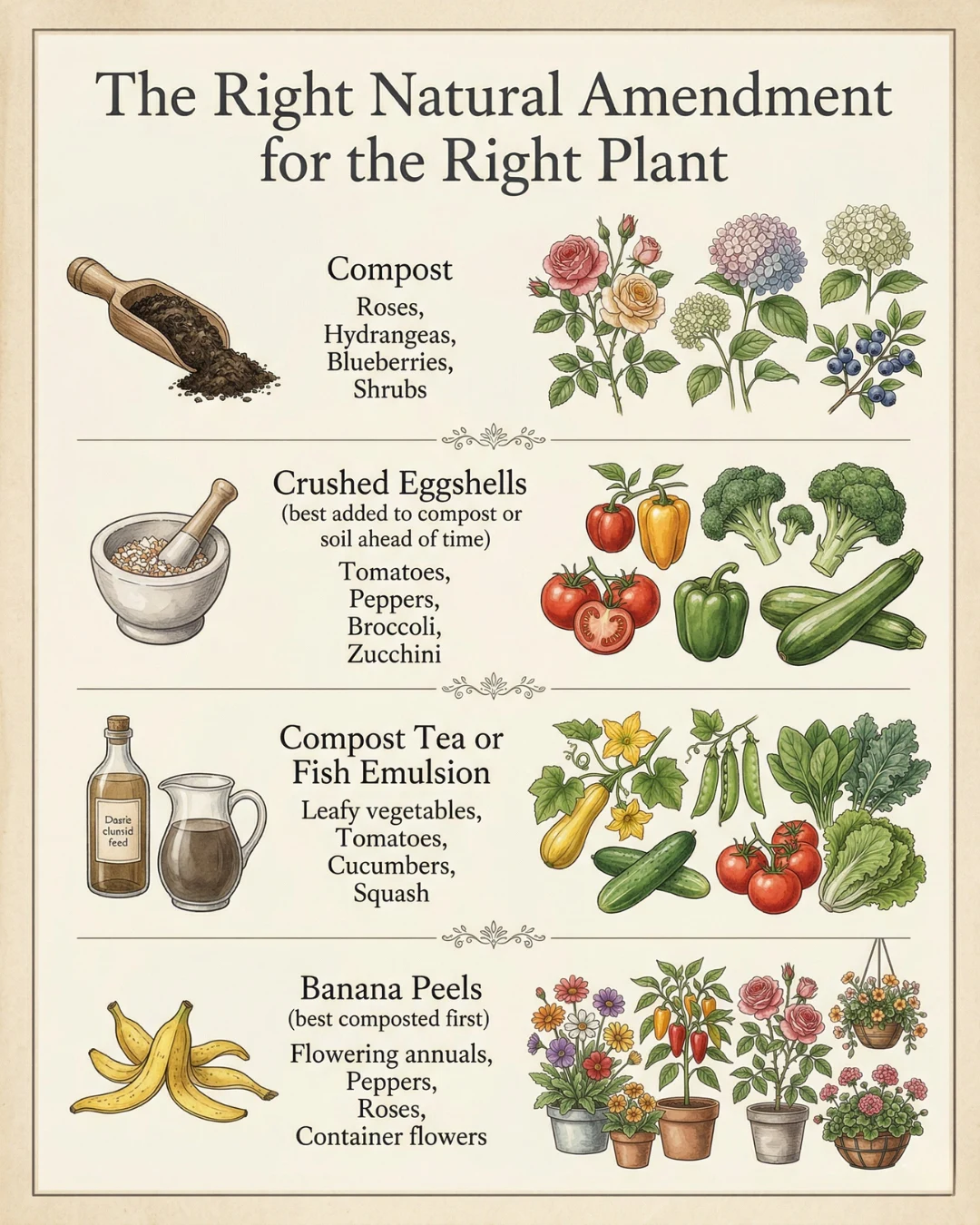
1. Compost: the foundation for roses, hydrangeas, blueberries, and shrubs
If there is one natural amendment almost every garden benefits from, it is compost. Compost improves soil structure, supports microbial life, helps sandy soils hold moisture, and helps heavier soils stay more open and workable.
It is especially useful around:
- Roses
- Hydrangeas
- Blueberries
- Shrubs

Why compost works so well
Compost is not just fertilizer. It is soil improvement. That distinction matters. Instead of giving a fast hit of nutrients, it helps create the conditions for better root health, better water movement, and more resilient plant growth.
Best way to use it
Spread compost around the root zone as a top-dressing or mix it into soil before planting. For established shrubs and flowering plants, apply it around the drip line rather than piling it directly against stems.
Practical tip for roses
Use compost as a seasonal top-dress in spring and again lightly during the growing season if needed. Roses respond well to improved soil texture and a steady nutrient supply rather than harsh feeding swings.
Practical tip for hydrangeas and shrubs
Compost helps moderate moisture, which is valuable for hydrangeas and other shrubs that resent drying out too sharply in hot weather.
Practical tip for blueberries
Blueberries can benefit from organic matter, but be careful not to assume all compost is equally suitable. Blueberries prefer acidic conditions, so avoid materials that may shift the soil the wrong way. Good soil management matters more than simply adding “something organic.”
2. Crushed eggshells: a slow calcium source for tomatoes, peppers, broccoli, and zucchini
Crushed eggshells are often discussed as a quick fix, but they work best when used with patience and realism. They are most useful when added ahead of time and allowed to break down gradually.
They are commonly used around:
- Tomatoes
- Peppers
- Broccoli
- Zucchini
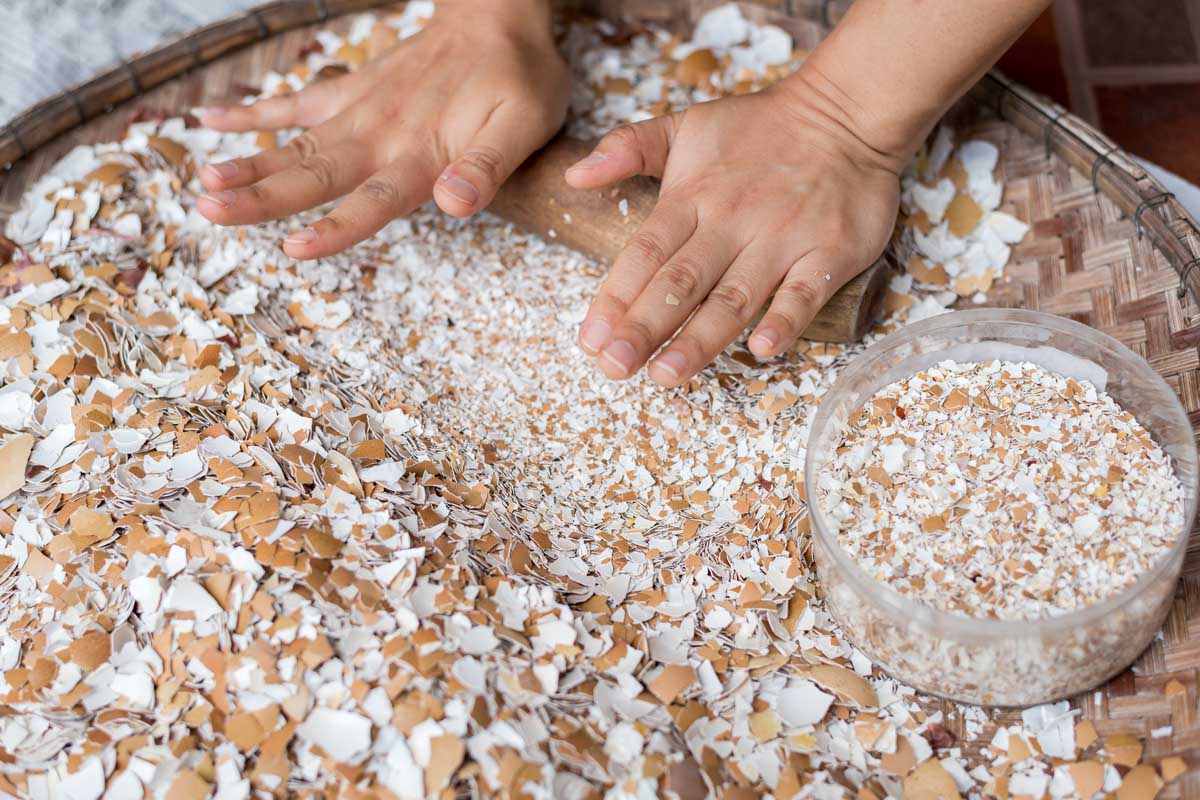
What eggshells actually do
Eggshells are mainly calcium carbonate. Calcium is important for plant structure and fruit development, but crushed shells do not dissolve overnight. They are not an instant rescue treatment.
Best way to use them
Dry the shells, crush them finely, and add them to compost or incorporate them into the soil before planting. The finer the crush, the more useful they become over time.
Important reality check
If a tomato plant already shows severe blossom-end rot, adding coarse eggshell pieces to the surface will not solve the problem quickly. Blossom-end rot is often tied not just to calcium availability, but to inconsistent watering and uneven uptake.
Practical tip
Think of eggshells as a long-game amendment. They are best used as part of soil preparation, not emergency correction.
3. Compost tea or fish emulsion: fast support for leafy vegetables, tomatoes, cucumbers, and squash
Some plants benefit from a quicker nutritional boost, especially during active growth. This is where compost tea or fish emulsion can be useful.
These are often well suited to:
- Leafy vegetables
- Tomatoes
- Cucumbers
- Squash

Why these feeds are useful
Unlike coarse organic matter that breaks down slowly, liquid feeding reaches the root zone faster. That makes it valuable when plants are growing rapidly, recovering from stress, or producing heavily.
Compost tea
Compost tea can be used as a gentle supplemental feed, especially when your goal is to support living soil and steady growth without overfeeding.
Fish emulsion
Fish emulsion is often richer and more immediately noticeable in its effect. It can green plants up quickly and help leafy crops move forward with strength.
Best time to use them
Use during active growth, especially when:
- leafy vegetables need a boost
- tomatoes are building foliage before heavy fruiting
- cucumbers and squash are growing fast and drawing heavily on available nutrients
Practical tip for leafy vegetables
Leafy crops usually respond especially well to gentle, regular liquid feeding because their value comes from continuous leaf production.
Practical tip for fruiting vegetables
Do not overdo liquid feeding once fruiting is well underway. Too much nitrogen at the wrong time can push lush leaves at the expense of balanced production.
4. Banana peels: best composted first for flowering annuals, peppers, roses, and container flowers
Banana peels are often recommended as a homemade garden booster, especially because they contain potassium. But the most useful approach is not burying fresh peels randomly in pots. It is composting them first or using them in a way that lets them break down properly.
They are often associated with:
- Flowering annuals
- Peppers
- Roses
- Container flowers

Why gardeners like banana peels
Potassium plays a role in flowering, fruit quality, and general plant function. That is why banana peels attract attention in home gardening advice.
The better way to use them
Compost banana peels first whenever possible. Once broken down, they become part of a balanced organic material that is much easier for soil life to process and plants to benefit from.
Why fresh peels are not always ideal
Fresh peels in pots or shallow soil can attract pests, smell unpleasant as they rot, or decompose too slowly to be truly useful when the plant needs support now.
Practical tip for container flowers
Containers are controlled environments. Use well-finished compost rather than raw scraps. You want nutrition without odor, fungus gnats, or uneven breakdown.
Practical tip for peppers and roses
Banana peels are best viewed as part of a broader feeding strategy, not a miracle bloom booster. Pair organic matter with good watering and healthy soil structure.
How to choose the right amendment for the job
A simple way to think about it is this:
Use compost when your goal is long-term soil improvement
Best for:
- shrubs
- perennials
- roses
- hydrangeas
- general bed preparation
Use crushed eggshells when your goal is slow calcium support over time
Best for:
- tomatoes
- peppers
- brassicas like broccoli
- zucchini and other heavy summer crops
Use compost tea or fish emulsion when your goal is faster feeding during active growth
Best for:
- leafy vegetables
- cucumbers
- squash
- tomatoes that need a boost
Use banana peels after composting when your goal is broad organic support for flowering and fruiting plants
Best for:
- flowering annuals
- roses
- peppers
- container flowers
Common mistakes that make natural amendments less effective
Treating all natural amendments like instant fertilizer
Not all organic materials act quickly. Some are builders, not boosters.
Applying raw kitchen scraps directly to pots
This often causes more trouble than benefit, especially in containers.
Overfeeding with liquid amendments
Natural does not automatically mean harmless in excess. Too much liquid feed can still create weak, overly soft growth.
Ignoring watering consistency
Nutrient problems are often worsened by poor watering habits. A plant cannot take up nutrients well if the soil swings between dry stress and saturation.
Feeding the plant but neglecting the soil
Healthy soil is what makes all the rest work better. Compost remains the foundation for that reason.
A practical feeding routine that actually works
A simple and effective approach for many home gardens looks like this:
Early season
Work compost into beds or top-dress around shrubs, roses, and perennials. Add finely crushed eggshells to compost or soil where calcium-hungry summer crops will grow.
Mid-growth
Use compost tea or fish emulsion lightly on leafy crops, tomatoes, cucumbers, and squash if growth needs support.
Flowering and container season
Use finished compost and well-managed organic feeding for peppers, roses, annual flowers, and patio containers. Add composted banana peels to your regular compost flow rather than using them as a stand-alone cure-all.
End of season
Return plant residues and kitchen materials to the compost system where possible. This closes the loop and makes next season’s soil stronger.
How this improves your gardening skills overall
Once you begin matching amendments to plant needs, your whole style of gardening improves. You start noticing:
- which crops are heavy feeders
- which plants need soil building more than quick feeding
- how container plants differ from in-ground beds
- how nutrient timing affects flowering and fruiting
- how organic materials work on different timescales
That is real gardening knowledge. It builds confidence because your actions become more deliberate and more effective.
Final thoughts
Natural amendments are most powerful when they are used with purpose. Compost supports roses, hydrangeas, blueberries, and shrubs by building better soil. Crushed eggshells help provide slow calcium support for tomatoes, peppers, broccoli, and zucchini when added ahead of time. Compost tea or fish emulsion can give leafy vegetables, tomatoes, cucumbers, and squash a timely boost during active growth. Banana peels, especially when composted first, can contribute usefully to flowering annuals, peppers, roses, and container flowers.
This is the kind of practical gardening wisdom that turns scattered effort into a thriving routine. You stop guessing. You stop wasting good materials. And your garden begins to respond with stronger growth, steadier production, and healthier plants that reflect the care behind them.