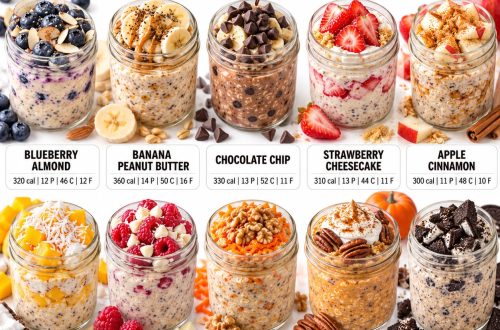
Oats are widely considered one of the healthiest breakfast choices. They are rich in fiber, easy to prepare, and often recommended for heart health and digestion.
But there’s a critical detail most people overlook:
👉 The same oats can produce completely different energy responses depending on how you prepare them.
Some forms of oats lead to steady, long-lasting energy. Others can cause rapid spikes followed by crashes — even when the food itself is “healthy.”
Understanding this difference is essential if you want to build low glycemic breakfasts, improve satiety, and stabilize daily energy levels.
Why the Same Oats Feel So Different
Oats are primarily a carbohydrate-based food. While they contain beneficial fiber (especially beta-glucan), their effect on the body depends heavily on:
- processing level (instant vs whole)
- texture (whole vs blended)
- temperature (hot vs cooled)
- food combinations (added sugar vs protein/fat)
👉 The key mechanism is digestion speed.
- Faster digestion → faster glucose release → energy spike + crash
- Slower digestion → gradual release → stable energy
This is why oats can either support steady glucose control or trigger unstable energy patterns.
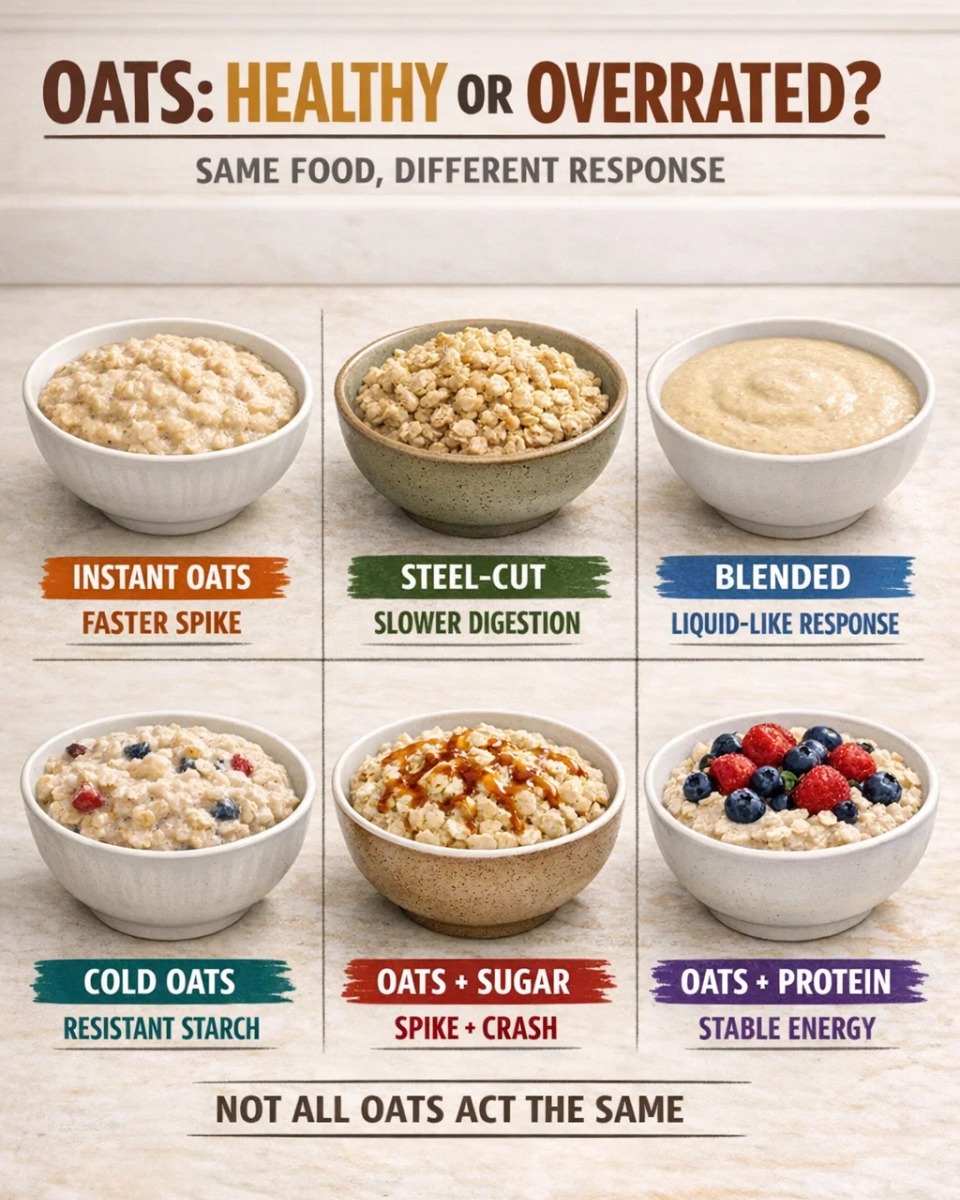
6 Common Ways Oats Affect Your Body (Based on Preparation)
1. Instant Oats – Faster Spike
Key trait: highly processed, thin flakes
Instant oats are pre-cooked and broken down, making them easy to digest.
Effect:
- rapid digestion
- quick energy spike
- shorter satiety
👉 Often linked to mid-morning hunger and unstable energy.
2. Steel-Cut Oats – Slower Digestion
Key trait: minimally processed whole oat groats
Steel-cut oats retain structure, requiring more time to break down.
Effect:
- slower glucose release
- more stable energy
- improved fullness
👉 One of the best options for low glycemic oatmeal recipes.
3. Blended Oats – Liquid-Like Response
Key trait: ground into flour or smoothie form
Blending removes structure, increasing surface area for digestion.
Effect:
- faster absorption (similar to liquid carbs)
- reduced satiety
- quicker glucose response
👉 Even “healthy oat smoothies” can behave like fast-digesting carbs if not balanced.
4. Cold Oats (Overnight Oats) – Resistant Starch Benefit
Key trait: soaked and cooled
Cooling oats increases resistant starch, a type of fiber that slows digestion.
Effect:
- slower glucose absorption
- improved gut health
- longer-lasting energy
👉 Ideal for overnight oats recipes for blood sugar control.
5. Oats + Sugar – Spike and Crash Pattern
Examples: oats with syrup, honey, or added sugar
Adding simple sugars increases the glycemic load.
Effect:
- rapid spike
- insulin surge
- energy crash
👉 Common cause of cravings and overeating later in the day.
6. Oats + Protein – Stable Energy
Examples: oats + Greek yogurt, protein powder, eggs
Adding protein slows digestion and stabilizes the response.
Effect:
- slower glucose release
- improved satiety
- steady energy
👉 One of the most effective ways to build a high-protein oatmeal breakfast.
The Science: Digestion Speed Drives Energy Response
From a physiological perspective, the structure of food determines how quickly enzymes break it down.
- Smaller particles → faster digestion → higher glucose response
- Intact structure → slower digestion → stable glucose
Oats contain beta-glucan fiber, which can help regulate blood sugar — but only when digestion is not accelerated by processing or blending.
👉 This explains why instant oats behave differently from steel-cut oats, even though they come from the same grain.
How to Build a Low Glycemic Oatmeal Meal
Instead of focusing only on the type of oats, focus on how you combine them.
Core formula:
👉 Oats + Protein + Healthy Fat + Fiber
Practical high-performance combinations
Stable energy breakfast ideas
- steel-cut oats + Greek yogurt + almonds
- overnight oats + chia seeds + berries
- oats + protein powder + peanut butter
Balanced meal prep ideas
- oats + cottage cheese + walnuts
- oats + eggs + avocado (savory oats)
👉 These combinations help create slow-digesting oatmeal meals that support energy and reduce spikes.
What to Avoid (Most Common Mistakes)
- instant oats eaten alone
- oat smoothies without protein
- oats with added sugar only
- low-fiber, high-sugar toppings
👉 These patterns often lead to:
- rapid glucose spikes
- energy crashes
- increased hunger
How Oats Affect Energy, Hunger, and Blood Sugar
Even though the infographic focuses on digestion and energy, these effects are closely linked to blood sugar dynamics.
Key insight:
- Faster digestion → higher glucose spike → crash
- Slower digestion → stable glucose → sustained energy
This is why optimizing oats can help:
- reduce blood sugar spikes after meals
- improve appetite control
- support weight management
- stabilize daily energy
Common Questions About Oats and Energy Response
Are oats good for blood sugar control?
- Yes, but only when prepared correctly. Steel-cut oats or overnight oats combined with protein and fat are more effective.
Why do oats sometimes make you hungry quickly?
- Because fast-digesting oats (like instant or blended) can spike glucose and lead to a crash.
What is the best oatmeal for stable energy?
- Minimally processed oats paired with protein, healthy fats, and fiber.
Do oat smoothies spike blood sugar?
- They can, especially if blended finely and not combined with protein or fat.
Final Takeaway
Oats are not inherently healthy or unhealthy.
👉 They are context-dependent.
The same oats can either:
- cause energy spikes and crashes
- or support stable, long-lasting energy
The difference comes down to:
- processing
- preparation
- food combinations
👉 By choosing the right type of oats and building balanced meals, you can:
- maintain stable energy
- reduce cravings
- improve metabolic health
- create better long-term eating patterns