A great cottage border does not happen by accident. It feels relaxed, generous, and full of charm, but behind that easy beauty is a smart planting strategy. The best borders are layered with purpose. They balance height, bloom time, texture, and plant health so the garden looks abundant without turning into a tangled mess by midsummer.
This kind of planting is not only beautiful. It is practical. A well-layered border helps you use space more efficiently, reduce bare patches, suppress weeds, support pollinators, and lower maintenance over time. For gardeners and small growers, that means better productivity from every square foot and a garden that becomes more rewarding with each season instead of more exhausting.
If you want a flower border that looks natural, matures gracefully, and teaches you to garden with more confidence, this planting style is one of the best places to begin.
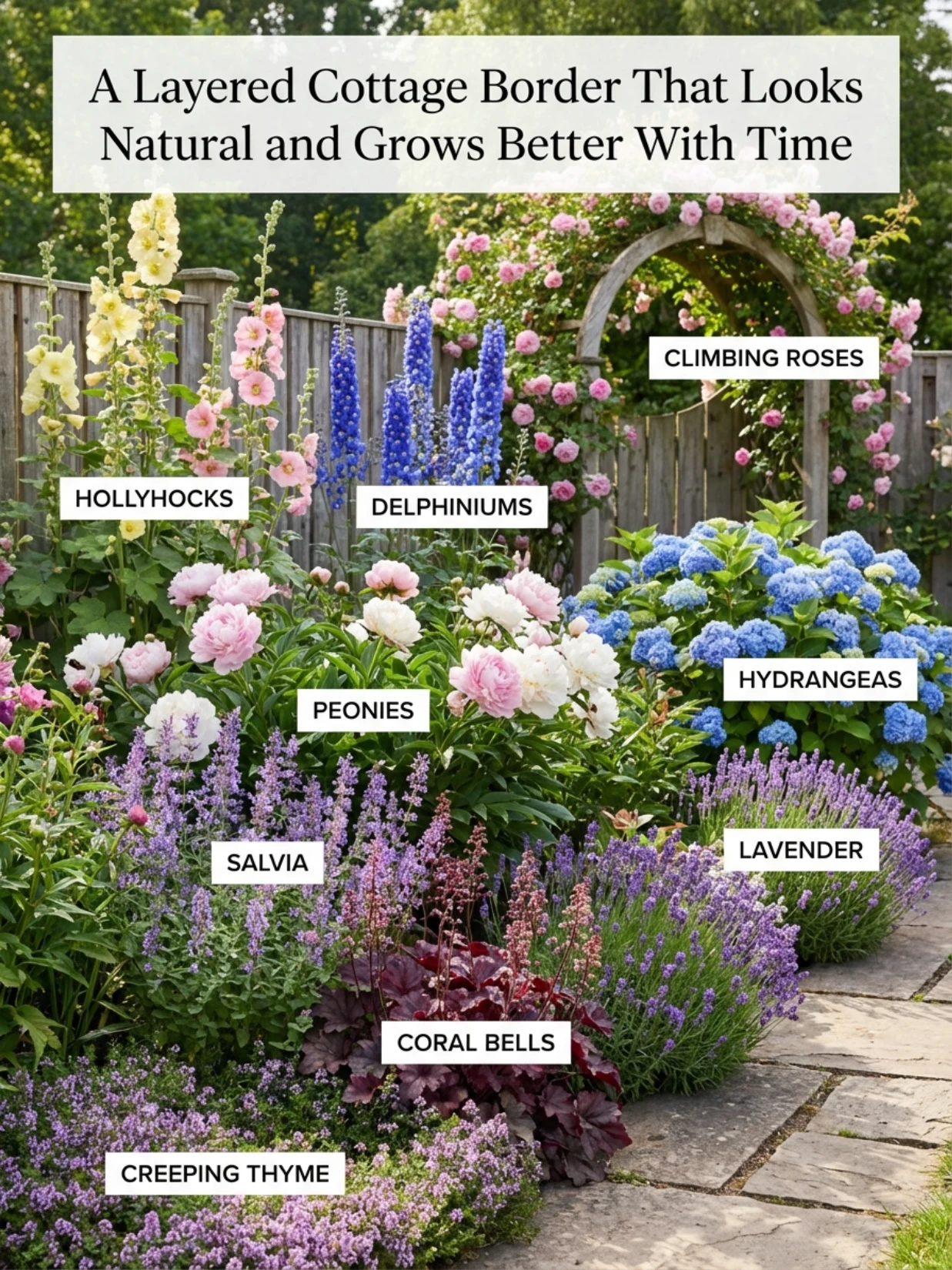
What makes a layered cottage border work so well?
A layered border is built like a living community. Tall plants rise at the back or around vertical features. Mid-height flowers carry the main body of color. Lower edging plants soften the front and spill gently into paths or stonework. Ground-hugging herbs and creepers knit the soil together.
That structure creates three major benefits.
First, it makes the planting look full and natural. Second, it gives each plant a role, so fewer areas sit empty or awkward. Third, it improves plant health by using light and root space more wisely.
A border like this feels romantic, but it is also highly functional.
The classic layered planting formula
A dependable cottage border often includes four planting zones:
1. Vertical accents and backdrop plants
These are your tall growers and climbers. They add height, drama, and strong seasonal structure.
Examples include:
- Hollyhocks
- Delphiniums
- Climbing roses
2. Main body plants
These fill the middle layer and give the border its strongest visual weight.
Examples include:
- Peonies
- Hydrangeas
- Salvia
3. Foliage anchors and contrast plants
These hold the design together when flowers come and go.
A strong example is:
- Coral bells
4. Front-edge softeners
These spill gently at the border edge and help connect the planting to the path.
Examples include:
- Lavender
- Creeping thyme
When these layers work together, the border feels full without looking crowded.
How each plant contributes to a better cottage border
Hollyhocks bring height and old-fashioned character
Hollyhocks create the upright, storybook quality that makes a cottage border feel established and generous. Their tall flower spires draw the eye upward and work beautifully against fences, walls, and corners.
Actionable tip: Stake them early, not after they start leaning. A discreet support added while stems are still developing is far more effective than trying to rescue top-heavy spikes later.
Care note: Good airflow matters. Space hollyhocks generously and remove lower leaves if they begin looking tired. This helps reduce rust problems and keeps the planting healthier.
Delphiniums add vertical color and cool-season drama
Delphiniums bring those strong spires of blue, violet, or lavender that instantly lift a border. They pair especially well with softer pinks, whites, and roses.
Actionable tip: Feed delphiniums lightly but consistently in spring, and mulch the root zone to hold moisture. They dislike drying out during active growth.
Care note: Cut the first flower spikes back after bloom if the plant is healthy. In many gardens, this encourages a second, lighter flush.
Climbing roses create structure that improves with age
A climbing rose over an arch, fence, or trellis gives the border a permanent backbone. It makes the garden feel mature, even when surrounding perennials are still filling in.
Actionable tip: Train long canes sideways instead of letting them shoot straight up. More horizontal training usually means more flowering side shoots and a fuller floral display.
Care note: Do not let the base become shaded out by neighboring plants. Keep good airflow around the lower stems to reduce disease pressure.
Peonies provide rich, luxurious middle-layer blooms
Peonies are among the most satisfying border plants because they bring volume, fragrance, and elegance without needing constant division or fuss once settled.
Actionable tip: Plant peonies shallowly. If the buds, or “eyes,” are set too deep, the plant may grow leaves well but flower poorly.
Care note: Support heavy blooms before they open if rain is common in your area. This keeps the flowers upright and the border looking intentional.
Hydrangeas add mass, repetition, and long seasonal presence
Hydrangeas are excellent for balancing spiky and airy plants with rounded flower heads and strong leafy growth. They help the border feel full during the heart of the season.
Actionable tip: Water deeply at the base instead of sprinkling lightly overhead. Hydrangeas are thirsty, but shallow daily watering creates weak roots.
Care note: Learn which type you grow before pruning. Some bloom on old wood, some on new wood. Pruning at the wrong time is one of the most common reasons for poor flowering.
Salvia keeps the border blooming and pollinators active
Salvia is one of the smartest workhorse plants in a layered border. It flowers generously, repeats well, and attracts bees and beneficial insects.
Actionable tip: Shear spent flowers after the main flush instead of only removing individual stems. This is faster and often triggers a tidier rebloom.
Care note: Avoid overly rich feeding. Too much fertility can make salvia floppy and reduce bloom performance.
Lavender defines the edge with scent and structure
Lavender is more than a pretty front-border plant. It creates a neat, fragrant edge that visually frames the looser flowers behind it.
Actionable tip: Plant lavender where drainage is excellent. Raised edges, gravelly soil, or lean ground are often better than rich, moisture-holding beds.
Care note: Prune lightly after flowering to keep the mound compact. Never cut hard into old woody stems unless there is still green growth to recover from.
Coral bells provide foliage contrast that lasts
Coral bells are valuable because they hold the border together even when bloom cycles shift. Their leaves add color depth, especially near lighter flowers or silver foliage.
Actionable tip: Use foliage plants like coral bells to bridge seasonal gaps. They stop the border from looking empty when one set of blooms finishes and another has not yet started.
Care note: Lift and reset crowns if frost heaving or shallow roots push them upward over time.
Creeping thyme softens the path and covers bare soil
Creeping thyme is one of those quiet plants that improves the whole border. It fills gaps near the front, suppresses weeds, and releases scent when brushed or stepped near.
Actionable tip: Use creeping thyme in the sunniest, driest edge spaces where fussier groundcovers struggle. It performs best when not smothered by larger neighbors.
Care note: Trim lightly after flowering if it starts looking uneven. This helps keep the mat dense.
How to arrange the border so it looks natural, not stiff
A cottage border should feel flowing, not lined up like soldiers. That means repeating plants in drifts and clusters instead of planting one of everything in strict order.
Try this layout approach:
- Place tallest plants in the back or around structures.
- Repeat one or two mid-layer plants several times across the border.
- Use front-edge plants in longer ribbons, not isolated dots.
- Let a few plants overlap slightly so the layers blend into one another.
This creates a natural look while still keeping the design readable.
The maintenance rhythm that makes it improve each year
The best cottage borders get better because the gardener pays attention in small, regular ways. Not endless work. Just well-timed work.
In early spring
Cut back old stems, refresh mulch lightly, divide overcrowded clumps, and tie in climbers. This is also the moment to check spacing before growth explodes.
In late spring to early summer
Stake tall flowers early, monitor moisture, and feed only where needed. Early support saves a lot of correction later.
In midsummer
Deadhead repeat bloomers like salvia and roses. Remove damaged leaves. Thin crowded growth if airflow is getting tight.
In autumn
Assess what worked. Which plants disappeared? Which dominated? Where was bloom missing? A strong border is built by editing, not just adding.
Practical mistakes to avoid
Planting everything at the same height
This flattens the border and wastes visual potential. Always think in layers.
Ignoring mature width
Young plants look small, but borders fail when everything is packed too tightly. Give plants room to knit together naturally.
Overfeeding for quick growth
Fast, lush growth often means weaker stems and more disease pressure. Aim for sturdy plants, not oversized ones.
Letting the front edge go empty
The front of the border matters. Lavender, thyme, and other low growers create the finished look people notice first.
Final thoughts: a border that teaches patience and rewards consistency
A layered cottage border is one of the most satisfying ways to garden because it blends beauty with skill. It asks you to think about timing, form, and plant relationships. It teaches restraint as much as enthusiasm. And over time, it becomes more than a flower bed. It becomes a living system that responds to your care.
With hollyhocks reaching upward, delphiniums bringing cool drama, roses framing the view, peonies and hydrangeas adding fullness, and lavender and thyme softening the edge, the garden begins to feel both abundant and grounded.
That is the real magic of a well-planned border. It does not just look beautiful today. It grows into itself, season after season, and invites you to grow with it.