A balanced 1700 calorie meal plan can be a practical option for people who want structured meals without feeling overly restricted. When meals include protein, fiber, healthy fats, and balanced carbohydrates, it becomes easier to stay satisfied throughout the day while supporting energy, portion awareness, and simple meal prep routines.
The key is building meals that feel realistic for everyday life instead of relying on complicated diets or extremely small portions.
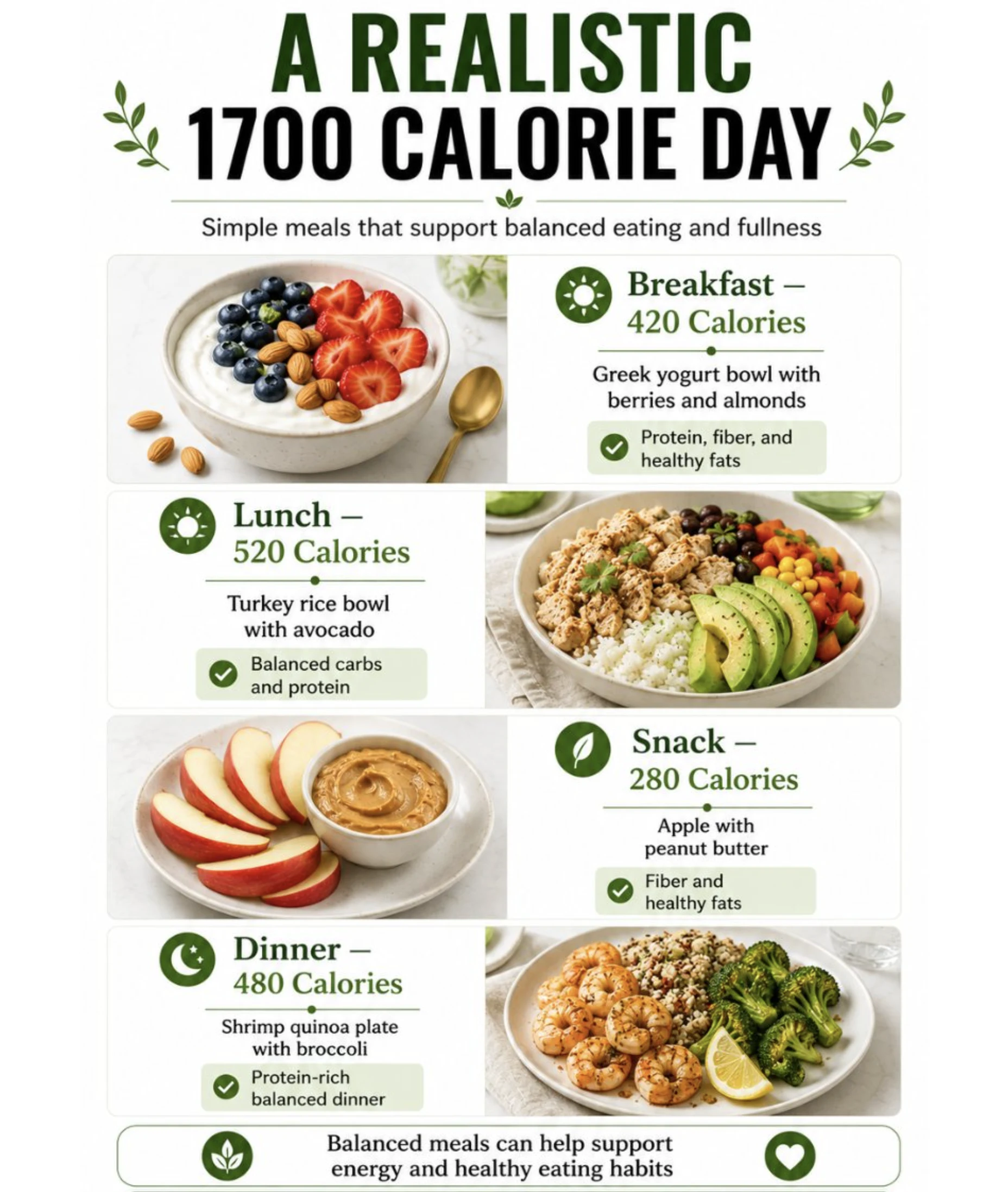
What a Balanced 1700 Calorie Day Looks Like
This type of meal structure often includes:
- protein at every meal
- fiber-rich carbohydrates
- healthy fats for fullness
- snacks that help stabilize hunger
A realistic plan also leaves room for flexibility and personal food preferences.
Breakfast — Around 420 Calories
Greek Yogurt Bowl with Berries and Almonds
Ingredients
- 1 cup plain Greek yogurt
- 1/2 cup strawberries
- 1/2 cup blueberries
- 14 almonds
- 2 tbsp granola
- drizzle of honey optional
Estimated Nutrition
- Calories: ~420
- Protein: ~28g
- Fiber: ~6g
Why This Meal Works
This breakfast combines:
- protein from Greek yogurt
- fiber from berries
- healthy fats from almonds
The combination helps many people stay full longer compared to sugary breakfast foods alone.
Lunch — Around 520 Calories
Turkey Rice Bowl with Avocado
Ingredients
- 5 oz lean ground turkey
- 3/4 cup cooked rice
- 1/2 avocado
- 1 cup roasted vegetables
- 1 tsp olive oil
- seasoning of choice
Estimated Nutrition
- Calories: ~520
- Protein: ~35g
- Fiber: ~8g
Why This Meal Works
Balanced lunch bowls are popular because they:
- are easy to meal prep
- include balanced carbs and protein
- feel satisfying without becoming overly heavy
Avocado also adds texture and healthy fats that support fullness.
Snack — Around 280 Calories
Apple with Peanut Butter
Ingredients
- 1 medium apple
- 2 tbsp peanut butter
Estimated Nutrition
- Calories: ~280
- Protein: ~8g
- Fiber: ~5g
Why This Snack Works
This simple snack combines:
- fiber from fruit
- healthy fats from peanut butter
- natural sweetness
Many people find this combination more filling than processed snack foods.
Dinner — Around 480 Calories
Shrimp Quinoa Plate with Broccoli
Ingredients
- 5 oz shrimp
- 3/4 cup cooked quinoa
- 1.5 cups broccoli
- 1 tsp olive oil
- garlic, lemon, and herbs
Estimated Nutrition
- Calories: ~480
- Protein: ~38g
- Fiber: ~7g
Why This Meal Works
Shrimp and quinoa create a lighter dinner that still contains:
- high protein
- fiber
- balanced carbohydrates
Broccoli also adds volume to the meal without drastically increasing calories.
Estimated Daily Totals
Approximate Nutrition Breakdown
- Calories: ~1700
- Protein: ~109g
- Fiber: ~26g
This type of balance may help support:
- fullness
- meal structure
- steady energy
- portion awareness
Why Higher Protein Meals Often Feel More Filling
Protein-rich meals may help:
- reduce constant snacking
- support muscle maintenance
- improve meal satisfaction
Common high-protein foods include:
- Greek yogurt
- shrimp
- turkey
- eggs
- chicken
- cottage cheese
Combining protein with fiber-rich foods can further improve fullness.
Simple Meal Prep Tips
Prep Ingredients in Advance
Many people save time by preparing:
- cooked rice
- quinoa
- chopped vegetables
- cooked proteins
- snack containers
Use Repeating Ingredients
Repeating ingredients throughout the week:
- reduces grocery cost
- simplifies cooking
- makes meal planning easier
For example:
- berries can work for breakfast and snacks
- broccoli works for lunch and dinner
- Greek yogurt works in bowls and smoothies
Easy Swaps for Variety
Breakfast Swaps
Instead of berries:
- banana
- kiwi
- mango
- apples
Lunch Swaps
Instead of turkey:
- chicken breast
- tofu
- salmon
- lean beef
Dinner Swaps
Instead of shrimp:
- grilled chicken
- baked salmon
- tofu
- white fish
Common Mistakes with Calorie Planning
Eating Too Little
Extremely low-calorie plans may:
- increase hunger
- reduce energy
- make consistency harder
Ignoring Protein
Meals without enough protein may feel less satisfying.
Skipping Fiber
Fiber-rich foods can help meals feel more balanced and filling.
Who This Type of Meal Plan May Work For
A moderate calorie structure may appeal to:
- busy professionals
- meal prep beginners
- people wanting balanced eating habits
- individuals focusing on portion awareness
Calorie needs vary significantly depending on:
- age
- activity level
- body size
- personal health needs
Important Reminder
No single calorie target fits everyone. Some people may need:
- more calories
- fewer calories
- different macronutrient balances
Anyone with medical conditions, eating disorders, or specialized dietary needs should consult a healthcare professional or registered dietitian before making major nutrition changes.
Final Thoughts
A realistic 1700 calorie day does not need to feel restrictive or overly complicated. Balanced meals with protein, fiber, healthy fats, and satisfying portions can help create a more sustainable eating routine for everyday life.
Simple breakfasts, meal prep bowls, smart snacks, and protein-rich dinners often work better long term than extreme diets that are difficult to maintain.