PART 1 — The Letter After the Birthday
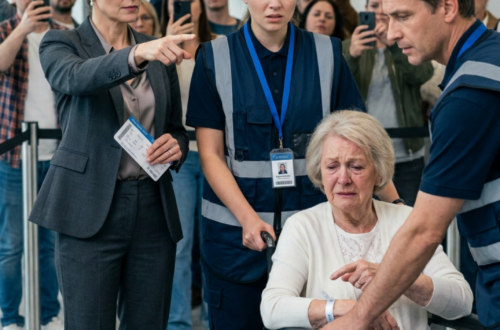
The first thing I remember clearly is the sound of the glass breaking.
Not the accusation. Not Elena Moreau’s hand resting on the handwritten letter as if it were a wounded bird she had just rescued. Not the lawyer’s polished table or the locked iron gate or the way my key stopped working before anyone had the courage to tell me I no longer belonged in that house.
The glass came first.
A wine glass, crystal, thin-stemmed, struck too hard against the edge of the dining table during Noah’s eleventh birthday dinner. It did not shatter dramatically. There was no explosion of glittering pieces across the white linen, no scream, no blood. It cracked with one sharp, bright sound, then split down the bowl as red wine opened through it like a wound.
Noah stopped breathing.
I saw it before anyone else did, because I had learned to watch for the small things. The way his fingers curled under the table. The way his right shoulder rose half an inch. The way his eyes moved toward the door before his body did. He had done that after his mother died, after the funeral, after the first winter in that house when every room sounded too large and every adult used words like legacy and transition while an eight-year-old boy forgot how to sleep.
I was standing near the sideboard with a folded napkin in my hand. I was not supposed to hover during family dinners. Elena had reminded me of that before the guests arrived.
“You are staff tonight, Sofia,” she had said softly, without looking unkind. “Let him feel surrounded by family.”
That was one of Elena Moreau’s gifts. She could say cruel things in a tone that made you feel unreasonable for hearing them correctly.
But when the glass cracked, family kept talking for one second too long.
Noah’s father, Olivier, looked toward the spilled wine with the delayed focus of a man still half inside his medication. Elena lifted her hand to signal the housekeeper. A cousin made a small joke about old crystal. And Noah began lining sugar cubes beside his plate.
One. Two. Three.
He did that when his panic came quietly.
I crossed the room before I remembered I had been told not to hover.
“Noah,” I said.
He did not answer.
I crouched beside his chair. His face had gone pale, his freckles standing out sharply across his nose. His small blue scarf, the one that had belonged to his mother, was folded in his lap even though Elena had told him it did not belong at the table. He had smuggled it there under his jacket.
I placed my hand palm-up on the edge of the chair. Not touching him. Never suddenly. Not when he was like that.
“Look at me if you can,” I said quietly.
His eyes flicked toward mine.
“Good. One sound. One room. Not the past.”
His fingers tightened around the scarf.
I heard Elena’s chair move.
“Sofia,” she said.
I did not look at her.
“Noah, count with me,” I said. “Not numbers. Corners.”
He swallowed.
“Window,” I said.
His lips moved. “Door.”
“Painting.”
“Lamp.”
“Your glass.”
He flinched.
“Not that one,” I corrected softly. “The water glass. The one that did not break.”
His breathing shook once, then came back thinly. Around us, the table had gone still. Wealthy families, I had learned, did not like visible need. They could fund hospital wings and scholarship programs, but a child trembling in front of them made them look away as though fear were bad manners.
Noah’s hand crept toward mine. I let him decide. When his fingers touched my palm, they were cold.
“I want to go upstairs,” he whispered.
“Then we will go upstairs.”
Elena stood. “Noah should stay and finish dinner.”
He looked down.
I still remember that. Not because Elena’s words were the worst thing she ever said, but because Noah’s face changed as if obedience had been placed over him like a cloth.
“It is his birthday,” I said, keeping my voice low. “He can take ten minutes.”
Elena’s eyes settled on me. She was forty-six then, elegant in a cream silk blouse and pearl earrings, her dark hair pinned at the nape of her neck. She looked like every article ever written about the Moreau family: composed, tasteful, necessary. After Noah’s mother died and Olivier collapsed into grief and pain medication, Elena became the public face of the vineyard, the trustee, the woman who handled lawyers, donors, school directors, seasonal workers, and journalists. She had made herself indispensable. That is a kind of power people often mistake for sacrifice.
“Of course,” she said after a moment. “Ten minutes.”
Noah stood so quickly his chair scraped against the floor. The sound made him flinch again. I picked up his scarf before it slipped under the table and followed him out.
That scarf was pale blue, cashmere, worn soft at the edges from being held too tightly. His mother, Claire, had worn it in winter when she walked through the vineyard rows. Noah kept it under his pillow on nights when the house felt too large. When he was younger, he called it “Maman’s sky,” because she had once told him the color looked like February before snow.
Elena called it unhealthy attachment.
I called it a child trying to survive.
Upstairs, Noah went straight to the small reading nook outside his bedroom. He did not want his bed when he was embarrassed. Beds made panic feel like illness. The reading nook had low shelves, a green velvet chair, and a narrow window looking over the courtyard. I sat on the floor because that made him feel less watched.
“I ruined dinner,” he said.
“You did not.”
“Aunt Elena looked angry.”
“Aunt Elena often looks like a museum director whose paintings have been touched.”
He almost smiled.
That almost was enough to make the whole evening worth enduring.
Noah lined three sugar cubes on the windowsill. He had taken them from the table without noticing. I did not point that out. He placed them in a row, then adjusted the middle one until its edges lined up with the others.
“She wants Papa to think I’m better,” he said.
“Your father wants you to be safe.”
“He doesn’t know what I am.”
The sentence was so soft I nearly missed it.
“What do you mean?”
Noah looked out at the courtyard. Below us, the guests were returning to their voices. The housekeeper had already replaced the broken glass. In rich houses, evidence of discomfort vanished quickly.
“Sometimes Aunt Elena talks about me when I’m there,” he said. “Like I’m weather.”
I did not answer right away.
That is something people forget about caregiving. The job is not always knowing what to say. Often, it is not rushing to cover pain with words because silence makes you uncomfortable.
“You are not weather,” I said finally.
He pressed his thumb into the edge of one sugar cube until it crumbled slightly. “Then why does everyone prepare for me?”
Because you are an heir, I thought.
Because your sadness has a financial value attached to it.
Because adults who did not know how to comfort you learned how to manage you instead.
But he was eleven, and I was his nanny, not his mother, not his guardian, not the person whose name appeared on any legal document that mattered. So I said, “Because they are afraid of doing the wrong thing.”
He looked at me. “Are you?”
“Yes.”
That surprised him.
I smiled a little. “All the time.”
“But you still do things.”
“I do small things.”
“You stayed.”
The word landed between us with more weight than he knew.
I had stayed.
I was hired when Noah was five, before Claire’s illness returned, before the Moreau house became a place of closed doors and lowered voices. I had come from Belgium to Lyon with two suitcases, a childcare diploma, and a plan to save enough money to open a small center of my own one day. I thought the job would last eighteen months. Live-in nanny, good salary, wealthy family, clear contract.
Six years later, I was still there.
Not always officially. The contract changed after Claire died. Then changed again when Olivier entered treatment. Then became a “flexible arrangement,” which is how wealthy people describe dependence when they do not want to admit someone has become necessary. I slept in the small staff room near the back staircase three nights a week, sometimes five if Noah had a difficult period. I packed school lunches, managed therapy appointments, learned which soups he could tolerate after panic attacks, sat outside his bedroom door during nightmares, and memorized the difference between silence that meant “leave me alone” and silence that meant “please notice I am disappearing.”
The Moreaus called me “like family” when they needed me to love him beyond my paid hours.
They called me “the nanny” when that love became inconvenient.
At the time of his eleventh birthday, I did not know how close we were to that second name.
Noah leaned his head against the window. “Will you still be here tomorrow?”
“Of course.”
“You always say that.”
“Because it is true.”
He looked at me with an expression too old for his face. “Things are true until adults have a meeting.”
I should have listened more carefully.
Downstairs, the birthday dinner resumed without him. I stayed with Noah until his breathing softened, then convinced him to wash his face and return for cake. Elena cut the first slice herself. She smiled for photographs. Olivier kissed Noah’s hair and called him “mon grand,” but his eyes were watery and distant. People sang softly, beautifully, like a choir at a funeral.
When Noah blew out the candles, he did not make a wish.
He looked across the cake at me.
I wish I could say I understood that look then. I did not. I thought he was asking whether he had done well. I nodded, and he relaxed.
After the guests left, I found his real birthday card for me on the small table in the schoolroom.
It was folded from thick cream paper and drawn with blue pencil. On the front was a crooked building with children in the windows. Above the door, he had written: Madame Sofia’s House for Small Brave People.
Inside, in his careful handwriting, he wrote:
When you open your center, I think children should have a room where they can be quiet without being punished. I would like to help with the books. Happy my birthday. Noah.
I laughed softly when I read “Happy my birthday.” Then I cried, but not where anyone could see.
I tucked the card into my coat pocket with the folded grocery receipts I always forgot to throw away. Later, I would not be able to find it. For weeks, I blamed myself. I thought I had left it in the laundry, dropped it in a taxi, misplaced it among old invoices and school forms.
I did not yet know that missing card mattered.
The next morning, Elena asked me to come to the family law office at eleven.
She did not say why. Her assistant called, not Elena herself. The Moreau family had a way of making summons sound like appointments.
The office was in central Lyon, on the second floor of an old stone building with tall windows and brass handles polished by generations of anxious hands. The meeting room smelled of coffee, leather folders, and lavender floor polish—the same polish used at the vineyard estate, though there it mixed with the darker smell of old wine barrels from the cellar. I remember that because smell often knows before the mind does when a place is unsafe.
Elena sat at the far side of the table beside Maître Deschamps, the family lawyer. Olivier was not there.
That was the first warning.
The second was the letter.
It lay in front of Elena, a single sheet of paper, folded once, flattened again. Handwritten. I saw the blue ink before I read the words.
“Sofia,” Elena said, and she did not smile. I used to say she smiled when she destroyed me, but that is not true. Elena did something worse. She looked disappointed, as if I had embarrassed her by fulfilling a suspicion she had nobly resisted.
“What is this?” I asked.
Maître Deschamps folded his hands. “We need to discuss a matter concerning your relationship with Noah.”
“My relationship with Noah?”
Elena touched the letter with two fingers. “This was found in Olivier’s study this morning.”
I remained standing. No one had invited me to sit.
Elena slid the paper toward me.
I knew immediately it was supposed to be Noah’s handwriting. The letters leaned the right way. The capitals were too large, as his often were. There was even the slight pressure mark after commas, where his hand hesitated.
But the words were wrong.
Papa,
Please listen to me. Sofia is the only one who loves me truly. I do not want her to leave when I am older. Please create a lifetime fund for her so she can stay with me always. She says I should have something in my own name and that people who love me should be protected. I want Sofia protected. Please do this for your Petit Loup.
Noah
I read it once.
Then again.
The room had gone strangely quiet.
I looked at Elena. “Noah did not write this.”
Her expression did not change. “That is what I hoped you would say.”
“I mean he did not write it.”
“Sofia,” Maître Deschamps said, “the handwriting appears consistent.”
“It is not his language.”
Elena leaned back slightly. “You know his language so well?”
“Yes.”
The answer came too quickly. Too honestly. I saw Elena notice.
“And that is precisely the concern,” she said.
I looked from her to the lawyer. “You think I made him write this?”
“We think boundaries have been crossed,” Elena said. “We think Noah has become emotionally dependent on you in a way that is unhealthy. We think you have encouraged him to view you as his primary attachment figure.”
“I did not encourage that. I stayed because no one else—”
I stopped.
Elena’s eyes sharpened.
No one else what, Sofia?
No one else sat outside his door?
No one else remembered therapy breathing exercises?
No one else knew he could not sleep when the cellar vents rattled in winter?
No one else saw him as a child before they saw him as a Moreau?
There are truths that sound like accusations when spoken in front of lawyers.
Maître Deschamps opened a folder. “There are also text messages in which you suggested that Noah needed something ‘in his own name.’”
I knew the message before he read it. Three weeks earlier, I had written to Elena after discovering Noah did not have access to even a small independent account for school expenses, gifts, or personal choices. Everything went through the family office. Every art class, every therapy invoice, every book order, every donation Noah wanted to make in his mother’s name had to be approved by Elena or her assistant.
I had written: Noah needs something in his own name. Not large. Not uncontrolled. Just something that lets him make age-appropriate choices without feeling watched.
In my phone, the message was practical.
In their folder, it looked like motive.
“That was about Noah,” I said. “Not me.”
Elena sighed softly. “You see how troubling it is that those categories have blurred?”
My face burned.
“I have never asked Noah or Olivier for money.”
“No one is saying you asked directly,” Maître Deschamps said.
“That is exactly what you are saying.”
Elena folded her hands. “We are saying a grieving child may have been influenced by an adult he trusts.”
I looked at the letter again.
Petit Loup.
Little wolf.
My stomach tightened.
Noah had not called himself that in two years.
He used to sign everything that way when he was younger, after Claire told him wolves were brave because they knew how to stay with the pack. After she died, he clung to it. Petit Loup on drawings. Petit Loup on notes. Petit Loup whispered into his scarf when he cried. Then therapy changed that. Dr. Camille Bernard helped him separate his mother’s words from the burden of being brave for adults. The day he stopped signing cards Petit Loup, he told me, “I think Noah is enough name.”
I remembered because I made him hot chocolate that afternoon and he lined up marshmallows instead of sugar cubes.
The letter used an old version of him.
Someone had copied a child who no longer existed.
I looked up. “Why would he sign it that way?”
Elena’s eyes moved.
Only slightly.
But she reacted before the lawyer did.
“He has always signed that way,” she said.
No.
No, he had not.
Maître Deschamps glanced at Elena, then back at me. He did not understand the significance yet. Elena did. Or rather, she understood that I had seen something.
My fear changed shape.
Until that moment, I thought Elena was accusing me because she resented Noah’s attachment to me. Because I was foreign, paid, unmarried, easy to dismiss. Because rich families like the Moreaus could call love inappropriate when it came from staff.
But her reaction to that nickname was too quick.
Too defensive.
“Where is Noah?” I asked.
“At school,” Elena said.
“I want to speak with him.”
“That will not be possible.”
“I have cared for him for six years.”
“And that is why this must be handled carefully.”
Maître Deschamps cleared his throat. “Effective immediately, your access to Noah and to all Moreau properties is suspended pending review.”
The words did not register at first.
“Suspended?”
Elena looked almost gentle. “You will be paid through the end of the month. We are not cruel.”
Not cruel.
I think I laughed. A small sound, ugly and involuntary.
Elena’s face cooled.
“We will also need your keys,” the lawyer said.
I touched my coat pocket. The estate key. The townhouse key. The small brass key to Noah’s schoolroom cupboard where we kept art supplies he did not want cousins touching.
“No,” I said.
Elena looked at me.
I should have been careful. I should have asked for time, called someone, understood that refusal would be recorded in their minds as proof. But the thought of handing over those keys while Noah was at school, while he believed I would be there after pickup, made something inside me revolt.
“Noah does not know,” I said.
“He will be told appropriately.”
“By whom?”
“By family.”
There it was.
Family.
The word rich people use like a locked gate.
I placed the keys on the table because I had no legal right to keep them. But before I let go, I said, “If he panics, he needs the blue scarf. Not the newer one. Claire’s. It is under his pillow unless Elena moved it.”
Maître Deschamps looked uncomfortable.
Elena did not.
“You may go,” she said.
At the estate gate that afternoon, my key no longer worked.
I had gone there against legal advice I had not yet received, because I still had Noah’s school bag in my car and because I could not believe they would cut me out without allowing me to say goodbye. The Moreau vineyard estate sat outside Lyon, stone and iron and old money under a low gray sky. Rows of vines stretched behind the house, bare and dark in the cold mist. The gate camera turned toward me.
I pressed the call button.
Elena answered.
“Sofia,” she said through the speaker. “This is not appropriate.”
“I have Noah’s things.”
“Leave them with the guard.”
“He will not understand.”
“That is no longer your responsibility.”
Behind the upper window of the house, a curtain moved.
I saw him.
Noah.
Small, pale, standing at the glass.
His blue scarf was not around his neck.
I held up his school bag with one hand. With the other, I found the scarf in my coat pocket—the one from the birthday dinner, the one I had picked up when it slipped from his lap. I had forgotten I still had it.
Noah saw it.
His hand touched the window.
Inside the gate, Elena stepped out with Maître Deschamps beside her. She held the fake letter in a folder.
“Sofia,” she said quietly, “do not make this harder for him.”
For him.
I looked up at Noah, then at the locked iron between us.
That was the moment I understood something rich families know instinctively and poor caregivers learn painfully: love means nothing in a locked system unless someone with power agrees to recognize it.
I placed the school bag by the guardhouse.
But I kept the scarf.
Not because it belonged to me.
Because I knew, somehow, that one day Noah might need proof that someone had tried to carry a piece of him out before they erased the rest.
That night, I read the letter again from the photo I had taken when Elena briefly left the room.
Please do this for your Petit Loup.
The nickname sat on the screen like a loose thread.
And for the first time since they took my keys, I stopped crying long enough to pull.
PART 2 — The Nanny Who Wanted Too Much
By the next morning, I was no longer Sofia Laurent, the devoted nanny who had helped raise Noah Moreau through grief.
I was “that nanny.”
That nanny who became too attached.
That nanny who forgot her place.
That nanny who tried to secure money through a traumatized child.
Elena did not announce the accusation publicly. She was far too intelligent for that. She moved it through Lyon the way perfume moves through a room: invisible, expensive, impossible to avoid once released. A phone call to the director of Noah’s private school. A confidential note to the family’s social circle. A careful message to two mothers who ran charitable committees. A “concern” shared with an agency that placed nannies in wealthy homes.
By Friday, three families who had previously asked if I might be available for part-time childcare stopped replying.
By Monday, the woman who had once promised to introduce me to an investor for my childcare center wrote: I think it is best we pause until your current situation is clarified.
Current situation.
I stared at that phrase in my small apartment above the bakery on Rue Sainte-Catherine, where the radiators hissed too loudly and the windows let in drafts. On the table were my savings notebook, three folded grocery receipts, a half-finished cup of coffee, and the little folder where I kept everything related to the childcare center I dreamed of opening one day.
I had a name for it.
La Maison des Petits Courageux.
The House of Small Brave Ones.
Noah had inspired it, though I never told him how much. Not because I wanted to own his pain, but because caring for him taught me how many children were punished for needing quiet, patience, repetition, and one adult who did not flinch.
Now, because of a letter I knew he had not written, my future center looked like evidence of motive.
“She wanted money to open her business.”
That was what people would say.
They would not mention the nights I slept outside Noah’s room because he woke screaming after dreams of his mother calling from the vineyard in winter. They would not mention the time Olivier forgot school pickup after mixing sedatives with wine, and I took two buses across Lyon to reach Noah before he noticed no one had come. They would not mention Elena calling me “our miracle” at charity dinners when donors praised how well Noah seemed to be doing.
Like family when love is useful.
Staff when love becomes inconvenient.
The first official warning came from the child welfare office.
It was not an accusation, not exactly. A note had been filed expressing concern about emotional boundary violations between a paid caregiver and a minor child. I was invited to provide information if contacted. The language was neutral, but neutrality can be terrifying when it is built around someone else’s lie.
I called Maître Anaïs Fournier, a family lawyer recommended by another nanny I had once helped find work. Her office was small, warm, and cluttered with files. She did not look impressed by the Moreau name, which made me trust her faster than I should have.
She read the letter twice.
“This is dangerous,” she said.
“I know.”
“No, Sofia. Not only because of the accusation against you. This letter makes the child appear vulnerable to undue influence.”
“That is what Elena wants people to think.”
“Maybe.”
I looked at her. “You think I did it?”
“I think my job is to ask what the evidence will look like to people who do not know you.”
“I know Noah.”
“That is also part of the problem.”
Her words hurt because they were true.
My closeness to Noah was real. I had stayed past my contract. I had argued for him. I had written texts saying he needed something in his own name. I had accepted drawings, late-night confessions, and the kind of trust that grows when a child learns who comes when he calls.
If someone wanted to frame care as control, they had material.
Anaïs tapped the letter. “Why are you certain he did not write it?”
“The nickname.”
“Petit Loup?”
“Yes.”
“That seems small.”
“It is not.”
“Then we need someone who can explain why it is not small.”
“Dr. Bernard,” I said.
Noah’s therapist.
Dr. Camille Bernard had been seeing Noah since the year after Claire’s death. She had a quiet office near Parc de la Tête d’Or with soft gray chairs, shelves of wooden toys, and a small sand tray Noah avoided at first because he said it looked too much like a grave. Camille was one of the few adults Elena could not fully charm. She was polite, precise, and unimpressed by money when it entered the room wearing concern.
But when I called her office, the receptionist told me Noah’s upcoming appointments had been canceled.
Canceled by whom?
Family office.
When?
Three weeks earlier.
Before the birthday dinner.
Before the letter appeared.
I wrote the dates down on the back of a grocery receipt because it was the first paper I found in my coat pocket.
Three weeks.
That was the first crack in the story.
If Elena believed Noah had only just been manipulated by me, why had she canceled therapy before the supposed letter surfaced?
Anaïs told me not to jump ahead.
“Patterns matter,” she said. “But patterns need support.”
So I began gathering support.
This was my mistake before: I had believed caregiving existed in memory. In routines. In knowing the child. In being there. But systems do not read memory unless you translate it into paper.
I made a folder.
Noah — Timeline.
I added therapy dates I remembered. School emails. Messages from Elena asking me to stay overnight because Noah “responds better to you.” Notes from Olivier thanking me for “holding everything together.” Voice messages from Noah when he was eight, asking if I would still come after Maman’s funeral week. Receipts for medication pickups. A photo of the sugar cubes lined beside his teacup on the first anniversary of Claire’s death. Not because it proved anything alone, but because I no longer trusted anything to remain meaningful unless I saved it.
I also searched for the birthday card.
The real card.
Madame Sofia’s House for Small Brave People.
I emptied my coat pockets, my bag, my car, the drawer where old receipts went to die. Nothing. I called the estate housekeeper, Amélie, from a prepaid number because my own calls went unanswered.
“Sofia?” she whispered.
Her whisper told me more than any full sentence.
“Amélie, I need to ask you something. Did you see a card from Noah? Cream paper, blue pencil, from his birthday night.”
A pause.
“I cannot talk.”
“Please. It matters.”
“I saw Elena in the schoolroom after dinner,” she said. “Late. She had the small wooden box.”
My hand tightened around the phone.
Noah’s memory box.
Claire had given it to him the year before she died. A small walnut box with a brass latch, used for keepsakes: old cards, drawings, a pressed vine leaf, tiny notes signed Petit Loup from when he was younger. He kept it under the low shelf in the schoolroom because he did not want it in his bedroom where cousins might touch it.
“Elena took it?” I asked.
“I only saw her carry it. Sofia, I cannot lose this job.”
“I understand.”
“No, you don’t.” Her voice shook. “You can leave that family. Some of us still have to work inside it.”
She hung up.
I sat on the edge of my bed, phone in hand, and felt shame cut through my anger.
She was right. My suffering was real, but I was not the only person trapped by the Moreaus’ power. Their estate ran on people who knew things and could not afford to say them.
Later that afternoon, I went to Noah’s school.
I should not have. Anaïs had warned me not to approach him directly, not to appear at the gates, not to give Elena any reason to claim I was violating boundaries. But I told myself I only wanted to speak with the school counselor. That was partly true.
The school sat behind stone walls and black railings, all old trees and polished brass nameplates. Children in navy uniforms passed through the courtyard. I stood across the street under a plane tree, holding my phone, feeling like exactly the kind of woman Elena had described: too attached, too emotional, unable to leave.
Then I saw Noah.
He walked beside a teacher, smaller than the boys around him, scarfless despite the cold. His schoolbag hung from one shoulder. He was not crying. That made it worse somehow. He moved carefully, like a child being observed.
I did not call his name.
I did not wave.
But he looked across the street.
For one second, he saw me.
His face changed so quickly that I almost stepped forward. Relief, fear, warning, all at once. Then the teacher touched his shoulder and guided him inside.
As he passed the gate, Noah lifted one hand near his chest. Three fingers straight, two folded.
A signal.
Not one from childhood. One from therapy.
When Noah was overwhelmed but could not speak, Dr. Bernard had taught him to show numbers with his fingers. Three meant: I need my own words.
He had used it twice before. Once when Elena tried to answer a therapist’s question for him. Once when Olivier told a doctor Noah was “fine now” while Noah stared at the floor.
Three fingers.
I need my own words.
I walked away before anyone could stop me.
That night, I called Dr. Bernard again and left a message that was probably too long. I said I knew she could not discuss Noah’s private medical details without authorization. I said I had been accused of influencing him. I said the letter used Petit Loup. I said therapy had been canceled before the accusation. I said Noah had shown me the three-finger signal outside school.
She called back at 8:12 p.m.
“Sofia,” she said, “I cannot discuss Noah’s treatment freely.”
“I know.”
“But I can listen.”
So I told her everything.
When I reached the nickname, she was silent for long enough that I thought the call had dropped.
Then she said, “Noah has not called himself Petit Loup in two years.”
The words hit with force even though I already knew them.
“Would that matter legally?” I asked.
“It matters clinically.”
“Will you say that?”
“I must be careful.”
“Everyone is careful,” I said, and my voice cracked. “Elena is not careful. She is moving fast.”
Camille exhaled slowly. “I had concerns before this.”
“What kind?”
“I cannot say yet.”
“Therapy was canceled.”
“Yes.”
“By Elena?”
“Through the family office.”
“Before the birthday.”
“Yes.”
I closed my eyes.
Camille’s voice softened. “Sofia, do not try to rescue Noah by breaking rules. That is what Elena expects you to do.”
“I’m not trying to break rules.”
“You went to his school today.”
My silence answered.
“She will use your love against you if you give her the shape she needs,” Camille said. “Let your lawyer work. Send me the letter. Send only the letter.”
I did.
The next day, Anaïs called me into her office. She had printed several pages and arranged them with colored tabs.
“Dr. Bernard has responded,” she said.
My heart began beating harder.
“She cannot release therapy notes without proper authorization, but she can provide a professional statement that the nickname in the letter is inconsistent with Noah’s current therapeutic language and emotional progress.”
I sat down.
Anaïs continued, “She also states that regression to that nickname under stress would be clinically significant and should be explored, not used as proof of external manipulation.”
That was Camille: careful enough to survive, sharp enough to matter.
“Is it enough?” I asked.
“It is a start.”
I was beginning to hate that word.
A start meant more waiting. More days without Noah. More emails unanswered. More people looking at me as if I had reached above my station and been caught with my hand in the silver drawer.
Elena’s social campaign intensified.
A woman I had interviewed with for a private preschool position sent a polite rejection. A Belgian acquaintance in Lyon messaged to ask if I needed “support around attachment issues.” One former Moreau dinner guest wrote that boundaries were important, especially for women working in private homes. The phrase private homes made me laugh until I could not breathe. As if wealthy homes were delicate sanctuaries invaded by working women, rather than places where working women learned every cracked marriage, every hidden bottle, every frightened child, every family secret folded into linen closets.
I stopped answering most messages.
But one evening, Olivier called.
No caller ID. His voice was slurred, but less than usual.
“Sofia?”
I stood so quickly my chair tipped back. “Olivier?”
“I was told you left.”
“I did not leave.”
A pause.
“Elena said there was a matter.”
“There is. But not what she told you.”
He breathed unevenly. I could hear papers rustling, or maybe bedsheets. Olivier had moved between the Lyon townhouse, the estate, and a private clinic since Claire’s death. Sometimes he was present enough to be kind. Sometimes he disappeared behind medication and grief so completely that Noah stopped asking when he would come downstairs.
“Noah is upset,” he said.
“Of course he is. He does not understand why I’m gone.”
“Elena says contact is not advised.”
“Elena is lying to you.”
The sentence came out before I could soften it.
Silence.
Then Olivier whispered, “About what?”
“About the letter. About Noah. About me.”
“I saw the letter.”
“Noah did not write it.”
“It looked like—”
“It used Petit Loup.”
Another silence.
Even through his fog, Olivier knew.
Claire had called Noah that. Olivier had stopped after Noah asked him to. He had cried when he told me, drunk and broken one night in the kitchen, that his son did not want to be anyone’s little wolf anymore.
“Elena said stress can make him regress,” Olivier murmured.
“Did Dr. Bernard say that?”
“I don’t know.”
“Have you spoken to her?”
“No. Elena handles appointments.”
My hand tightened around the phone.
“Olivier, listen to me. Noah needs someone independent. Not me. Not Elena. Someone who is only for him.”
He breathed in, then coughed. “I’m so tired, Sofia.”
I hated him in that moment.
Then I hated myself for hating him.
He was grieving, ill, dependent, and weak in ways that made Noah unsafe. All of that could be true at once. Pain explains many things. It does not excuse leaving a child to be managed by the person most interested in his assets.
“Your son is more tired,” I said.
The line went quiet.
Then another voice entered, distant but clear.
“Elena wants to know who you’re speaking to.”
The call ended.
I sent the call log to Anaïs.
She called me ten minutes later. “Do not call him back.”
“He called me.”
“I know. Still.”
“Is he in danger?”
“Noah is the immediate concern.”
“I mean Olivier.”
Anaïs sighed. “Sofia, Elena’s power depends partly on Olivier’s incapacity. If he begins asking questions, the situation changes.”
“Then we need him to ask.”
“Yes. But safely.”
Safely.
That word again.
Everything important had to happen safely except Elena’s accusation, which had happened with breathtaking speed.
Two days later, Anaïs received a copy of a memo from Elena’s lawyer. It proposed that due to Noah’s “recent evidence of undue emotional dependence on a non-family caregiver,” Elena should be granted expanded interim decision-making authority over his education, therapy, residence, and trust distributions until Olivier’s health stabilized.
The memo was dated the morning before Noah’s birthday dinner.
Before the broken glass.
Before the letter.
Before the accusation.
I stared at the date until the numbers blurred.
Anaïs placed a finger on the line that mattered most.
Minor demonstrates undue emotional dependence on non-family caregiver.
There it was.
Not hidden anymore.
The letter was not just an attack on me.
It was a tool.
Elena needed me to look like a manipulator so Noah could look manipulable. If Noah could be portrayed as emotionally unstable, suggestible, and improperly attached to staff, then his wishes, his therapy progress, his discomfort, even his own words could be discounted. Elena could present herself as the only stable adult protecting the Moreau legacy.
I had thought she wanted to remove me because Noah loved me.
That was only part of it.
She wanted to remove Noah from himself.
I looked at Anaïs. “She is stealing his voice.”
Anaïs did not correct me.
PART 3 — The Child Who Was Being Managed
Once I understood Elena’s plan, grief became less useful than anger.
Not loud anger. Loud anger would have helped her. Elena wanted me emotional, unstable, boundaryless. She wanted me outside gates, calling Noah’s name. She wanted screenshots of unanswered messages, witnesses to my desperation, proof that I could not distinguish love from possession.
So I became careful.
Carefulness had once made me easy to dismiss. Now I sharpened it.
Anaïs and I built a timeline.
Not the emotional timeline I carried in my body: Claire’s last winter, Noah’s first panic attack, Olivier’s collapse, Elena’s rise. A legal timeline. Dates. Documents. Canceled appointments. Staff schedules. Text messages. Draft memos. Calls routed through assistants. Small details that, alone, looked harmless. Together, they formed a map.
Three weeks before Noah’s birthday: therapy sessions canceled by the family office.
Ten days before: Elena’s assistant requested copies of Noah’s old schoolroom inventory, including “personal keepsake storage.”
Six days before: Maître Deschamps drafted language about undue emotional dependence.
Birthday night: Elena entered Noah’s schoolroom after dinner and removed the wooden memory box.
Next morning: fake letter appeared in Olivier’s study.
Noon: my access suspended.
Afternoon: Noah’s phone number changed.
Evening: Elena notified school that “former staff member Sofia Laurent is not authorized for contact.”
I stared at the timeline and felt something cold settle under my ribs.
This was not panic by a concerned aunt.
This was choreography.
We needed proof Elena accessed the memory box.
Amélie was afraid to speak formally. I did not blame her. The Moreau estate employed her sister in the tasting room and her nephew during harvest. Fear travels through payroll.
Then the gardener, Marc, called me.
He had worked at the vineyard for twenty-two years and treated the vines with more tenderness than most Moreaus treated people. He said very little as a rule. When he did speak, everyone listened, not because he had power, but because he had never wasted a word.
“I heard they say you took money,” he said.
“They say I tried.”
“Did you?”
“No.”
“I know.”
Those two words nearly undid me.
Marc continued, “Madame Elena was in the schoolroom after dinner.”
“You saw her?”
“Yes.”
“With the box?”
“Yes.”
“Would you say that to a lawyer?”
Silence.
I closed my eyes. “Marc, I understand if you cannot.”
“She had the box when she came out,” he said. “And the blue card.”
I sat forward.
“What blue card?”
“From the boy. Drawing of a house.”
My throat tightened.
Madame Sofia’s House for Small Brave People.
“Marc,” I said carefully, “what happened to it?”
“I do not know. She put it in her folder with other papers.”
I pressed my hand against my chest.
The real card had not been lost.
It had been taken.
Elena had removed the card Noah truly wrote and replaced his present voice with an old one she could weaponize.
Marc agreed to speak to Anaïs, but only if his statement could be held confidential until necessary. Anaïs said we could work with that.
Dr. Bernard became the next pillar.
Camille’s statement expanded after Anaïs formally requested her professional input through proper channels. She still protected Noah’s privacy, but what she provided was enough. Noah had stopped using Petit Loup two years earlier. The change reflected a therapeutic milestone: he no longer believed he had to perform bravery to remain connected to his mother. The sudden reappearance of the nickname in a financial plea would be clinically inconsistent with his current emotional language and should raise concern about authorship or external prompting.
External prompting.
Not accusation. Not certainty.
But enough.
Olivier remained the hardest part.
Elena controlled his schedule through assistants, medication management, family office communication, and guilt. Especially guilt. She had built her power around the fact that Olivier knew he had failed after Claire died. Every time he questioned her, she reminded him that she had kept the estate running, handled the lawyers, protected Noah from scandal, protected him from himself.
When I finally spoke with him again, it was through Anaïs, with Maître Deschamps reluctantly present. Olivier looked thinner on video than I remembered. His hair had grown too long, and his eyes carried that blurred softness grief leaves when it mixes with sedatives for too many years.
“I don’t understand,” he said. “Elena said Sofia had become a risk.”
Camille Bernard, present as Noah’s therapist, said, “I have concerns about that characterization.”
Elena was not in the room.
That mattered.
Maître Deschamps looked uncomfortable. “Madame Moreau’s position is that the child’s attachment to Mademoiselle Laurent has compromised his judgment.”
Camille replied, “Noah is eleven. His judgment is developing. His attachments are not legal defects.”
I wanted to write that sentence on every wall in the Moreau estate.
Anaïs presented the date of the guardianship memo.
Olivier frowned. “Before the birthday?”
“Yes,” Anaïs said.
“Before the letter?”
“Yes.”
He looked at Deschamps. “Why?”
The lawyer adjusted his glasses. “Preparatory documents are often drafted in anticipation of possible developments.”
“Possible developments,” Camille said, “or planned evidence?”
No one answered.
Then Anaïs showed Olivier the photograph of Noah’s real birthday card, which Marc had described and which we still had not recovered. I had recreated it from memory as best I could, including the phrase about children having a room where they could be quiet without being punished. It was not evidence in the strictest sense, but it helped Olivier remember something.
“Noah told me about that,” he said slowly.
I held my breath.
“When?”
“The morning of his birthday. He said he made Sofia a card for her school.”
“My center,” I said before I could stop myself.
Olivier looked at me then. Really looked, perhaps for the first time in months.
“He was proud,” he said.
My eyes burned.
Maître Deschamps shifted in his chair.
Anaïs asked, “Did Noah mention writing you a letter requesting a lifetime fund for Sofia?”
Olivier’s face went blank.
“No.”
“Did he ever ask you to create financial support for her?”
“No.”
“Did Sofia ever ask you for such support?”
He looked ashamed. “No.”
There was a long silence.
Then Olivier said, “I want to speak to my son.”
That was the first time in weeks I felt the room tilt toward Noah rather than around him.
Elena fought immediately.
She said Olivier was not medically stable. She said Noah was fragile. She said Sofia’s influence had already contaminated the child’s responses. She said Dr. Bernard had become biased. She said Anaïs was exploiting family grief. She said many things in beautifully structured sentences.
But she had moved too soon.
The memo date could not be explained cleanly. The canceled therapy sessions looked terrible. The nickname contradicted Noah’s documented progress. Marc’s statement about the memory box gave the false letter a source. Olivier’s confirmation about the birthday card gave the missing real card weight.
And then Noah acted.
Not dramatically. Noah was not a child who would run down a corridor and deliver a speech in front of adults. He had been trained by that house to survive quietly.
He sent three sugar cubes.
They arrived in a small envelope addressed to Dr. Bernard’s office. No return address. Inside were three sugar cubes wrapped in tissue and one strip of blue paper torn from a school notebook.
On the paper, in Noah’s handwriting, were four words:
I need my words.
Camille called Anaïs first.
Anaïs called me second.
I was in the bakery downstairs from my apartment, buying a day-old baguette because day-old was half price. When Anaïs told me, I sat down at one of the little tables near the window without asking permission. The baker, who had heard some version of my scandal by then, looked at me with concern but did not interrupt.
“He sent it to Dr. Bernard?” I asked.
“Yes.”
“How?”
“We don’t know yet. Possibly through school mail.”
“Is he in trouble?”
“Not for this.”
“Are you sure?”
“No. But this helps.”
I closed my eyes.
Three sugar cubes.
I need my words.
Not help me. Not come get me. Not I choose Sofia.
His own words.
That was the bravest thing Noah could have said.
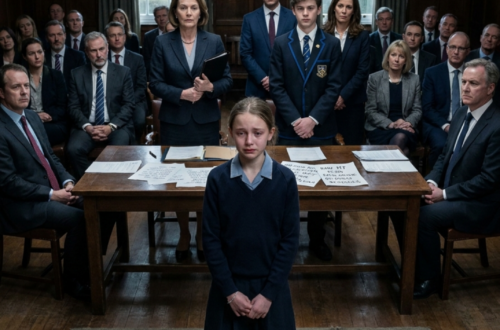
The legal meeting happened four days later in the family office.
Not a courtroom. Not yet. Wealthy families avoid court if they can. They prefer rooms with walnut tables, controlled access, and lawyers who use soft words for hard threats. But this time, Elena did not control every chair.
Olivier was present in person, pale but sober. Camille Bernard sat beside the child advocate newly appointed on an emergency basis. Anaïs sat with me. Maître Deschamps sat near Elena, though with less confidence than before. Elena wore charcoal gray, pearls, and the expression of a woman prepared to be misunderstood by lesser people.
Noah was not in the room.
Thank God.
This meeting was about him, but not for him to endure.
Elena began before anyone asked her to.
“My only concern has ever been Noah’s stability,” she said. “This family has suffered enough public and private damage. I will not apologize for acting decisively when a paid caregiver encouraged inappropriate dependency.”
Anaïs said, “The issue is not whether you acted decisively. It is whether you manufactured the reason.”
Elena’s eyes moved to her. “That is a serious accusation.”
“Yes.”
A silence followed.
I admired Anaïs in that moment more than I can say.
Camille presented her statement. Petit Loup. Therapy milestone. Inconsistency. Possible external authorship.
Elena said, “Children regress.”
Camille replied, “They do. Which is why a responsible adult would have brought the letter to therapy, not to a guardianship lawyer.”
Olivier looked down.
The child advocate presented the sugar cubes and Noah’s note. I watched Elena’s face carefully. She did not react much. Elena was too skilled for that. But when she saw the phrase I need my words, one finger tapped once against the table.
Just once.
Maître Deschamps explained that the guardianship memo had been preliminary.
Anaïs asked why preliminary concerns about undue emotional dependence were drafted before the alleged evidence emerged.
He said family concerns had existed before the letter.
Anaïs asked for written documentation of those concerns.
He referred to Elena’s verbal reports.
Anaïs asked whether Dr. Bernard had been consulted before therapy appointments were canceled.
No.
Anaïs asked whether Olivier had personally authorized the cancellation.
Olivier lifted his head. “I did not.”
Everyone looked at Elena.
She folded her hands. “Olivier was not in a state to manage scheduling.”
“And yet,” Anaïs said, “you intended to use Noah’s emotional state to expand your control over his trust.”
Elena’s face hardened. “I intended to protect family assets from exploitation.”
There it was again.
Assets.
Not child.
Not nephew.
Assets.
Olivier flinched as if she had struck him.
Elena must have realized the mistake because she immediately corrected. “I mean Noah’s future.”
But the first word had already entered the room.
Anaïs then introduced Marc’s statement: Elena had removed Noah’s memory box and the real blue birthday card from the schoolroom after the dinner.
Elena said, “That is absurd.”
Maître Deschamps looked at her too quickly.
Anaïs noticed. So did I.
“Then you deny entering the schoolroom?” Anaïs asked.
“I entered many rooms that night. It is my family home.”
“Do you deny removing the memory box?”
Elena paused.
Only a fraction too long.
“I may have moved personal items for safekeeping after concerns arose.”
“Concerns that, according to your own memo, existed before the letter appeared.”
Elena’s voice cooled. “You are twisting chronology.”
“No,” Camille said quietly. “That is what the letter did.”
For the first time, Elena looked directly at her with open dislike.
The meeting did not end with a confession. People like Elena do not confess unless confession is their strongest remaining strategy. She did not break down. She did not shout that she forged the letter. She did not declare that she wanted Noah’s inheritance.
Real exposure is quieter.
Her timeline collapsed.
That was enough.
Olivier requested immediate independent review of Noah’s guardianship arrangements. The child advocate recommended that Elena’s decision-making authority be temporarily limited pending investigation. Dr. Bernard’s therapy sessions were reinstated, with scheduling removed from Elena’s assistant. Noah’s phone access was restored under supervised therapeutic guidelines, not family office control. The trust matter was referred for independent oversight.
And me?
I was not restored to my old role.
That hurt more than I expected, even though I knew it was right.
I was cleared of the accusation, but Noah’s advocate recommended a structured pause before any direct contact resumed. Not because I had harmed him, but because the adults around him had turned attachment into battlefield. Noah needed space where wanting to see me did not become evidence for anyone.
I understood.
I hated it.
Both were true.
After the meeting, Elena found me in the hallway.
No lawyers. No audience. Just us beneath a framed photograph of the vineyard in summer.
“You think you saved him,” she said.
I looked at her.
“I think I helped stop you from using him.”
Her jaw tightened. “You know nothing about what it takes to preserve a family like this.”
“I know what it costs the child.”
Her eyes flashed. “You were paid to care for him. Do not mistake wages for motherhood.”
The sentence hit exactly where she intended.
For a moment, I was thirty-two and seven at once. Sofia the nanny in a borrowed coat outside rich people’s rooms. Sofia the girl whose mother left her with relatives in Liège and sent postcards for two years before even those stopped. Sofia who learned early that being loved by someone without legal obligation was both miracle and risk.
Then I thought of Noah’s three sugar cubes.
I need my words.
“I am not his mother,” I said.
Elena’s mouth curved faintly, thinking she had won.
I continued, “But I know the difference between protecting a child and possessing him.”
Her smile disappeared.
I walked away before she could answer.
PART 4 — The Person Who Stayed
The first time I saw Noah after the accusation, he did not run to me.
That is important.
In stories, a child runs across a room, throws himself into the arms of the person who stayed, and everyone watching understands the truth at last. Real children are more complicated than stories, especially children who have learned that their love can be entered into evidence.
It was six weeks after the legal meeting. Dr. Bernard arranged it at her office, with Noah’s advocate present in the waiting room and clear rules agreed upon in advance. One hour. No discussion of legal matters. No promises about the future. No questions that forced Noah to choose between adults.
I arrived twenty minutes early and sat in my car because my hands would not stop shaking.
I had brought the blue scarf.
Claire’s scarf. The one I had kept since the day at the estate gate. I had washed it once by hand, then regretted it because it smelled less like the Moreau house, less like Noah. But perhaps that was good. Perhaps children should not have to carry the exact scent of old grief forever.
When Camille opened the office door, she said, “He is nervous.”
“So am I.”
She smiled. “Good. Then no one has to pretend.”
Noah was in the therapy room, sitting on the gray sofa with his feet tucked beneath him. He looked thinner, or maybe older. His hair had grown over his forehead. On the small table beside him were three sugar cubes, already lined up.
I stopped at the doorway.
“Hello, Noah,” I said.
His mouth trembled once.
“Hello, Sofia.”
Not Madame Sofia.
Not Petit Loup.
Noah and Sofia.
Enough names.
I sat in the chair across from him because Camille had explained that giving him space mattered. I held the scarf folded in my lap.
“I brought something,” I said.
His eyes dropped to the blue fabric.
For a second he looked like the boy at the upstairs window, hand against glass.
Then he said, “I thought Aunt Elena threw it away.”
“No.”
“You had it?”
“Yes.”
“Why?”
I considered soft answers. Because I forgot to give it back. Because things happened quickly. Because I wanted to keep something of you. All partly true, all insufficient.
“Because when I saw you at the window, I thought someone should keep safe something that belonged to you.”
He nodded slowly.
“Can I have it?”
“It is yours.”
I stood just enough to place it on the table between us, not in his hands. His choice. His timing.
He touched the edge of it first. Then pulled it into his lap.
“I didn’t write the letter,” he said.
Camille, seated near the bookshelf, said gently, “Noah, remember the agreement.”
He looked at her. “I know. But I need to say one sentence.”
Camille paused. Then nodded.
Noah looked back at me. “I didn’t write it.”
“I know.”
His face changed.
Not relief exactly. Something deeper. The exhaustion of a child who had been waiting for one adult to say the simplest possible thing.
“I knew because of Petit Loup,” I said.
He pressed the scarf to his chest. “I’m not that anymore.”
“No.”
“I loved it when Maman said it.”
“I know.”
“But when other people use it now, it feels like they want me to be little forever.”
I swallowed.
“You get to be Noah,” I said.
He nodded, then looked down at the sugar cubes. “Papa cried.”
“Did he?”
“When he found out. He said sorry too many times.”
“What did you say?”
“I said sorry is not a plan.”
Camille looked away, but I saw her smile.
“That is a very good sentence,” I said.
“I got it from you.”
“I do not remember saying it.”
“You said it to the plumber when the kitchen flooded.”
I laughed then. A real laugh. Small, surprised, alive.
Noah smiled.
For a few minutes, we talked about ordinary things. His school project on Roman roads. The soup at the estate, which was still terrible because the cook refused to salt it enough. A book he was reading about a boy who could speak to birds but found them annoying. He told me he was back in therapy with Camille twice a week. He told me his father was “trying in a way that makes everyone tired, but maybe good tired.” He told me Elena was living mostly at the vineyard now and not attending his appointments.
He did not ask if I was coming back.
I did not offer.
That was the hardest kindness of my life.
At the end of the hour, Noah folded the scarf carefully.
“Will I see you again?”
“Yes,” Camille said before I could answer. “In planned ways, if you want that and if it remains healthy for you.”
Noah made a face. “That sounds like a lawyer sentence.”
“It is a therapist sentence wearing a lawyer coat,” Camille said.
He looked at me.
“I would like that,” I said. “Planned ways.”
He nodded.
Then he stood, hesitated, and asked, “Can I hug you?”
I looked at Camille. She nodded.
Noah crossed the room and hugged me carefully at first, then fiercely. I held him without pulling him closer than he chose. His shoulder blades felt sharp under my hands. His hair smelled faintly of the lemon shampoo from the estate bathroom. For six weeks, I had imagined this moment. In my imagination, it healed everything.
In life, it healed one thing.
That was enough.
Months passed.
Elena did not disappear. People like Elena rarely vanish from the systems they helped build. She lost immediate guardianship leverage. Her control over Noah’s trust was restricted. Independent oversight entered the family office like cold air through a cracked window. Her public image did not shatter, but it fractured. In certain Lyon circles, that is sometimes worse. Whispers replaced praise. Invitations slowed. Her name remained elegant on paper while rooms grew careful around her.
Olivier became more present, though not transformed. I refuse to give him a miracle he did not earn. He still struggled. He still retreated some days. But he began attending therapy sessions with Noah when invited. He learned to ask questions without answering them himself. He signed papers establishing an independent child advocate. He wrote me a letter of apology by hand.
It was not enough.
It was also more than nothing.
Amélie kept her job. Marc retired at the end of the season and sent me a basket of grapes with no note. I understood.
The real birthday card was never recovered.
I grieved that strangely. More than some larger losses. A child’s drawing of a house that did not exist yet. A sentence about quiet rooms. It had been small, private, and true. Elena had understood its danger before anyone else did. The fake letter tried to make Noah’s love look like dependence. The real card showed what it was: a child imagining safety for other children because one adult had given him some.
I rebuilt it from memory and kept the copy in my folder.
Not as evidence anymore.
As a promise.
A year later, I opened my childcare center.
Not large. Not impressive by Moreau standards. Three rooms on the ground floor of a renovated building near a park. Secondhand shelves. Soft rugs. A kitchen that smelled of soup and toasted bread. A quiet room with dimmable lights, floor cushions, weighted blankets, and a sign painted by a local artist:
No one is punished for needing a pause.
On opening morning, I found a small envelope tucked under the door.
No stamp. No return address.
Inside was a drawing.
Blue pencil.
A house with crooked windows. Children in each window. A scarf hanging by the door. Above it, in careful handwriting:
For the Small Brave Ones.
No signature.
He did not need one.
I sat on the floor of the entryway and cried before the first family arrived. Then I wiped my face, made coffee I forgot to drink, and opened the door.
People sometimes ask whether I think of Noah as mine.
The answer is no.
And yes.
No, because children are not rewards for loyalty. They are not prizes given to the adult who suffered most publicly. Noah has a father, a therapist, an advocate, memories of his mother, complicated blood ties, and a future that should not be narrowed into gratitude toward me.
Yes, because love leaves marks even when law does not name them.
I am part of his story.
He is part of mine.
That must be enough, and on most days, it is.
I still have the blue scarf sometimes. Not permanently. Noah brings it when we meet at Camille’s office or, later, when supervised visits become ordinary lunches and bookstore trips and eventually the kind of relationship no one has to define every five minutes. Sometimes he leaves it with me to mend a loose edge. Sometimes I return it with a book tucked inside. It remains his. I am only trusted with it.
That distinction matters.
As for Elena, I saw her once after everything, at a charity event for children’s mental health. She stood beneath a chandelier, wearing ivory silk, speaking to a donor about resilience. The word sounded expensive in her mouth.
She saw me across the room.
For a moment, neither of us moved.
Then she looked away first.
It was not victory. Not exactly.
Victory would have been Noah never needing to learn that adults could forge his feelings. Victory would have been Claire alive, Olivier whole, Elena unwarped by whatever bitterness made her confuse control with protection. Victory would have been me never sitting in a lawyer’s office proving that love was not greed.
What we got was smaller.
Noah got his words back.
I got my name back.
Elena lost the right to speak for him unchecked.
Sometimes partial justice is not satisfying, but it is still a door where there was a wall.
I think often about the fake letter.
How clever it was. How almost believable. How it used real details: Noah’s grief, his attachment to me, my wish for him to have something in his own name. Lies work best when they borrow the furniture of truth. Elena did not invent our bond. She turned it sideways. She made care look like hunger. She made a child’s dependence, born of abandonment by the adults around him, look like my design.
But she misread one thing.
Children change.
They remember who stayed, yes. But they also grow beyond the names adults give them. Petit Loup had once comforted Noah. Then it became too small. Elena, searching through old keepsakes, copied the boy she understood how to control. She did not recognize the boy who had learned to say, I need my words.
That was her mistake.
Not the forgery itself.
Not the timeline.
Not the legal memo.
Her mistake was believing affection made Noah weak.
In truth, it had taught him the difference between being spoken for and being heard.
On quiet afternoons at the center, when the children are napping and the light falls across the rugs in pale rectangles, I sometimes find folded grocery receipts in my coat pockets and smile at how little some habits change. I keep a box now—not walnut like Noah’s, but plain pine—filled with drawings children give me. Houses, monsters, suns with too many rays, families with missing heads because children run out of space. I label none of them as evidence.
They are not evidence.
They are offerings.
Still, I protect them.
One winter morning, Noah visited the center with Olivier. He was taller, nearly twelve and a half, wearing his school coat open despite the cold. He stood in the quiet room for a long time, looking at the cushions and shelves and the small lamp shaped like a moon.
“This is better than my drawing,” he said.
“Your drawing gave the instructions.”
He pretended not to be pleased.
A little girl in the corner was arranging wooden blocks in a precise line. Noah watched her.
“She does sugar cubes,” he said.
“Something like that.”
“Does she have to stop?”
“No.”
He nodded.
Then he asked, “Can I help with the books?”
The question was so ordinary that it nearly broke me.
“Yes,” I said. “But only if you want to.”
“I want to.”
So Noah Moreau, heir to one of the oldest wine families outside Lyon, spent that morning sitting cross-legged on the floor of a small childcare center, stamping name labels inside picture books while a four-year-old explained that dragons preferred toast.
No one photographed it.
No one posted it.
No one used it to prove anything.
It was just a boy safe enough to do a small helpful thing.
That is the ending I keep.
Not Elena’s face when the memo date exposed her. Not the lawyer’s silence. Not the gate, or the accusation, or the letter with its stolen nickname. I keep Noah sitting on the floor with ink on his thumb, laughing because the four-year-old told him he stamped a book upside down.
The world did not become fair.
But in that room, for that hour, no one stole his voice.
And that was the house we had both been trying to build.