Summer brings vibrant life and longer days, a perfect time for your roses to truly shine. However, the season also presents unique challenges, from intense heat to potential pest and disease pressure. With the right care, your rose bushes can not only survive but thrive, rewarding you with an abundance of spectacular, larger blooms that continuously grace your garden. Neglecting proper summer maintenance, on the other hand, can lead to smaller flowers, weakened plants, and a higher susceptibility to issues.
This comprehensive guide will walk you through 9 essential summer care tips, ensuring your roses reach their full potential and become the envy of your neighborhood. Whether you’re a seasoned rosarian or just starting your journey with these beloved flowers, these practical tips will help you cultivate healthier plants and more prolific blossoms.
 Mastering summer rose care can lead to stunning, continuous blooms.
1. Pruning for Perfection: Shaping Your Roses for Abundance
Pruning is often associated with winter dormancy, but strategic pruning in summer is vital for encouraging more blooms and maintaining plant health. It’s about directing your rose’s energy where it matters most.
Deadheading: The Key to Continuous Blooms
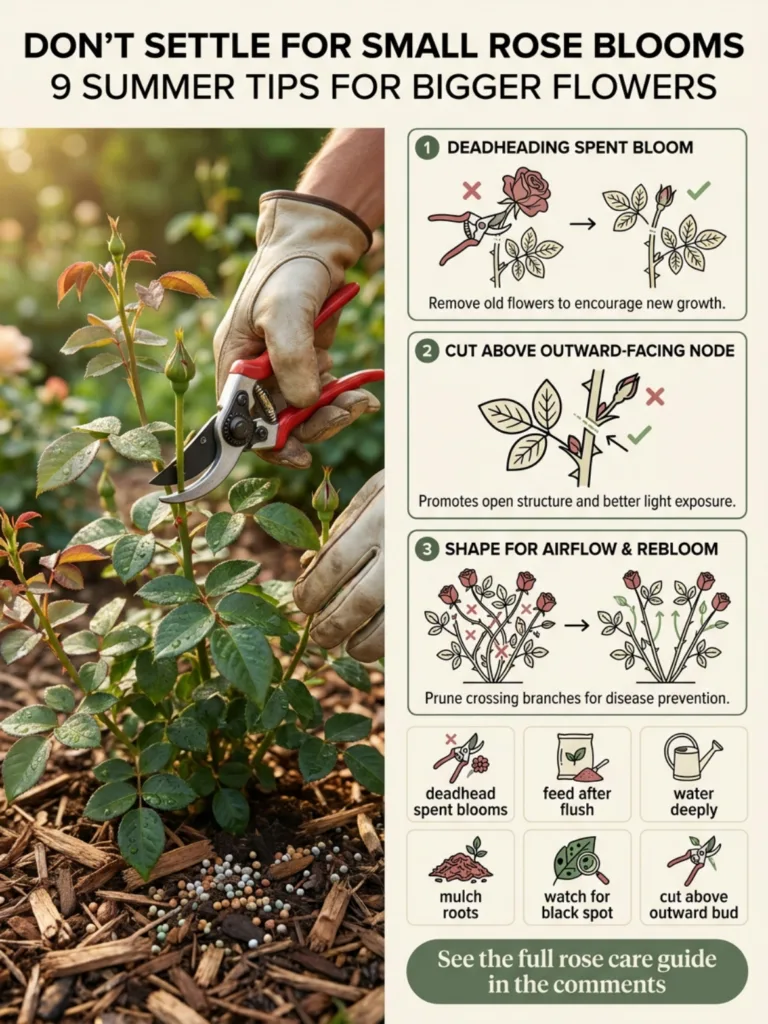
One of the most crucial summer tasks for any rose enthusiast is deadheading. This simply means removing spent or faded flowers from the plant. When a rose flower fades, the plant naturally starts to put its energy into producing seeds (forming rose hips). By removing these spent blooms, you trick the plant into thinking it hasn’t successfully reproduced yet, prompting it to produce more flowers in an attempt to set seeds.
- How to Deadhead: Look for a strong leaf with five leaflets pointing outwards, just below the spent bloom. Make a clean cut with sharp, clean pruning shears about 1/4 inch above this leaf node, at a 45-degree angle. This encourages new, healthy growth that will likely produce another flower.
Strategic Pruning for Airflow and Shape
Beyond deadheading, summer is an excellent time for light shaping and improving air circulation within your rose bush. This helps prevent fungal diseases that thrive in damp, stagnant conditions.
- Remove Weak or Crossing Branches: Snip off any spindly, weak, or inward-growing branches that crisscross through the center of the plant.
- Open Up the Center: Aim to create an open, goblet-like shape that allows air and sunlight to penetrate the entire bush. This improves overall plant vigor and reduces the risk of diseases like black spot.
The Right Cut: Above Outward-Facing Nodes
Whenever you make a cut, especially when shaping or deadheading, always aim to cut just above an outward-facing bud or leaf node. This ensures that any new growth will grow away from the center of the plant, contributing to good airflow and an aesthetically pleasing, open form.
2. Nourishing Your Roses: Fueling Growth and Bloom Power
Roses are notoriously heavy feeders, and the constant cycle of blooming in summer demands a steady supply of nutrients and adequate hydration.
Feeding for Flourish: The Summer Nutrient Boost
After your first flush of spectacular spring blooms, your roses will appreciate another dose of fertilizer to support continued flower production. Choose a balanced rose-specific fertilizer or a general-purpose granular fertilizer with a good N-P-K ratio (e.g., 5-10-5 or 10-10-10).
- Timing: Fertilize after the first major bloom cycle and again mid-summer, if needed, depending on your climate and rose variety. Always follow product instructions carefully.
- Application: Sprinkle fertilizer around the base of the plant, keeping it away from the main cane, and water thoroughly immediately afterward.
Watering Wisely: Hydration in the Heat
Summer heat can quickly dry out soil, making deep, consistent watering crucial. Roses need ample moisture to produce large, healthy blooms.
- Deep Watering: Aim for deep, infrequent watering rather than shallow, frequent sprinkles. This encourages roots to grow deeper, making the plant more resilient to drought. Water until the soil is moist to a depth of 12-18 inches.
- When to Water: The best time to water is in the early morning. This allows the foliage to dry before nightfall, reducing the risk of fungal diseases. Avoid overhead watering if possible, as wet leaves are more susceptible to disease.
- Check Soil Moisture: Stick your finger into the soil. If it feels dry a couple of inches down, it’s time to water.
Mulch: Your Rose’s Best Friend
A good layer of mulch around the base of your rose bushes offers numerous benefits, especially in summer.
- Moisture Retention: Mulch acts as a blanket, slowing down water evaporation from the soil, meaning you’ll need to water less frequently.
- Weed Suppression: It helps suppress weeds, which compete with your roses for water and nutrients.
- Temperature Regulation: Mulch keeps soil temperatures more consistent, protecting roots from extreme heat.
- What to Use: Apply a 2-4 inch layer of organic mulch such as shredded bark, compost, or straw around the base of your roses, keeping it a few inches away from the main canes.
3. Pest and Disease Vigilance: Keeping Your Roses Healthy
Warm, humid summer conditions can be an invitation for pests and diseases. Regular inspection and prompt action are key.
Spotting and Preventing Black Spot
Black spot is one of the most common and frustrating fungal diseases affecting roses, especially in humid conditions. It appears as circular black spots with fringed margins on the leaves, often leading to yellowing and premature leaf drop.
- Prevention is Key: Ensure good air circulation (as discussed in pruning), remove and dispose of any fallen infected leaves immediately (do not compost them), and avoid overhead watering.
- Treatment: If black spot appears, remove affected leaves. Consider using a fungicidal spray specifically formulated for roses, following the product instructions carefully. Early intervention is always best.
Embrace the Beauty of Growing Roses This Summer
By dedicating a little time to these 9 essential summer care tips – focusing on smart pruning, consistent feeding and watering, mulching, and vigilant disease management – you can dramatically enhance the health and beauty of your roses. Picture your garden adorned with continuous flushes of larger, more vibrant blooms throughout the season. Enjoy the process of nurturing these magnificent plants, and delight in the spectacular show they put on for you.
Happy gardening!