Eating with the seasons isn’t just a trend; it’s a powerful way to enhance your health, support local agriculture, and enjoy produce at its peak flavor and nutritional value. When fruits and vegetables are harvested in season, they are often fresher, taste better, and retain more of their vital nutrients compared to items shipped long distances or grown out of season.
Let’s dive into some incredible seasonal superfoods that can easily become staples in your kitchen, offering a wealth of benefits and delicious culinary possibilities.
 Discover the health advantages and culinary versatility of eating seasonally.
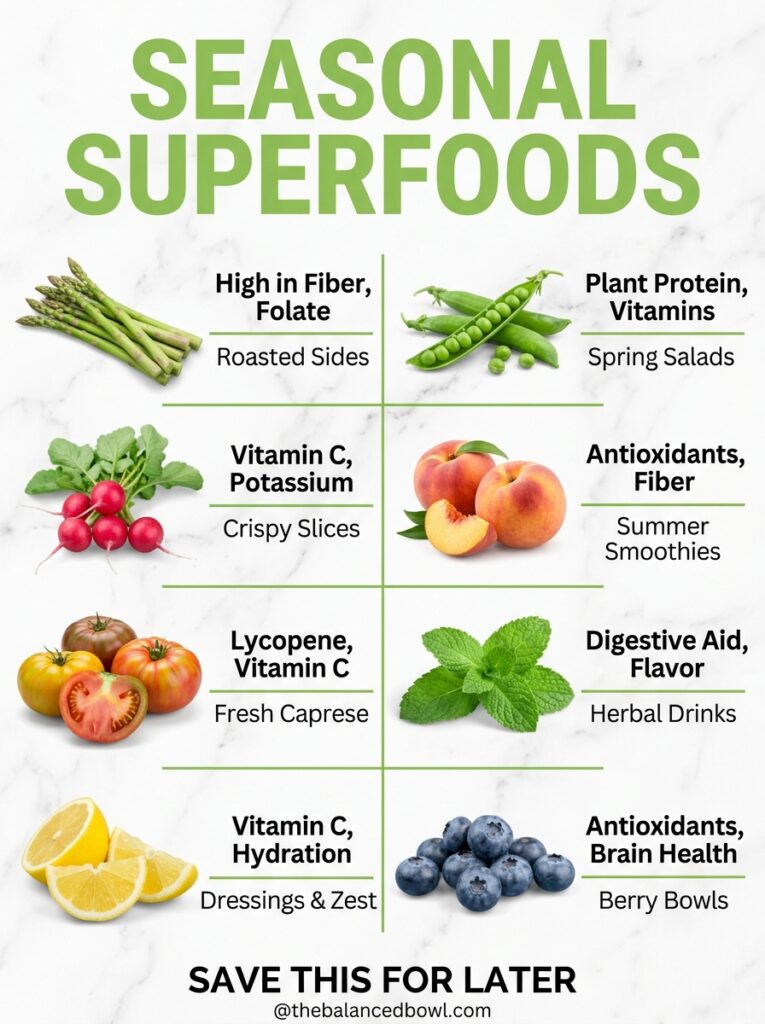
Asparagus: Spring’s Green Powerhouse
As spring unfurls, so does the tender stalk of asparagus. This elegant vegetable is more than just a delicious side dish; it’s packed with goodness.
- Key Nutrients: Asparagus is an excellent source of fiber, which supports digestive health, and folate, crucial for cell growth and function. It also provides vitamins A, C, E, and K, as well as chromium, a trace mineral that helps transport glucose from the bloodstream to cells.
- Why It’s a Superfood: Its combination of vitamins, minerals, and antioxidants contributes to heart health, bone strength, and can help reduce inflammation.
- Culinary Uses: Roasted asparagus with a drizzle of olive oil, steamed until tender-crisp, added to stir-fries, or blended into creamy soups. Its versatility makes it a perfect addition to many meals.
Peas: Tiny Green Jewels of Nutrition
Sweet, vibrant peas are a quintessential spring vegetable, bringing a burst of freshness to any dish.
- Key Nutrients: Peas are rich in antioxidants, which protect your cells from damage, and Vitamin K, important for blood clotting and bone health. They also offer a good amount of Vitamin C, fiber, and plant-based protein.
- Why It’s a Superfood: Their high antioxidant content, including polyphenols, can help support overall well-being. The fiber and protein contribute to satiety and steady energy levels.
- Culinary Uses: Tossed fresh into salads, lightly steamed as a side, blended into a vibrant pesto, or incorporated into risottos and pasta dishes.
Radishes: Crunchy & Zesty
These peppery root vegetables add a delightful crunch and a unique zing to your spring and early summer meals.
- Key Nutrients: Radishes are abundant in Vitamin C, an essential immune booster, and folate. They also contain various antioxidants and beneficial compounds.
- Why It’s a Superfood: Beyond their vitamin content, radishes are known for their detoxifying properties and can support liver health. Their fiber content also aids digestion.
- Culinary Uses: Thinly sliced in salads, added to tacos for a refreshing crunch, or simply enjoyed raw with a sprinkle of sea salt. Pickled radishes are also a fantastic way to enjoy them year-round.
Peaches: Summer’s Sweet Reward
As summer ripens, so do the juicy, fragrant peaches. A true taste of sunshine, these fruits are as nutritious as they are delicious.
- Key Nutrients: Peaches are an excellent source of Vitamin C, vital for skin health and immunity, and dietary fiber, which promotes digestive regularity. They also contain Vitamin A and potassium.
- Why It’s a Superfood: Their antioxidant compounds, including carotenoids and phenolic compounds, contribute to protecting your body against oxidative stress.
- Culinary Uses: Enjoyed fresh as a snack, grilled for a unique dessert, sliced into salads, baked into crumbles, or blended into smoothies.
Heirloom Tomatoes: Garden Gems
Heirloom tomatoes, with their striking colors and irregular shapes, are a testament to nature’s artistry and a summer staple.
- Key Nutrients: These vibrant fruits are loaded with antioxidants, particularly lycopene, which is known for its heart-protective benefits, and Vitamin C.
- Why It’s a Superfood: The diverse array of antioxidants found in heirloom tomatoes supports cellular health and can help reduce the risk of certain chronic diseases.
- Culinary Uses: Sliced thickly with fresh mozzarella and basil for a Caprese salad, roasted to bring out their sweetness for sauces, or simply enjoyed in a fresh summer sandwich.
Mint Leaves: Refreshing Aromatic Power
More than just a garnish, fresh mint leaves offer a refreshing burst and a surprising amount of health benefits, especially in warmer months.
- Key Nutrients: Mint contains antioxidants and a good amount of Vitamin A, which is important for vision and immune function.
- Why It’s a Superfood: It’s traditionally used to aid digestion and can help soothe an upset stomach. Its aromatic compounds can also have a calming effect.
- Culinary Uses: Infused in water for a refreshing drink, chopped into fruit salads, added to yogurt, or as a key ingredient in savory dishes like lamb or peas.
Lemons: Zesty & Invigorating
Available year-round, lemons shine brightest during their peak seasons, offering a burst of tartness and health benefits that invigorate any dish or drink.
- Key Nutrients: Lemons are famous for their high Vitamin C content, a powerful antioxidant, and also contain beneficial plant compounds called flavonoids.
- Why It’s a Superfood: Vitamin C supports the immune system, promotes healthy skin, and aids in iron absorption. The antioxidants help protect cells from damage.
- Culinary Uses: Squeezed into water for a morning boost, used in dressings and marinades, added to baked goods, or to brighten up almost any savory dish.
Blueberries: Tiny Antioxidant Powerhouses
These small, sweet berries are a true gift of summer, bursting with flavor and an incredible nutritional profile.
- Key Nutrients: Blueberries are renowned for being exceptionally high in antioxidants, especially anthocyanins, which give them their deep blue hue. They are also a good source of Vitamin C and fiber.
- Why It’s a Superfood: Their potent antioxidant properties contribute to brain health, heart health, and can help reduce inflammation.
- Culinary Uses: Eaten fresh as a snack, added to smoothies, mixed into oatmeal or yogurt, baked into muffins or pancakes, or used in fruit salads.
Bringing Seasonal Superfoods to Your Table
Embracing seasonal eating is a delicious and impactful choice for your health and the environment. By choosing produce at its peak, you’re not only getting the best flavor and nutrition but also supporting sustainable practices. Make it a habit to check what’s in season in your region and experiment with these and other seasonal superfoods. Your body, taste buds, and local community will thank you!