Gardening can be one of the most rewarding hobbies, bringing beauty and tranquility to your home. But let’s be honest, not everyone has endless hours to dedicate to planting new flowers every spring. If you dream of a vibrant garden that requires minimal effort year after year, then perennials are your secret weapon!
Perennials are plants that live for more than two years, typically returning each spring from their rootstock. Unlike annuals, which complete their life cycle in one season, perennials offer long-lasting beauty and reduce the need for constant replanting. This means less work for you and more time to simply enjoy your blossoming sanctuary. Below, we introduce nine fantastic perennials that you can plant once and cherish for many seasons to come.
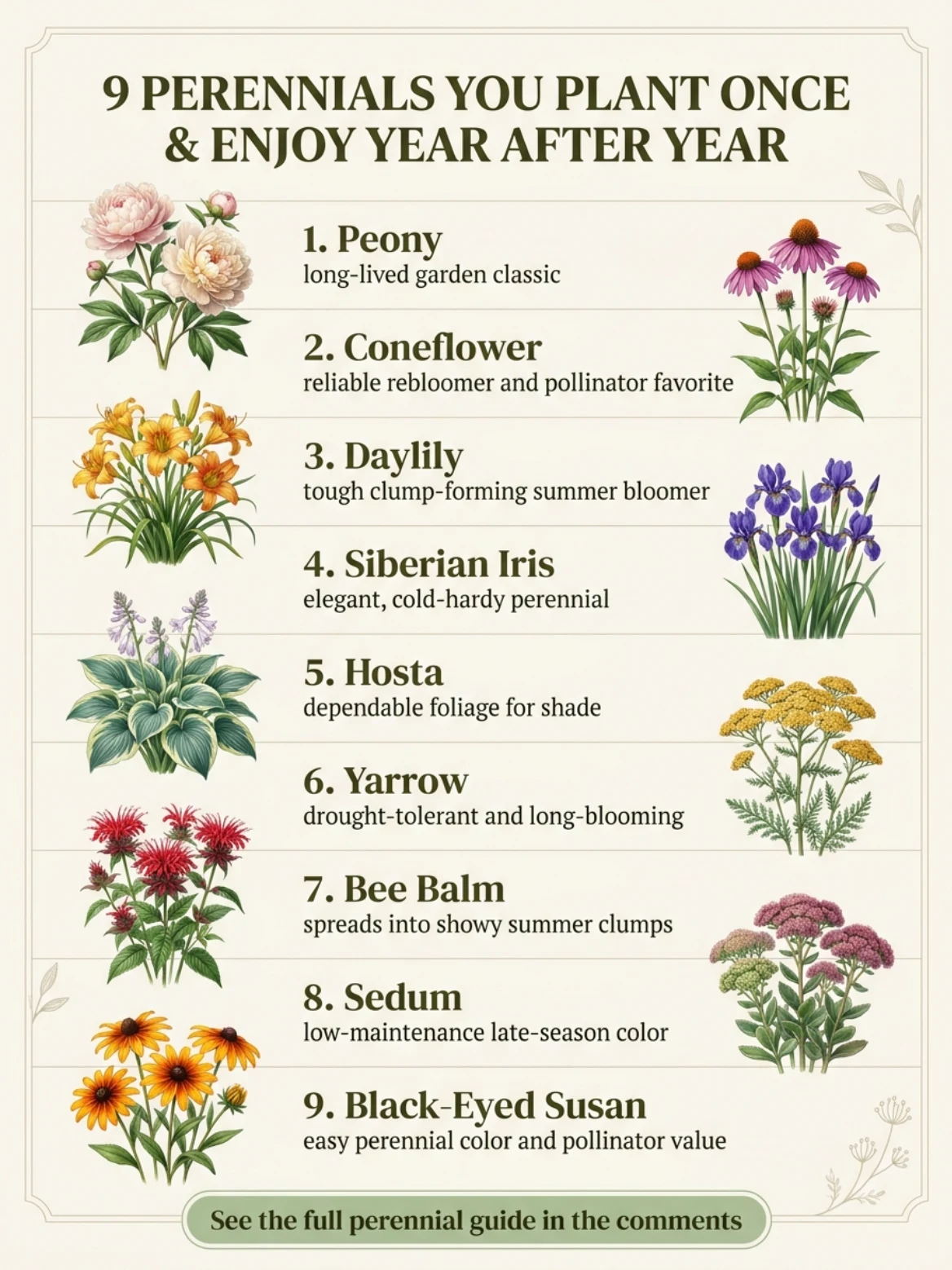
The Enduring Charm of Perennials: Our Top 9 Picks
1. Peony (Paeonia)
Peonies are classic garden favorites, renowned for their large, fragrant blooms that arrive in late spring to early summer. With their lush petals and rich colors ranging from white to deep pink and red, they make a spectacular statement. Peonies are incredibly long-lived, often thriving for decades, and require very little maintenance once established.
- Why we love them: Iconic, fragrant, long-lived, deer-resistant.
- Care tip: Plant in full sun (at least 6 hours) with well-draining soil. Ensure the ‘eyes’ (growth buds) are no more than 1-2 inches below the soil surface for optimal flowering.
2. Daylily (Hemerocallis)
Daylilies are a gardener’s dream: tough, adaptable, and incredibly diverse. While each individual flower lasts only a day (hence the name), a single plant produces an abundance of buds, ensuring a continuous display of color throughout the summer. They come in an astonishing array of colors, shapes, and sizes, fitting into almost any garden design.
- Why we love them: Extremely hardy, drought-tolerant, wide variety of colors, long blooming period.
- Care tip: Thrive in full sun to partial shade and are tolerant of various soil conditions. Deadhead spent blooms to encourage more flowering.
3. Siberian Iris (Iris sibirica)
For elegant vertical accents and beautiful blue, purple, white, or yellow flowers, the Siberian Iris is an excellent choice. Unlike its bearded cousin, the Siberian Iris prefers moist soil and does not require as much division. Its slender, grass-like foliage remains attractive long after the blooming period, adding texture to the garden.
- Why we love them: Graceful, low-maintenance, excellent in wet areas, deer-resistant.
- Care tip: Prefers full sun to partial shade and consistently moist, well-draining soil.
4. Hosta
Hostas are the undisputed kings of the shade garden. While primarily grown for their stunning foliage, which ranges from miniature to massive, and includes shades of green, blue, gold, and variegated patterns, they also produce delicate lavender or white flower spikes. They are perfect for brightening up shady spots and suppressing weeds.
- Why we love them: Incredible variety in foliage, thrives in shade, low-maintenance.
- Care tip: Plant in partial to full shade with rich, moist, well-draining soil. Protect from slugs and snails.
5. Bee Balm (Monarda didyma)
If you want to attract pollinators to your garden, Bee Balm is a must-have. Its unique, shaggy, tubular flowers in shades of red, pink, purple, or white are a magnet for bees, butterflies, and hummingbirds. It’s a native North American perennial, making it well-adapted to many climates and quite resilient.
- Why we love them: Attracts pollinators, vibrant flowers, native plant.
- Care tip: Prefers full sun to partial shade and moist, well-draining soil. Good air circulation helps prevent powdery mildew.
6. Yarrow (Achillea millefolium)
Yarrow is a remarkably tough and versatile perennial known for its fern-like foliage and flat-topped flower clusters. Available in a spectrum of colors from yellow and orange to pink and red, it’s an excellent choice for hot, dry areas and provides long-lasting blooms, often from early summer into fall. It’s also a great cut flower.
- Why we love them: Drought-tolerant, long blooming, attracts beneficial insects, deer-resistant.
- Care tip: Thrives in full sun and well-draining soil. Avoid overly rich soil, which can lead to leggy growth.
7. Coneflower (Echinacea purpurea)
Coneflowers are iconic prairie plants, celebrated for their daisy-like flowers with distinctive raised central cones. They are incredibly hardy, drought-tolerant, and a favorite of butterflies and other pollinators. Blooming throughout the summer, they provide a cheerful splash of color, typically in shades of purple, pink, white, and yellow.
- Why we love them: Pollinator magnet, drought-tolerant, long bloom time, strong architectural form.
- Care tip: Prefers full sun and well-draining soil. Deadhead spent flowers to encourage new blooms, or leave them for winter interest and bird food.
8. Sedum (Hylotelephium, formerly Sedum)
Sedums, often called ‘stonecrop,’ are succulents that are incredibly easy to grow and maintain. Their fleshy leaves and sturdy stems make them highly drought-tolerant. ‘Autumn Joy’ is a popular variety, known for its broccoli-like flower heads that start green, turn pink, then russet-red in fall, providing late-season interest.
- Why we love them: Extremely drought-tolerant, late-season interest, architectural form.
- Care tip: Requires full sun and excellent drainage. Avoid overwatering.
9. Black-Eyed Susan (Rudbeckia hirta)
The cheerful Black-Eyed Susan is a quintessential summer flower, instantly recognizable by its bright yellow petals and dark brown or black central cone. These vigorous bloomers are fantastic for mass plantings, borders, or naturalized areas, providing a sunny disposition from mid-summer until frost. They are also attractive to butterflies.
- Why we love them: Cheerful, long-blooming, attracts butterflies, great for cut flowers.
- Care tip: Prefers full sun and well-draining soil. Can self-seed readily, spreading its sunny disposition.
General Tips for Perennial Success
- Right Plant, Right Place: Always consider your specific growing conditions (sunlight, soil type, moisture) and choose plants that are well-suited to them.
- Soil Preparation: Good soil is key. Amend heavy clay or sandy soils with organic matter like compost to improve drainage and fertility.
- Watering: Water new perennials regularly until they are established. Once established, most are more tolerant of dry spells.
- Mulching: Apply a layer of organic mulch around your perennials to help retain soil moisture, suppress weeds, and regulate soil temperature.
- Division: Many perennials benefit from division every few years to maintain vigor and prevent overcrowding.
The Lasting Rewards of Perennial Gardening
Investing in perennials is a smart choice for any gardener seeking lasting beauty with less upkeep. These nine plants are just a starting point, but they represent some of the most reliable and rewarding options available. By selecting perennials, you’re not just planting flowers; you’re cultivating a sustainable, evolving landscape that will bring joy and vibrancy to your outdoor space year after year.
So, roll up your sleeves, pick your favorites, and get ready to enjoy a garden that keeps on giving!