In the vibrant tapestry of a healthy garden, few creatures play as vital a role as bees. These tiny, industrious pollinators are essential for the reproduction of countless plants, including many of the fruits, vegetables, and flowers we cherish. Beyond their ecological importance, watching bees busily flit from bloom to bloom adds a serene, living energy to any outdoor space.
Creating a bee-friendly garden is not only a rewarding endeavor for you but a crucial act of support for these declining populations. By carefully selecting plants and adopting sustainable gardening practices, you can transform your backyard into a bustling haven for native bees and honeybees alike. Let’s explore nine fantastic plants that are sure to draw these beneficial insects to your garden, along with key tips for creating an irresistible pollinator paradise.
Why Your Garden Needs Bees
Bees are responsible for pollinating approximately one-third of the food we eat, from apples and almonds to berries and broccoli. Beyond agriculture, they play a critical role in maintaining biodiversity in natural ecosystems by pollinating wildflowers and trees. Unfortunately, bee populations worldwide are facing significant threats from habitat loss, pesticide use, and climate change. By planting bee-attracting flowers, you’re directly contributing to their survival and the health of our planet.
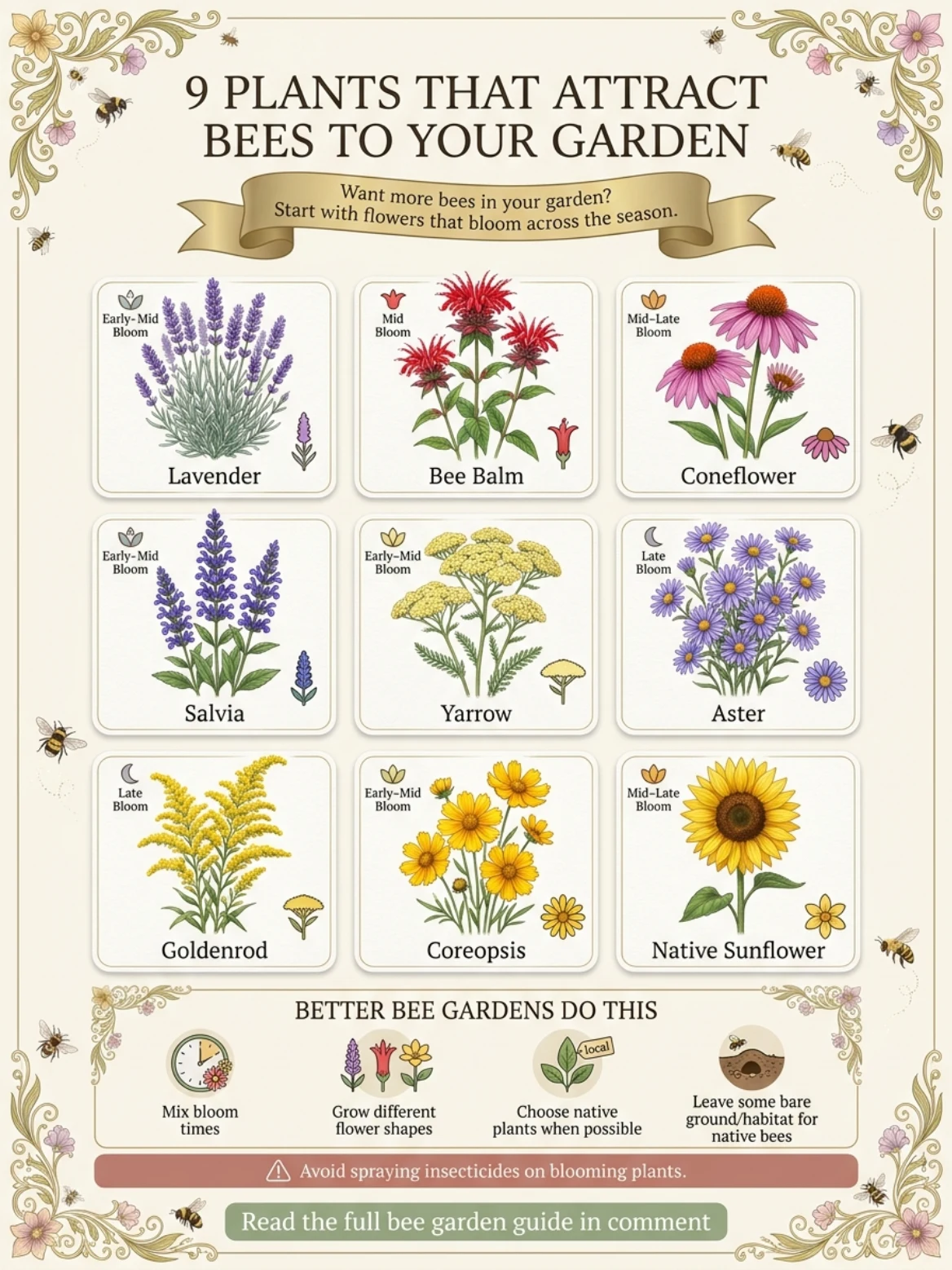
Top 9 Plants to Bring Bees Buzzing
Choosing the right plants is the first step in creating a vibrant bee garden. Here are nine fantastic options, many of which are native to North America and are known for their high nectar and pollen content:
1. Lavender (Lavandula)
- Bloom Time: Early-Mid season
- Why Bees Love It: With its fragrant purple spikes, lavender is a magnet for all types of bees. Its rich nectar content provides sustained energy for pollinators throughout its long blooming period.
2. Bee Balm (Monarda)
- Bloom Time: Mid season
- Why Bees Love It: As its name suggests, Bee Balm is a bee favorite. Its unique tubular flowers come in shades of red, pink, and purple, perfect for long-tongued bees and hummingbirds. It’s a powerhouse for nectar.
3. Coneflower (Echinacea)
- Bloom Time: Mid-Late season
- Why Bees Love It: The iconic daisy-like blooms of coneflowers (often purple, but also pink, white, and yellow) offer a broad landing pad and a central cone packed with pollen and nectar, attracting many bee species.
4. Salvia (Salvia spp.)
- Bloom Time: Early-Mid to Late season (depending on variety)
- Why Bees Love It: Salvias offer a vast array of colors and sizes, many with tubular flowers that are irresistible to bees, particularly bumblebees. They are known for their continuous blooms throughout the growing season.
5. Yarrow (Achillea millefolium)
- Bloom Time: Mid-Late season
- Why Bees Love It: Yarrow’s flat-topped clusters of tiny flowers provide a convenient landing platform for smaller bees and hoverflies. It’s drought-tolerant and comes in various colors, from white to yellow and pink.
6. Aster (Symphyotrichum spp.)
- Bloom Time: Late season
- Why Bees Love It: As summer wanes, asters become a crucial late-season food source, providing vital nectar and pollen when other flowers fade. Their profusion of small, daisy-like flowers is a feast for bees preparing for winter.
7. Goldenrod (Solidago spp.)
- Bloom Time: Late season
- Why Bees Love It: Often mistakenly blamed for allergies (ragweed is the culprit!), goldenrod is an indispensable native plant for late-season pollinators. Its bright yellow plumes are buzzing with activity, providing abundant resources for bees.
8. Coreopsis (Coreopsis spp.)
- Bloom Time: Mid season
- Why Bees Love It: Also known as Tickseed, Coreopsis produces cheerful, daisy-like flowers, often in shades of yellow, red, and orange. They offer a steady supply of nectar and pollen and are very attractive to a wide range of bee species.
9. Native Sunflower (Helianthus spp.)
- Bloom Time: Mid-Late season
- Why Bees Love It: While cultivated sunflowers are impressive, native varieties are often even better for bees. Their large heads provide a bountiful buffet of pollen and nectar, attracting large numbers of bees and other beneficial insects.
Cultivating a Thriving Bee-Friendly Haven
Beyond selecting the right plants, a truly bee-friendly garden incorporates practices that support their entire life cycle. Here are a few essential tips:
Provide a Fresh Water Source
Just like any living creature, bees need water. A shallow bird bath filled with pebbles or marbles that bees can perch on will prevent them from drowning while they hydrate. Even a shallow dish of water in a sunny spot can make a difference.
Plant in Drifts, Not Just Singles
Bees are more efficient foragers when they can find large patches of the same flower. Planting flowers in groups or ‘drifts’ of at least 3-5 plants of one species makes it easier for bees to spot them and collect more pollen and nectar in one visit, conserving their energy.
Offer Safe Nesting Sites
Most native bees are solitary and nest in the ground or in hollow plant stems. You can help by leaving some patches of bare, undisturbed soil in sunny spots, providing bundles of hollow stems (like bamboo or raspberry canes), or even installing a bee hotel. Avoid excessive tidiness in your garden, as leaf litter and brush piles can also provide shelter.
Say NO to Insecticides
This is perhaps the most critical tip. Even ‘organic’ or ‘natural’ insecticides can be harmful to bees. The best approach is to avoid synthetic pesticides entirely. Embrace natural pest control methods, encourage beneficial insects, and tolerate a little imperfection in your garden. A healthy ecosystem manages itself.
By integrating these plants and practices into your gardening routine, you’ll not only enjoy a more beautiful and productive garden but also contribute significantly to the health and survival of our invaluable bee populations. Get ready to enjoy the delightful hum of happy bees in your own backyard!