There’s nothing quite like the joy of stepping into your garden, seeing your hard work flourish, and enjoying the bounty it brings. But for many of us, this serene picture often comes with a common challenge: deer. These beautiful creatures, while charming in their natural habitat, can turn a lush garden into an overnight buffet, leaving behind frustration and nibbled-down plants. If you’ve ever felt this particular heartache, you’re certainly not alone.
But what if there was a way to coexist, to create a garden that’s less appealing to deer without resorting to tall fences or harsh chemicals? The good news is, there is! By choosing the right plants and arranging them strategically, you can create a natural defense system that keeps your precious blooms and veggies safe and sound. Think of it as inviting nature to work with you, not against you.
Understanding Our Hoofed Visitors: What Deer Don’t Like
To effectively deter deer, it helps to understand what puts them off. Deer rely heavily on their sense of smell and touch when foraging. They generally avoid plants that have:
- Strong, pungent scents: Many aromatic herbs and flowers have odors that deer find unappealing.
- Fuzzy or coarse textures: Plants with woolly leaves or prickly stems are less pleasant for them to munch on.
- Bitter tastes: Some plants naturally produce compounds that taste bad to deer.
- Toxicity: While we aim for safety, many common ornamental plants are naturally toxic to deer, which they instinctively avoid.
By focusing on these characteristics, we can build a garden that’s beautiful to us but a definite no-go zone for deer.
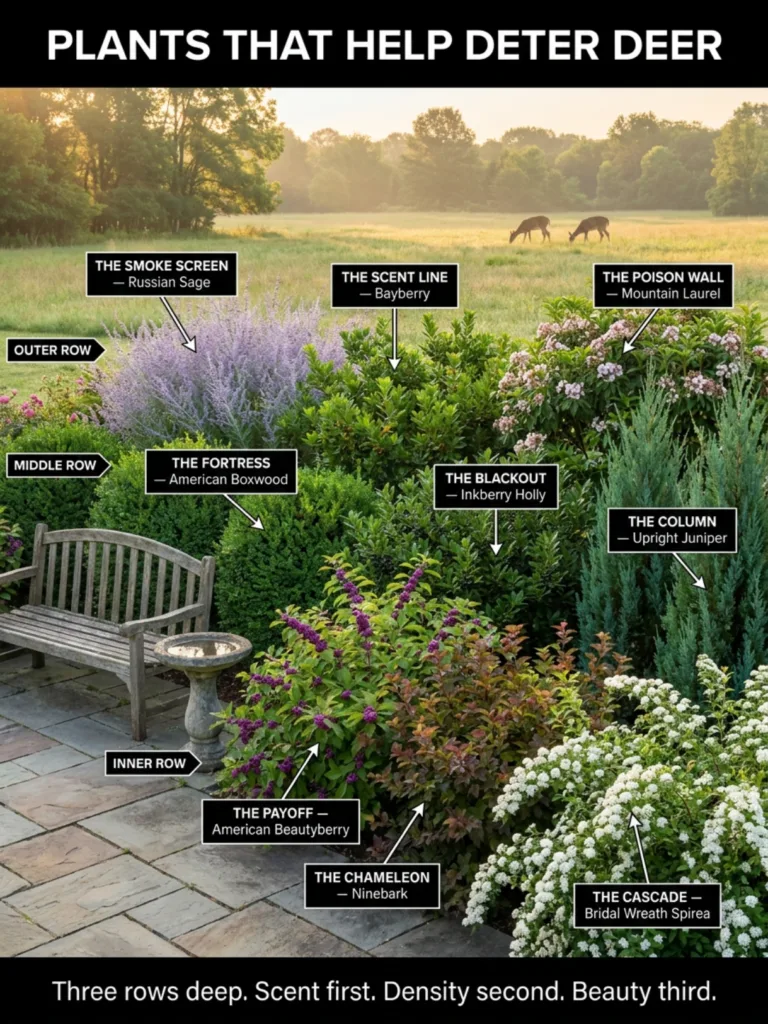 Visualize a strategic planting approach that helps keep deer away from your garden’s treasures.
The “Three Rows Deep” Strategy: A Layered Defense
One of the most effective strategies for deer-proofing your garden is to think in layers. Imagine building a protective barrier, not with fences, but with plants! This ‘three rows deep’ approach works by combining different deterrents to create a formidable natural barrier.
1. The Outer Row: Scent First (The ‘Smoke Screen’)
This is your first line of defense, designed to hit deer with a scent they dislike before they even get close to your more tempting plants. These plants often have strong, aromatic foliage that, while lovely to us, sends a clear ‘stay away’ message to deer.
- Lavender (Lavandula angustifolia): Its beautiful purple blooms and calming scent are a joy for humans but a turn-off for deer. It thrives in full sun and well-drained soil, perfect for USDA Zones 5-9.
- Salvia (Salvia nemorosa): Also known as ‘Meadow Sage,’ this plant offers vibrant spikes of blue, purple, or pink flowers. Its strong scent and slightly fuzzy leaves make it unappealing. Many varieties are hardy in Zones 4-9.
- Coneflower (Echinacea purpurea): With its iconic daisy-like flowers, coneflower is a pollinator magnet and a deer deterrent. Its coarse texture and strong scent are effective. Hardy in Zones 3-9.
- Marigolds (Tagetes spp.): The classic garden annual, marigolds are not just cheerful; their pungent scent is a well-known deer repellent. Plant them in sunny spots after the last frost.
- Herbs (Rosemary, Thyme, Mint): Many culinary herbs, like rosemary (Zones 7-10) and thyme (Zones 5-9), have strong, distinct aromas that deer avoid. Planting a border of these can be very effective.
2. The Middle Row: Density Second (The ‘Fortress’)
If a deer makes it past the scent barrier, this row presents a physical challenge. These plants typically have tough, prickly, or fuzzy textures that are unpleasant to browse, discouraging deer from pushing further into your garden.
- Lamb’s Ear (Stachys byzantina): Its soft, fuzzy, silver-grey leaves are beautiful but not appetizing to deer. It’s a fantastic groundcover for full sun to partial shade in Zones 4-8.
- Blue Oat Grass (Helictotrichon sempervirens): This ornamental grass forms dense, spiky clumps that deer tend to avoid. It adds great texture and movement to the garden and is hardy in Zones 4-9.
- Barberry (Berberis thunbergii): While some might find it invasive, many dwarf varieties of barberry (Zones 4-8) offer thorny protection and vibrant foliage, acting as a great deterrent.
- Russian Sage (Perovskia atriplicifolia): Its woody stems, pungent scent, and silvery foliage make it undesirable to deer. It thrives in hot, dry conditions in Zones 4-9.
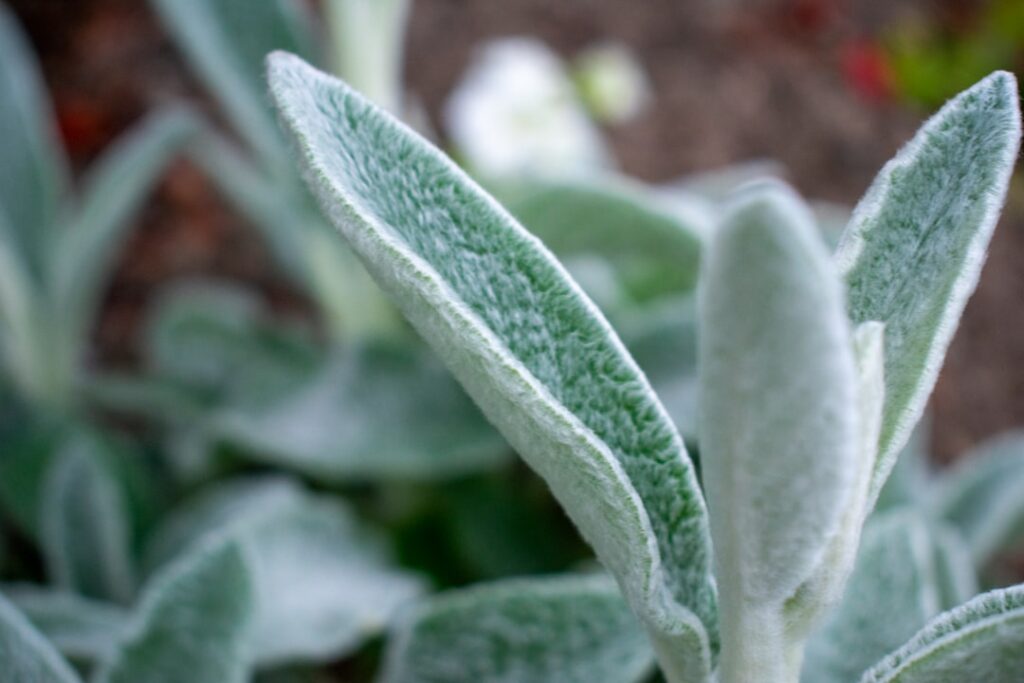 The unique texture of Lamb’s Ear can be a subtle yet effective deterrent.
3. The Inner Row: Beauty Third (The ‘Protected Treasures’)
This is where you can plant your most prized possessions – the plants deer usually adore, like hostas, roses, or certain vegetables. Surrounded by the outer two layers, these vulnerable plants are less likely to be discovered and munched upon. The idea is that deer will be put off by the outer defenses before they ever get a chance to taste what’s inside.
Consider placing your favorite edibles, delicate annuals, or any other plant you want to protect in this inner sanctuary. The effectiveness of this layer relies heavily on the strength of your outer and middle rows.
Beyond Plants: Holistic Deer Management
While strategic planting is incredibly effective, a holistic approach often yields the best results. Here are a few other tips to complement your plant-based defense:
- Repellents: Commercial or homemade repellents (often egg-based or hot pepper solutions) can provide an additional layer of protection, especially during peak browsing times or for particularly tempting plants. Remember to reapply after rain.
- Physical Barriers: For very specific plants or small areas, temporary netting or cages can offer foolproof protection without the need for a full fence.
- Scare Tactics: Motion-activated sprinklers or noise makers can occasionally deter deer, though they can become accustomed to these over time.
- Clean Up: Remove fallen fruit and vegetables promptly to avoid attracting deer with easy food sources.
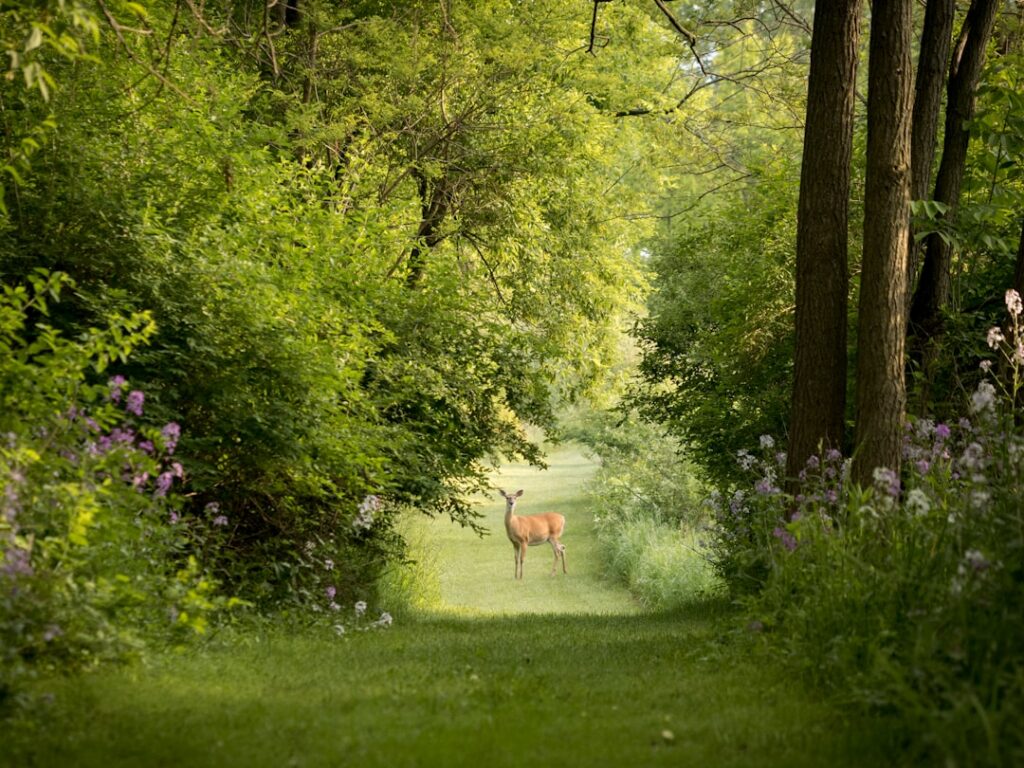 A well-planned garden can be a beautiful haven for you and a fortress against deer.
Cultivating Confidence in Your Garden
Creating a deer-resistant garden isn’t about giving up on your favorite plants; it’s about smart design and understanding nature’s rhythm. By embracing the ‘three rows deep’ strategy and incorporating deer-resistant plants into your landscape, you can reclaim your garden and enjoy its beauty without constant worry. It might take a little experimentation to see what works best in your specific environment, but the reward of a thriving, untouched garden is well worth the effort.
Remember, gardening is a journey of learning and discovery. With these tips, you’re not just planting a garden; you’re building a sustainable, harmonious space where both you and your plants can flourish. Happy gardening!