There’s a special kind of magic that twinkles in the twilight hours of a summer evening, isn’t there? It’s the gentle dance of fireflies, those enchanting little beacons of light that bring a sense of wonder and nostalgia to our gardens. If you’ve ever watched them glow, you know the feeling. What if I told you that inviting these glowing guests into your own backyard is easier than you think? It’s all about creating a welcoming home for them, and it starts with the right plants and a few simple habitat tweaks.
Many of us cherish the sight of fireflies, but their populations have been declining in some areas. By understanding what they need, we can turn our gardens into safe havens, ensuring future generations can experience their mesmerizing light shows. Let’s dig in and discover how to cultivate a garden that not only thrives but also twinkles with life after sunset.
The Firefly’s Secret Life: More Than Just a Pretty Glow
Before we talk about plants, it’s helpful to know a little about these fascinating insects. Fireflies, or lightning bugs as some call them, aren’t just one type of creature; there are over 2,000 species worldwide, each with its own unique light pattern. Most firefly species spend the majority of their lives as larvae, often living in moist soil, under leaf litter, or even in decaying wood. It’s during this larval stage that they hunt small prey like slugs, snails, and other soft-bodied insects, making them fantastic natural pest controllers in your garden!
When they mature into the flying adults we recognize, their main purpose is to mate. The glowing signals we see are their way of communicating. For adult fireflies, nectar from certain plants provides energy, and a safe, dark, and moist environment is crucial for laying eggs and for their larvae to develop. Keeping this in mind will help us design a truly firefly-friendly space.
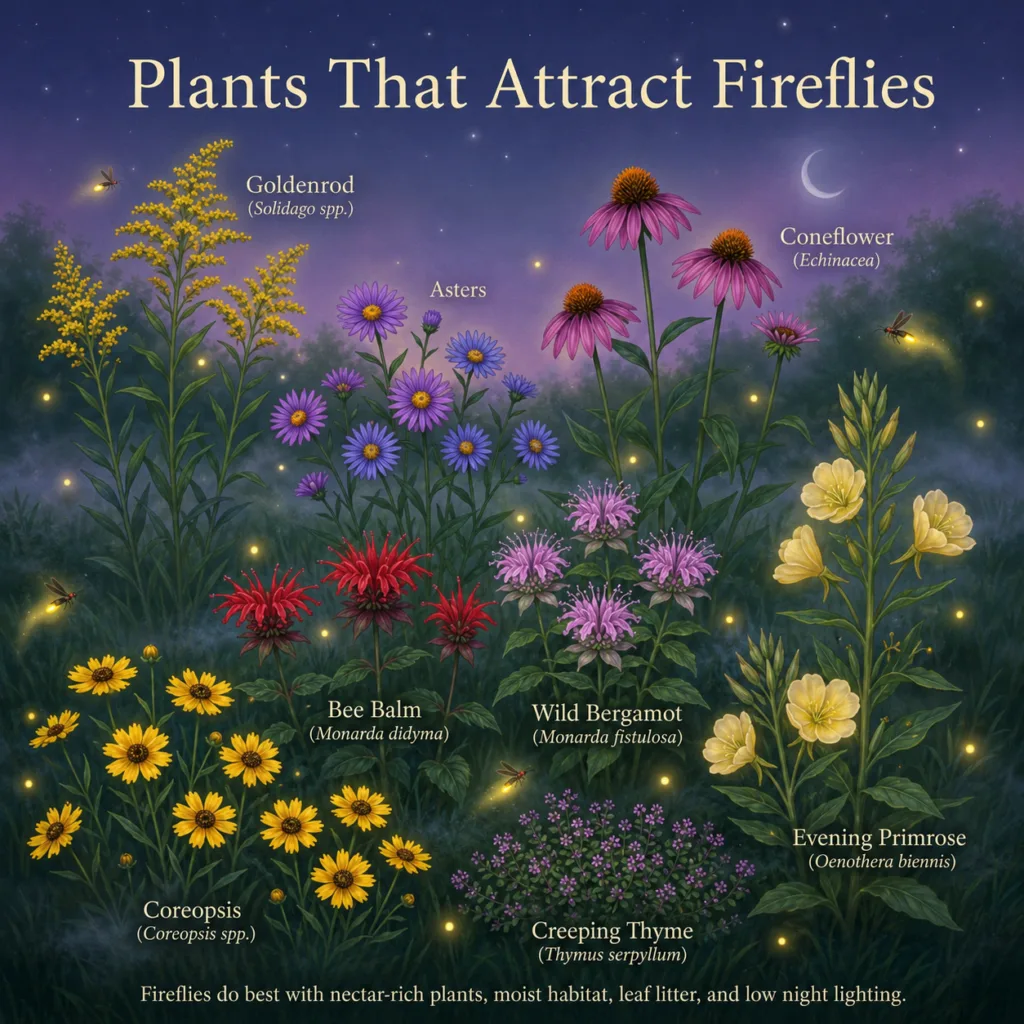 Creating a haven for fireflies starts with understanding their favorite plants and habitats.
Star Plants for Your Twinkling Sanctuary
When it comes to attracting fireflies, choosing the right plants is a wonderful first step. Many of these plants are native species that offer nectar for adult fireflies and create the kind of leafy, sheltered environment their larvae adore. Here are some fantastic choices that will make your garden irresistible to these luminous visitors:
1. Goldenrod (Solidago species)
- These cheerful yellow blooms are a late-season superstar, providing abundant nectar for many insects, including adult fireflies. They’re hardy and adaptable to various soil types, making them a reliable choice for many regions.
2. Coneflower (Echinacea species)
- With their distinctive cone-shaped centers and vibrant petals (often purple, but also pink, white, and yellow), coneflowers are nectar powerhouses. They’re drought-tolerant once established and a beautiful addition to any garden.
3. Evening Primrose (Oenothera biennis)
- True to its name, Evening Primrose opens its delicate yellow flowers at dusk, releasing a sweet fragrance that’s perfect for nocturnal visitors like fireflies and moths. It thrives in full sun to partial shade.
4. Aster (Symphyotrichum species)
- Another fall bloomer, asters come in a stunning array of purples, pinks, and whites, offering vital nectar when other flowers are fading. Their dense foliage also provides great shelter.
5. Bee Balm / Wild Bergamot (Monarda species)
- These striking, often spiky flowers are known for attracting a wide range of pollinators, and fireflies are no exception. Bee Balm prefers moist soil and good air circulation and comes in beautiful shades of red, pink, and purple. Wild Bergamot is a close relative with a more lavender hue.
6. Coreopsis (Coreopsis species)
- Often called ‘Tickseed,’ Coreopsis varieties offer sunny yellow, orange, or even red-tinged daisy-like flowers. They’re low-maintenance, bloom for a long time, and provide excellent ground cover and nectar.
7. Creeping Thyme (Thymus serpyllum)
- This aromatic ground cover produces tiny, charming flowers that attract small beneficial insects. It’s perfect for filling in gaps between stepping stones or along borders, offering nectar and a low-lying habitat.
Beyond the Blooms: Creating the Perfect Firefly Habitat
Plants are a fantastic start, but fireflies need a bit more than just a buffet of nectar. Remember their secret life? To truly make your garden a firefly magnet, you’ll want to think about their entire life cycle:
1. Embrace Moisture
Fireflies absolutely love moist environments. Their larvae thrive in damp soil, and adults appreciate humid conditions. Consider adding a water feature like a small pond, a bird bath, or even just ensuring areas of your garden stay consistently moist (but not waterlogged). Drip irrigation or regular watering during dry spells in planted areas can make a big difference.
2. Leave the Leaves Alone
That blanket of fallen leaves under trees and shrubs? It’s gold for fireflies! Leaf litter provides essential shelter for firefly larvae to hide, forage, and develop. Instead of raking every last leaf, consider leaving some in tucked-away corners of your garden or under specific plants. It also enriches your soil naturally, which is a win-win.
3. Ditch the Bright Lights
Perhaps the most crucial, yet often overlooked, factor is light pollution. Fireflies communicate using their bioluminescent flashes, and bright artificial lights at night can disrupt their mating signals, making it hard for them to find a mate. Try to minimize outdoor lighting, especially during peak firefly season (typically late spring to mid-summer). Opt for downward-facing, motion-sensor lights or switch to warm-spectrum LED bulbs if you need outdoor illumination.
4. Go Pesticide-Free
This goes for all beneficial insects, but it’s especially important for fireflies. Pesticides, insecticides, and herbicides don’t discriminate; they can harm firefly larvae and adults, disrupting their food sources and habitat. Embrace organic gardening practices, encourage natural predators, and let your garden’s ecosystem find its own balance.
Bringing It All Together: Your Firefly-Friendly Garden Plan
Ready to start planning your twinkling paradise? Here’s a simple action plan:
- Assess Your Space: Look at your garden. Where are the sunny spots? Where are the shadier, potentially moist areas?
- Choose Your Plants: Select a variety of the plants mentioned above that suit your climate and soil conditions. Many are adaptable across a wide range of USDA zones. Consider bloom times to ensure a continuous nectar source throughout the season.
- Create Diverse Habitats: Plan for areas with dense foliage, places for leaf litter, and consistently moist soil.
- Reduce Light Pollution: Evaluate your outdoor lighting and make adjustments.
- Practice Organic Methods: Commit to keeping your garden free of harmful chemicals.
A Little Effort, a Lot of Magic
Building a firefly-friendly garden is a rewarding endeavor that connects you more deeply with nature’s subtle wonders. It’s about more than just adding plants; it’s about fostering an entire ecosystem that supports these incredible creatures. With a little planning and a gentle hand, you can transform your backyard into a truly magical place where the stars don’t just shine above, but also twinkle right at your feet. Imagine sitting out on a warm evening, surrounded by the soft glow of fireflies – pure bliss! Your efforts will help ensure these beloved insects continue to light up our summer nights for years to come.