Ever walk through your vegetable patch and wish it felt a little more vibrant, a little more alive? What if I told you that adding a splash of color could not only make your garden prettier but also healthier, more productive, and less prone to pests? It’s not just wishful thinking; it’s the magic of companion planting with flowers!
Many experienced gardeners and small farmers know a secret: the right flowers planted near your vegetables can create a bustling ecosystem. These beautiful blooms act like tiny superheroes, inviting beneficial insects that munch on pests, attracting pollinators for better harvests, and sometimes even improving the soil. It’s like having a helpful neighbor, always ready to lend a hand (or a petal!).
Let’s dive into some of the most wonderful flower companions that can revolutionize your vegetable patch. You’ll be amazed at the natural harmony they bring.
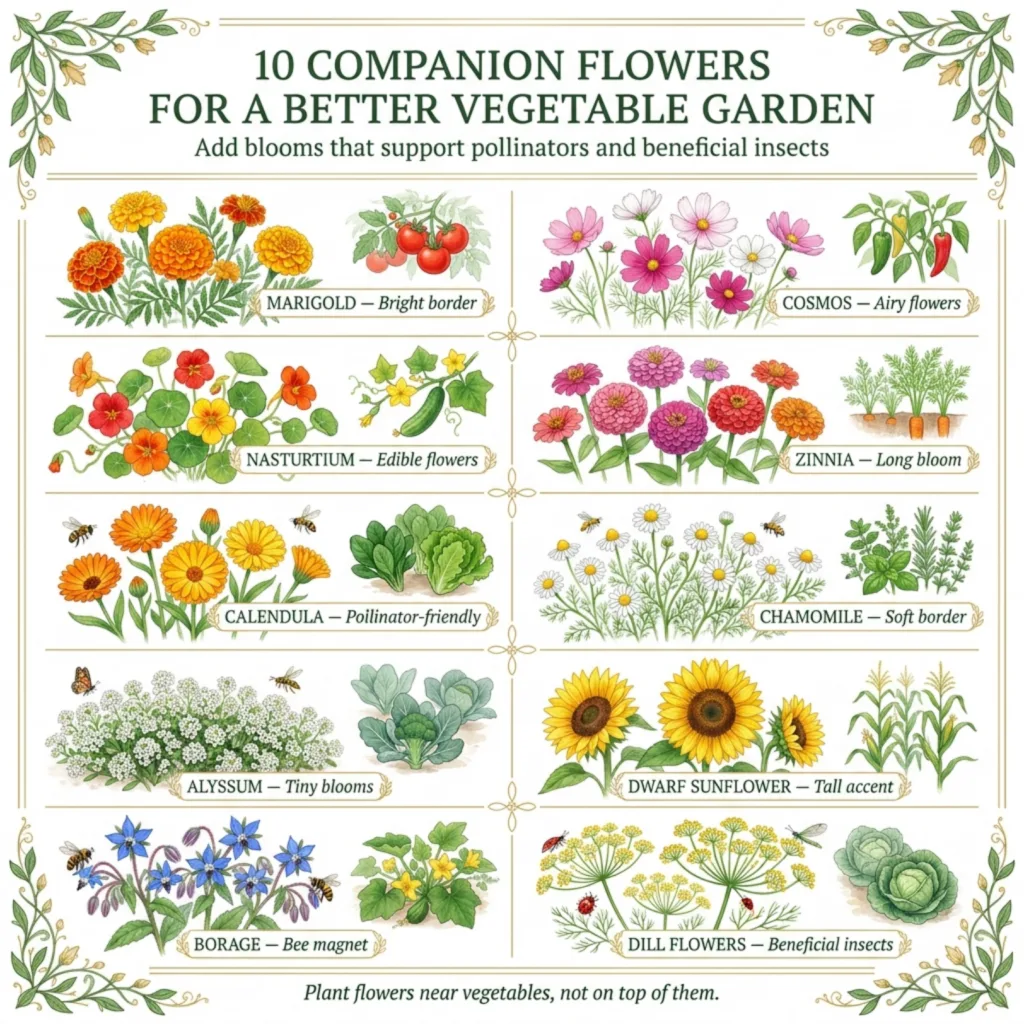 Discover which flowers can become your vegetable garden’s best friends.
Our Top 10 Flowering Friends for Your Veggie Patch
1. Marigolds (Tagetes spp.) – The Pest Patrol
These cheerful, bright orange and yellow flowers are more than just a pretty face. Marigolds are renowned for their ability to deter a host of garden nasties, especially nematodes (tiny worms that attack plant roots) and whiteflies. Their roots release a compound that keeps these soil-dwelling pests away. Plant them around tomatoes, potatoes, peppers, and even roses for a natural defense.
2. Borage (Borago officinalis) – The Bee Magnet & Tomato’s Best Friend
With its striking blue, star-shaped flowers, borage is an absolute magnet for bees and other pollinators. This means more pollination for all your fruiting plants! Borage is particularly cherished by tomato growers as it’s believed to deter tomato hornworms. It’s also thought to improve the flavor of tomatoes and strawberries. Plus, it’s edible and delicious!
3. Nasturtiums (Tropaeolum majus) – The Aphid Trap
Nasturtiums are fantastic for drawing aphids away from your prized vegetables. These vibrant flowers act as a ‘trap crop,’ luring aphids to their leaves, which you can then easily remove. They’re also edible, adding a peppery kick to salads. Plant them near squash, broccoli, kale, and fruit trees.
4. Calendula (Calendula officinalis) – The Beneficial Bug Attractor
Often called ‘pot marigold,’ calendula offers sunny yellow and orange blooms that attract beneficial insects like hoverflies and ladybugs. These helpful predators feast on aphids and other soft-bodied pests. Calendula also makes a beautiful, edible garnish and is known for its medicinal properties.
5. Sunflowers (Helianthus annuus) – The Tall Protector & Trellis
Beyond their majestic beauty, sunflowers offer practical benefits. Their tall stalks can act as a natural trellis for climbing beans or peas, providing support and vertical growing space. Their broad leaves offer shade to heat-sensitive plants like lettuce or spinach during the hottest parts of summer. They also attract many pollinators!
6. Cosmos (Cosmos bipinnatus) – The Delicate Defender
With their airy, colorful blooms, cosmos bring a touch of whimsy to the garden. More importantly, they attract beneficial insects like lacewings and parasitic wasps, which are excellent at controlling aphid populations and other small pests. Plant them near corn, beans, and leafy greens.
7. Zinnias (Zinnia elegans) – The Pollinator Powerhouse
Zinnias are a cut-flower garden favorite, but their bright, daisy-like blooms are equally loved by bees, butterflies, and hummingbirds. Planting them throughout your vegetable garden ensures consistent pollinator activity, leading to better fruit and vegetable set. They’re easy to grow and come in a huge array of colors.
8. Sweet Alyssum (Lobularia maritima) – The Living Mulch
This low-growing, carpeting flower produces masses of tiny white, pink, or purple blooms. Sweet Alyssum acts as a wonderful living mulch, helping to suppress weeds and retain soil moisture. Its small flowers are a favorite landing spot for tiny beneficial insects like hoverflies and parasitic wasps, which prey on aphids and other pests.
9. Dill (Anethum graveolens) – The Dual-Purpose Herb-Flower
While often thought of as an herb, dill’s feathery foliage and umbrella-like flower heads are fantastic. They attract a wide array of beneficial insects, including ladybugs, hoverflies, and predatory wasps, which are all excellent pest controllers. It’s also a host plant for swallowtail butterfly caterpillars. Plant it near cabbage and lettuce.
10. Chamomile (Matricaria chamomilla) – The ‘Plant Doctor’
Chamomile is sometimes called the ‘plant doctor’ because it’s believed to improve the health and growth of nearby plants. Its delicate white flowers attract beneficial insects, and a chamomile tea spray can even help combat damping-off disease in seedlings. Plus, you can harvest the flowers for a soothing tea!
Tips for Successfully Incorporating Flowers
- Placement is Key: Remember, you want your flowers near your vegetables, not right on top of them. Give both plants enough space to thrive. A border or interplanting within rows works beautifully.
- Variety is the Spice: Don’t just pick one or two! A diverse range of flowers will attract a wider array of beneficial insects and pollinators, creating a more robust ecosystem.
- Observe and Learn: Spend time watching your garden. Which flowers are attracting the most activity? Are certain pests decreasing? Your garden will tell you what’s working best.
- Consider Sunlight Needs: Make sure your chosen flowers and vegetables have similar sunlight and water requirements to ensure they both flourish in their shared space.
Cultivate Beauty, Harvest Abundance
Adding flowers to your vegetable garden isn’t just about making it look pretty; it’s about harnessing nature’s wisdom to create a more resilient, productive, and joyous space. By inviting these hardworking blooms into your garden, you’re not only fostering a thriving environment but also reducing the need for synthetic interventions.
So, why not pick a few of these flowering friends and invite them to your garden party this season? You might just find that your vegetables grow healthier, your harvests are more bountiful, and your time in the garden becomes even more delightful. Happy planting!