Boost Your Harvest: The Right Support for Every Vegetable!
Gardening is a rewarding journey, but sometimes our plants need a little extra help to reach their full potential. Providing the right support for your vegetables isn’t just about aesthetics; it’s a crucial step towards a healthier garden and a more abundant harvest. From preventing disease to maximizing sunlight, proper plant support makes a world of difference.
Why Plant Support Matters for Your Harvest
You might wonder why taking the time to stake, cage, or trellis your plants is so important. Here’s why it’s a game-changer:
- Prevents Disease: Keeping foliage and fruit off the ground improves air circulation, reducing the risk of fungal diseases like blight and powdery mildew.
- Maximizes Sunlight: Upright plants can absorb more sunlight, leading to better photosynthesis and stronger growth.
- Easier Harvesting: Supported plants present their fruits more openly, making them easier to spot and pick without damaging the plant.
- Saves Space: Vining plants, especially, can be trained upwards, freeing up valuable garden bed space for more plants.
- Protects Fruits: Lifting fruits off the soil protects them from pests, rot, and soil-borne pathogens.
- Increases Yield: Healthier plants that are well-supported tend to produce more, larger, and higher-quality fruits.
Choosing the Right Support for Your Vegetables
Different vegetables have different needs. What works for a tomato might not be ideal for a cucumber. Let’s explore the most common types of plant support:
1. Stakes
Stakes are simple, individual poles (wood, bamboo, metal) inserted into the ground next to a plant. They’re great for plants that grow tall and need vertical support, but don’t produce excessively heavy fruit or spread widely.
- Best for: Indeterminate (vining) tomatoes (when pruned to a single stem), peppers, eggplants, and some tall flowering plants.
- How to use: Drive the stake firmly into the ground 6-8 inches away from the plant stem at planting time. As the plant grows, gently tie the stem to the stake with soft garden ties or old cloth strips, leaving room for the stem to thicken.
2. Cages
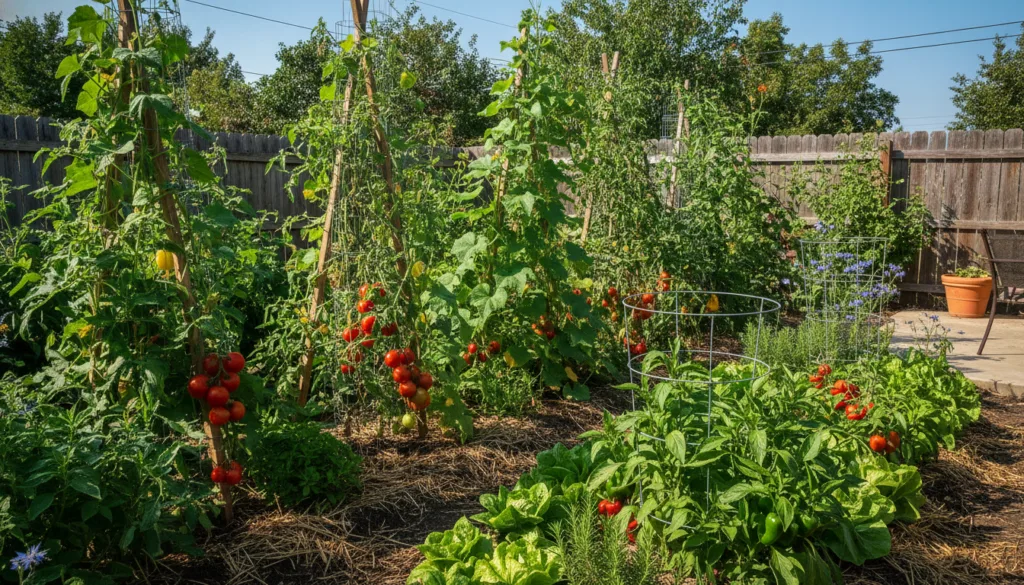
Tomato cages are a popular choice, providing support on all sides. They’re ideal for bushy plants that produce heavy fruits.
- Best for: Determinate (bush) tomatoes, peppers, eggplants, and zucchini (smaller varieties).
- How to use: Place the cage over the young plant soon after transplanting. The plant will grow up through the cage, with branches supported by the wire structure.
3. Trellises
Trellises come in many forms – flat panels of wire or netting, fan-shaped structures, or even DIY designs – providing a vertical surface for climbing plants to cling to.
- Best for: Cucumbers, vining beans, peas, vining squash, small melons, and some types of indeterminate tomatoes.
- How to use: Install trellises at planting time. Gently guide the tendrils or main stems of your vining plants to begin climbing. They will naturally wrap around the structure.
4. Netting
Similar to trellises, netting offers a flexible grid for climbing plants. It’s often stretched between posts to create a living wall of greenery.
- Best for: Peas, pole beans, and lightweight vining crops.
- How to use: Securely attach netting to sturdy posts or a frame. Guide plants through the mesh as they grow.
Specific Support Guides for Popular Vegetables
Tomatoes
- Indeterminate (Vining) Tomatoes: These grow indefinitely and can reach great heights. They benefit most from tall stakes (5-7 feet) combined with diligent pruning, or a sturdy trellis system.
- Determinate (Bush) Tomatoes: These grow to a predetermined size, fruit, and then often decline. They are perfect for tomato cages, which offer good all-around support without requiring much pruning.
Cucumbers
Cucumbers are natural climbers! Trellises or netting are ideal. Training them vertically keeps the fruit clean, prevents rot, and makes harvesting a breeze. Ensure your trellis is strong enough to hold the weight of mature vines and fruit.
Peppers and Eggplants
While generally smaller than tomatoes, peppers and eggplants can become top-heavy when laden with fruit. A single sturdy stake per plant or a small cage can prevent branches from breaking and keep fruits off the ground.
Beans and Peas
- Pole Beans: These are avid climbers and thrive on trellises, netting, or even a teepee made of stakes.
- Bush Beans: Generally don’t require support, but if your variety gets particularly heavy with pods, a short cage or pea netting can keep them tidy.
- Peas: All peas, even bush varieties, appreciate something to climb. Pea netting or a small trellis works wonders.
Vining Squash & Melons (Small Varieties)
While large pumpkins and winter squash typically spread on the ground, smaller vining squash like delicata or smaller melons can be grown vertically on a very strong trellis or arbor. You might need to cradle individual fruits in slings made of old pantyhose or fabric strips to prevent them from breaking the vine.
Tips for Successful Plant Support
- Install Early: It’s much easier to put supports in place when plants are young and small, minimizing root disturbance and stem damage.
- Be Gentle: When tying plants, use soft materials and create loose loops to avoid girdling the stem as it grows.
- Keep it Clean: Remove diseased leaves or fallen debris around the base of supported plants to maintain good air circulation.
- Check Regularly: As plants grow, they may need additional ties or adjustments to their support system.
- Consider Material: Choose durable materials that can withstand weather and the weight of your harvest.
Harvesting the Rewards
Investing a little time in providing proper support for your garden vegetables will pay dividends in the form of healthier plants, easier maintenance, and a significantly more abundant and cleaner harvest. It transforms your garden into an organized, productive space.
What are your favorite ways to support your vegetables? Share your tips and tricks with our community!