Welcome, fellow garden enthusiasts! If you’ve ever dreamed of a thriving garden overflowing with life, you know that every magnificent plant starts with a tiny seed. And just like any great journey, the first step is often the most crucial. Today, we’re diving deep into the ‘Art of Precise Planting,’ focusing on one of the most fundamental elements for success: crafting the optimal soil mixture for your robust garden seedlings.
Many new gardeners face the challenge of seeds failing to germinate or seedlings struggling to thrive. Often, the culprit isn’t a lack of love or attention, but rather an unsuitable growing medium. Think of it this way: a newborn baby needs a carefully prepared environment to grow strong, and your precious seedlings are no different!
Why the Right Soil Matters for Seedlings
Seedlings are delicate. They have unique needs that differ significantly from mature plants. They require:
- Excellent Drainage: To prevent ‘damping-off,’ a fungal disease that can quickly wipe out young sprouts.
- Good Aeration: Roots need oxygen to breathe and grow, especially when they’re just starting.
- Moisture Retention: A consistent level of moisture is crucial for germination and initial growth, but without becoming waterlogged.
- Fine Texture: Tiny roots can easily navigate a fine, crumbly mix, allowing for strong root development.
- Low Nutrient Content: Believe it or not, too many nutrients can ‘burn’ delicate seedling roots. Seeds contain enough stored energy for initial growth, and a lean mix encourages roots to seek out nutrients as they grow.
- Sterility: To minimize the risk of pests, diseases, and weed seeds that can outcompete your young plants.
Key Components of an Ideal Seed Starting Mix
While you can certainly buy pre-made seed starting mixes, understanding the components allows you to choose wisely or even create your own bespoke blend. Here are the essentials:
1. Peat Moss or Coco Coir (Base Material)
- Purpose: Provides structure, excellent moisture retention, and good aeration.
- Why it’s great: Both are lightweight and hold moisture without becoming heavy. Coco coir is a more sustainable alternative to peat moss.
- Ratio: Typically the largest component, around 50-60%.
2. Perlite or Vermiculite (Aeration & Drainage)
- Purpose: Improves drainage, prevents compaction, and adds aeration.
- Why it’s great: Perlite is a volcanic rock that creates air pockets, while vermiculite retains moisture and nutrients while still providing aeration. Many gardeners use a mix of both.
- Ratio: 20-30% of your mix.
3. Fine Compost or Worm Castings (Gentle Nutrients)
- Purpose: Provides a gentle, slow-release source of nutrients as seedlings begin to grow beyond their initial stored energy.
- Why it’s great: Enriches the soil biome and offers essential micronutrients without overwhelming young roots. Ensure it’s finely sifted and mature.
- Ratio: 10-20% of your mix. Use sparingly for very young seedlings.
4. Fine Sand (Optional, for Extra Drainage)
- Purpose: Can be added to very heavy mixes or for seeds that specifically require sharper drainage.
- Why it’s great: Helps prevent waterlogging. Ensure it’s horticultural or ‘sharp’ sand, not play sand.
- Ratio: 0-10%, depending on other components and specific plant needs.
DIY Seed Starting Mix Recipe
Ready to get your hands dirty? Here’s a simple, effective recipe to create your own optimal seed starting mix:
- Gather Your Ingredients:
- 2 parts sieved peat moss or coco coir
- 1 part perlite
- 1 part vermiculite
- 0.5 part fine, mature compost or worm castings (optional for very nutrient-sensitive seeds)
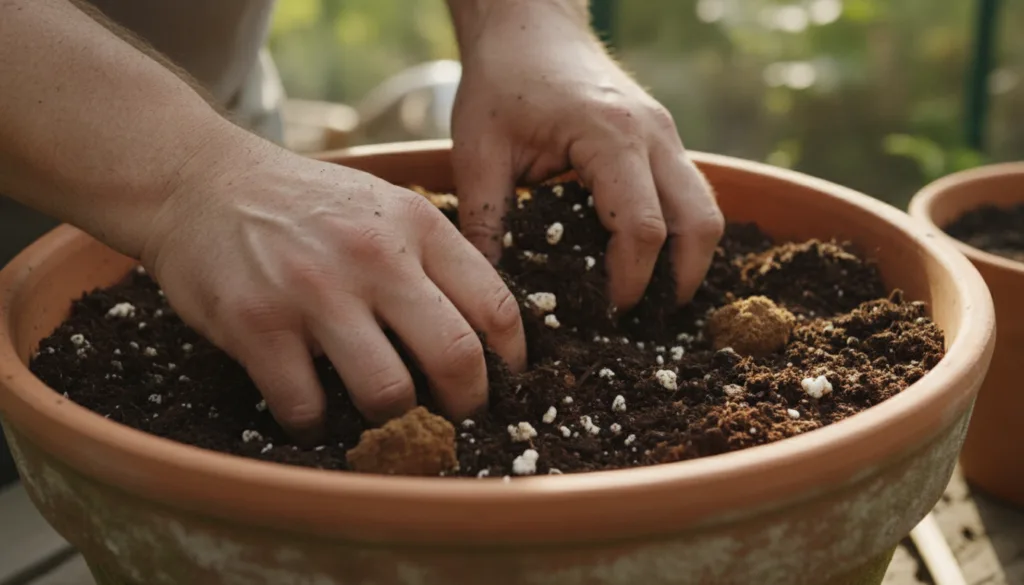
- Mix Thoroughly: In a large tub or wheelbarrow, combine all ingredients. Use gloves and a small trowel or your hands to mix until everything is uniformly distributed.
- Moisten Lightly: Add water gradually, mixing as you go, until the mixture is evenly moist but not soggy. It should feel like a wrung-out sponge – able to hold its shape when squeezed, but no water should drip out.
- Sterilize (Optional but Recommended): To eliminate potential pathogens or weed seeds, you can sterilize your mix. Spread the moist mix in shallow baking pans and bake at 200°F (93°C) for 30 minutes. Let it cool completely before using.
Tips for Success
- Always Use Fresh Mix: Don’t reuse old potting mix for starting seeds, as it can harbor diseases and pests.
- Label Everything: It’s easy to forget what you planted where. Use durable labels.
- Gentle Watering: Water from the bottom or use a fine spray to avoid disturbing tiny seeds and seedlings.
- Consistent Environment: Provide consistent temperature, light, and humidity for best germination rates.
By taking the time to prepare the right foundation – your soil – you’re giving your seedlings the best possible start in life. This precise approach to planting will lead to stronger, healthier plants and a more abundant harvest, making all your gardening dreams come true!
What’s your go-to soil mix for starting seeds? Share your tips and tricks with us in the comments below!