Understanding your blood pressure range is vital for heart health. High readings increase risks, so empowering yourself with knowledge is the first step to keeping your heart strong! Blood pressure is a key indicator of your cardiovascular health, reflecting the force of blood against the walls of your arteries as your heart pumps it around your body.
Ignoring your blood pressure can lead to serious health issues, including heart attack, stroke, and kidney disease. The good news is that managing your blood pressure is often within your control through lifestyle choices and, when necessary, medical guidance. This guide will help you understand what your blood pressure numbers mean and how they relate to your age, empowering you to take charge of your well-being.
What Do Your Blood Pressure Numbers Mean?
When you get your blood pressure checked, you’ll see two numbers:
- Systolic Pressure (Top Number): This measures the pressure in your arteries when your heart beats.
- Diastolic Pressure (Bottom Number): This measures the pressure in your arteries when your heart rests between beats.
Both numbers are crucial for assessing your heart health. A reading of 120/80 mmHg is generally considered ideal for most adults.
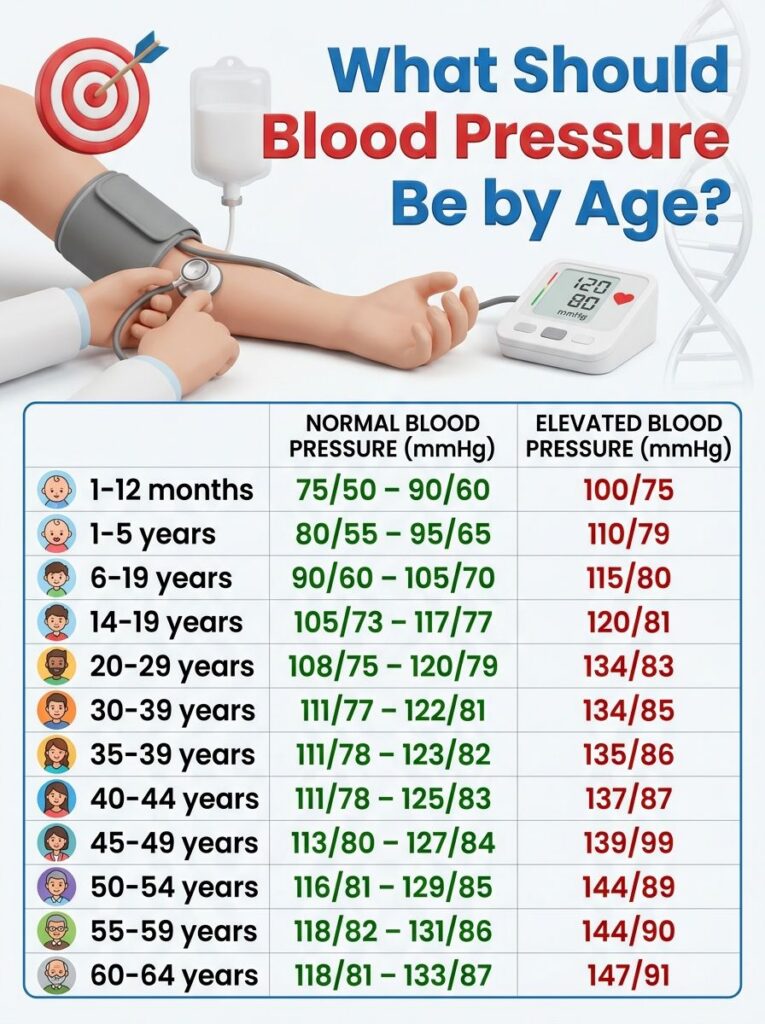
Blood Pressure Ranges by Age: What’s Normal for You?
While 120/80 mmHg is a universal healthy target, some variations can occur due to age, lifestyle, and individual health conditions. It’s important to remember that these are general guidelines, and personalized advice from your doctor is always recommended.
General Blood Pressure Categories:
- Normal: Less than 120/80 mmHg
- Elevated: Systolic between 120-129 mmHg and diastolic less than 80 mmHg
- High Blood Pressure (Hypertension Stage 1): Systolic between 130-139 mmHg or diastolic between 80-89 mmHg
- High Blood Pressure (Hypertension Stage 2): Systolic 140 mmHg or higher or diastolic 90 mmHg or higher
- Hypertensive Crisis: Systolic over 180 mmHg and/or diastolic over 120 mmHg (requires immediate medical attention)
Healthy Habits for a Healthy Heart
Maintaining healthy blood pressure is a proactive journey. Small, consistent changes can make a significant difference. Here are some science-backed strategies you can adopt:
1. Embrace a Balanced Diet
- Reduce Sodium: Too much salt can lead to fluid retention and increased blood pressure. Focus on whole, unprocessed foods and limit packaged snacks.
- Boost Potassium: Potassium helps balance sodium levels. Incorporate potassium-rich foods like bananas, spinach, sweet potatoes, and avocados.
- DASH Diet: The Dietary Approaches to Stop Hypertension (DASH) diet emphasizes fruits, vegetables, whole grains, lean protein, and low-fat dairy while limiting saturated fat, cholesterol, and sodium.
2. Stay Active Regularly
- Aerobic Exercise: Aim for at least 150 minutes of moderate-intensity aerobic activity or 75 minutes of vigorous-intensity activity per week. This includes brisk walking, jogging, swimming, or cycling.
- Strength Training: Incorporate strength training exercises at least twice a week to build muscle and improve overall fitness.
3. Manage Stress Effectively
- Mindfulness & Meditation: Practices like meditation, deep breathing exercises, and yoga can help calm your nervous system and reduce stress hormones.
- Prioritize Sleep: Aim for 7-9 hours of quality sleep per night. Poor sleep can contribute to higher blood pressure.
- Hobbies & Relaxation: Engage in activities you enjoy to unwind and de-stress, whether it’s reading, gardening, or listening to music.
4. Maintain a Healthy Weight
Losing even a small amount of weight if you are overweight or obese can significantly lower your blood pressure. Work towards a healthy BMI through a combination of diet and exercise.
5. Limit Alcohol & Quit Smoking
Excessive alcohol consumption can raise blood pressure. If you drink, do so in moderation. Smoking is a major risk factor for heart disease and significantly elevates blood pressure, so quitting is one of the best things you can do for your heart.
Consult Your Doctor
While lifestyle changes are powerful, always consult your doctor for personalized advice. Regular check-ups are essential to monitor your blood pressure and discuss any concerns or necessary medical treatments. Your doctor can help you understand your specific readings, especially in relation to your age and overall health profile.
What’s Your Healthy Habit?
Do you know your latest blood pressure reading? Taking charge of your heart health starts with awareness and action. Share your healthy habits in the comments below – what’s one healthy habit you practice daily for your heart?