Healthy fats are not just “extra calories.” They help your body build hormones, protect your brain, absorb fat-soluble vitamins (A, D, E, K), and keep your skin barrier strong.
But here’s the part most people miss: not all “omega” fats work the same way.
- Omega-6 (especially linoleic acid) is an essential fat, meaning your body cannot make it and you must get it from food.
- Omega-9 (often oleic acid) is not essential because your body can produce it, but it still shows up in many heart-healthy diets.
The goal is not to fear omega-6 or chase omega-9. The goal is to choose higher-quality fat sources and keep your overall pattern balanced.
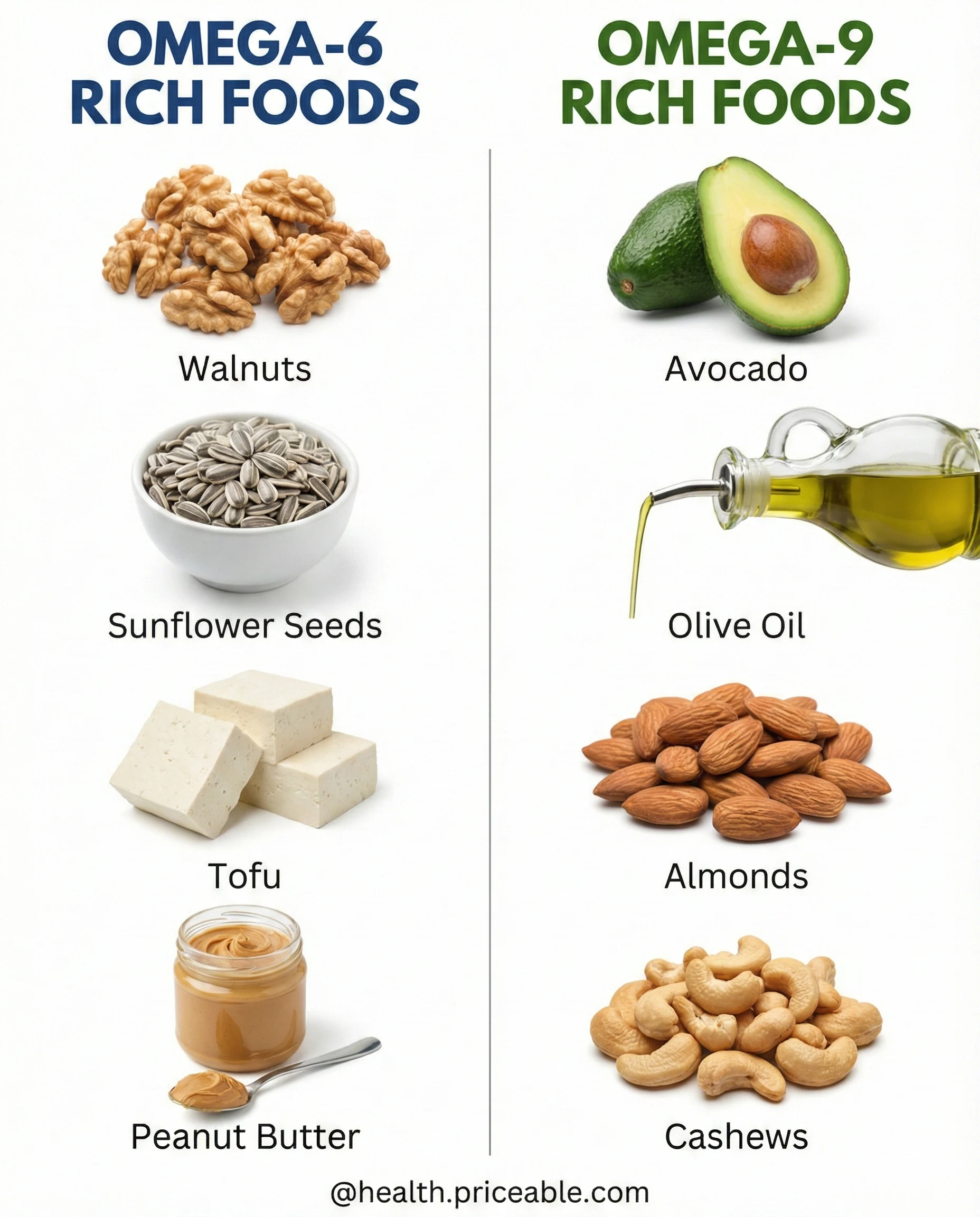
Omega-6 Rich Foods
Omega-6 fats often get blamed online, but the research is more nuanced. Large reviews and heart-health organizations note that omega-6 polyunsaturated fats can support cardiovascular health when they replace saturated fats.
The key is to get omega-6 from whole foods (nuts, seeds, soy) more often than from ultra-processed sources.
1. Walnuts
Walnuts are one of the most nutrient-dense nuts, providing omega-6 fats plus plant-based omega-3 (ALA) and antioxidants.
How to use
- Add to oatmeal or yogurt
- Sprinkle on salads
- Blend into pesto-like sauces for pasta or bowls
Best tip
Keep portions moderate (a small handful). Nuts are healthy, but calorie-dense.
2. Sunflower Seeds
Sunflower seeds are rich in omega-6 fats and also known for vitamin E, a fat-soluble antioxidant that supports skin and immune health.
How to use
- Sprinkle on salads or soups
- Mix into yogurt bowls
- Add to homemade trail mix
Best tip
Choose lightly salted or unsalted to avoid excess sodium.
3. Tofu
Tofu provides omega-6 fats in a “whole-food package,” plus plant protein, making it especially useful for balanced meals.
How to use
- Pan-sear and add to stir-fries
- Blend into smoothies for creaminess
- Bake with soy sauce, garlic, and spices
Best tip
Pair tofu with fiber-rich vegetables to stay full longer.
4. Peanut Butter
Peanut butter offers omega-6 fats, plus protein, and can be very satisfying.
How to use
- Stir into oatmeal
- Add to smoothies
- Make a simple peanut sauce for noodles or bowls
Best tip
Look for peanut butter with short ingredients: peanuts (and maybe salt). Sweetened versions can add sugar quickly.
Omega-9 Rich Foods
Omega-9 fats are commonly found in monounsaturated fat sources, especially olive oil and avocado. These foods are strongly associated with heart-friendly eating patterns. Omega-9 fats are not “required” like omega-6, but they are often easy to include because they improve flavor and satiety.
1. Avocado
Avocado is rich in monounsaturated fat (omega-9), plus fiber. It supports fullness and makes meals feel satisfying.
How to use
- Add to eggs or grain bowls
- Mash onto toast with a pinch of salt
- Blend into smoothies for a creamy texture
Best tip
If you are working on weight loss, avocado is healthy but energy-dense. A quarter to half avocado is a practical portion for many people.
2. Olive Oil
Olive oil is one of the best-known omega-9 sources and a staple in Mediterranean-style eating patterns.
How to use
- Drizzle on salads and cooked vegetables
- Use in marinades
- Finish soups with a small swirl for flavor
Best tip
For higher-heat cooking, use moderate heat and avoid burning oils.
3. Almonds
Almonds provide omega-9 fats, plus fiber, magnesium, and vitamin E. Your earlier example was perfect: they are one of the best nuts for nutrient density.
How to use
- Snack on a small handful
- Add to oatmeal or yogurt
- Use almond butter in smoothies
Best tip
Portion matters. Nuts are beneficial, but easy to overeat mindlessly.
4. Cashews
Cashews contain mostly monounsaturated fats (omega-9) and have a naturally creamy texture.
How to use
- Blend into creamy sauces
- Add to stir-fries
- Snack with fruit for balance
Best tip
If you use cashews often, choose roasted unsalted versions to reduce sodium.
Do You Need to “Balance” Omega-6 and Omega-9?
A more helpful approach is this:
- Omega-6 is essential—your body needs it.
- Omega-6 is not automatically inflammatory in real-life diets, especially when it comes from whole foods and replaces saturated fat.
- Many experts emphasize that it’s often more important to ensure you get enough omega-3s than to obsess over omega-6 ratios.
So instead of stressing about perfection, aim for variety:
- Mix nuts and seeds
- Use olive oil regularly
- Include tofu or legumes as protein options
- Keep ultra-processed fats and snacks as “sometimes foods”
When You’ll Notice Changes
Healthy fats don’t work like a stimulant. They support your body gradually.
- Within a few days: better satiety and steadier energy after meals (especially when fats are paired with protein + fiber)
- Within 6–12 weeks: lipid markers (like cholesterol and triglycerides) often show measurable improvements when diet quality is consistent
Quick Safety Notes
- Allergies: nuts (walnuts, almonds, cashews) and peanuts are common allergens.
- Digestive sensitivity: large amounts of nuts, seeds, or nut butters can cause bloating in some people. Start smaller.
- Calorie density: healthy fats still add up. Use measured portions if weight loss is a goal.
- If you take blood thinners or have a medical condition, discuss major diet changes with your clinician.
Final Takeaway
Omega-6 and omega-9 fats can both fit into a heart-supportive diet. The difference is that omega-6 is essential, while omega-9 is beneficial but not required.
For a simple weekly routine:
- Use olive oil + avocado often
- Add walnuts or almonds a few times per week
- Use tofu as a protein option
- Enjoy peanut butter in measured portions
Related Science Sources
- Linoleic acid (omega-6) is essential because humans can’t synthesize it. (Linus Pauling Institute)
- Omega-9 fats are not considered essential in the diet. (Wikipedia)
- Higher omega-6 PUFA intake is associated with lower coronary heart disease risk when replacing saturated fats. (ahajournals.org)
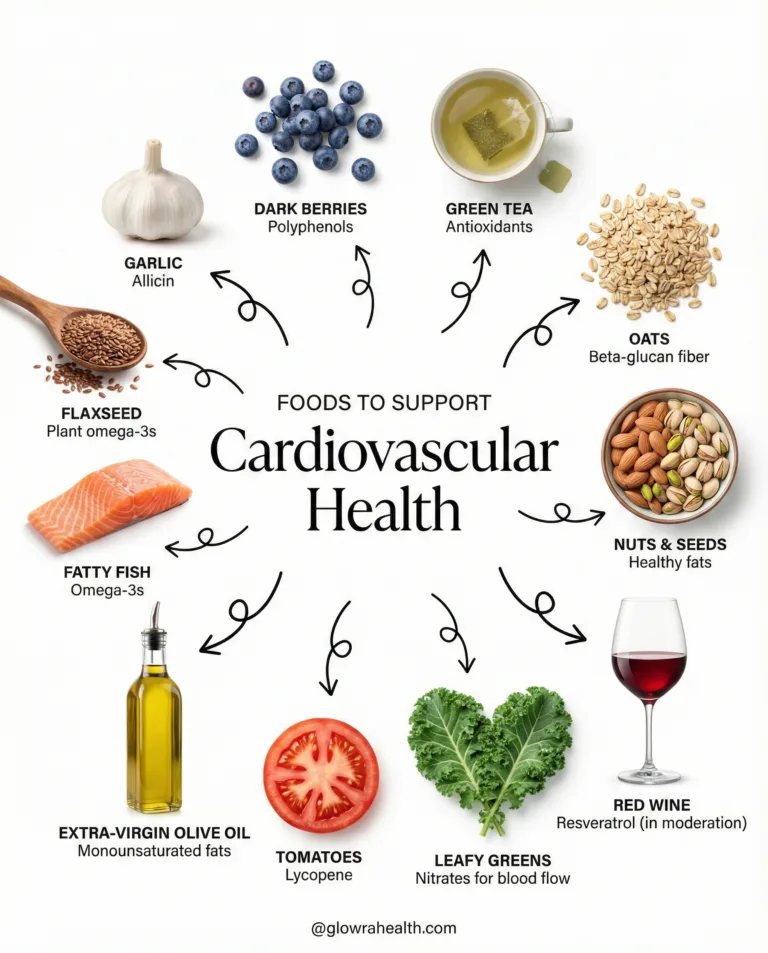
Read more about “10 foods for cardiovascular health”