Light foods leave you hungry because they are designed to look filling while digesting too quickly to sustain appetite control.
Let’s break down why this happens, and what actually works better for fullness and energy.
Foods That “Look Light” but Often Leave You Hungry
Many foods are marketed or perceived as light, clean, or low-calorie.
However, these options often digest quickly and fail to sustain fullness.
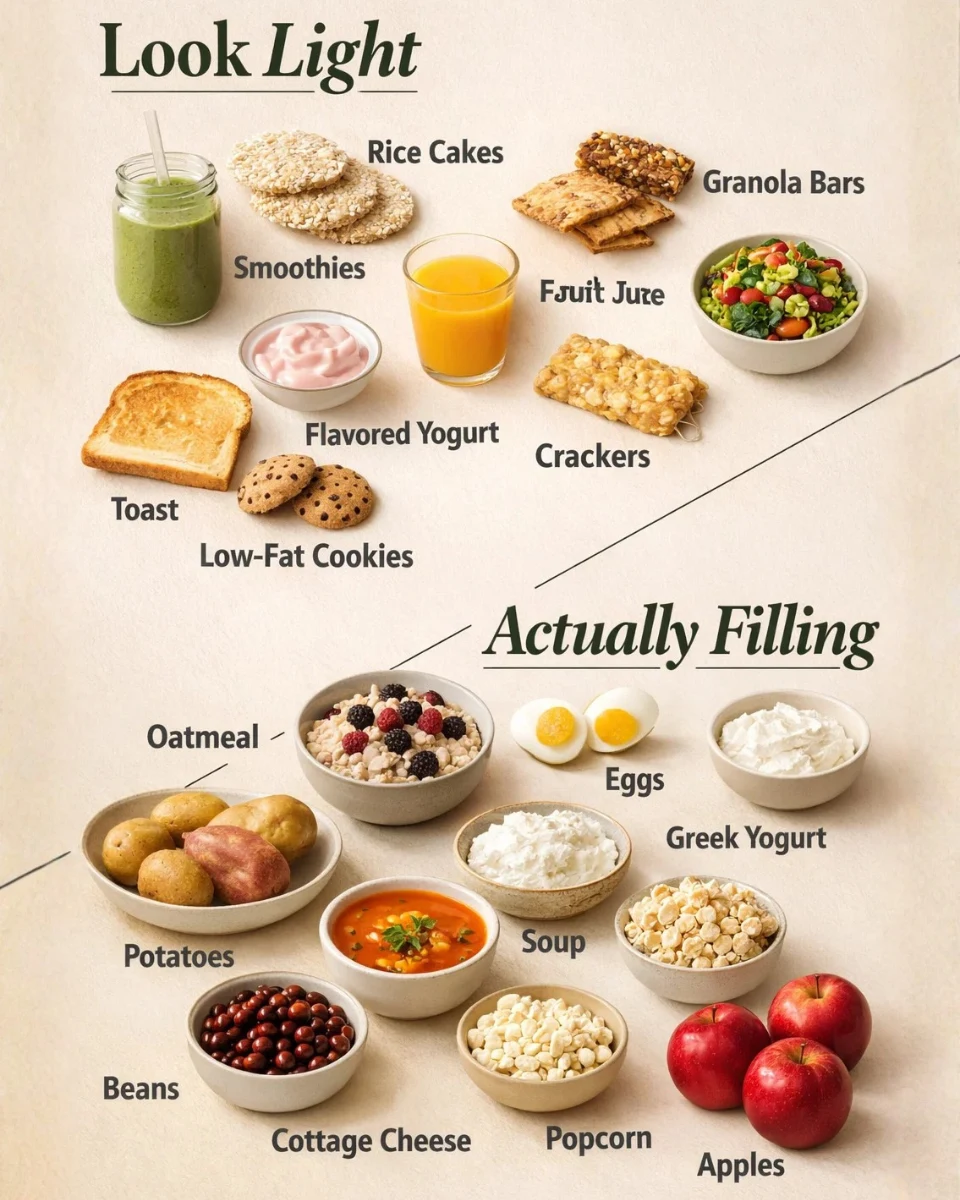
From the infographic, common “look light” foods include:
-
Smoothies
-
Rice cakes
-
Granola bars
-
Fruit juice
-
Crackers
-
Flavored yogurt
-
Toast
-
Low-fat cookies
These foods tend to share similar characteristics:
-
Low protein
-
Minimal fat
-
Highly processed or liquid-based
Because of this structure, they often pass through the stomach quickly and trigger hunger soon after eating.
Foods That Are Actually More Filling
In contrast, the foods shown in the “Actually Filling” group work differently.
They slow digestion, stabilize blood sugar, and support satiety signals.
Foods highlighted in the infographic include:
-
Oatmeal
-
Eggs
-
Greek yogurt
-
Soup
-
Potatoes
-
Beans
-
Cottage cheese
-
Popcorn
-
Apples
These foods may not look “light,” but they are structurally more satisfying due to:
-
Higher protein or fiber
-
Natural volume
-
Solid texture that requires chewing
As a result, they tend to keep you full longer, even at similar calorie levels.

The Problem With “Look Light” Foods
Foods in the “Look Light” category often share three traits:
-
Low protein
-
Low fat
-
Highly processed or liquid
Examples include smoothies, fruit juice, rice cakes, crackers, flavored yogurt, toast, and low-fat cookies.
Why they fail to keep you full
From a physiological perspective:
-
Liquid calories pass through the stomach faster than solid foods
-
Refined carbohydrates spike blood sugar, then drop it quickly
-
Low protein and fat fail to activate satiety hormones like GLP-1 and PYY
The result is predictable:
You may feel full briefly, then hungry again within 1–2 hours.
This is why “light” snacks often lead to constant grazing, cravings, or overeating later in the day.
What “Actually Filling” Foods Do Differently
Foods in the “Actually Filling” group work because they slow digestion and stabilize energy.
Key features include:
-
Higher protein content
-
Natural fats or fiber
-
Solid structure that requires chewing
Examples from the infographic include oatmeal, eggs, Greek yogurt, soup, potatoes, beans, cottage cheese, popcorn, and apples.
Why these foods work
These foods support fullness by:
-
Slowing gastric emptying, so food stays in the stomach longer
-
Reducing blood sugar swings, preventing rebound hunger
-
Activating satiety signals through protein, fiber, or volume
Importantly, these foods are not necessarily “heavy” or unhealthy. They are simply structurally more satisfying.
Satiety Is About Structure, Not Calories Alone
A common misconception is that eating less means choosing the lightest option.
In reality, satiety depends more on food structure than calorie count.
For example:
-
A bowl of oatmeal often keeps people fuller than a smoothie with similar calories
-
Whole apples tend to satisfy more than apple juice
-
Eggs or Greek yogurt reduce hunger better than low-fat snacks
Eating foods that require chewing, digestion, and gradual absorption helps regulate appetite naturally.
How to Build More Filling Meals (Without Eating More)
Instead of focusing on “light” labels, aim for meals that include at least one of the following:
-
A protein anchor (eggs, yogurt, beans, fish)
-
Natural fiber or volume (oats, potatoes, apples, soup)
-
Minimal processing
You do not need to eat large portions. You need foods that work with your digestion, not against it.
When “Light” Foods Can Still Fit
This does not mean smoothies or granola bars are always bad.
They can work:
-
As part of a balanced meal
-
When combined with protein or fat
-
When used intentionally, not as a meal replacement
The issue is relying on them alone to control hunger.
A Simple Reframe to Remember
If a food goes down quickly and digests fast, it will usually leave you hungry faster.
If a food takes time to eat and digest, it is more likely to keep you satisfied.
Want to Go Deeper? Read More on the Blog
If this topic resonates with you, you may find these related articles helpful:
-
How breakfast structure affects hunger and energy levels
-
Why oats and chia support steadier digestion when used correctly
-
The role of protein and fiber in appetite regulation
👉 You can explore these guides in the Food & Nutrition section of the blog.
Understanding how food structure affects fullness can make eating feel simpler, calmer, and more intuitive notice how your body responds, not just what the food label says.