If you’ve ever grown cucumbers, you know this truth:
Some seasons, the vines explode with fruit.
Other seasons… you get lots of leaves and very few cucumbers.
After years of gardening – from backyard beds to small farm plots – I’ve learned that cucumber yield isn’t luck. It’s management.
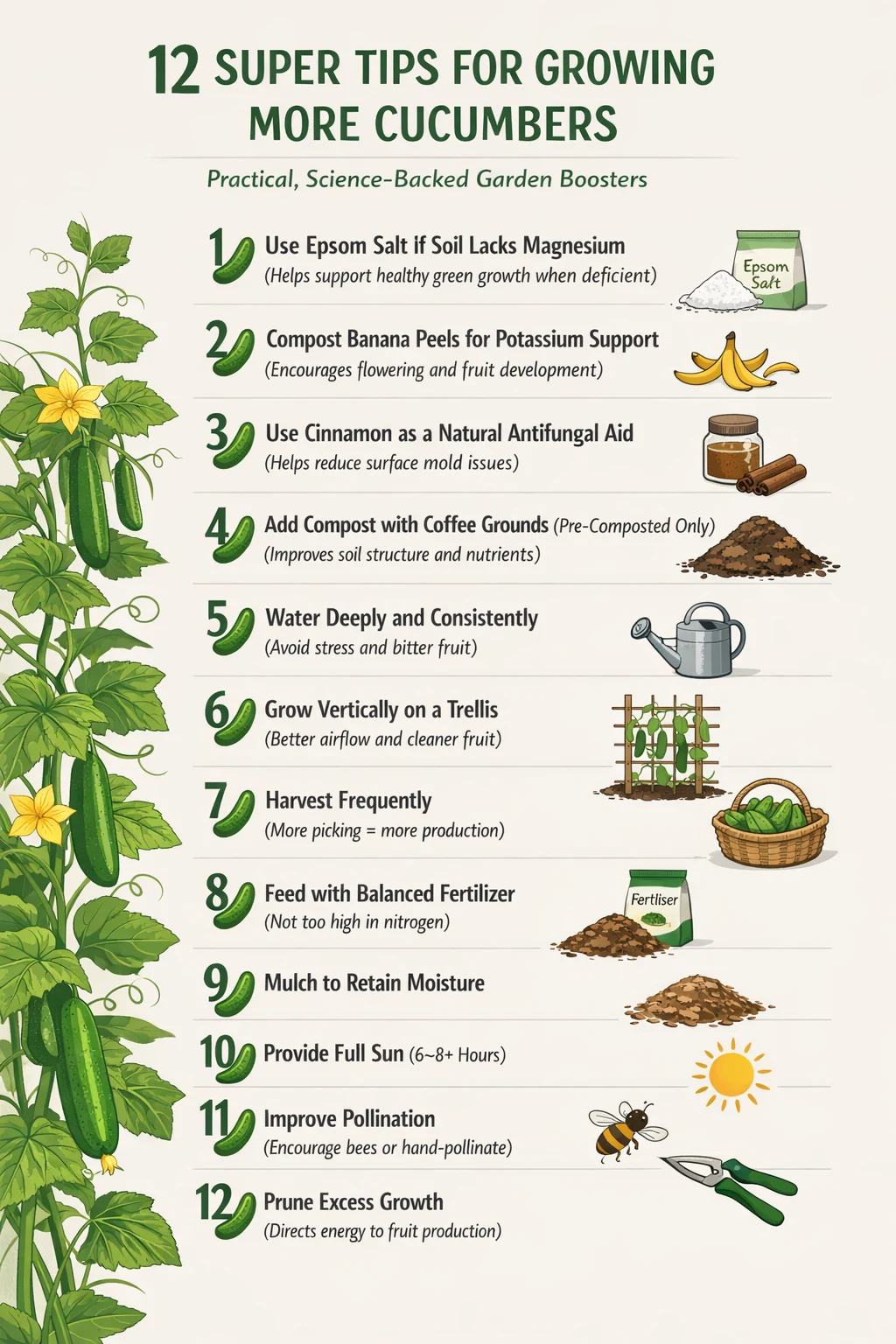
There highlights 12 powerful, practical tips. But the real magic lies in understanding why each one works and how to combine them strategically.
Let’s break it down — not just as tips, but as a system.
🌱 First: Understand How Cucumbers Grow
Cucumbers are:
- Heavy feeders
- Fast growers
- Water-sensitive
- Pollinator-dependent
- Warm-season crops
They produce separate male and female flowers. Without proper pollination and consistent nutrition, production slows dramatically.
If you want more cucumbers, you must:
✔ Support strong vegetative growth
✔ Encourage flower production
✔ Maintain moisture balance
✔ Improve pollination
✔ Direct plant energy toward fruit
Now let’s go step-by-step.
1️⃣ Use Epsom Salt (Only If Soil Lacks Magnesium)
Magnesium supports chlorophyll production. If leaves are yellowing between veins, your soil may be deficient.
How to use:
- Dissolve 1 tablespoon in 1 gallon of water
- Apply monthly as foliar spray if deficiency is confirmed
⚠ Important: Don’t apply blindly. Test soil first.
When magnesium is adequate, plants photosynthesize more efficiently — which directly impacts fruit production.

2️⃣ Compost Banana Peels for Potassium Support
Potassium strengthens fruit development and flowering.
Without enough potassium:
- Flowers drop
- Fruits stay small
- Plants weaken under stress
How to use:
- Bury chopped peels near root zone
- Or make banana peel tea
This is especially useful during early flowering stage.
3️⃣ Use Cinnamon as a Natural Antifungal Aid
Cucumbers are prone to powdery mildew and surface fungal issues.
Cinnamon acts as a mild antifungal agent.
How to apply:
- Sprinkle lightly around seedlings
- Dust soil surface if mold appears
It’s not a cure for major infection — but excellent for prevention.
4️⃣ Add Compost with Pre-Composted Coffee Grounds
Coffee grounds improve soil texture and add mild nitrogen — but must be composted first.
Why compost first?
Fresh grounds can:
- Compact soil
- Alter pH
- Slow decomposition
Properly composted grounds:
✔ Improve drainage
✔ Feed soil microbes
✔ Support steady growth

5️⃣ Water Deeply and Consistently
This is the most overlooked tip.
Inconsistent watering leads to:
- Bitter cucumbers
- Misshapen fruit
- Blossom drop
Cucumbers need deep watering 1–2 times per week (depending on heat).
Better practice:
- Water at root zone
- Avoid overhead watering
- Maintain consistent soil moisture
Stress equals bitterness.
6️⃣ Grow Vertically on a Trellis
This single change can double yield.
Why vertical growing works:
- Better airflow
- Reduced fungal disease
- Cleaner fruit
- Easier harvesting
- Improved pollination visibility
Trellising also saves space — ideal for small gardens or urban farms.

7️⃣ Harvest Cucumber Frequently
Cucumber plants are programmed to reproduce.
If fruit stays on vine too long:
The plant thinks its job is done.
Result?
Production slows.
Harvest every 1–2 days during peak season.
More picking = more cucumbers.

8️⃣ Feed with Balanced Fertilizer (Not Too High in Nitrogen)
Too much nitrogen creates:
- Huge leaves
- Weak flowering
- Low fruit production
Use balanced fertilizer like 5-5-5 or 10-10-10.
Focus on:
- Moderate nitrogen
- Adequate phosphorus
- Strong potassium
Fertilize lightly but consistently.
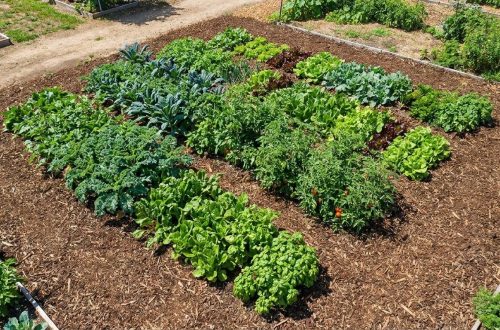
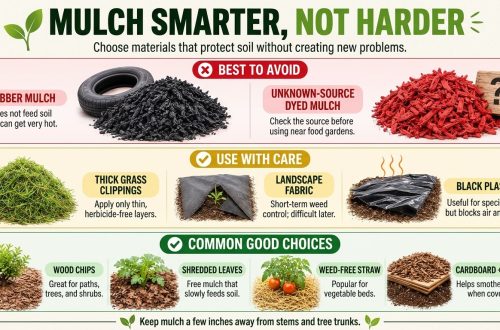
9️⃣ Mulch to Retain Moisture
Mulch regulates:
- Soil temperature
- Moisture levels
- Weed competition
Best mulch options:
- Straw
- Leaf compost
- Grass clippings (dry)
Mulch reduces stress, which improves fruit quality.

🔟 Provide Full Sun (6–8+ Hours)
Cucumbers love heat.
Less than 6 hours of direct sun = reduced flowering.
Full sun encourages:
- More female flowers
- Strong vine growth
- Better fruit formation
If yield is low, check sunlight exposure first.

1️⃣1️⃣ Improve Pollination
No pollination = no cucumbers.
You can:
✔ Plant flowers nearby to attract bees
✔ Avoid spraying pesticides
✔ Hand pollinate using small brush
Female flowers have tiny fruit behind bloom.
Transfer pollen from male flowers manually if needed.
In high heat or rainy periods, pollination often declines — hand pollinating can dramatically increase yield.
1️⃣2️⃣ Prune Excess Growth
This step separates beginners from experienced growers.
Too many vines mean:
- Energy spread thin
- Poor airflow
- Smaller fruits
Prune:
- Yellowing leaves
- Overcrowded side shoots
- Weak runners
Redirect energy into fruit production.
🐓 Bonus Farm Insight: Why This Matters Beyond the Garden
On a small farm, cucumbers aren’t just fresh snacks.
They feed:
- Chickens (overripe fruit)
- Compost piles
- Market stands
- Pickling jars
Maximizing yield means reducing waste and increasing self-sufficiency.
Every extra cucumber counts.
🌿 The Secret to Growing More Cucumbers
It’s not one trick.
It’s balance.
- Balanced nutrition
- Balanced watering
- Balanced pruning
- Balanced sunlight
- Balanced pollination
When you align all five, cucumbers respond aggressively.
And once they start producing — they don’t stop.
🥒 Final Thoughts
Cucumbers grow fast. They respond quickly. And they reward attentive gardeners generously.
If you apply even half of these 12 strategies consistently, you’ll see a noticeable increase in:
✔ Fruit size
✔ Fruit quantity
✔ Plant health
✔ Season length
The difference between average and abundant is attention to detail.
And cucumbers — more than most crops — reward that effort.