Plants you can water once a month are a smart pick for busy households, frequent travelers, and anyone who tends to forget a watering day. The key is choosing species that store water well and planting them in fast-draining soil with the right pot.
That said, “once a month” is not a hard rule for every home. Light, temperature, humidity, pot size, and season all matter. In many indoor setups, these plants can go close to a month between waterings, especially in winter or in cooler rooms.
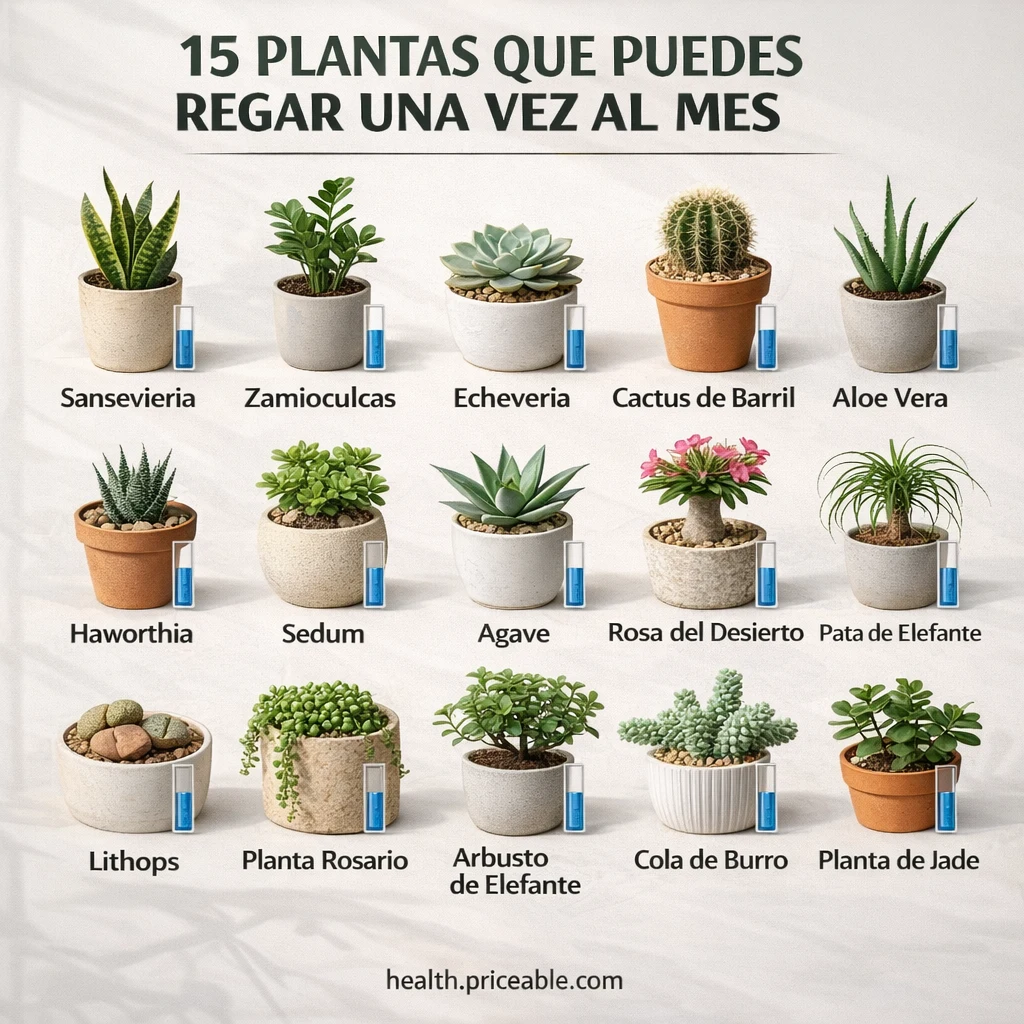
Plants You Can Water Once a Month: 15 Easy Indoor Picks
1. Snake Plant
Snake plant is one of the best beginner options for low-water living. Its thick upright leaves hold moisture well, and it usually does better with underwatering than overwatering.
2. ZZ Plant
ZZ plant has glossy leaves and underground rhizomes that store water. It handles missed watering surprisingly well and works in many low-light spots indoors.
3. Echeveria
Echeveria is a classic rosette succulent that likes bright light and dry soil. It is a good fit for sunny windowsills and small decorative pots with drainage holes.
4. Barrel Cactus
Barrel cactus is built for dry conditions. It prefers lots of light, gritty cactus potting mix, and very little water, especially during cooler months.
5. Aloe Vera
Aloe vera stores water in its fleshy leaves, which makes it a solid low-maintenance plant. Let the soil dry fully before watering again.
6. Haworthia
Haworthia stays compact and is easy to grow on desks, shelves, and small plant stands. It tolerates dry indoor air better than many leafy houseplants.
7. Sedum
Many sedum varieties are drought-tolerant and forgiving. They usually perform best in bright light with a fast-draining succulent mix.
8. Agave
Agave has thick, sculptural leaves that hold water well. Indoors, it needs bright light and a pot that does not trap moisture around the roots.
9. Desert Rose
Desert rose has a swollen stem that stores water, which helps it handle dry stretches. It needs strong light and can slow down a lot in winter, when it needs less water.
10. Ponytail Palm
Often called elephant foot or ponytail palm, this plant stores water in its bulb-like base. It is one of the easiest statement plants for people who do not want a demanding routine.
11. Lithops
Lithops, also called living stones, need very careful watering. They can go a long time dry, and too much water is one of the fastest ways to lose them.
12. String of Pearls
String of pearls can tolerate dry periods, but it may need water a little sooner than a full month during active growth. Good drainage and bright light make a big difference.
13. Elephant Bush
Elephant bush is a tough succulent shrub with small fleshy leaves. It adapts well to containers and does not need frequent watering once established.
14. Burro’s Tail
Burro’s tail is another trailing succulent that prefers dry soil between waterings. Its leaves fall off easily, so place it somewhere it will not be bumped often.
15. Jade Plant
Jade plant is a classic low-water favorite. With bright light, a nursery pot that drains well, and careful watering, it can last for years.
How to Water Low-Water Plants the Right Way
If you want these plants to thrive, the goal is not “tiny sips” of water. It is better to water deeply and then let the soil dry out.
Follow this simple routine
-
Check the soil first, not the calendar.
-
For most of these plants, wait until the top 2 to 3 inches of soil feel dry.
-
Water until a little moisture drains from the bottom.
-
Empty the saucer so the roots are not sitting in water.
-
In winter, stretch the watering interval longer if growth slows down.
A moisture meter can be helpful if you are new to succulents or tend to overwater. It is also worth using a cactus or succulent potting mix instead of regular dense potting soil.
Best Conditions for Once-a-Month Watering
These plants are most likely to handle a monthly schedule when they have:
-
Bright to medium light
-
Fast-draining soil
-
A pot with drainage holes
-
Good airflow
-
A stable indoor temperature
-
No standing water in the tray
If your plant sits in a dark corner, in a large plastic planter, or in heavy soil, the roots may stay wet too long. That can lead to yellowing, mushy stems, or root rot.
Common Mistakes and Easy Fixes
1. Watering on a strict schedule
A once-a-month reminder sounds convenient, but real plants do not follow a fixed calendar.
Fix: Check the soil, leaf firmness, and pot weight before watering.
2. Using the wrong soil
Regular potting mix can stay wet too long for succulents and cacti.
Fix: Choose a fast-draining cactus mix or add perlite and coarse sand to improve drainage.
3. Buying a pretty pot without drainage
Decorative planters look nice, but trapped water is a major problem.
Fix: Use a nursery pot inside a cover pot, or buy a terracotta pot with a drainage hole.
4. Putting drought-tolerant plants in very low light
Low water does not mean no light. Many of these plants still need bright indirect light or a few hours of sun.
Fix: Move the plant closer to a brighter window or use a basic grow light.
5. Ignoring seasonal changes
A plant that needs water every 3 weeks in summer may need much less in winter.
Fix: Slow down watering when growth slows down and temperatures drop.
Safety Note Before You Bring One Home
Some low-water plants can irritate pets or people if chewed or handled carelessly. Aloe vera, jade plant, snake plant, desert rose, and ZZ plant are examples many pet owners double-check before buying.
Cacti, agave, and other spiny plants should be handled with gloves. If you have children or curious pets at home, choose placement carefully and always confirm plant safety before purchase.
Buying Guide: What to Look for Before You Buy
A good low-water plant starts with a healthy specimen, not just a nice label.
What to look for
-
Firm leaves, not mushy or translucent ones
-
No sour smell from the soil
-
No black spots, webbing, or visible pests
-
Roots that are not rotting or packed too tightly
-
A plant size that matches your space and light
Best setup for beginners
For most buyers, the safest setup is:
-
A small to medium starter plant
-
A nursery pot with drainage holes
-
A terracotta pot or breathable planter
-
A bag of cactus potting mix
-
A simple moisture meter if you tend to overwater
Typical price range
Common small succulents and starter plants often fall in the $4 to $12 range. Mid-size snake plants, jade plants, aloe, and ZZ plants are often around $12 to $30. Larger statement plants, mature specimens, or decorative potted versions can run $40 and up.
Where to buy
A local nursery or garden center often gives you the best chance to inspect the roots, leaf condition, and soil quality before you buy. Online plant shops can work well too, but check shipping policies, cold-weather protection, and replacement options for damaged plants.
Which Plant Is Best for Your Space?
If you want the easiest option overall, start with snake plant, ZZ plant, jade plant, or ponytail palm.
If you have a bright sunny window, echeveria, aloe vera, agave, barrel cactus, and lithops can be great picks.
If you like trailing plants, string of pearls and burro’s tail add texture, but they usually need a bit more attention than the toughest upright varieties.
FAQ
Can houseplants really be watered only once a month?
Some can, especially drought-tolerant plants in bright light and fast-draining soil. But watering needs still change with the season and your home environment.
What is the easiest plant to water once a month?
Snake plant and ZZ plant are two of the easiest choices for most beginners. They are forgiving and adapt well to normal indoor conditions.
Do succulents always need less water than regular houseplants?
Usually yes, but not always in the same amount or on the same schedule. Pot size, light, and soil still matter.
Is a moisture meter worth buying for low-water plants?
For many beginners, yes. It can help prevent overwatering and make it easier to tell when the root zone is actually dry.
What kind of pot is best for low-water houseplants?
A pot with drainage holes is the most important feature. Terracotta is a great option because it helps the soil dry faster.
Why are my low-water plants turning yellow?
Yellow leaves often point to overwatering, poor drainage, or low light. Check the roots and soil before watering again.
Are these plants safe for cats and dogs?
Not all of them are. Always check pet safety before buying, especially with aloe, jade, snake plant, desert rose, and ZZ plant.
Can I keep these plants in a bathroom or low-light room?
Some, like ZZ plant and snake plant, can handle lower light better than others. Most succulents and cacti still do best near brighter windows.
Low-water plants make indoor gardening feel much more manageable. Pick the right plant, use the right potting mix, and let the soil dry down properly, and you can enjoy greenery without a high-maintenance routine.