A flowering tree does more than decorate a yard. It changes how a garden feels, how wildlife moves through it, and how the whole space works across the seasons. One well-placed tree can soften a hard corner, create dappled shade for understory plants, draw pollinators into the garden, and turn an ordinary path or sitting area into a destination.
For gardeners and small-scale growers, flowering trees also offer something deeper than appearance. They teach timing, pruning discipline, soil awareness, and long-term planning. Unlike fast annual color, a tree asks you to think ahead. Where will its roots spread? How will its canopy change light levels? What plants will thrive beneath it in two or five years? That kind of thinking strengthens everyday garden management and leads to more resilient, beautiful landscapes.
This guide explores nine standout flowering trees and how to care for them well, so your garden becomes not only prettier, but also more balanced, productive, and alive.
Why flowering trees are one of the smartest garden investments
A good flowering tree earns its place in multiple ways. It brings seasonal bloom, supports bees and beneficial insects, adds structure in winter, and often increases the comfort of the garden by cooling surrounding soil and planting beds. In larger home gardens and farmstead landscapes, flowering trees can also define edges, anchor entryways, and create visual rhythm across open ground.
The key is choosing trees that match your climate, available space, and maintenance style. A tree that is perfect in one garden may struggle in another if soil, drainage, or sun exposure are wrong. Success begins with thoughtful planting, not just beautiful bloom.
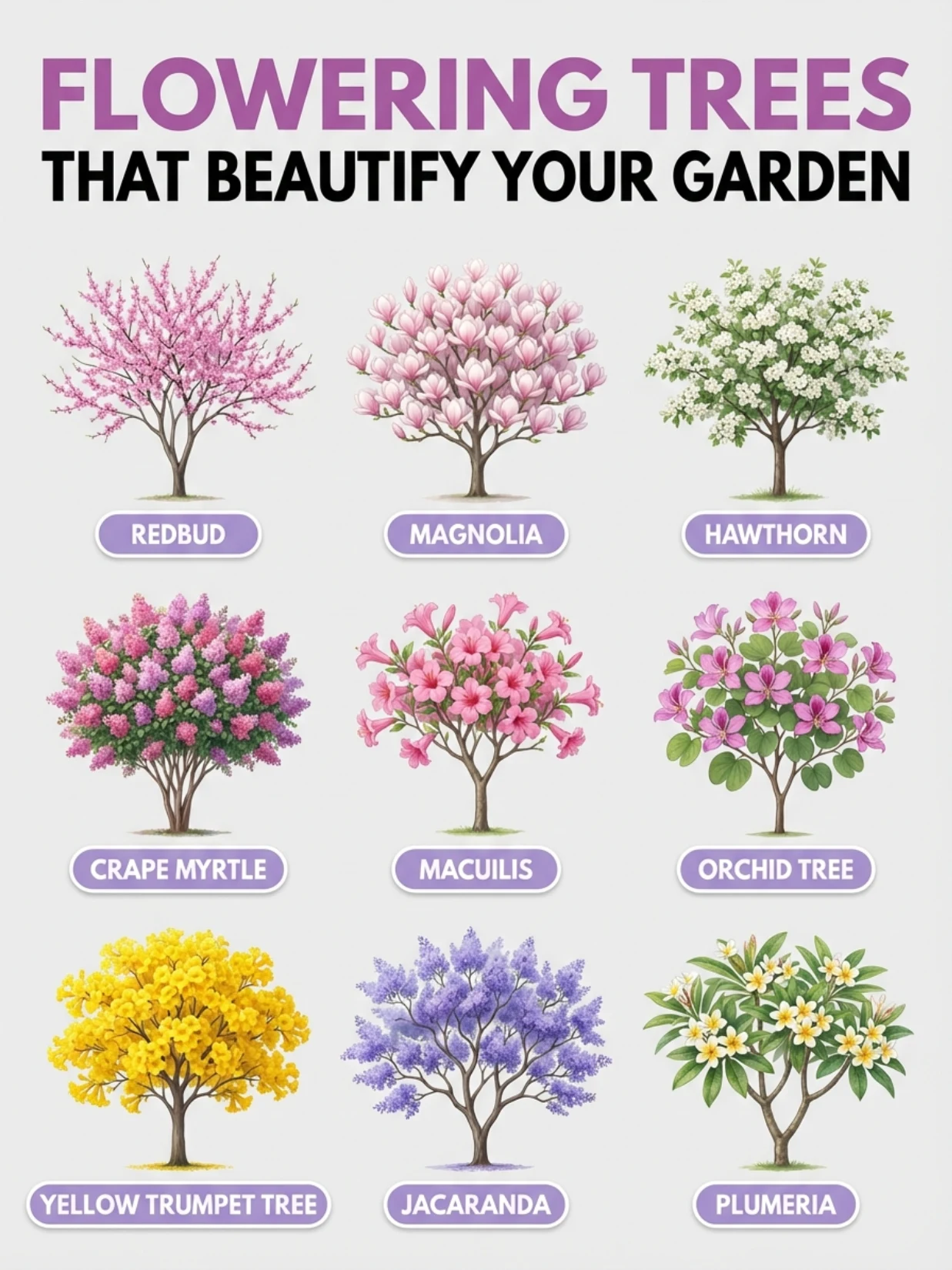
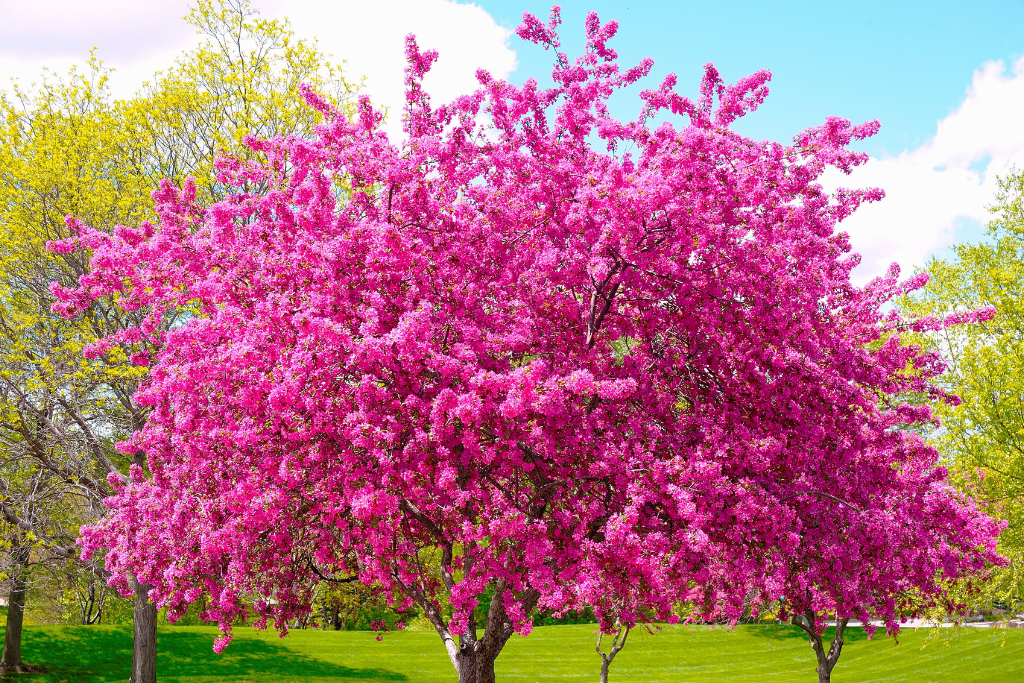
1. Redbud: early color that wakes up the garden
Redbud is one of the most charming flowering trees for early-season impact. Its pink to rosy-purple blossoms appear along bare branches before the leaves open, which makes the whole tree seem to glow at the edge of winter.
It works beautifully near walkways, patios, or as a focal point in a mixed border. Because it flowers before many other plants have started growing, it helps the garden feel active very early in the year.
Hardiness: 4 – 9
Plant type: Small Tree
Exposure: Full Sun, Partial Sun, Partial Shade
Height: 20′ – 30′ (6m – 9m)
Spread: 15′ – 25′ (4.6m – 7.6m)
Practical care tip:
Give redbud well-drained soil and avoid planting it in low spots where water lingers after rain. Young redbuds dislike soggy roots more than dry spells.
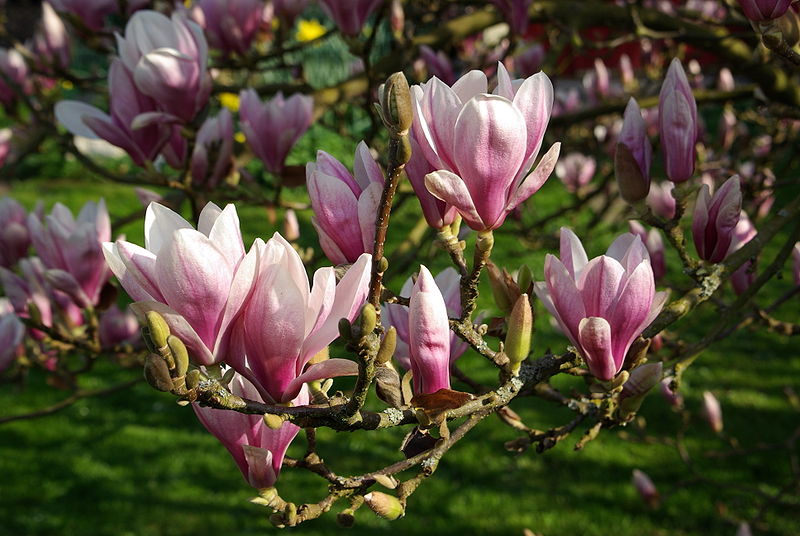
2. Magnolia: bold blooms with graceful form
Magnolia is a classic choice when you want large, elegant flowers and strong architectural beauty. The blooms are often among the most dramatic in spring, and even when not flowering, the tree holds a refined shape that suits formal and informal gardens alike.
Magnolia deserves enough room to develop naturally. Crowding it too close to buildings or other trees often reduces airflow and spoils its natural silhouette.
Hardiness: 5 – 9
Plant type: Large Shrub, Small Tree
Exposure: Full Sun, Partial Sun
Height: 15′ – 25′ (4.6m – 7.6m)
Spread: 15′ – 25′ (4.6m – 7.6m)
Practical care tip:
Mulch the root zone lightly to keep soil moisture steady, but do not pile mulch against the trunk. That simple mistake can invite rot and weaken young trees.
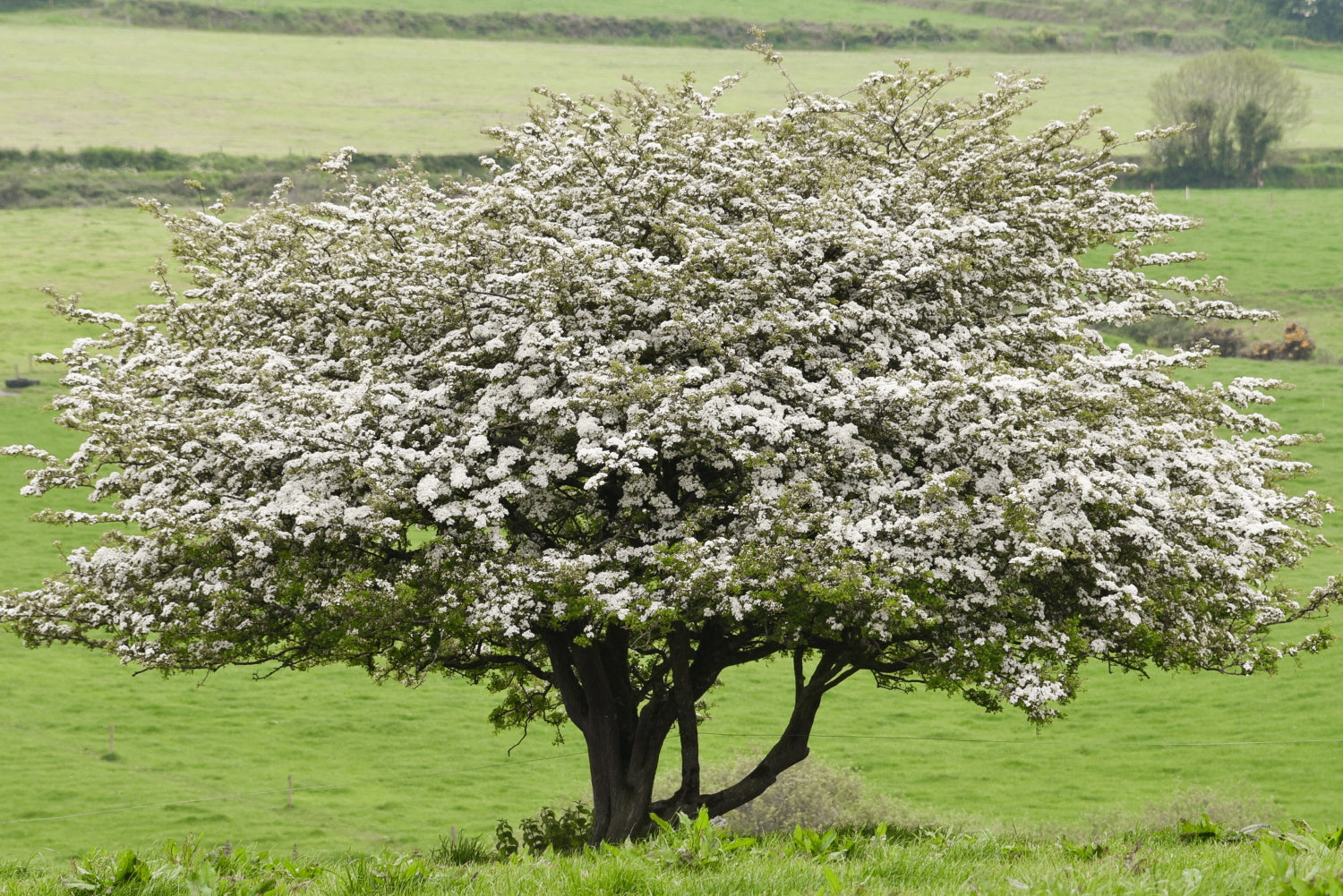
3. Hawthorn: blossom, structure, and wildlife value
Hawthorn is useful for gardeners who want a tree that offers more than flowers alone. It brings spring bloom, strong branching form, and often fruit that supports birds later in the season. This makes it a practical option for gardeners trying to build a more ecologically active landscape.
Hardiness: 3 – 8
Plant type: Tree
Exposure: Full Sun
Height: 25′ – 30′ (7.6m – 9m)
Spread: 25′ – 30′ (7.6m – 9m)
Practical care tip:
Prune for shape while the tree is young. Early structure training reduces crossing branches and makes future maintenance easier and safer.
4. Crape Myrtle: long bloom and excellent heat tolerance
Crape myrtle is one of the most rewarding flowering trees for warm climates. It blooms generously through summer, when many spring-flowering trees are already finished, and it handles heat well once established.
This makes it especially valuable in sunny gardens, roadside plantings, farm entrances, and areas where long-lasting color matters.
Hardiness: 6 – 9
Plant type: Shrub, Small Tree
Exposure: Full Sun
Height: 15′ – 25′ (4.6m – 7.6m)
Spread: 6′ – 15′ (1.8m – 4.6m)
Practical care tip:
Do not over-prune it. Harsh topping ruins the natural branching pattern and often leads to weak, awkward regrowth. Thin selectively instead, removing crowded or inward-growing branches.

5. Macuilis/ Pink Trumpet Tree
Trees in this pink-flowering group offer bright, cheerful bloom and strong ornamental appeal. Their flowers create a tropical, uplifting look that stands out in open landscapes and sunny gardens.
They perform best where they receive strong light and enough space for airflow around the canopy.
Hardiness: 9 – 11
Plant type: Tree
Exposure: Full Sun
Height: 60′ – 90′ (18m – 27m)
Spread: 30′ – 50′ (9m – 15m)
Practical care tip:
Water deeply during establishment, then reduce frequency. Deep watering encourages stronger root systems than light daily irrigation ever will.

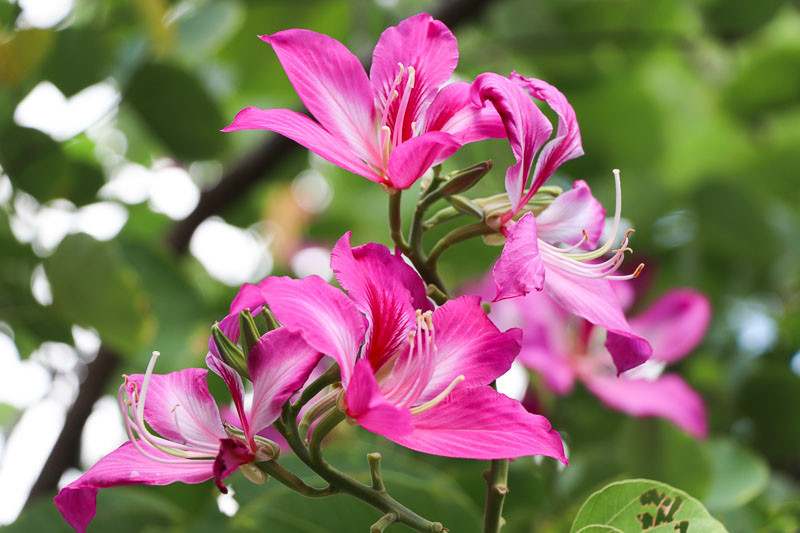
6. Orchid Tree: soft, exotic beauty for warm regions
Orchid tree brings large, orchid-like blossoms and a relaxed, graceful form. It is ideal for gardeners who want a flowering tree that feels soft and expressive rather than tightly formal.
This tree is often best used as a specimen, where the unusual flowers can be appreciated up close.
Hardiness: 9 – 10
Plant type: Large Shrub, Small Tree
Exposure: Full Sun, Light Shade
Height: 20′ – 35′ (6m – 10.6m)
Spread: 20′ – 35′ (6m – 10.6m)
Practical care tip:
Protect young trees from strong wind until they are well rooted. New growth can be tender, and wind stress slows establishment more than many gardeners realize.
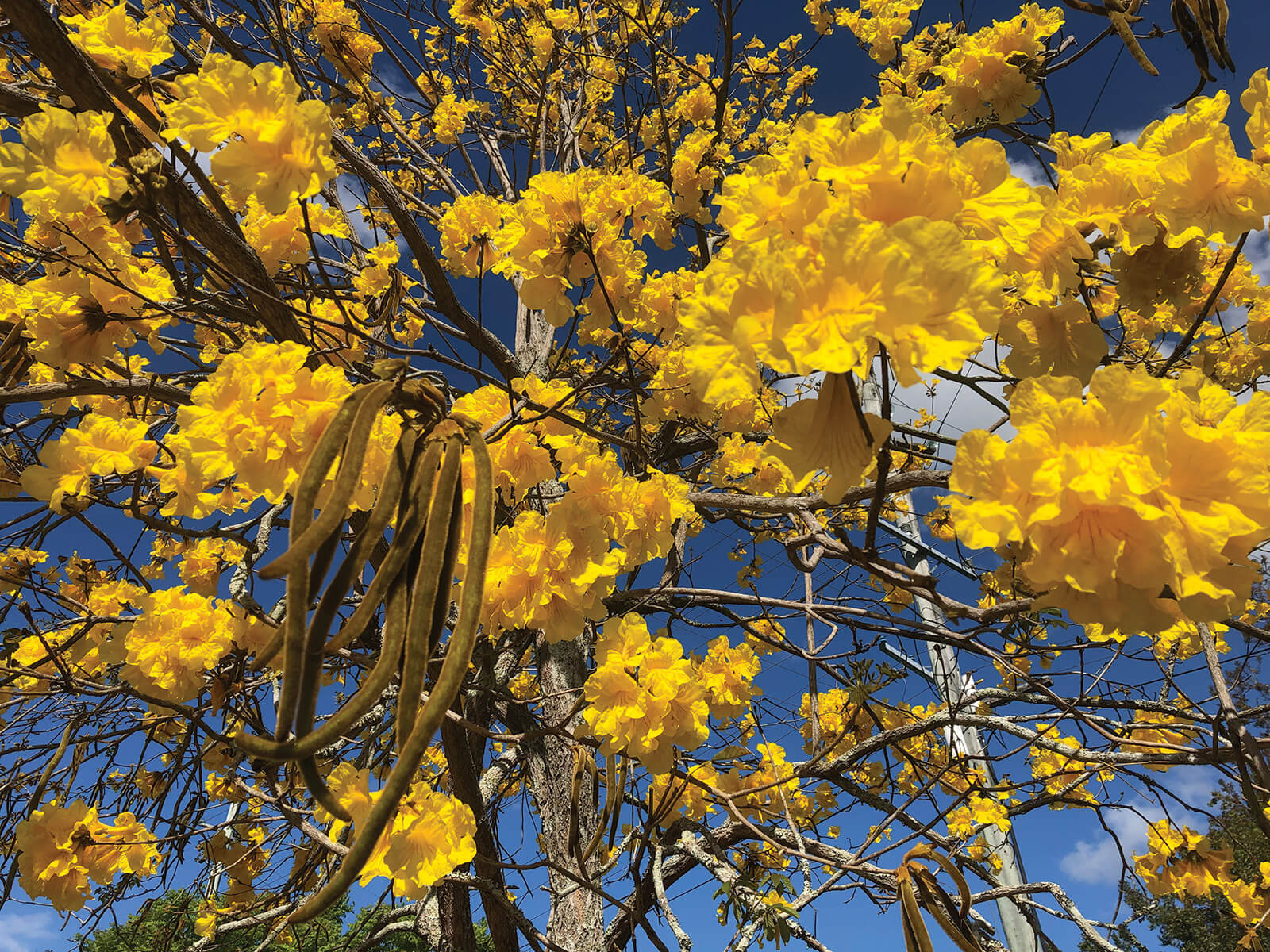
7. Yellow Trumpet Tree: brilliant color with strong visual impact
A yellow trumpet tree can light up a garden in a way few plants can. The vivid bloom creates instant energy and is especially effective in larger spaces where a single strong focal point is needed.
It pairs well with green lawns, darker evergreen backdrops, or simple understory planting that lets the tree remain the star.
Hardiness: 9B – 11
Plant type: Tree
Exposure: Full Sun
Height: 25′ – 40′ (7.6m – 12.2m)
Spread: 25′ – 35′ (7.6m – 10.6m)
Practical care tip:
Keep the base weed-free during the first years. Grass competition quietly robs young trees of moisture and nutrients, slowing the growth you want most at establishment.
8. Jacaranda: a dreamlike canopy of lavender-blue
Jacaranda is beloved for its airy form and spectacular purple-blue flowers. When in bloom, it transforms the entire mood of a landscape. It is one of those trees that can make even a simple garden feel memorable.
Because of its spread and seasonal flower drop, placement matters. It shines best where fallen petals can be enjoyed rather than treated as a nuisance.
Hardiness: 9B – 11
Plant type: Tree
Exposure: Full Sun, Light Shade
Height: 25′ – 50′ (7.6m – 15.2m)
Spread: 15′ – 50′ (4.6m – 15.2m)
Practical care tip:
Plant jacaranda where it has room overhead and below. Avoid squeezing it into narrow side yards or tight foundation beds where its form can never develop properly.

9. Plumeria: fragrance and flower power in one tree
Plumeria is perfect for warm climates and gardens designed around evening enjoyment, patios, or tropical-style planting. Its flowers are not only beautiful but often fragrant, which adds another layer of value to the landscape.
In containers or frost-prone regions, plumeria can still be grown successfully with seasonal protection.
Hardiness: 10 – 12
Plant type: Large Shrub, Small Tree
Exposure: Full Sun
Height: 15′ – 25′ (4.6m – 7.6m)
Spread: 15′ – 25′ (4.6m – 7.6m)
Practical care tip:
Let the soil dry slightly between waterings. Plumeria prefers a more restrained watering rhythm than many gardeners expect.

How to choose the right flowering tree for your garden
Match the tree to your space, not just your taste
A common mistake is choosing a tree for the flower color alone. Instead, start with these practical questions:
- How much full sun does the site get?
- Does water drain well after heavy rain?
- How tall and wide can the tree become?
- Will nearby walls, driveways, or power lines create future problems?
- Do you want spring bloom, summer bloom, fragrance, shade, or pollinator value?
When you answer these first, the right tree becomes much easier to choose.
Think about what happens under the canopy
A flowering tree changes the microclimate beneath it. Over time, the space below may become cooler, shadier, and more protected from wind. This creates opportunities to add shade-tolerant perennials, mulch rings, groundcovers, or even seating.
Gardeners who plan this layer early build landscapes that feel finished much faster.
Planting tips that improve long-term success
Dig wide, not unnecessarily deep
The planting hole should be wider than the root ball, but not much deeper. Trees planted too deeply often decline slowly and mysteriously. Keep the root flare visible at the soil surface.
Water with a schedule, not with guesswork
For the first year, watering matters more than fertilizer. Deep, consistent watering helps roots move into surrounding soil. Light surface watering creates dependency and weak root development.
A simple method is to water slowly and deeply, then allow the upper soil to begin drying before watering again.
Mulch correctly
Apply mulch in a ring around the base, but keep it several inches away from the trunk. This holds moisture, reduces weeds, and protects the root zone without trapping dampness against bark.
Pruning and care habits that keep flowering trees healthy
Prune for structure, not constant control
Young trees benefit from light shaping to create strong branch spacing. Mature trees need much less interference than many people think. Remove dead, damaged, rubbing, or inward-growing branches, but avoid over-thinning.
Feed only when needed
Flowering trees do not always need routine fertilizer. If leaves are healthy and growth is steady, focus first on mulch, water management, and soil health. Too much feeding often causes excessive leafy growth at the expense of flowers.
Watch the leaves
Leaves tell the truth early. Yellowing, scorched edges, poor bloom, or sparse canopy growth often point to water imbalance, root stress, or poor site fit. Catching these signs early prevents bigger setbacks later.
A smarter landscape starts with trees that do more
The best flowering trees are not only beautiful. They help organize your garden, support pollinators, improve comfort, and create a stronger relationship between the land and the people caring for it. They slow you down in the best way. They teach patience, observation, and stewardship.
When you plant one thoughtfully and care for it well, the benefit keeps growing year after year. A redbud brightens early spring. A magnolia brings drama. A jacaranda creates wonder. A crape myrtle carries color through heat. Over time, those moments shape not just the garden, but the way you work in it.
That is the real power of a flowering tree. It does not simply beautify your garden. It gives the garden identity.