A productive garden is not only about what you grow. It is also about what you grow together. That is where companion planting becomes one of the most practical skills a gardener can learn. When the right crops share space, they can help reduce pest pressure, attract pollinators, improve airflow, shade the soil, and make every bed work harder without feeling crowded.
This is one of those gardening habits that changes everything slowly but deeply. You begin noticing how basil calms the look of a tomato bed while making harvest easier. You see how marigolds bring in beneficial insects. You learn that one strong pairing can make a bed more balanced, more resilient, and easier to manage day by day.
The beauty of companion planting is that it feels natural, not forced. You are not fighting the garden. You are arranging it so plants support one another in simple, visible ways. Once that clicks, your routine becomes more efficient, your crops become healthier, and your connection with the growing space becomes much more intuitive.
What companion planting really does in the garden
Companion planting is not magic. It is smart observation. Some plants attract pollinators. Some confuse or distract pests. Some grow upright while others spread low and protect bare soil. Some mature quickly and can be harvested before larger crops need the room.
That means a well-paired bed can help you:
- reduce empty space and weed growth
- improve biodiversity in a small area
- create better root and canopy layering
- make harvesting easier
- build a more attractive and more functional food garden
The key is to think beyond individual plants and start seeing each bed as a small working ecosystem.
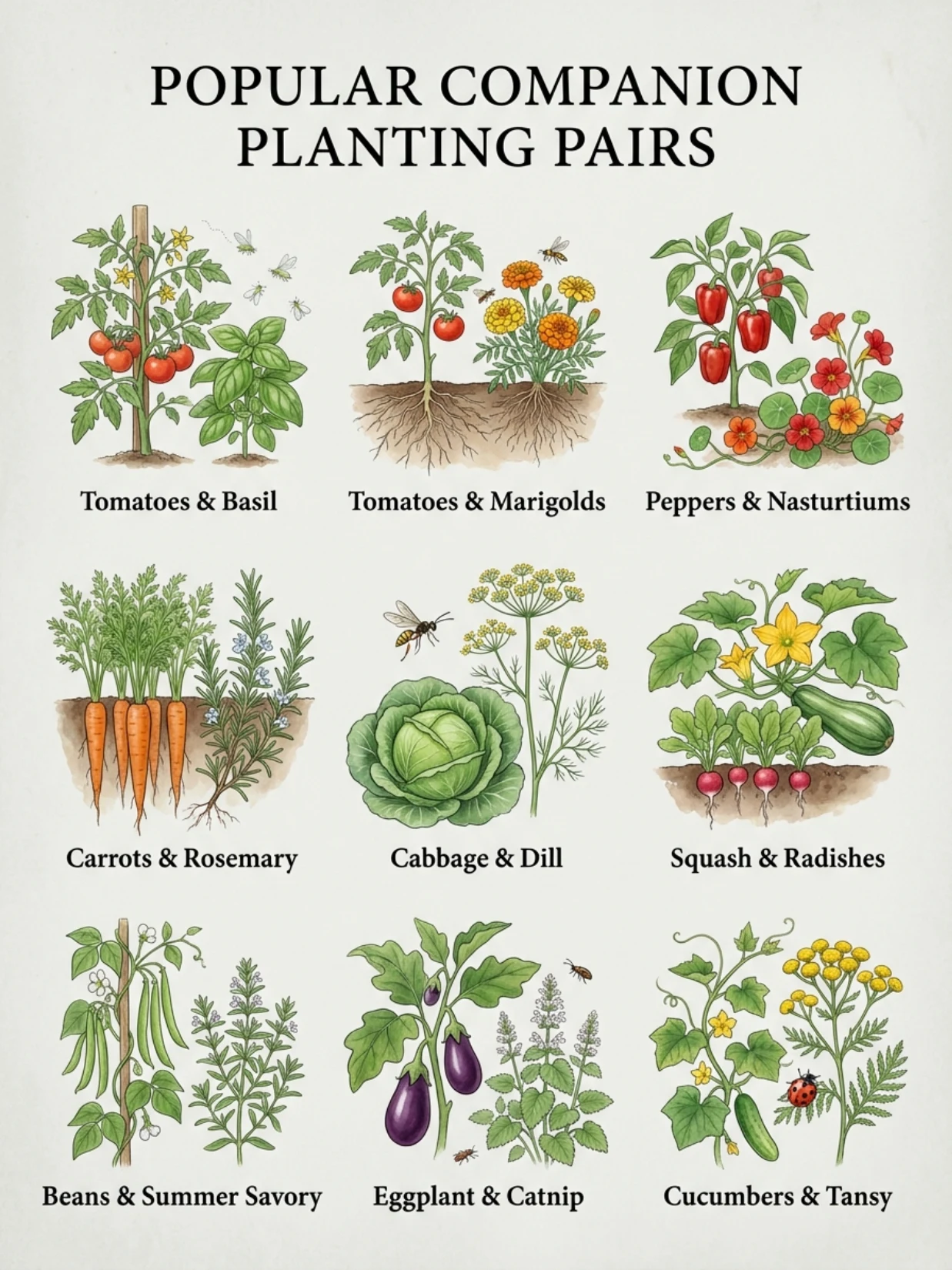
1. Tomatoes and Basil: the classic kitchen garden pair
Tomatoes and basil are paired so often because they simply fit together well. They enjoy similar warm-weather conditions, and basil stays low enough not to compete heavily with tomato vines when spacing is done properly. Basil also makes it easier to use the space around tomato plants more intentionally instead of leaving open soil that invites weeds.
Why this pairing works
Tomatoes grow upward and outward, while basil fills the lower layer. This helps shade the soil lightly and makes the bed feel fuller and more productive.
Practical growing tip
Do not plant basil too close to the tomato stem. Leave enough room for airflow around the base of the tomato plant. A crowded stem area traps moisture and increases disease risk.
Daily management habit
Harvest basil often. Frequent pinching keeps it bushy and prevents flowering too early. That gives you more leaves, a tidier understory, and a cleaner planting around your tomatoes.
2. Tomatoes and Marigolds: color with a purpose
This is one of the most useful companion planting combinations for gardeners who want both beauty and practical function. Marigolds bring bright color, help draw in pollinators and beneficial insects, and create a more diverse planting around tomatoes.
Why this pairing works
A mixed bed is often more resilient than a single-crop patch. Marigolds break up the visual uniformity of a tomato row and help create a busier environment that supports insect life beyond pests.
Practical growing tip
Plant marigolds at the outer edge of the tomato bed, not jammed directly beneath the main canopy. They need light and airflow too.
Daily management habit
Deadhead marigolds regularly. The more you remove spent blooms, the more flowers they produce, and that keeps the companion effect strong all season.
3. Peppers and Nasturtiums: beauty that earns its place
Peppers benefit from neighbors that do not overwhelm them, and nasturtiums are excellent for this role. They spread gently, flower generously, and bring useful insect activity into the bed.
Why this pairing works
Nasturtiums fill the ground-level layer and soften the base of pepper plants, which can otherwise leave a lot of bare, sun-baked soil between stems.
Practical growing tip
Guide nasturtiums outward instead of letting them climb into the peppers too heavily. Peppers still need good light and clear airflow to flower and fruit well.
Daily management habit
Check under nasturtium leaves often. Their lush growth makes them a useful “inspection plant” that encourages you to observe the whole bed more carefully.
4. Carrots and Rosemary: root crop meets aromatic structure
Carrots use underground space efficiently, while rosemary adds upright, aromatic growth nearby. This kind of pairing is especially useful in a mixed edible border where you want vegetables and herbs to work together without competing for the same visual or root zone.
Why this pairing works
Carrots stay low and slender above ground, while rosemary gives structure and year-round presence. The combination makes the bed feel layered and intentional.
Practical growing tip
Do not place rosemary so close that it shades young carrot seedlings. Carrots need a clean, open start to establish evenly.
Daily management habit
Thin carrots on time. Overcrowded carrots remain weak, and no companion plant can fix poor spacing.
5. Cabbage and Dill: a strong pairing for a smarter brassica bed
Cabbage beds can feel heavy and exposed at the same time. Dill changes that. It adds a fine-textured vertical note and brings beneficial insects into a part of the garden that often needs more ecological support.
Why this pairing works
Cabbage forms broad, dense heads close to the ground. Dill rises lightly above and between it, creating a more layered structure that feels alive rather than static.
Practical growing tip
Sow dill in small groups or pockets instead of scattering it randomly. This gives you better control and keeps the planting easier to manage.
Daily management habit
Watch your cabbage leaves closely from the beginning. Companion planting supports the bed, but early pest detection still matters more than any planting trick.
6. Squash and Radishes: using time and space wisely
This is a practical pairing because radishes mature quickly while squash takes time to spread. That means one crop uses the space early and the other uses it later.
Why this pairing works
Radishes occupy the bed before squash vines fully expand. By the time the squash needs the room, the radishes are often already harvested.
Practical growing tip
Plant radishes in a loose front band or in short rows between future squash positions. Keep the layout simple so harvest does not disturb the developing squash roots too much.
Daily management habit
Harvest radishes promptly. If they stay in too long, they become woody and stop serving the purpose of quick early productivity.
7. Beans and Summer Savory: a compact, useful partnership
Beans are generous growers, but they can benefit from a bed that feels less exposed and more balanced. Summer savory is a smart companion because it stays manageable, fits naturally nearby, and adds an herb crop without crowding the planting.
Why this pairing works
Beans grow upward or outward depending on type, while summer savory stays lower and neater. This makes the combination well suited for compact raised beds and small kitchen gardens.
Practical growing tip
Keep bean roots undisturbed once plants begin climbing or setting pods. Add companions early rather than trying to squeeze them in later.
Daily management habit
Pick beans frequently. Regular harvest encourages more production and keeps the plant energy moving toward new pods.
8. Eggplant and Catnip: pairing fruiting plants with aromatic support
Eggplant benefits from warm, open growing conditions, and catnip can be a useful aromatic neighbor when given enough space. This combination works best in sunny beds where plants have room to breathe.
Why this pairing works
Eggplant provides height and bold foliage, while catnip adds a softer, more informal lower layer. The contrast in leaf shape and texture also makes the bed more visually readable.
Practical growing tip
Keep catnip trimmed. If left unchecked, it can become too sprawling and begin competing for light and space around young eggplant.
Daily management habit
Inspect eggplant flowers and leaf undersides every few days. The more often you observe, the faster you can respond to stress, feeding needs, or pest pressure.
9. Cucumbers and Tansy: a more advanced companion pairing
Cucumbers are vigorous and productive, but they can quickly take over a space. Pairing them with supportive neighboring plants helps make the bed feel less chaotic and more manageable.
Why this pairing works
Cucumbers bring fast vine growth, while tansy adds a contrasting form and beneficial insect interest nearby. This kind of pairing works best when the cucumber growth is guided, not left to sprawl wildly.
Practical growing tip
Train cucumbers up a support whenever possible. Vertical growth saves space, improves airflow, and makes the companion planting around the base far easier to maintain.
Daily management habit
Harvest cucumbers young and often. Overripe fruits slow the plant down and reduce total production.
How to use companion planting without overcrowding your beds
One of the biggest mistakes gardeners make is assuming more plants always mean better support. In reality, overcrowding causes many of the same problems companion planting is meant to solve. Poor airflow, hidden pests, extra mildew, and nutrient competition can all appear when good combinations are planted too tightly.
Use these simple rules:
- give the main crop first priority for spacing
- place companions where they fill gaps, not where they press against stems
- repeat pairings in small drifts instead of mixing too many ideas in one bed
- keep access clear so you can water, prune, and harvest easily
A bed should feel abundant, not jammed.
A practical companion planting strategy for real gardens
If you want better results, do not redesign your whole garden at once. Start with two or three pairings and observe them carefully for one season.
A simple plan might be:
- tomatoes with basil in one bed
- peppers with nasturtiums in another
- cabbage with dill in a cool-season section
This lets you compare results, learn how the plants share space, and build experience without confusion.
Keep notes on:
- pest activity
- airflow and disease issues
- harvest timing
- ease of watering
- overall plant vigor
That habit alone will improve your gardening faster than copying long companion charts without testing them.
Final thoughts: companion planting makes the garden feel more alive
The best companion planting pairs do more than save space. They make the whole garden feel connected. Tomatoes with basil. Cabbage with dill. Squash with radishes. These combinations help you think like a grower who notices timing, texture, root space, pollinators, and plant behavior all at once.
That is where gardening becomes deeper and more satisfying. You stop seeing plants as isolated crops and begin seeing relationships. And once you garden that way, your beds become not only more productive, but also more beautiful, more balanced, and more alive.
Plant with intention, observe closely, and let each season teach you which partnerships truly strengthen your soil, your harvest, and your daily rhythm in the garden.