Fructose is not automatically “bad,” and it is not something most people need to fear. But when fructose-rich foods pile up across the day, especially from juices, syrups, sweet sauces, and concentrated fruit products, they can become easy to overconsume without realizing it.
That is why understanding high-fructose foods can be so helpful. This is not about cutting out fruit or stressing over every bite. It is about learning which foods are more concentrated sources, which ones are easier to overdo, and how to eat them more mindfully.
Most people misunderstand fructose because they assume all sweet foods affect the body in the same way. In reality, the food form matters. A whole apple is very different from fruit juice or high-fructose corn syrup in terms of fiber, fullness, and how easy it is to consume large amounts.
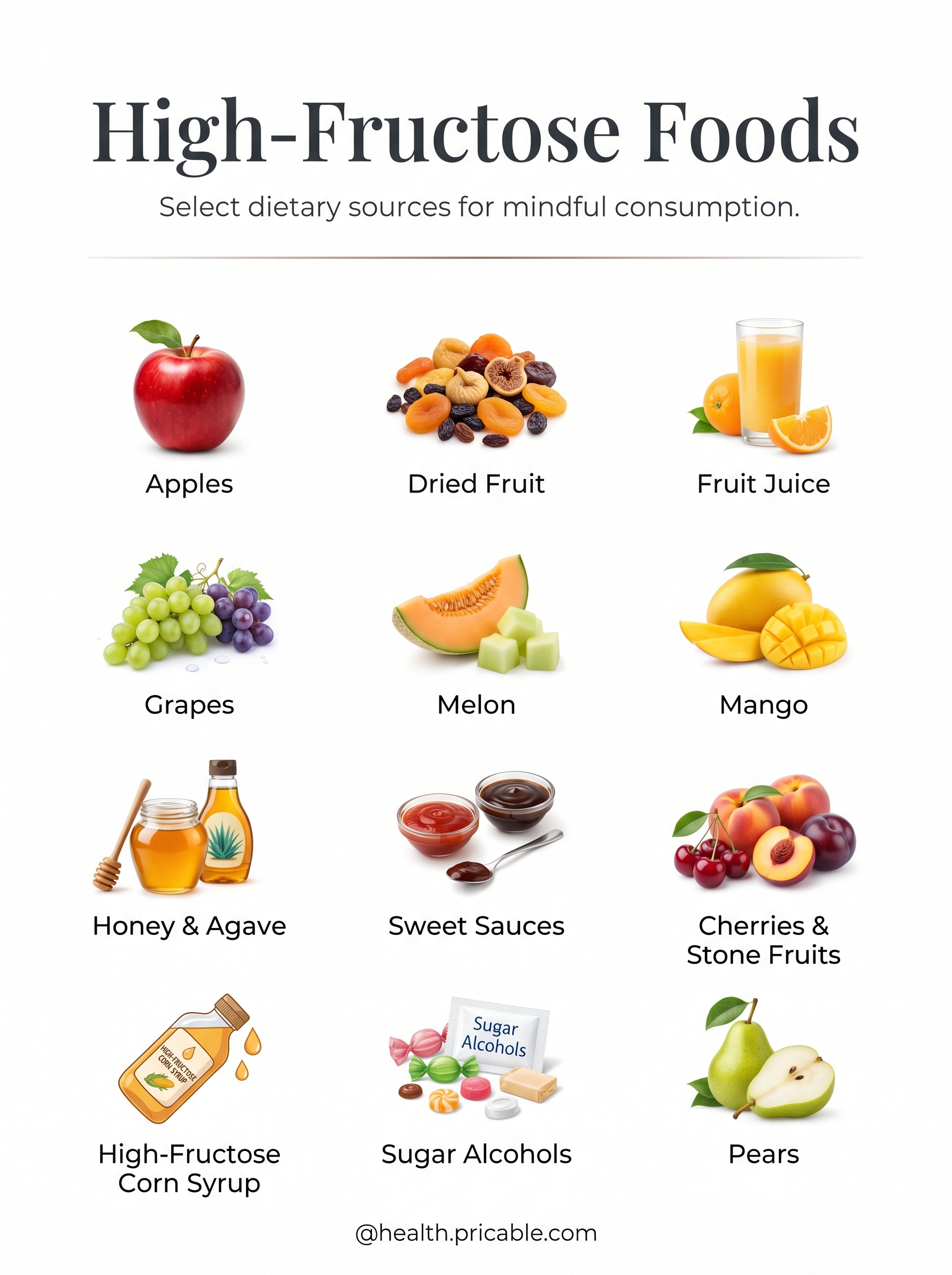
High-Fructose Foods to Be Aware Of
Apples
Apples contain natural fructose, but they also come with fiber and water, which makes them much more balanced than sweetened drinks or syrups. For most people, whole apples are not the main issue.
The key is context. An apple eaten whole is usually a smart snack. Apple juice or multiple sweet apple-based products in the same day can add up more quickly.
Dried Fruit
Dried fruit is easy to underestimate because it looks small and healthy. But once the water is removed, the natural sugars become much more concentrated.
A few pieces can fit well into a balanced snack, but large handfuls can push sugar intake up fast. Pairing dried fruit with nuts or yogurt can help slow things down.
Fruit Juice
Fruit juice is one of the easiest ways to take in a lot of fructose quickly. Even when it is 100% juice, it usually lacks the fiber that makes whole fruit more filling and slower to consume.
This does not mean juice is forbidden. It just works better as a smaller portion rather than an all-day drink.
Grapes
Grapes are refreshing and nutrient-rich, but they are also easy to eat in large amounts because they are small, sweet, and convenient. That makes portion awareness useful.
They can still absolutely fit into a healthy pattern. Pairing grapes with protein, like cheese or Greek yogurt, often makes them more satisfying.
Melon
Melon is hydrating and lighter than many processed sweets, but it still contributes natural sugars. Like other fruit, the impact depends on the portion and what else you eat with it.
Melon is usually best enjoyed as part of a meal or snack, not as a “free food” you mindlessly keep picking at.
Mango
Mango is delicious, vitamin-rich, and naturally sweet. It is also one of the fruits people tend to overeat because it tastes like a treat and goes down easily in smoothies or bowls.
A moderate serving is usually enough to enjoy the benefits without turning it into a sugar-heavy snack.
Honey and Agave
Honey and agave are often marketed as more natural sweeteners, but they are still concentrated sugar sources. Agave in particular is known for being high in fructose.
That means they should be treated more like sweeteners than health foods. A little can go a long way in tea, yogurt, or dressings.
Sweet Sauces
Sweet sauces are one of the sneakiest entries on this list. Barbecue sauce, sweet glazes, dessert sauces, and certain dipping sauces can add a surprising amount of sugar in a small amount of food.
This is where labels matter. Many people are not getting most of their extra sugar from fruit. They are getting it from sauces and added sweeteners.
Cherries and Stone Fruits
Cherries and stone fruits, such as peaches, plums, and nectarines, naturally contain fructose. They also offer useful vitamins, water, and plant compounds.
For many people, whole fruit in normal portions is not the main concern. The issue is more likely to appear when fruit is dried, juiced, or eaten in very large servings.
High-Fructose Corn Syrup
High-fructose corn syrup is one of the most recognized concentrated sweeteners in processed foods and drinks. It often shows up in sodas, packaged desserts, sauces, and sweet snacks.
This is one of the biggest areas where mindful reading can help. You may not need to eliminate it completely, but reducing frequent intake can improve overall diet quality.
Sugar Alcohols
Sugar alcohols are a little different from fructose, but they are included here because they can still be relevant in sweetened products marketed as “sugar free.” They may not affect everyone the same way, but some people notice bloating, gas, or digestive discomfort with larger amounts.
This matters especially for people with sensitive digestion or IBS-type symptoms.
Pears
Pears are another whole fruit that naturally contains fructose. Like apples, they also contain fiber, which makes them more balanced than juices or syrups.
Still, some people with fructose sensitivity or digestive issues may notice that pears are one of the fruits they tolerate less easily.
How to Eat These Foods More Mindfully
The goal is not perfection. It is balance.
A practical approach looks like this:
Choose whole fruit more often than juice
Whole fruit usually gives you better fullness and slower eating.
Watch concentrated sources
Dried fruit, honey, agave, sweet sauces, and high-fructose corn syrup can add up much faster than people think.
Pair sweet foods with protein or fat
Fruit with yogurt, nuts, or cheese often feels more stable than fruit alone.
When You Might Notice a Difference
If you tend to overdo juices, syrups, or sweet packaged foods, you may notice less bloating, fewer energy dips, or better appetite control within several days to two weeks of making more balanced choices.
The biggest improvements usually come from cutting back on concentrated sweeteners, not from fearing whole fruit.
Safety Note
Most healthy people do not need to avoid fruit. But people with fructose malabsorption, IBS, blood sugar concerns, or digestive sensitivity may feel better with more individualized guidance. If sweet foods consistently trigger bloating or discomfort, it is worth discussing with a qualified clinician.
Final Takeaway
Knowing your high-fructose foods can make healthy eating feel much more realistic. Apples, dried fruit, fruit juice, grapes, melon, mango, honey and agave, sweet sauces, cherries and stone fruits, high-fructose corn syrup, sugar alcohols, and pears all fit somewhere on the spectrum.
The smartest move is not extreme restriction. It is learning which foods are concentrated sources, which ones are easier to overeat, and how to build a more balanced plate around them.
Related source science: Whole fruit is generally handled differently from sweetened beverages and concentrated sweeteners because fiber, water, and chewing slow intake and improve fullness, while excess intake of added sugars is more strongly linked to poor diet quality over time.