The right butterfly garden plants offer nectar, color, landing spots, and repeat blooms that keep pollinators coming back.
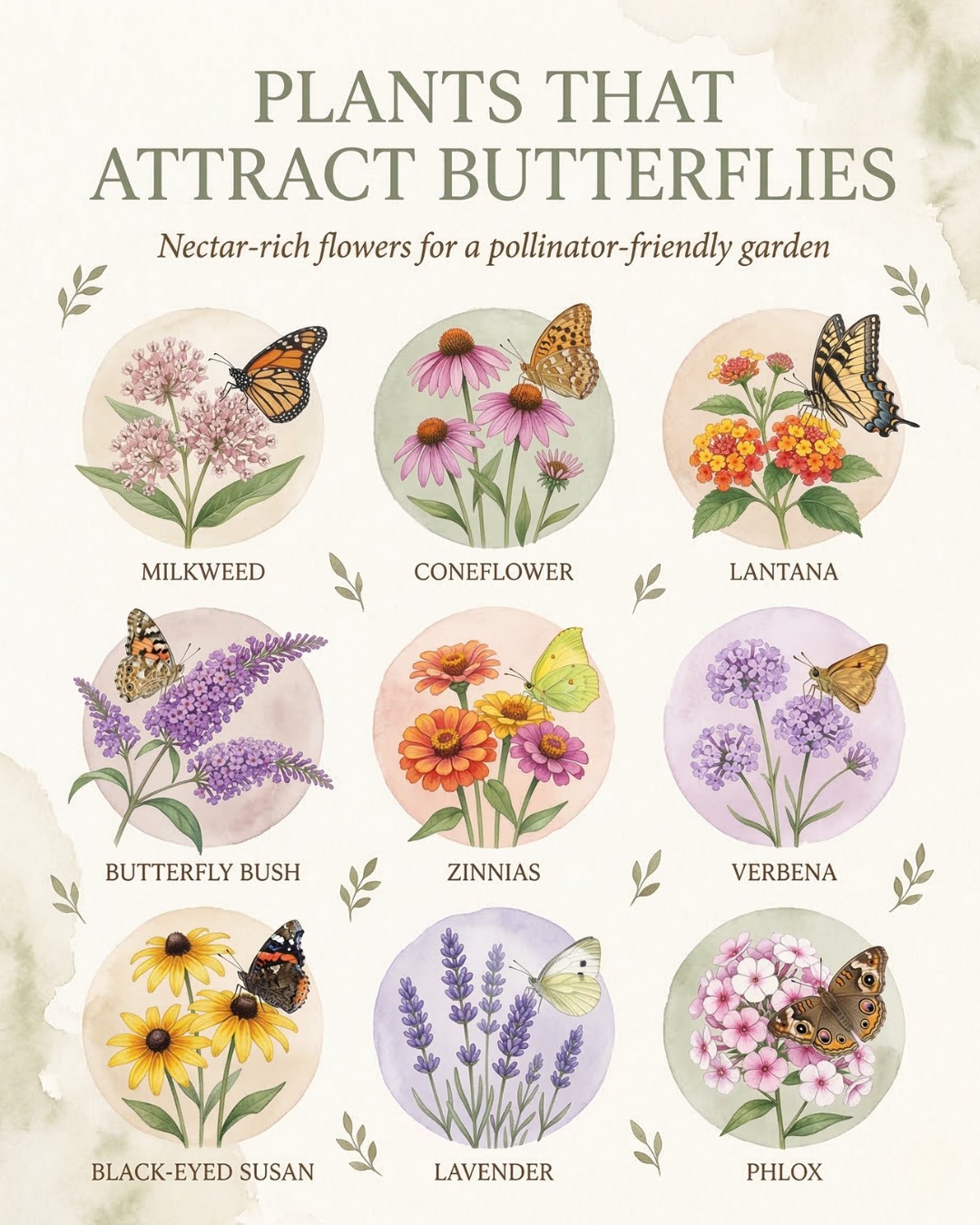
Milkweed, coneflower, lantana, butterfly bush, zinnias, verbena, black-eyed Susan, lavender, and phlox are all strong choices for a garden that looks alive from spring through fall.
The trick is not just what you plant, but how you group, place, and care for them.
These flowers can support butterflies, but they do not guarantee constant butterfly traffic every day.
Weather, local habitat, pesticide exposure, bloom timing, and nearby host plants all matter.
Still, a nectar-rich planting is one of the easiest ways to make a yard feel more colorful, useful, and pollinator-friendly.
Why it works:
- Nectar access: Butterflies need easy-to-reach nectar sources during active seasons.
- Color signals: Bright flower clusters help pollinators locate food more easily.
- Bloom succession: Planting early, midseason, and late bloomers keeps the garden active longer.
- Landing pads: Flat or clustered flowers give butterflies a place to rest while feeding.
- Habitat layering: A mix of flowers, shrubs, herbs, and native plants creates more shelter and movement.
Start with the plants that match your sunlight and space, then build a simple bloom calendar so something is always open.
Best butterfly garden plants for full sun
Most butterfly-friendly flowers perform best with at least 6 hours of direct sun per day.
Full sun encourages stronger stems, more blooms, and better nectar production in many common garden flowers.
9 nectar-rich flowers to consider
- Milkweed: Essential for monarch caterpillars and useful as a nectar source when in bloom.
- Coneflower: A sturdy perennial with open centers that attract butterflies and bees.
- Lantana: Heat-loving flower clusters that perform well in containers and sunny beds.
- Butterfly bush: Fragrant flower spikes that draw butterflies, though some types may be invasive in certain areas.
- Zinnias: Easy annuals with bright blooms and excellent cutting-garden value.
- Verbena: Long-blooming clusters that work well in borders, pots, and pollinator beds.
- Black-eyed Susan: Tough, sunny flowers that add late-summer color.
- Lavender: Aromatic blooms loved by many pollinators in dry, sunny spots.
- Phlox: Colorful clusters that can support butterflies when planted in the right conditions.
Easy full-sun planting formula
For a 4-by-8-foot butterfly bed, use this simple layout:
- Back row: 2 to 3 taller plants such as butterfly bush, tall phlox, or coneflower.
- Middle row: 5 to 7 medium plants such as milkweed, black-eyed Susan, lavender, or zinnias.
- Front edge: 6 to 10 lower plants such as verbena, compact zinnias, or trailing lantana.
Plant in clusters of 3 or more when possible. Butterflies can spot groups of flowers more easily than one isolated plant.
What to look for before you buy butterfly garden plants
Buying butterfly plants is easier when you shop by sunlight, bloom season, plant size, and local suitability instead of choosing only by color.
A beautiful flower is not always the best pollinator plant for your yard.
Buying guide checklist
- Sun requirement: Choose full-sun plants for open beds and part-sun plants for lighter shade.
- Bloom window: Mix spring, summer, and fall bloomers so nectar is available longer.
- Native value: Include native milkweed, coneflower, black-eyed Susan, or phlox varieties when appropriate for your region.
- Plant height: Check mature size so taller plants do not shade smaller ones.
- Water needs: Group dry-loving plants like lavender with similar drought-tolerant companions.
- Pesticide history: Look for plants labeled pollinator-safe or grown without systemic insecticides.
- Invasive risk: Check local guidance before planting butterfly bush or aggressive spreaders.
- Container suitability: For patios, choose compact lantana, zinnias, lavender, or verbena.
- Host plant value: Add milkweed if monarch support is part of your goal.
- Hardiness zone: Match perennials to your USDA zone or treat tender plants as annuals.
What to avoid
- Plants treated with broad-spectrum pesticides.
- One-season color mixes with no nectar value listed.
- Overcrowded nursery pots with yellow leaves or root circling.
- Plants labeled only as “butterfly mix” with no species names.
- Perennials that are not hardy in your growing zone unless you want annual color only.
How to plant butterfly garden plants
Butterfly flowers do best when they are planted in visible clusters with enough spacing for airflow and growth.
Before digging, place the pots on the soil and adjust the layout until the height, color, and spacing feel balanced.
Basic planting steps
- Choose the site: Pick a spot with 6 or more hours of sun for most nectar flowers.
- Prepare the soil: Loosen the top 8 to 12 inches and mix in 1 to 2 inches of compost if the soil is poor.
- Set the spacing: Keep small annuals about 8 to 12 inches apart, medium perennials 12 to 24 inches apart, and larger shrubs 3 to 6 feet apart.
- Plant at the right depth: Keep the top of the root ball level with the surrounding soil.
- Water deeply: Soak the root zone after planting, then keep soil evenly moist while plants establish.
- Mulch lightly: Add 1 to 2 inches of mulch, keeping it away from plant crowns.
- Deadhead selectively: Remove faded annual blooms for more flowers, but leave some seed heads for wildlife value later in the season.
Simple watering rhythm
New plants often need water 2 to 3 times per week for the first few weeks, depending on heat, rainfall, and soil type.
Once established, many perennials need less frequent watering, while container flowers may need water daily during hot weather.
How to attract butterflies with nectar flowers
Butterflies are more likely to visit when your garden offers sun, flowers, shelter, and fewer chemical disruptions.
Nectar is the hook, but habitat is what makes the space useful.
Pollinator-friendly setup
- Plant flowers in drifts instead of single scattered plants.
- Choose several colors, especially purple, pink, orange, yellow, and red.
- Add flat stones where butterflies can rest and warm themselves.
- Provide a shallow water source with damp sand or pebbles, not a deep bowl.
- Keep some wind protection with shrubs, fences, or taller perennials.
- Avoid spraying flowers while pollinators are active.
Bloom calendar idea
- Early to midseason: Lavender, milkweed, early phlox, and coneflower.
- Midseason: Zinnias, lantana, verbena, and black-eyed Susan.
- Late season: Phlox, zinnias, lantana, and coneflower if deadheaded.
The strongest butterfly garden usually has both nectar plants for adults and host plants for caterpillars.
Butterfly garden plants for small yards
You do not need a large meadow to attract butterflies.
A patio pot, sunny walkway, mailbox bed, balcony planter, or 4-foot border can still provide nectar if the plant choices are focused.
Small-space plant combinations
- Container combo: Lantana, verbena, and compact zinnias in a 16-to-20-inch pot.
- Mailbox bed: Black-eyed Susan, coneflower, and milkweed if space allows.
- Herb-and-flower border: Lavender, zinnias, and low verbena along a sunny path.
- Balcony planter: Compact lantana, trailing verbena, and dwarf zinnias.
- Narrow strip: Phlox, coneflower, and black-eyed Susan in repeating clusters.
Use fewer plant types but more repetition. Three strong varieties planted in groups often perform better visually than nine single plants squeezed into one small space.
Common Mistakes + Quick Fixes
- Mistake: Planting one of each flower. Why it matters: Butterflies spot larger flower patches more easily. Fix: Plant in groups of 3, 5, or 7.
- Mistake: Ignoring bloom timing. Why it matters: The garden may have nectar for only a few weeks. Fix: Mix early, mid, and late-season bloomers.
- Mistake: Buying pesticide-treated plants. Why it matters: Chemicals can work against pollinator goals. Fix: Ask for pollinator-safe plants or grow from seed.
- Mistake: Planting lavender in wet soil. Why it matters: Lavender dislikes soggy roots. Fix: Use sharp drainage and avoid overwatering.
- Mistake: Skipping host plants. Why it matters: Nectar feeds adults, but caterpillars need specific plants. Fix: Add milkweed for monarchs if suitable in your region.
- Mistake: Overcrowding perennials. Why it matters: Crowding reduces airflow and long-term performance. Fix: Space plants based on mature width.
- Mistake: Expecting instant results. Why it matters: Pollinator activity builds as plants mature and bloom. Fix: Give the garden a full season to settle in.
Safety Note
Some butterfly plants can be irritating, toxic, or regionally problematic.
Milkweed sap may irritate skin and is toxic if eaten, so wear gloves and keep it away from curious pets or children.
Lantana can be toxic to pets and livestock if ingested. Butterfly bush may be invasive in some regions, so check local recommendations before planting.
Avoid using broad-spectrum insecticides on or near nectar flowers, especially when butterflies, bees, or other pollinators are active.
Timeline: What to Expect
Same day
You can choose a sunny location, arrange plant groups, and plant a small nectar bed or container.
Water deeply and add light mulch to reduce stress.
1 week
Plants may still look like they are settling in.
Keep soil evenly moist for new transplants and remove any broken stems or faded blooms.
2 to 4 weeks
Annuals like zinnias, lantana, and verbena may begin pushing more flowers if conditions are warm and sunny.
Perennials may focus on roots first, but they often improve with time and repeat care.
FAQ
What are the best butterfly garden plants for full sun?
Good full-sun options include milkweed, coneflower, lantana, butterfly bush, zinnias, verbena, black-eyed Susan, lavender, and phlox.
The best mix depends on your climate, soil, garden size, and whether you want annuals, perennials, shrubs, or containers.
What should you look for before you buy butterfly garden plants?
Look for sun requirements, bloom time, mature size, hardiness zone, pesticide history, and whether the plant is native or regionally appropriate.
For pollinator goals, avoid plants with vague labeling or no clear nectar value.
How do you plant butterfly garden plants?
Plant them in a sunny spot with loose soil, proper spacing, and deep watering after planting.
Group flowers in clusters instead of scattering single plants across the yard.
How do you attract butterflies with nectar flowers?
Use colorful flower clusters, stagger bloom times, add shelter, reduce pesticide use, and include host plants when possible.
Butterflies are more likely to visit when nectar is easy to find and the area feels protected.
What are the best butterfly garden plants for small yards?
Compact zinnias, lantana, verbena, lavender, coneflower, and black-eyed Susan can work well in small sunny spaces.
Use containers, narrow borders, or repeated clusters to create impact without needing a large garden.
Do butterflies prefer native plants?
Many butterflies benefit from native plants because local insects often evolved with them.
A garden can include both native nectar plants and non-invasive ornamental flowers if they are safe and useful.
Can I grow butterfly plants in pots?
Yes. Lantana, verbena, zinnias, lavender, and compact milkweed varieties can grow in containers with enough sun and drainage.
Use a pot with drainage holes and check water more often during hot weather.
When choosing plants, compare bloom time, mature size, water needs, and local suitability before buying. A smart mix gives you more flowers, more color, and a better chance of steady pollinator activity.
Final Takeaway
- Use butterfly garden plants in clusters, not isolated singles.
- Start with full-sun nectar flowers like milkweed, coneflower, lantana, zinnias, and verbena.
- Choose plants with different bloom windows for longer seasonal interest.
- Check labels for pesticide exposure, mature size, and hardiness zone.
- Add host plants, shelter, and shallow water for a stronger pollinator garden.
- A small bed or container can still attract butterflies when the plant choices are focused.