A moon garden is one of the most magical ways to use a shady or softly lit part of the landscape. Instead of chasing midday color, it leans into evening. Pale flowers catch the last light. Glossy leaves reflect the moon. Fragrance grows stronger after sunset. And a quiet corner of the yard becomes a place that feels cooler, calmer, and more alive.
This kind of garden is not only beautiful. It is practical. A well-designed moon garden helps you make use of the spaces that many gardeners struggle with most: dappled shade, filtered light, and areas that are beautiful in the morning or evening but not in harsh afternoon sun. It also strengthens your observation skills. You begin paying attention to bloom timing, leaf texture, scent, and how plants behave after dark. That is the kind of gardening knowledge that changes daily routines in a real way.
If you want a planting that feels romantic, useful, and deeply connected to the rhythms of nature, these nine plants are excellent choices to build around.
What makes a great moon garden plant?
The best moon garden plants usually do one or more of these things well:
- bloom in white, cream, pale yellow, or soft pink tones
- release fragrance in the evening
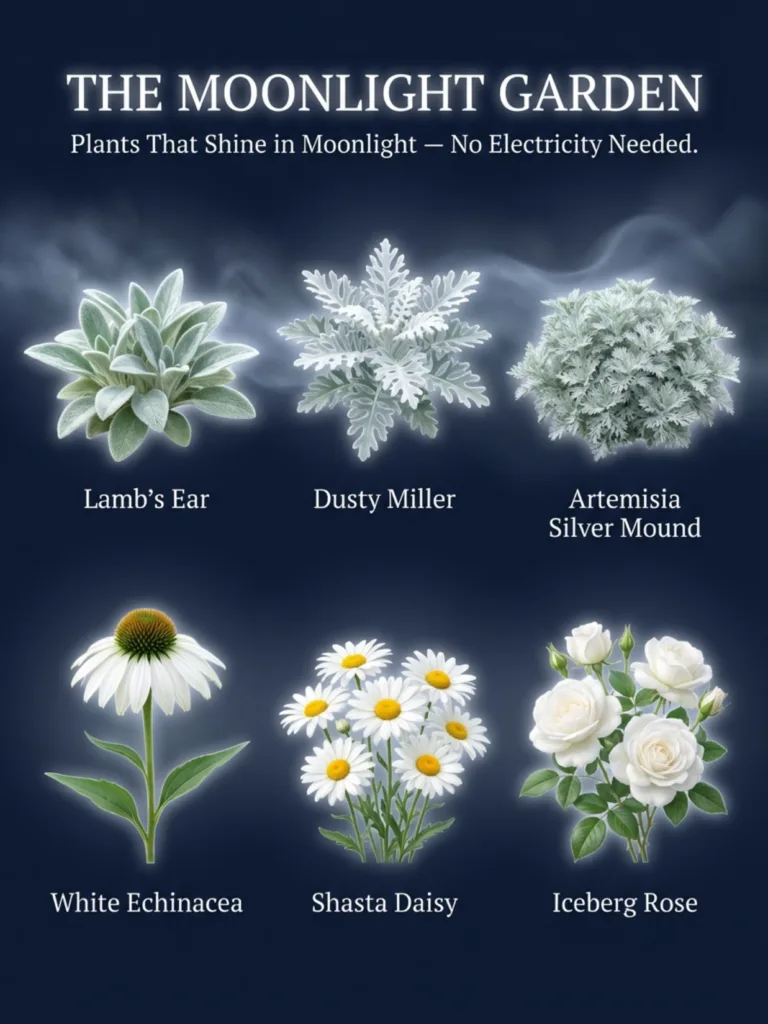
- reflect available light with glossy or silvery foliage
- tolerate part shade, bright shade, or gentle morning sun
- create strong shape and texture even when flowers are not the focus
A moon garden does not have to be all white. Soft pastel pinks, pale yellows, cool greens, and variegated foliage also work beautifully, especially in low-light spaces where contrast matters.
Light matters: “shade-friendly” does not mean deep darkness
One of the most useful things to understand is that most moon garden plants still want some light. Many do best in part shade, bright shade, or filtered light, not in a fully dark corner under dense trees. That is especially true for flowering plants. If the goal is evening impact, choose a site that gets at least a little morning sun or open-sky brightness during the day.
A good moon garden location often includes:
- east-facing light
- filtered sun under high tree canopies
- bright shade near patios or paths
- gentle reflected evening light near fences or walls
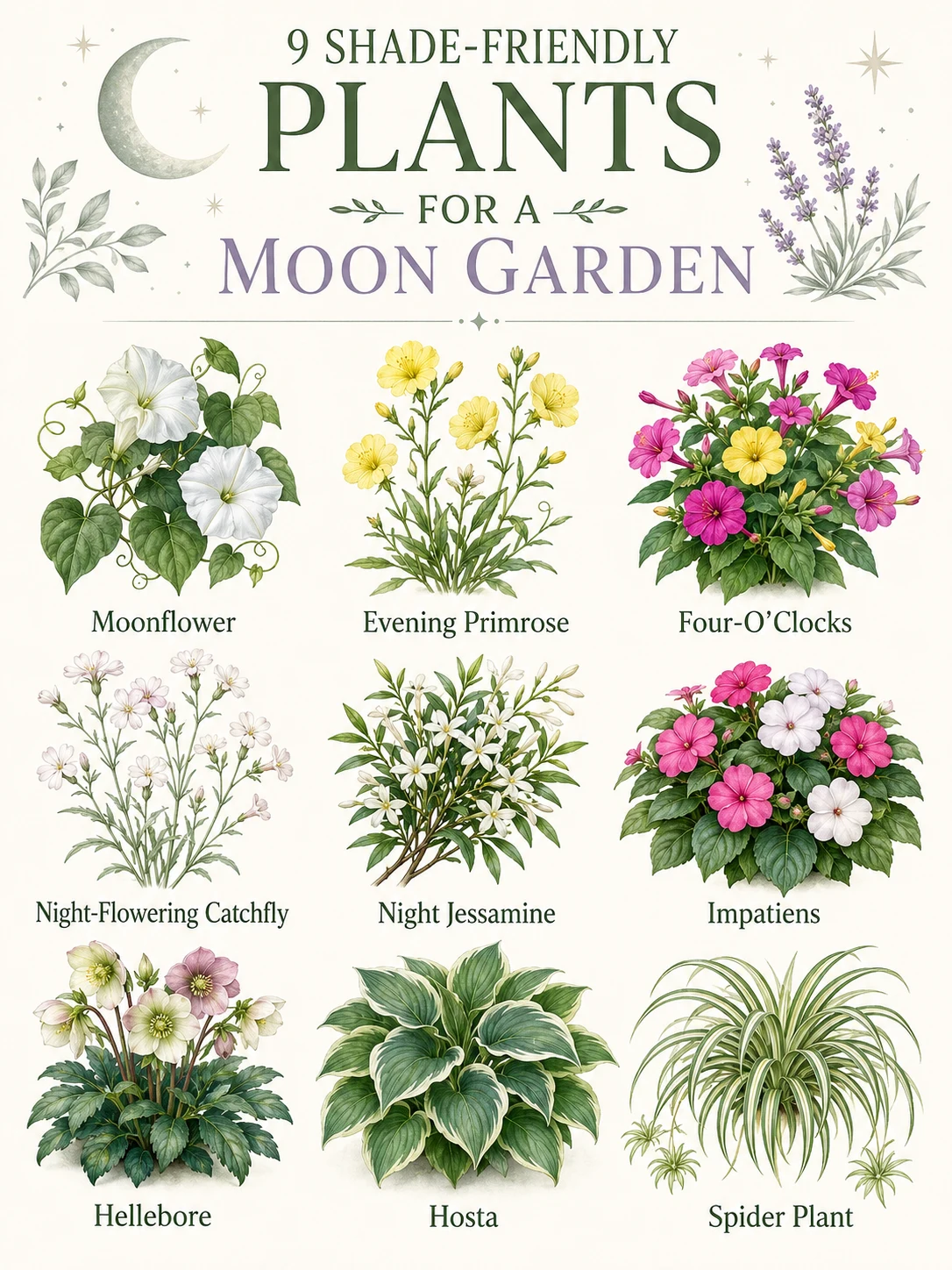
1. Moonflower: the classic evening opener
Moonflower is one of the signature plants of a moon garden. Its large white blooms unfurl in the evening, and that opening moment alone can make the garden feel theatrical.
Plant character
A fast-growing vine with heart-shaped leaves and luminous white flowers that are especially striking around dusk.
USDA zone use
Often grown as a warm-season annual in much of the United States, though it can behave as a perennial in warmer climates, especially Zones 10–11.
Practical care tip
Give moonflower a support from the beginning. A trellis, arch, or fence lets the blooms rise into view where evening light can catch them. In cooler zones, start early enough that the vine has time to build before summer peaks.

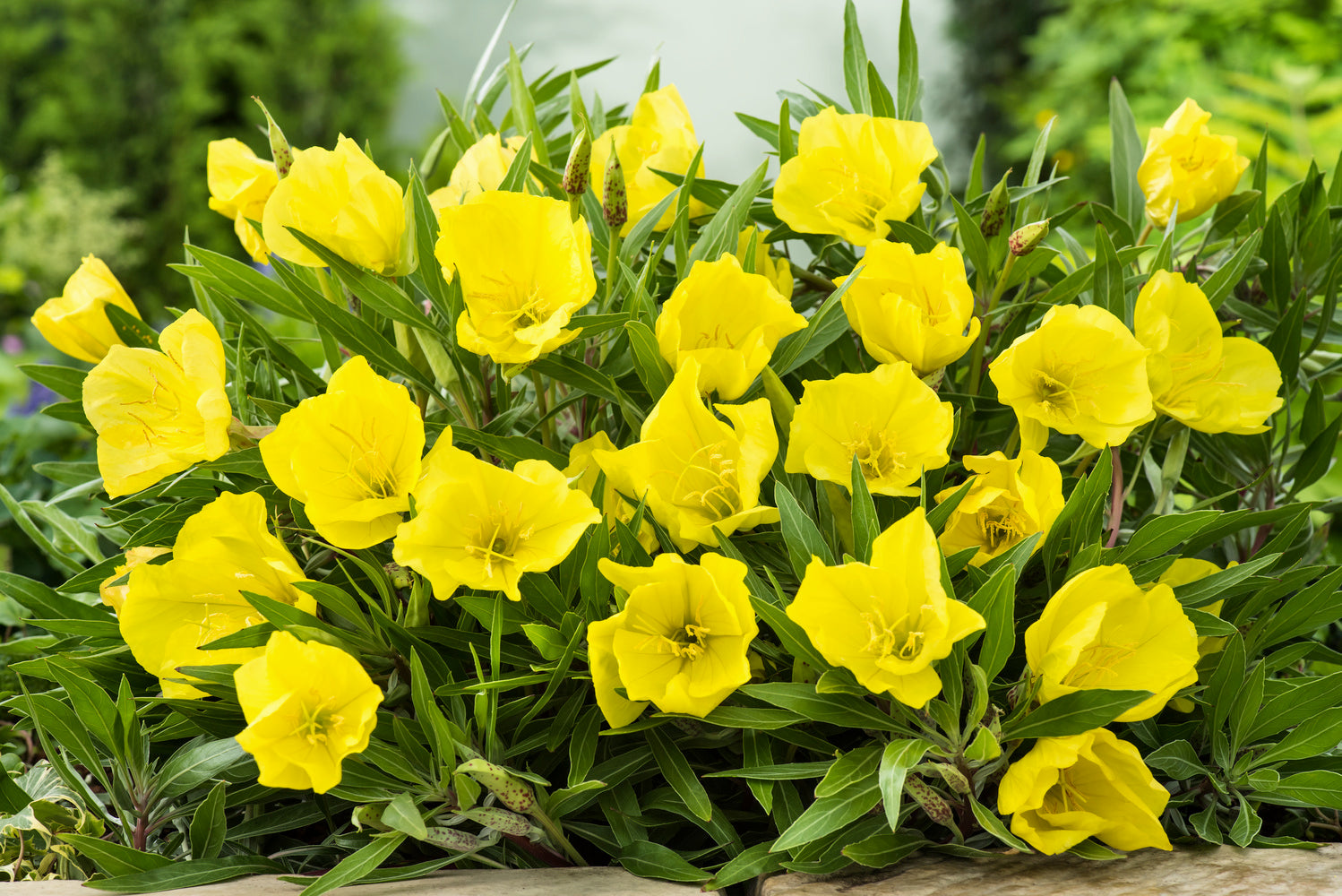
2. Evening Primrose: soft light and quiet resilience
Evening primrose is one of the best plants for gardeners who want flowers that feel natural rather than formal. Its pale blooms suit a relaxed moon garden beautifully.
Plant character
Open, graceful growth with soft yellow flowers that become especially appealing in low light.
USDA zone use
Varies by species, but many evening primroses perform well in Zones 4–9.
Practical care tip
Use it where the garden can feel a little loose and natural. It works especially well near path edges or in drifts with ornamental grasses and pale companions.
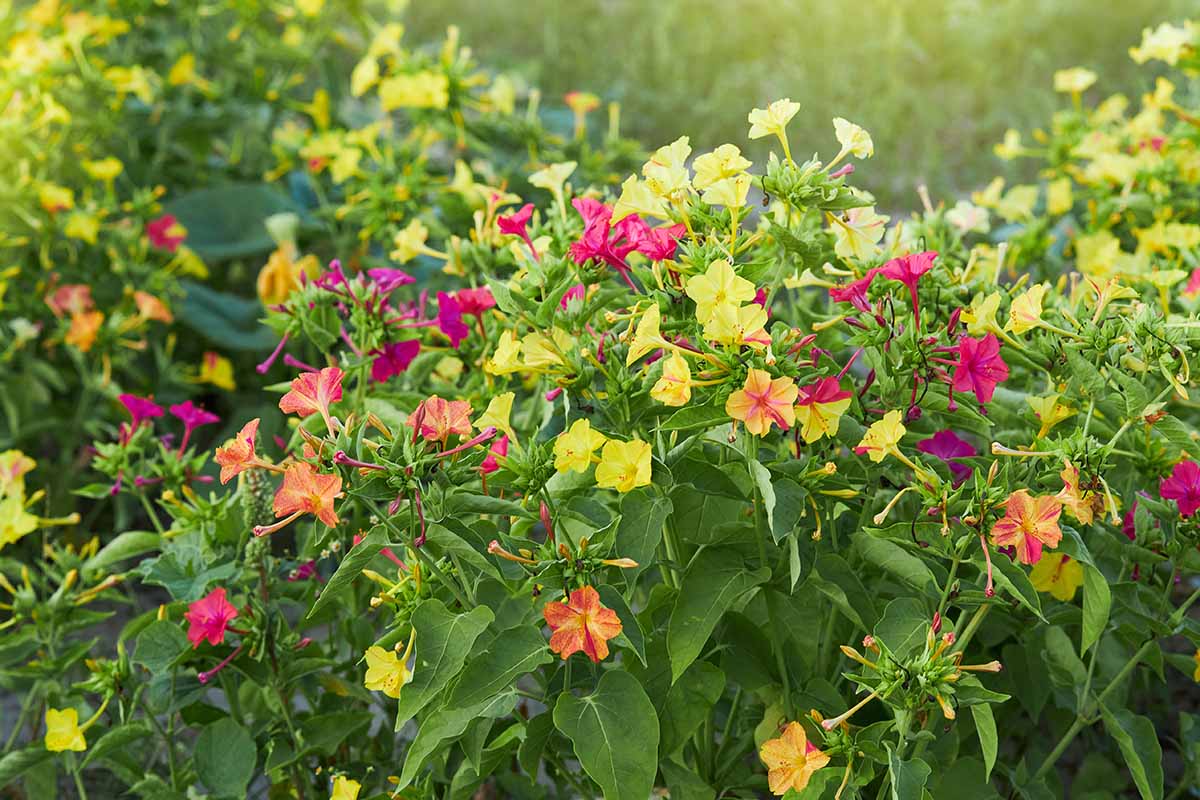
3. Four-O’Clocks: dependable evening color and fragrance
Four-o’clocks are excellent for a moon garden because they open later in the day and bring color just as many other flowers begin fading visually.
Plant character
Bushy, generous, and long-blooming, often with pink, yellow, white, or mixed flowers on the same plant.
USDA zone use
Perennial in warm climates, often Zones 9–11, and commonly grown as an annual elsewhere.
Practical care tip
Plant four-o’clocks where you spend time in the evening. Their bloom timing is part of their charm, and they are best appreciated when you actually walk past them at dusk.
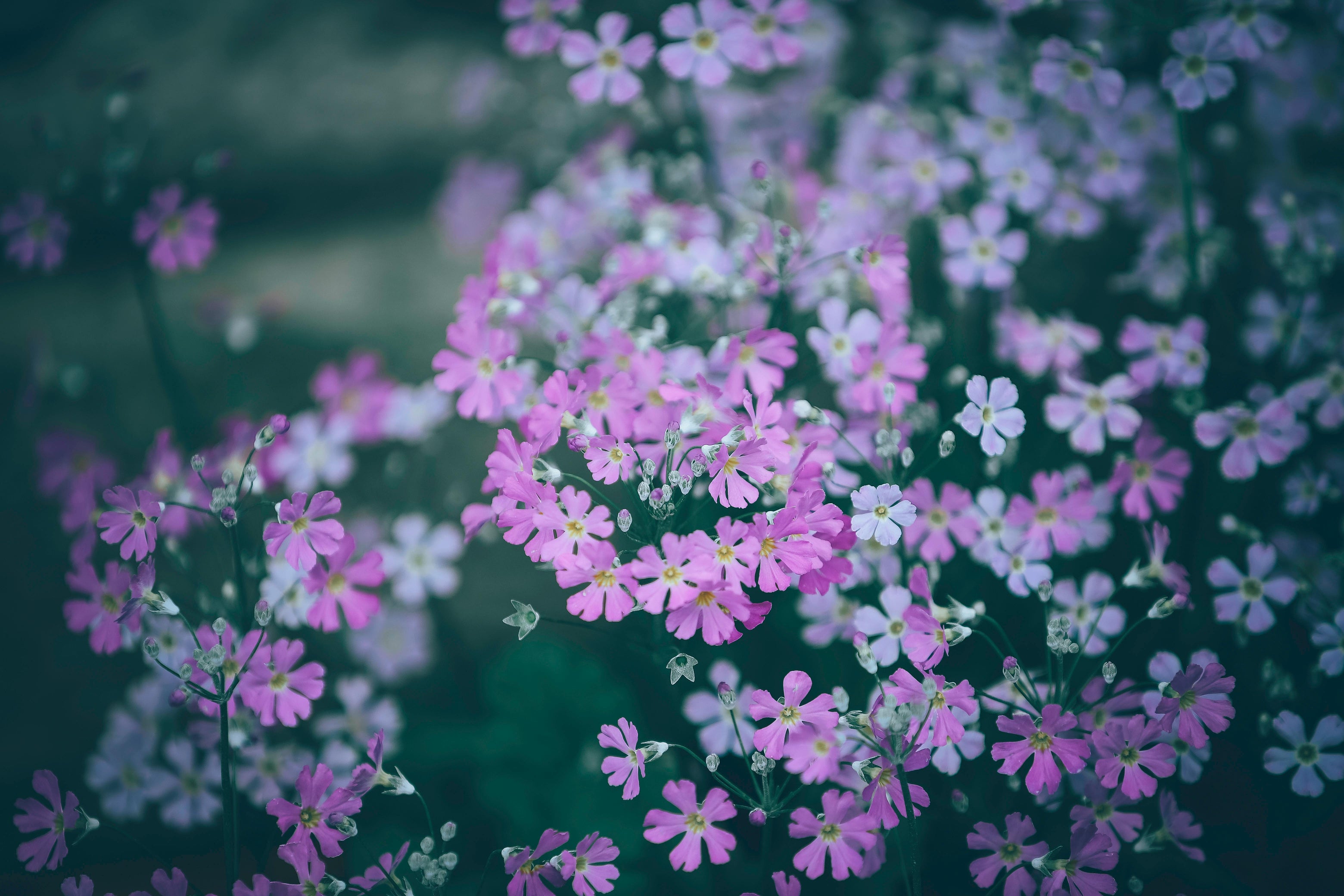
4. Night-Flowering Catchfly: airy and delicate in evening light
Night-flowering catchfly adds a softer, more delicate mood than bolder moon garden plants. It brings movement and a lighter visual texture.
Plant character
Fine stems, pale blossoms, and a gentle, floating presence.
USDA zone use
Often grown as an annual or short-lived perennial depending on type and region.
Practical care tip
Use catchfly among denser foliage plants like hosta or hellebore. The contrast between airy bloom and solid leaf mass makes both look better.
5. Night Jessamine: fragrance that defines the space
If fragrance matters to you, night jessamine deserves serious attention. It may not always be the showiest plant by day, but in the evening it transforms the atmosphere around it.
Plant character
A shrubby plant valued especially for strong nighttime scent.
USDA zone use
Best suited to warmer climates, often Zones 8–11, and sometimes grown in large containers where it can be protected in cooler areas.
Practical care tip
Place it near seating areas, patios, or windows that are opened in the evening. This is a plant best chosen for sensory impact, not only visual effect.

6. Impatiens: one of the easiest ways to brighten shade
Impatiens remain one of the most reliable flowering plants for bright shade and gentle morning sun. In a moon garden, white and soft pink varieties are especially effective.
Plant character
Mounded, lush, and continuously blooming when happy.
USDA zone use
Usually grown as annuals across most of the U.S., though perennial in frost-free climates.
Practical care tip
Keep them evenly watered. Impatiens tell you quickly when they are stressed. In return, they reward steady moisture with a long display and easy color in difficult shady spots.

7. Hellebore: elegant structure for the quiet season
Hellebores are not usually thought of first when people imagine a moon garden, but they are incredibly useful because they bring refined foliage and soft blooms in shade.
Plant character
Evergreen or semi-evergreen clumps with nodding flowers in white, blush, green, or dusky tones.
USDA zone use
Most hellebores thrive in Zones 4–9.
Practical care tip
Use hellebores as the backbone of the planting. Their foliage stays handsome for a long season, which matters in a garden designed for mood and structure, not just peak bloom.

8. Hosta: the foliage anchor every shade garden needs
Hosta gives a moon garden weight and calm. Broad leaves catch low light beautifully, especially variegated or blue-green forms.
Plant character
Leaf-focused, mounding, cool-toned, and highly useful in shade.
USDA zone use
Hostas are broadly reliable in Zones 3–9.
Practical care tip
Choose hostas with white or cream variegation if you want stronger evening visibility. In moonlight or porch light, these brighter leaf edges make a real difference.

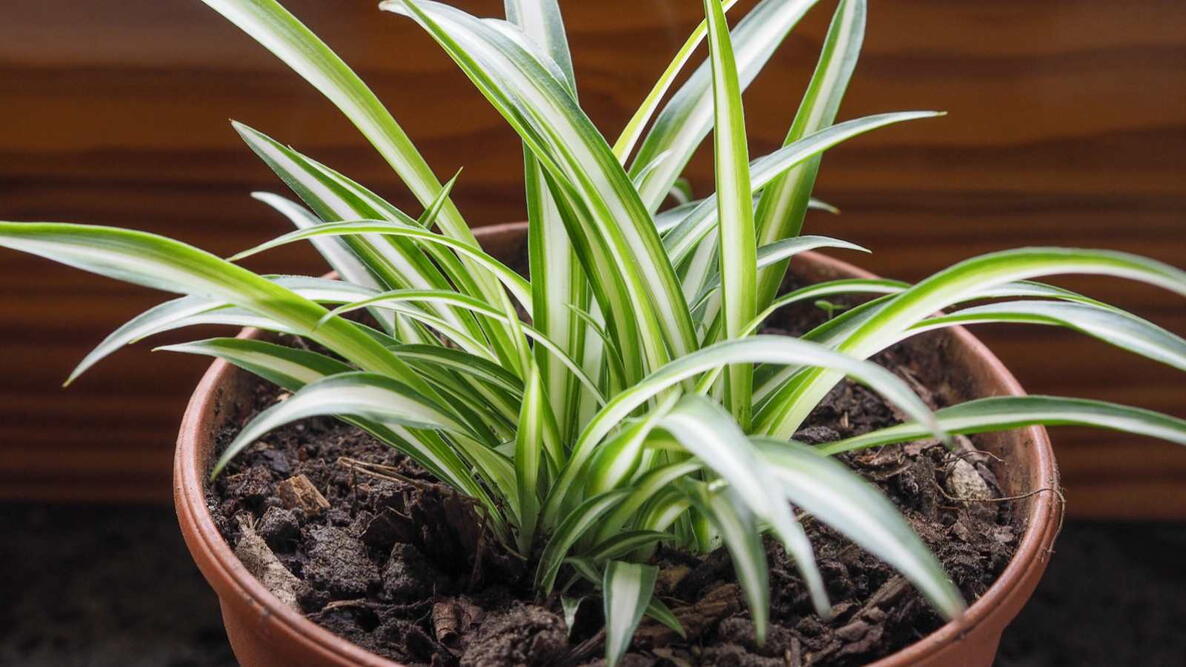
9. Spider Plant: useful in sheltered moon garden containers
Spider plant is more often grown indoors, but in protected outdoor containers during warm weather it can be very effective for softening a moon garden nook.
Plant character
Arching striped foliage and dangling offsets that create movement.
USDA zone use
Generally used as a warm-season container plant outdoors except in frost-free climates.
Practical care tip
Use spider plant in hanging baskets or pedestal pots near a shaded porch or moon garden seating area. It is especially useful where you want foliage texture without relying on bloom.
How to design a moon garden that actually works
Build with layers, not just flowers
A successful moon garden is usually made of three layers:
- taller vines or shrubs for backdrop
- medium flowering plants for evening color and scent
- leafy ground-level plants for contrast and visual weight
For example, moonflower can climb in the back, four-o’clocks and impatiens can fill the middle, and hosta or hellebore can anchor the front.
Focus on contrast
In daylight, bright colors do the work. In evening light, contrast matters more. White flowers, pale yellow blooms, silver-toned leaves, and variegated foliage stand out best.
Use fragrance intentionally
Place fragrant plants like night jessamine or evening bloomers close to where people sit, walk, or open windows. Scent is one of the defining strengths of a moon garden.
Repeat a few plants instead of using one of everything
A drift of hostas or repeating pockets of white impatiens usually looks stronger than a scattered collection of unrelated plants.
Practical care habits that keep a moon garden beautiful
Water deeply, especially in filtered shade
Shade does not always mean moist soil. Areas near fences, trees, and walls can be surprisingly dry.
Mulch for moisture and glow
A light organic mulch helps conserve water and also gives the planting a finished look. In moon gardens, a clean mulch layer makes pale flowers stand out better.
Prune with the evening view in mind
Remove damaged leaves and spent flowers, but think about how the garden looks at twilight. Strong silhouettes matter.
Do not overcrowd for instant fullness
Moon gardens need airflow and shape. Plants that are slightly spaced when young usually become much more elegant over time.
Best moon garden strategy by USDA zone
Zones 3–5
Lean heavily on hosta, hellebore, impatiens, and selected evening primroses. Use moonflower and four-o’clocks as seasonal annual accents.
Zones 6–8
You have the widest design range. Combine dependable shade perennials with warm-season moonflower, four-o’clocks, and fragrant evening plants.
Zones 9–11
Use tropical and warm-climate options more confidently, including night jessamine and longer-lived moonflower or four-o’clocks, while still balancing them with foliage anchors.
Final thoughts: a moon garden changes how you experience the garden itself
A moon garden is not only about plants. It is about time of day. It asks you to slow down, step outside later, and notice what the garden becomes after sunset. Moonflower opens. Fragrance deepens. White blooms brighten. Foliage cools the whole scene.
That is what makes it so rewarding. It turns a shady space from a problem area into one of the most memorable parts of the landscape.
With moonflower, evening primrose, four-o’clocks, night-flowering catchfly, night jessamine, impatiens, hellebore, hosta, and spider plant, you can build a garden that does more than survive in softer light. It glows there.