One of the most useful things a gardener can learn is this: your house creates microclimates. The same yard can hold hot, dry, sun-baked soil on one side and cool, moist shade on another. That is why one plant thrives near the front walk while another struggles just a few steps away. It is not always about bad soil or bad luck. Often, it is about direction.
When you start matching plants to the side of the house where they naturally belong, your garden becomes easier to manage and far more productive. Watering gets simpler. Plant stress drops. Flowering improves. Leaves stay cleaner and stronger. And instead of forcing a plant to survive in the wrong conditions, you begin working with the rhythm of your landscape.
This is one of the clearest ways to garden more wisely. You are not just choosing plants. You are choosing the right place for them.
Why house direction matters so much in gardening
The four sides of a house receive sunlight differently. They also differ in heat reflection, wind exposure, moisture retention, and how quickly soil warms in spring. That means each side tends to favor a different kind of plant community.
A wall, driveway, fence, or patio can intensify that effect. A south-facing foundation bed may feel like a heat trap in midsummer. A north-facing bed may stay cool and damp long after rain. An east-facing bed can be ideal for plants that like gentle sun, while a west-facing border may push all but the toughest flowers into afternoon stress.
Once you notice this, you stop asking, “Why does this plant hate my yard?” and start asking the better question: “Which side of my yard actually suits this plant?”
The simplest rule: use direction as your first clue, not your only answer
House direction is a strong guide, but it is not the whole story. Trees, fences, slope, reflected heat, and local wind can all change conditions. So think of direction as your starting point, then fine-tune based on what you observe.
Look for:
- how many hours of sun each side gets
- whether the light is morning sun or hot afternoon sun
- whether walls or pavement reflect extra heat
- whether the soil stays dry or moist
- whether wind is stronger on one side
That kind of observation turns a good gardener into a skilled one.
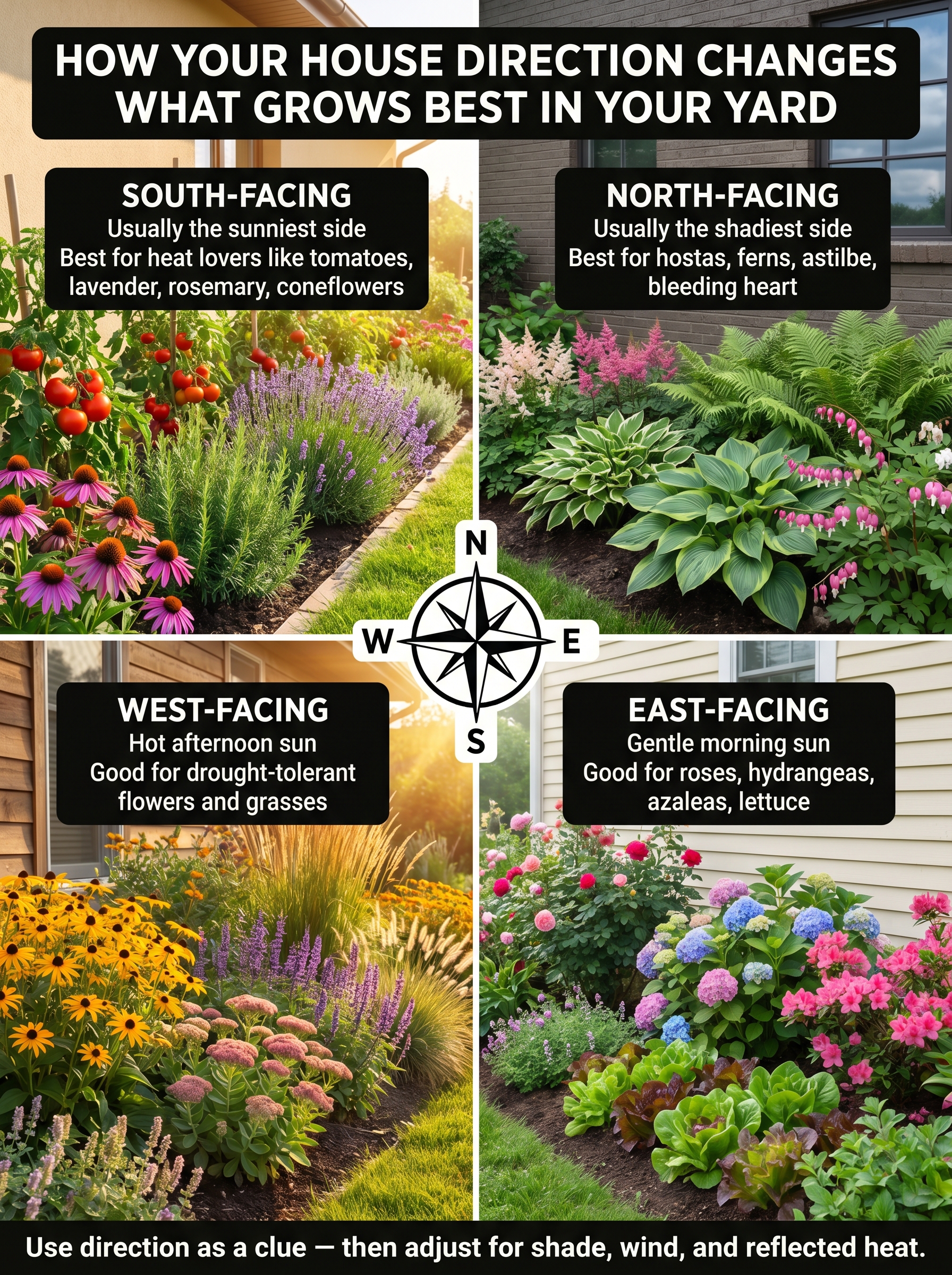
South-facing beds: the hottest, brightest side
In most U.S. gardens, the south-facing side is the sunniest and warmest. It usually gets the strongest light for the longest part of the day. This is the place for plants that love heat, bright light, and good drainage.
Best for:
- tomatoes
- lavender
- rosemary
- coneflowers
- salvias
- yarrow
- ornamental grasses
- many Mediterranean herbs
Why this side works for them
These plants usually want strong sun to flower well, produce heavily, or keep compact growth. A south-facing bed often gives them exactly what they need.
Practical care advice
South-facing beds dry out faster, especially near walls and foundations. Improve the soil with compost, mulch deeply, and water more deeply rather than more often. This encourages stronger root systems instead of shallow dependence.
USDA zone note
In cooler zones like 3–6, south-facing sites can help heat-loving plants perform much better. In hotter zones like 8–10, this side may become intense enough that some plants need extra mulch or a little companion shading at the root level.
North-facing beds: the coolest and shadiest side
The north-facing side is usually the calm, cool side of the house. It often receives the least direct sun, especially if the house itself blocks much of the day’s light. This is where shade-loving plants often look their best.
Best for:
- hostas
- ferns
- astilbe
- bleeding heart
- hellebores
- coral bells
- lungwort
- woodland ground covers
Why this side works for them
These plants usually prefer bright shade, filtered light, or cooler root zones. On the north side, foliage often stays fresher and flowers last longer because they are not scorched by afternoon heat.
Practical care advice
Do not assume north-facing always means wet. Some north beds under roof overhangs can actually be dry. Check the soil before planting. If the bed is deeply shaded and dry, choose tough shade plants and improve moisture retention with compost and leaf mulch.
USDA zone note
In warm regions, north-facing beds can be a gift. They often provide relief for plants that struggle elsewhere. In colder zones, they may warm slowly in spring, so do not rush early planting there.
East-facing beds: one of the easiest spots to garden well
The east-facing side is often the gardener’s friend. It usually receives soft morning sun and is protected from the harshest late-day heat. This makes it one of the most flexible and forgiving planting zones around the house.
Best for:
- roses
- hydrangeas
- azaleas
- lettuce
- parsley
- basil in milder climates
- foxglove
- impatiens in brighter shade
Why this side works for them
Morning sun dries dew gently, which can help reduce disease pressure, but it usually does not stress the plant the way hot afternoon exposure does. Many flowering shrubs and leafy edibles perform beautifully here.
Practical care advice
East-facing beds are ideal for plants that want light but not punishment. This is often the best place for hydrangeas in warm climates and for cool-season edibles in spring and early summer.
USDA zone note
In Zones 7–10, east-facing beds are often better for moisture-loving ornamentals and tender leafy crops than south- or west-facing locations. In cooler zones, they still provide excellent all-around garden conditions.
West-facing beds: intense afternoon sun and heat
The west-facing side is often the trickiest. It may not get the longest total sun exposure, but it gets the strongest afternoon and evening heat, which can be much harder on plants than gentle morning sun.
Best for:
- drought-tolerant flowers
- black-eyed Susan
- sedum
- Russian sage
- lavender in good drainage
- ornamental grasses
- catmint
- gaillardia
Why this side works for them
Plants suited to western exposure are usually tough, heat-tolerant, and able to handle reflected warmth from walls, brick, or pavement.
Practical care advice
This side benefits from heavy mulching, soil-building, and realistic plant selection. Do not put delicate shade lovers or thirsty shrubs here unless there is significant protection. West-facing beds are often where gardeners lose plants by underestimating heat stress.
USDA zone note
In Zones 8–10, west-facing beds can be brutally hot in summer. Choose resilient species and give new plantings extra attention during establishment. In cooler zones, this side can still be very useful for sun-loving plants, but the stress is often less extreme.
Matching common plant types to house direction
Vegetables
Tomatoes, peppers, squash, rosemary, and lavender usually belong on the south or warmest east-facing side. Lettuce and many herbs may do better on the east side, especially in hot climates.
Shade perennials
Hostas, ferns, astilbe, bleeding heart, and hellebores usually belong on the north side or in protected east-facing beds.
Flowering shrubs
Hydrangeas and azaleas often do best on the east side or in bright north-side light, depending on climate. Roses usually appreciate east or south exposure if airflow is good.
Drought-tolerant perennials
Sedum, coneflower, yarrow, ornamental grasses, and Russian sage often thrive on south or west exposures.
How to read your yard like a skilled gardener
A smart planting plan starts with one day of careful observation.
In the morning, notice which areas get first light. At midday, notice where heat builds. In the late afternoon, look for the places that stay bright and the places that suddenly become punishing. After rain, check which beds stay moist longer. On windy days, watch which corners dry out fast.
This gives you the real map of your garden.
And once you have that map, plant choice becomes easier:
- put moisture-loving shade plants where the site protects them
- put heat lovers where they get energy, not stress
- use east beds for balanced, flexible planting
- reserve west beds for the toughest performers
Common mistakes gardeners make with house direction
Planting by appearance, not exposure
A plant may look beautiful near the nursery entrance, but that does not mean it belongs on your west-facing wall.
Treating all “sun” as the same
Morning sun and late-afternoon sun are not equal. West sun is often much harsher.
Ignoring reflected heat
Brick walls, driveways, patios, and white siding can all intensify exposure.
Assuming shade means no care needed
North beds can still have dry soil, root competition, or slow spring warming.
Final thoughts: your house is already shaping your garden
Every home creates its own garden conditions. The south side pushes growth with heat and light. The north side protects cool-loving plants. The east side offers gentle, balanced conditions. The west side tests toughness and drought tolerance.
Once you start planting with those realities in mind, gardening becomes much more intuitive. You waste fewer plants. You water more effectively. You choose with more confidence. And the garden starts to feel less like trial and error and more like a living system you understand.
That is when real progress happens: not when you buy better plants, but when you place them better.