PART 1 — The Missing Dress
The first thing I remember is the sound of the zipper.
Not Camille screaming.
I used to say she screamed, because that was how everyone told it afterward. The bride screamed from the bridal suite, and we all ran. It sounded cleaner that way, more dramatic, easier to place in a story where one terrible thing happened and everyone reacted naturally.
But Camille did not scream.
She made a broken little breath.
A practiced, fragile sound. The kind that pulled people toward her before anyone knew what had happened. It floated out from the bridal suite and down the stone hallway of that Provence villa, past the baskets of lavender tied with silk ribbon, past the champagne flutes no one had finished, past the open windows where the cicadas had already started their furious morning chorus.
Then came the zipper.
The long, empty rasp of a garment bag being pulled open.
That sound has stayed with me longer than the shouting, longer than the pearl button in my palm, longer than the phones raised behind me while I stood there with flour on my sleeve and buttercream under one fingernail.
A zipper should be an ordinary sound.
That morning, it became the sound of my life coming undone.
My name is Nora Whitfield. I was thirty-one then, though I felt older in the way people do when they measure their lives by bills, hospital appointments, and oven repair quotes. I owned a small bakery in Bath called Whitfield & Rye, though “owned” is generous. The bank owned most of it. The landlord owned the walls. My mother’s prescriptions owned whatever was left after rent, flour, butter, electricity, staff wages, and the old mixer that made a grinding noise whenever I pushed it past medium speed.
But the sign above the door had my name on it.
That mattered to me.
My mother, Elaine, had painted the first version by hand when I took over the shop from a retired baker who said the high street was dying and young people were foolish enough to mistake exhaustion for hope. Mum had arthritis in both hands by then, but she insisted on painting each letter herself. “If it’s going to take your life,” she said, “it should at least have your name properly on it.”
She was ill in ways that made people say brave too often. Kidney disease first, then complications, then the slow humiliations of a body that requires paperwork to keep failing at a manageable speed. She lived in the little flat above the bakery with me when she was well enough, and with my aunt in Bristol when the stairs became too much. Every time I considered closing the shop, she said the same thing.
“Don’t you dare bury your life because mine got complicated.”
I would roll my eyes. She would pretend not to see me cry.
That was the life I left behind when I flew to France with three insulated cake boxes, two checked bags full of sugar flowers, a garment steamer I had no business packing, and a bridesmaid dress that cost more than my monthly electricity bill.
I went because Camille asked me.
That sentence explains too much and not enough.
Camille Laurent had been my best friend for twelve years. We met in our first year at university in Bristol, where she arrived with two monogrammed suitcases, a silk scarf tied around her ponytail, and the effortless certainty of someone who had never wondered whether her card might decline in a supermarket. I arrived with one secondhand suitcase, three pairs of shoes, and a Tupperware of Mum’s lemon biscuits because I was afraid I would not know how to make friends without offering food.
Camille chose me in the first week.
That was how it felt then. Like being chosen.
She sat beside me during a lecture on visual culture, leaned over my notebook, and whispered, “Your handwriting looks like it has morals.”
I laughed too loudly. She grinned.
For years, I mistook that first grin for proof.
Proof that she saw me.
Proof that the gap between us did not matter.
Proof that I had not been invited into her world only because I knew how to carry heavy things without asking where the lift was.
Camille was dazzling in the way certain women learn to be before they are old enough to understand the work involved. She photographed well in bad light. She remembered everyone’s favorite drink. She could turn a late rent payment into “a messy little chapter” and a panic attack into “a reset weekend.” By the time she became a lifestyle influencer, no one who knew her was surprised. Camille had been curating her life long before anyone paid her for it.
I was the practical friend.
That was my role.
I fixed hems, baked birthday cakes, found emergency taxis, held hair back after champagne, remembered which boyfriends were gluten-free, and once spent an entire night hand-painting place cards because Camille decided at midnight that printed names felt “soulless.” I told myself I did these things because I loved her. That was true.
It was also incomplete.
I did them because being useful made me harder to leave.
When Camille got engaged to Julian Ashford, heir to a hotel family with cheekbones like old money and the emotional range of a closed umbrella, she called me before she posted the ring.
“Nora,” she said, breathless. “I’m going to be a bride.”
I was standing in the bakery kitchen at 5:20 in the morning, rolling croissant dough with one hand and holding the phone with the other. The fridge motor rattled behind me. My apron was dusted with flour. Mum was asleep upstairs after a bad night.
I said, “Of course you are.”
She laughed. “What does that mean?”
“It means the universe has been waiting for the content.”
She screamed then. A real scream, happy and unguarded.
I miss that sound sometimes.
Not enough to forgive her.
But enough to remember that grief and anger can live in the same room without canceling each other out.
The wedding was planned for a restored estate outside Gordes, in Provence. Three days. Lavender fields, stone terraces, a chapel ruin for photographs, long tables under plane trees, custom embroidered linens, wildflower installations, and a cake that was supposed to look “like if a Dutch still life fell in love with an English garden.”
That was Camille’s brief to me.
She wanted figs, pears, sugar grapes, hand-painted pressed-flower panels, honey buttercream, almond sponge, and a cascade of edible flowers that would look effortless in photos and survive the heat.
She also wanted a discount.
She did not say discount. Women like Camille rarely say the ugly word. She said, “It would mean everything to have your hands in this part of the day.”
I said yes before she finished asking.
Then the real asks began.
Could I cover the final deposit for the lavender supplier? Just temporarily. The French banking app was being impossible.
Could I pay the emergency courier for the custom cake stand? Julian’s card was tied up with a hotel authorization.
Could I speak to the caterer because Camille “couldn’t handle another practical conversation without crying”?
Could I bring extra sugar roses because the florist had become “weirdly rigid about budget language”?
Budget language.
That phrase came up often.
“Please don’t say budget around Julian’s mother,” Camille told me two weeks before the wedding. “She gets so Victorian about money.”
Then, a few days later: “If anyone asks, everything is fully settled. It’s just cleaner that way.”
Cleaner.
That was one of Camille’s words.
Clean meant hidden.
Polished meant unpaid.
Effortless meant someone else was sweating.
By the time I arrived in Provence, I had put nearly four thousand pounds of my own money into emergency wedding fixes, none of which I could afford. Some of it was on a credit card I used only for bakery equipment. Some of it came from the fund I had been building to replace the old oven that ran ten degrees hot on the left side and twenty degrees low on the right. That oven fund had taken me eighteen months.
Camille knew.
She had sat at the bakery counter in Bath three months earlier, drinking oat milk coffee she did not finish, while I told her the oven was becoming dangerous. She placed her hand over mine and said, “After the wedding, I’m going to make sure people know what you did. This cake will change everything for you.”
I wanted to believe her.
That is the most humiliating part.
Not that she lied.
That I kept handing her more of myself and calling it friendship.
The Provence villa was beautiful in a way that made practical problems look vulgar. Honey-colored stone walls. Blue shutters. Terraces dripping with bougainvillea. A courtyard that smelled of lavender, warm dust, and expensive flowers. Even the kitchen, where I spent most of my first day, had arched windows and copper pans hanging from beams so old they looked religious.
I arrived forty hours before the ceremony.
The cake components arrived separately in refrigerated transport, which I had insisted on and Camille had called “a little intense” until the French heat hit thirty-two degrees before noon. I spent the afternoon checking layers, re-whipping buttercream, repairing a crack in one painted panel, and arguing with a planner named Amélie who kept insisting the cake table would be in direct sun because the light was “more romantic there.”
“Romantic for photos,” I said, “or romantic for melted butter?”
She blinked at me.
That was how most of Camille’s wedding people reacted to me. I was included but not equal. A bridesmaid, yes, but also the baker. A friend, yes, but one wearing an apron while they drank rosé by the pool. I moved through the villa as both guest and staff, and people treated me according to whichever role made them most comfortable at the time.
Camille found me in the kitchen just before dinner.
She was already in bridal-white loungewear, though the wedding was the next day. Silk trousers. Feather-trimmed sleeves. Bare feet. Her engagement ring catching the light every time she lifted her phone.
“Nora,” she said, “please don’t be angry.”
That was never a good opening.
I was balancing a tray of sugar flowers on the counter. “About what?”
“The musicians need their second payment before tomorrow.”
“No.”
Her face folded slightly. Not crying yet. Preparing.
“Camille.”
“I know. I know how it sounds.”
“It sounds like you did not pay another vendor.”
“I did pay them. The transfer is delayed.”
“Then show them the confirmation.”
Her eyes moved away.
There it was.
“Camille,” I said quietly, “how many vendors are still waiting?”
She picked up a sugar rose from the tray and turned it between her fingers. “This is beautiful.”
“Put that down.”
She did, too slowly.
“How many?”
She leaned against the counter. “Don’t use that voice.”
“What voice?”
“The one where you make me feel like a child.”
I stared at her.
Behind us, one of the catering assistants carried a crate of lemons through the side door. I waited until he passed.
“I am not doing this tonight,” I said. “I am not covering another payment.”
“It’s not covering. It’s helping me get through one more day.”
“You said that about the florist.”
“That was different.”
“And the cake stand.”
“Nora—”
“And the deposit on the villa shuttle.”
Her eyes sharpened. “You offered.”
“I offered because you said the transfer had failed.”
“It had.”
“Every transfer fails?”
She looked toward the open kitchen door, checking who might hear. Camille cared about privacy only when truth was nearby.
“Please,” she said. “Not here.”
“No, you’re right. Not here. Not now. Not ever, apparently.”
Her face went still.
That should have warned me.
Camille was most dangerous when she stopped performing hurt and began calculating.
“You think it’s fake,” she said.
“What?”
“My wedding.”
I rubbed my forehead. I had been awake since four, and the smell of buttercream had started to make me nauseous. “I think parts of it are being held together with lies.”
She flinched beautifully.
I hated myself for noticing the beauty of it.
“I’m scared,” she whispered.
I closed my eyes.
That was how she always found the door back in. Not with apology. With vulnerability. Camille understood that I could resist entitlement longer than I could resist fear.
“What is going on?” I asked.
She looked down at her hands. “Julian’s family expects a certain kind of wedding. My followers expect something. Brands are involved. His mother is already watching me like I’m temporary. If anything looks cheap or chaotic, they’ll think I don’t belong.”
“You don’t have to prove you belong by bankrupting yourself.”
She laughed once, bitterly. “That is exactly what people without money always say.”
I stepped back as if she had slapped me.
Camille saw it. For one second, something like regret crossed her face.
“Nora, I didn’t mean—”
“Yes, you did.”
She reached for my hand. I let her take it. That is another detail I hate.
“I’m sorry,” she said. “I’m disgusting when I’m frightened.”
“You’re also expensive when you’re frightened.”
She gave a small watery laugh.
I did too, because that was the rhythm of us. She cut. I joked. She softened. I stayed.
“After the honeymoon,” she said, “I’ll pay everything back. I swear. Julian has funds clearing after the wedding, and my partnership invoice comes through next month. Just one more thing. Please.”
The musicians needed fifteen hundred euros.
I did not have fifteen hundred euros.
I paid eight hundred.
That was the last money in the oven fund.
At midnight, I checked the cake storage.
That detail later became false evidence.
The villa had a cool stone room near the bridal suite, originally used for wine storage, now repurposed into what the planner called “wedding staging.” It held garment racks, floral crates, linen boxes, emergency décor, and my cake transport boxes. I had argued to keep the cake components there overnight because it was the only room cool enough without putting them in the catering fridge, which smelled faintly of fish.
Camille had insisted.
“Keep your boxes near the suite,” she said earlier. “If anything needs adjusting for photos, you’ll be close.”
I thought she was being fussy.
I did not know she was placing me in the story.
The hallway outside the bridal suite had a small security camera angled toward the stairs. Not hidden. A discreet black dome in the corner, part of the estate’s insurance system. At 12:11 a.m., it recorded me walking past the bridal suite door carrying a toolkit and a roll of baking parchment. At 12:14, it recorded me walking back with an empty bowl and my phone tucked under my chin.
What it did not record was that I had been on the phone with Mum, who had woken in pain and did not want to call the night nurse because “France is expensive enough without me adding drama from Bath.”
I sat on the stone floor of the cake room for eight minutes, listening to my mother breathe through a bad spell while lavender cooled in the courtyard outside. My cake boxes were sealed. The garment rack holding Camille’s dress was behind me, zipped inside its ivory bag. I did not touch it.
I barely looked at it.
The dress was famous before Camille ever wore it.
A custom couture gown from a Paris atelier, pearl-buttoned down the back, with embroidered vine leaves along the bodice and a train that looked in photographs like it had been poured rather than sewn. Camille posted only glimpses: a sleeve, a button, a shadow behind tissue paper. She called it “the heirloom I’m creating for the daughter I may never have.”
That caption got seventy-two thousand likes.
The next morning, the dress was gone.
I was in the kitchen when Camille made the sound.
Not scream. Breath.
The house shifted around it.
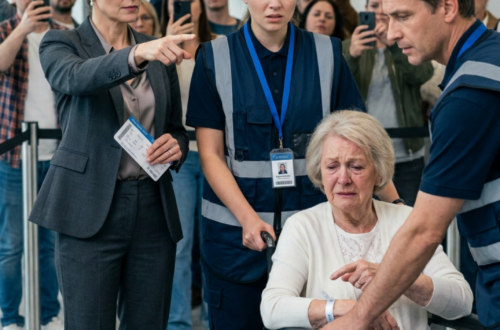
Bridesmaids stopped mid-sentence. Someone dropped a spoon. A makeup artist stepped into the corridor with one false eyelash still attached to her fingertip. I wiped my hands on my apron and ran with the others toward the bridal suite.
Camille stood barefoot in the doorway, silk robe hanging open over ivory lingerie, one hand pressed to her mouth.
The garment bag lay on the floor.
Open.
Empty.
The zipper teeth glinted under the chandelier.
For one second, nobody spoke.
Then Vivienne Laurent arrived.
Camille’s mother was a narrow, immaculate woman with silver-blonde hair and the emotional temperature of chilled marble. She looked at the garment bag, then at Camille, then at the room.
“Who had access?” she asked.
Not what happened.
Not where could it be.
Who.
The question entered the room like a knife.
Amélie, the planner, began listing staff. The dress stylist. The photographer’s assistant. Housekeeping. Bridesmaids. Family.
Vivienne said, “Who had a spare key?”
The planner looked uncomfortable. “The bridal suite key? Camille, myself, villa management, and—”
Her eyes moved to me.
Everyone’s eyes moved to me.
“Nora had one last night,” Camille whispered.
I had forgotten.
Camille had given it to me when she asked me to check whether the cake room door stuck from the inside. “You’re the only one I trust with practical things,” she had said, pressing the key into my hand.
I still had it in my apron pocket.
The pocket with plasters, a paring knife cover, two receipts, and a tiny tube of burn cream because sugar work always found a way to injure me.
“I had it to access the storage room,” I said. “Not the suite.”
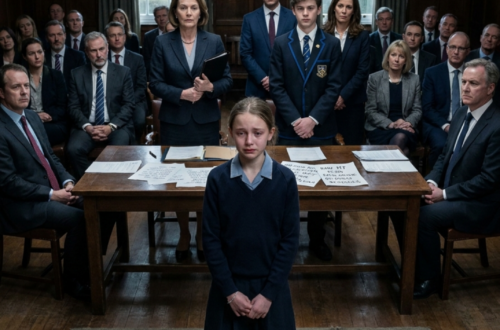
Vivienne looked at my apron. “Empty your pockets.”
I laughed, because I genuinely thought I had misheard her.
No one else laughed.
Camille looked at me with wet eyes. “Nora, please. Just do it. We need to understand.”
Understand.
I emptied my pockets onto the dressing table.
Plasters. Receipts. Burn cream. Phone. Key. Lip balm. A folded list of cake assembly timings. Two sugar pearls stuck to a piece of parchment.
Vivienne picked up the key.
One of the bridesmaids, Lila, whispered, “Oh my God.”
“What?” I said.
She was looking at the floor near the cake boxes.
My white transport box sat against the wall where I had left it sealed the night before. Its lid was slightly open.
That alone made my stomach drop.
I crossed the room, but Vivienne said sharply, “Don’t touch it.”
Amélie lifted the lid.
Inside, on the clean plastic corner where I packed extra supports, lay one pearl button.
Small. Round. Ivory. Distinctive.
Exactly like the buttons down the back of Camille’s dress.
For a moment, I could not understand what I was seeing. The mind resists betrayal when it first appears. It tries to make a practical problem out of it. Maybe a button had fallen earlier. Maybe someone had moved supplies. Maybe the dress stylist had used the box accidentally. Maybe.
Camille made a sound.
This time, closer to a sob.
“She wouldn’t,” she whispered.
The room turned toward her.
That was Camille’s genius.
She did not accuse me first. She mourned the possibility of my guilt. She made herself the friend trying not to believe the worst.
Vivienne did the rest.
“Nora,” she said, “where is the dress?”
“I don’t know.”
“You had the key.”
“To the storage area.”
“You were seen in the hall after midnight.”
“To check the cake.”
“You argued with Camille last night.”
My face went hot. “That was private.”
“So it happened.”
Camille covered her mouth.
Lila already had her phone half-raised. Not openly filming. Not yet. But angled. Ready.
“I did not touch the dress,” I said.
Vivienne held up the pearl button between two manicured fingers. “Then why is part of it in your box?”
I looked at Camille.
That was my mistake.
I still expected her to save me.
She stood in the doorway, trembling beautifully, tears tracking down her cheeks without smudging her makeup.
“I tried to love her through it,” Camille said softly.
Nobody breathed.
“But I think my happiness was too much for her.”
That sentence was not spontaneous.
I know that now.
At the time, it hit me like a physical blow.
“Camille,” I said.
She looked away.
By noon, I was escorted out of the villa.
Not by police. That would have been too ugly for the wedding aesthetic, even with the dress missing. The estate manager and one of Julian’s cousins walked me to the side entrance with my bags half-packed and my cake tools thrown into a tote by someone else’s hands. I kept saying I did not do it. After a while, I heard how useless the words sounded.
In the courtyard, guests had begun whispering.
No one looked directly at me for long.
That is how polite people watch a public execution: in glances.
As I reached the gravel drive, Camille appeared on the balcony above the courtyard in her silk robe, surrounded by bridesmaids. Someone had wrapped a blanket around her shoulders though the morning was already hot. She looked down at me with red eyes.
For one terrible second, I thought she might speak.
She did.
Just not to me.
“She was my best friend,” Camille said, loud enough for the courtyard to hear.
The bridesmaids gathered closer.
Phones rose.
“I don’t understand why love wasn’t enough.”
I stood there with a duffel bag cutting into my shoulder and flour still on my sleeve.
Then the villa gate opened, and I was outside.
By evening, my bakery in Bath had seventeen one-star reviews.
By midnight, there were forty-three.
Most of them mentioned the dress.
None of them had tasted my cakes.
PART 2 — The Jealous Bridesmaid
The first bad review said:
Would not trust this bakery with a wedding cake or a friendship.
That one almost made me laugh.
Not because it was funny. Because it was written like a slogan, and part of me could still recognize good copy even while my life was burning.
The second said:
Owner is the bridesmaid who destroyed Camille Laurent’s couture wedding dress in France. Disgusting jealousy. Avoid.
The third:
If she’ll sabotage her best friend, imagine what she’ll do to your event.
After that, they stopped being creative.
Jealous. Bitter. Unstable. Thief. Saboteur. Broke girl energy. Dangerous around brides.
I was in a budget hotel outside Avignon when they started coming in. The villa had sent a driver to drop me there because no flights back to Bristol were available until the next morning. They did not ask if I had enough money for the room. I did, barely, because I used the bakery credit card and told myself I would solve that problem after I solved the larger one of everyone thinking I had destroyed a wedding dress.
The hotel room smelled of stale air conditioning and lemon cleaning spray. My bags sat near the door, half-zipped, a sugar flower crushed into the seam of one. I still had Camille’s bridesmaid robe because someone had shoved it into my things by mistake. Pale blush silk. Embroidered initials. C.L. + J.A.
I threw it in the bin, then took it out because it was probably expensive, then threw it back in because I hated myself for caring.
My phone would not stop lighting up.
Camille posted at 6:42 p.m.
A black-and-white photo of her hand covering Julian’s, both of them wearing no wedding rings because there had been no ceremony. Caption:
Today did not become what we dreamed. I am trying to process a betrayal I still cannot name. Please respect our privacy as we grieve what was taken from us.
She did not name me.
She did not need to.
The comments named me for her.
Julian did not post.
At first, I thought that meant something.
Julian Ashford was not emotional online. His feed was hotels, sailing weekends, charity dinners, and occasional photos of Camille looking radiant beside him while he appeared politely surprised to be engaged. I never disliked him, but I never trusted him either. He came from people who thanked staff without seeing them. Not cruel. Worse, maybe. Trained.
Still, when he did not repost Camille’s statement, a stupid part of me hoped.
Then Lila posted a story.
A blurred image of me in the bridal suite, face pale, one hand extended toward Camille while Vivienne held the pearl button.
Text overlay:
When you ignore the red flags because you love someone.
That was when the followers arrived.
Whitfield & Rye’s Instagram comments filled with bridal accounts, lifestyle women, and strangers who wrote as if Camille’s sorrow had personally authorized them to punish me.
By 9 p.m., my part-time assistant, Jas, called from Bath.
“Nora,” she said, voice shaking, “people are calling the shop.”
“We’re closed.”
“They’re leaving voicemails. One woman said she hopes your oven catches fire.”
I sat on the bed. “Is Mum downstairs?”
“No. Your aunt picked her up this afternoon, remember?”
I had forgotten. My aunt had taken Mum to Bristol for a renal appointment. Thank God.
“Lock the front,” I said.
“It’s already locked.”
“Don’t answer the phone.”
“I won’t.”
There was a pause.
“Did you do it?” Jas asked.
I closed my eyes.
She was twenty-two, clever, heavily tattooed, and had worked for me since she left catering college. She had seen me cry over supplier invoices and once watched me re-ice a three-tier wedding cake at 3 a.m. because the bride’s mother decided the buttercream looked “too rustic.” She knew me better than most people leaving reviews.
Still, she had to ask.
“No,” I said.
Her breath came out hard. “Okay.”
That okay kept me alive that night more than she knows.
Mum found out the next morning.
I had planned to tell her after I landed. Another stupid plan. The internet does not wait for daughters to protect sick mothers.
She called at 7:10 a.m. while I was at Marseille airport, sitting near Gate 24 with my cake tool bag between my feet and a coffee I could not swallow.
“Nora,” she said.
“Mum.”
“What did that girl do?”
Not what happened.
Not did you.
What did that girl do?
I bent over, pressing my forehead to my free hand.
“I didn’t ruin her dress.”
“Of course you didn’t.”
“You don’t know that.”
“I know you.”
People say that in stories all the time. I know you. It can sound sentimental, easy. But from my mother, after a night when half the internet decided I was capable of cruelty because I was poor enough to look resentful, it landed like a hand at my back.
“Everyone thinks I did,” I said.
“Everyone has been wrong before.”
“The bakery—”
“I know.”
“My reviews are destroyed.”
“I know.”
“I spent the oven money, Mum.”
There it was.
The thing I had not told her.
Silence.
The airport speaker announced a delayed flight to Paris in French and English. Somewhere nearby, a toddler dropped a packet of crisps and began crying as if the world had ended. I wanted to sit on the floor and join him.
“How much?” Mum asked.
“Most of it.”
“For Camille?”
“For vendors. Temporary. She said—”
“Oh, Nora.”
Not angry.
Worse.
Heartbroken.
“I thought I was helping.”
“I know you did.”
“I thought after the wedding she would—”
“Pay you back? Praise you online? Make your bakery famous?”
I did not answer.
Mum sighed. It rattled in her chest.
“My darling,” she said, “you have always thought being needed was the same as being loved.”
That sentence found the oldest bruise in me and pressed.
I nearly hung up.
Instead, I whispered, “I can’t do this right now.”
“Yes, you can,” she said. “You are going to get on the plane. You are going to come home. You are going to write down everything you paid for, every message, every time that woman made you carry a piece of her lie. Then you are going to stop protecting her.”
I looked out the airport window at the pale morning light on the runway.
Stop protecting her.
At the time, I still thought there was a chance Camille had panicked.
That was the kindness I gave her even then. I thought maybe Vivienne planted the button. Maybe Camille had been overwhelmed, cornered by her mother, desperate to save face. Maybe the sentence about loving me through it had come from fear, not planning.
I still thought some part of her would call.
I arrived back in Bath just after noon.
The bakery was closed, blinds drawn. Someone had stuck a note to the door.
DRESS KILLER.
Jas had already pulled it down halfway, but the tape had torn the paint.
I stood on the pavement with my suitcase and stared at the mark.
Bath tourists moved around me, carrying shopping bags, taking photos of honey-colored stone, eating gelato though the sky was gray. The city did what cities do around private ruin. It remained beautiful without permission.
Inside, the bakery smelled of cold coffee, sugar, and yesterday’s bread. Usually that smell steadied me. That day, it felt like standing in a body I might lose.
Jas came out of the kitchen and hugged me hard.
I did not cry until then.
Not at the villa.
Not at the hotel.
Not at the airport.
But in my own bakery, with flour dust still on the wooden counter and the review notifications blinking on the tablet, I broke.
Jas let me.
That was the difference between care and performance. Care did not always rush to make you presentable.
After a few minutes, she said, “We saved all the voicemails.”
“Why?”
“Evidence.”
I laughed through my nose. “You’ve been spending too much time with me.”
“Probably.”
We sat at the counter with her laptop, my phone, and a notebook.
For three hours, we collected damage.
Screenshots of reviews. Comments. Camille’s posts. Lila’s story. A bridesmaid group message where someone wrote, “Nora always gave obsessed energy tbh.” A cropped text Camille had posted from me two weeks earlier:
This wedding is fake, Camille, and someone is going to get hurt.
She did not post what came before or after.
The full exchange was about unpaid vendors.
I had written:
You cannot keep telling vendors the money is coming if it isn’t. This wedding is fake, Camille, and someone is going to get hurt. Not because of the flowers or the dress. Because you’re lying to everyone and making me help.
Her reply:
Can you not do this when I’m fragile?
In Camille’s version, I sounded jealous of her happiness.
In the real version, I sounded tired of being used.
At 4 p.m., Julian called.
I almost did not answer.
Jas said, “Speaker.”
I put him on speaker.
“Nora,” he said. His voice was clipped, controlled. Background noise suggested he was still in France.
“Julian.”
“I wanted to ask you directly.”
“That’s generous of you.”
Jas’s eyebrows lifted.
He ignored it. “Did you take the dress?”
“No.”
“Did you damage it?”
“No.”
“Do you know where it is?”
“No.”
A pause.
“Then how did the button get in your box?”
“I don’t know.”
“That is not a helpful answer.”
“It’s the only true one.”
He exhaled. “Camille is devastated.”
“So am I.”
“She says you had been angry about the wedding for weeks.”
“I was angry about unpaid vendors.”
“She says you resented the scale of it.”
“I resented paying for pieces of it.”
Silence.
There.
The first crack.
“What do you mean?” Julian asked.
I closed my eyes.
This was the moment.
I could protect Camille again. I could soften it, say she was stressed, say there were small cash flow issues, say I did not want to drag private matters into a public disaster. I could be the practical friend one more time.
My mother’s voice came back.
Stop protecting her.
“I paid part of the musicians’ balance the night before the wedding,” I said. “I paid the lavender supplier deposit. I paid the courier for the cake stand. I covered the villa shuttle. I have records.”
Julian did not speak.
When he did, his voice had changed. “Camille told me those were settled.”
“She told everyone that.”
“How much?”
“From me? Nearly four thousand pounds.”
Jas mouthed Jesus.
Julian said, “Send me the records.”
“I will. But I want something from you.”
“What?”
“Ask Camille why she said she knew I would do something like this before anyone had established sabotage.”
Another pause.
“What?”
“In the bridal suite. Before anyone searched the estate, before anyone checked staff, before anyone even knew if the dress was misplaced, she said she tried to love me through it. That is not shock. That is a prepared story.”
Julian’s voice cooled again. “Be careful, Nora.”
“No,” I said. My hands were shaking, but my voice held. “I was careful for twelve years. Look where that got me.”
I hung up first.
That felt better than it should have.
The florist clue came the next morning.
His name was Hugo Marchand. He was not the head florist, only an assistant at the floral company Camille had hired, but he had been at the villa during setup and had seen enough to distrust the official version. He messaged Whitfield & Rye’s business email first, then Instagram, then finally called the bakery.
Jas answered.
“It’s someone French asking for you,” she whispered, covering the receiver. “He sounds terrified.”
I took the phone.
“Mademoiselle Whitfield?” Hugo said.
“Yes.”
“I am sorry. I do not want trouble.”
I almost laughed. “That makes two of us.”
He took a breath. “I saw the posts. About the dress. About you.”
“I didn’t do it.”
“I think perhaps no.”
Perhaps no.
Not a declaration. But after days of hatred, perhaps no felt like mercy.
“I have a message,” he said. “From Madame Camille. The morning of the wedding.”
“What message?”
“She texted my supervisor, but I had the delivery phone. At 6:18.”
I sat down slowly.
“What did it say?”
He read it in English, carefully.
Please pause the full floral delivery until I confirm. There may be a ceremony disruption. Do not discuss with Julian or villa staff yet. I will explain soon.
I gripped the edge of the counter.
Camille claimed she discovered the dress was missing at 7:00.
The whole villa had been told at 7:03.
At 6:18, I had been in the kitchen trimming dowels for the cake.
At 6:18, the garment bag was supposedly still untouched.
At 6:18, Camille had already warned the florist there might be a ceremony disruption.
“Hugo,” I said, “do you still have the message?”
“Yes.”
“Can you send it to me?”
“I can send screenshot. But please, my supervisor—”
“I understand. Blur whatever you need. But I need the timestamp.”
He sent it two minutes later.
There it was.
6:18 a.m.
Forty-two minutes before Camille’s broken little breath.
For the first time since the zipper, I stopped trying to prove I was innocent.
I began trying to prove Camille had planned it.
PART 3 — The Wedding That Was Already Falling Apart
The florist text did not clear my name by itself.
That is the thing about real evidence. It rarely arrives like thunder. It arrives like a loose thread. You pull it, and at first all you have is thread. Then a seam opens. Then the whole garment begins to show how it was made.
At 6:18 a.m., Camille warned the florist to pause delivery.
That meant she expected disruption before she claimed to know the dress was gone.
It did not prove she hid the dress.
It did not prove she planted the pearl button.
But it proved the timeline she was selling was wrong.
And once Camille’s timeline was wrong, I could finally ask why.
Jas and I built a board in the bakery office.
The office was barely large enough for a desk, a filing cabinet, and the old printer that jammed unless you spoke to it kindly. We taped brown paper over one wall and drew a line from the night before the wedding to the moment I was escorted out.
Midnight: Nora checks cake storage.
6:18 a.m.: Camille texts florist to pause delivery.
6:40 a.m.: Kitchen staff sees Camille’s makeup artist enter bridal wing.
6:55 a.m.: Bridesmaids gather.
7:00 a.m.: Camille “discovers” dress missing.
7:03 a.m.: Camille makes broken breath.
7:12 a.m.: Pearl button found in Nora’s cake box.
7:25 a.m.: Camille says, “I tried to love her through it.”
By itself, it was suspicious.
Not enough.
I pulled vendor records next.
That was my gift, if you can call it that. I remembered practical details because practical details had always been my way of surviving Camille’s chaos. She forgot invoice deadlines; I remembered. She lost confirmation numbers; I saved screenshots. She asked me to “just handle” awkward conversations; I kept notes because I owned a business and had learned early that sweetness did not pay suppliers.
The lavender supplier had emailed Camille four times about unpaid balance.
The musicians had threatened not to arrive without at least partial payment.
The villa shuttle company had marked the account “past due.”
The cake stand courier payment had gone through my card.
The florist had reduced the installation plan twice due to nonpayment, though Camille’s public mood board still showed the full version.
Every invoice told the same quiet story.
The wedding was not a dream interrupted by sabotage.
It was a financial collapse dressed in silk.
Still, debt alone did not explain the dress.
The dress was insured. Or at least it was supposed to be. I remembered Camille talking about it because she made a joke during one of our planning calls.
“If I fall into a fountain, at least someone gets money.”
So I searched my messages.
Three months before the wedding, Camille had sent me a photo of an insurance document for the gown because she wanted me to admire the replacement value.
Look at this. I’m officially worth more as a dress than as a person.
I found the image.
The insurer’s name was visible.
I sent it to Ana Patel, the solicitor Jas found through a former bakery client. Ana was sharp, unsentimental, and spoke as though every sentence had already been cross-examined before leaving her mouth. When I explained the situation, she asked for records before offering sympathy. I liked her immediately.
Two days later, Ana called.
“The dress policy was canceled nine days before the wedding.”
I sat on the bakery floor between sacks of flour.
“Canceled by who?”
“The policyholder.”
“Camille?”
“Her representative, according to the email chain. We would need formal disclosure to know more, but the cancellation confirmation was sent to Camille’s address.”
“Why would she cancel insurance on the dress before the wedding?”
“Because she could not pay the final premium.”
My hand went cold around the phone.
There it was.
The dress was not just missing.
It had become financially dangerous.
If the dress was damaged, lost, unpaid, or never fully released from the boutique, there was no insurance safety net. No compensation. No elegant recovery. Just exposure.
I pressed my forehead against my knees.
The bakery kitchen smelled of yeast, bleach, and cinnamon rolls cooling on the rack. Downstairs, Jas was serving customers who had started to return in small numbers after we posted a temporary statement:
Whitfield & Rye is aware of harmful allegations circulating online. Nora denies any involvement in the missing dress. We are gathering documentation and ask that people do not harass our staff.
People still harassed the staff.
But less.
“Ana,” I said, “if the policy was canceled, could Camille claim the dress was stolen?”
“She could claim anything. Whether anyone would believe it is another matter.”
“But if everyone believed I destroyed it—”
“Then the attention moves from her financial failure to your supposed emotional motive.”
I lifted my head.
There it was again.
Motive.
Camille had given everyone mine.
Bitter. Broke. Jealous. Too attached. Resentful of her happiness.
She had been preparing it for weeks.
I went back through old messages.
At first, I looked for obvious things: arguments, money, vendor complaints. Then I began searching words Camille used publicly after the accusation.
Jealous.
Bitter.
Happiness.
Love her through it.
The last phrase appeared three weeks before the wedding.
In a voice note Camille sent after I refused to pay the dress stylist’s extra travel fee.
Her voice came through the speaker, tired and soft.
“I know you think I’m being dramatic, but sometimes I feel like you hate how happy I am. And I hate even saying that, because I’ve tried so hard to love you through your hard seasons.”
I played it twice.
Then a third time.
I had not heard the danger in it before. I had heard hurt. Manipulation, yes, but familiar manipulation. The kind friends forgive when they have spent years calling patterns “stress.”
Now I heard rehearsal.
I sent the voice note to Ana.
Then I called the makeup artist.
Her name was Priya Shah. She had worked on Camille’s engagement shoot and wedding weekend. I remembered her because she was the only person in the bridal suite who offered me water after the accusation. She did not defend me then. But she did not film.
She answered cautiously.
“Nora, I don’t want to be involved.”
“I understand.”
“I have clients. I can’t be in drama online.”
“I’m not asking you to post. I’m asking if Camille said something before the dress went missing.”
Silence.
I waited.
Priya sighed. “What kind of something?”
“Something about me being jealous. Or about loving me through bitterness.”
Another silence.
Then: “Jesus.”
My pulse quickened. “What?”
“The night before, when I did her skincare prep, she was talking to Lila. I thought they were discussing content ideas. Camille said if anything went wrong, she wanted the language to be compassionate, not accusatory. She said, ‘The tragedy is that I loved her through her bitterness.’”
I closed my eyes.
There it was.
Not enough for court, maybe.
Enough for truth.
“Did she say my name?”
“Yes.”
“Would you tell my solicitor that?”
“I need to think.”
“Priya—”
“No. Don’t push me. I saw what happened to you.”
That stopped me.
She was right.
Everyone around Camille had learned caution. Vendors, staff, friends, assistants. Camille did not need to threaten directly. Her world punished people who disrupted the image.
Priya called back the next day.
“I’ll give a statement,” she said. “But no public posts.”
“Thank you.”
“Don’t thank me yet. I should have said something that morning.”
I sat with that.
“It was a hard room,” I said.
“That’s generous.”
“I’m tired of being generous.”
“Then stop.”
So I did.
The boutique was harder.
The dress came from Maison Éliane, a Paris bridal atelier with a waiting list, a polished website, and the kind of staff who could say “unfortunately” in a way that made you feel underdressed. Ana contacted them formally. They refused to disclose details without Camille’s consent.
So I checked what I already had.
Camille had sent countless dress-related messages. Photos of fittings. Complaints about alterations. Screenshots of emails. One message from six weeks before the wedding included a PDF preview of the final pickup form.
The signature page was missing.
At the time, I had not cared. Camille often sent half documents and then asked me to make sense of them. Now it mattered.
If the final pickup form was incomplete, had the dress ever been fully collected? Or had it been released under unusual terms? Was there an unpaid balance? Did Camille owe the boutique too?
Ana warned me not to speculate publicly.
“We need confirmation.”
“How do we get it?”
“Pressure from Julian may help.”
Julian.
I had been avoiding sending him everything because part of me still feared being called vindictive. That fear felt ridiculous by then, but fear does not leave just because logic arrives.
I prepared a folder.
Vendor payments I covered. Florist 6:18 text. Insurance cancellation confirmation. Priya’s statement summary. Voice note transcript. The cropped text Camille posted, followed by the full exchange. Timeline.
I sent it to Julian with one line:
You do not have to believe me because we were friends. Believe the timestamps.
He replied five hours later.
Nora, I need to speak with you.
We met in London, not Bath, at Ana’s insistence. Public place. Neutral. No Camille. No Vivienne. Julian arrived at a hotel lounge wearing a charcoal coat and looking like a man whose life had been rearranged while he was still reading the instructions.
He stood when I approached.
“Nora.”
“Julian.”
“I’m sorry.”
I sat down. “For what?”
He looked thrown by the question.
Good.
“For not asking sooner,” he said.
I placed my bag beside my chair. “You did ask.”
“I asked if you took the dress.”
“Yes. That is not the same as asking what happened.”
He accepted that with a small nod.
A waiter came. Julian ordered sparkling water. I ordered coffee I did not want. My hands smelled faintly of vanilla because I had left the bakery right after icing cupcakes for a child’s birthday order. There was buttercream under the edge of my thumbnail. I did not hide it.
Julian opened a folder.
“I spoke with Maison Éliane.”
My breath caught.
“And?”
“There was an unpaid balance.”
“How much?”
He looked away. “Significant.”
“Did Camille tell you?”
“No.”
“Did she collect the dress?”
“Yes. But not under normal terms. Vivienne guaranteed the balance temporarily. Then that guarantee was withdrawn.”
I frowned. “Why?”
“Because Vivienne discovered Camille had already borrowed against several wedding brand payments that had not come through.”
There it was.
The larger collapse.
Not just unpaid flowers. Not just delayed transfers. Camille had built the wedding on anticipated sponsorship income, family assumptions, vendor goodwill, and lies. The dress was the most visible piece, but not the only one.
“What was the plan?” I asked.
Julian looked exhausted. “I don’t know if there was one.”
“There was.”
He looked at me.
“Camille texted the florist at 6:18. Priya heard her rehearsing language. The insurance was canceled. She asked me to keep my cake box near the bridal suite. She gave me a spare key. She posted a cropped text. That is a plan.”
He rubbed a hand over his face.
“I loved her,” he said.
“So did I.”
That quieted him.
It was easy for Julian to imagine himself as the primary betrayed party. The groom deceived by a bride’s financial fantasy. But Camille had not only lied to him. She had fed me into the machinery to keep herself clean.
“I’m not your enemy,” I said.
“I know that now.”
“Do you?”
He met my eyes.
“I’m beginning to.”
Not enough.
But honest, perhaps.
Then he showed me the thing that broke Camille’s story open.
A screenshot from Camille’s tablet, backed up to an account shared with Julian for wedding planning files. It showed a draft Instagram caption, created at 5:56 a.m. the morning of the wedding.
Before the florist text.
Before the dress was “discovered.”
Before the pearl button.
The caption read:
I never thought I would have to choose between protecting my peace and protecting someone I loved. Today, my wedding morning became a lesson in betrayal, grief, and the painful truth that some people cannot stand to see you happy when they are still hurting.
My hands went numb.
Julian said, “She says it was a journaling exercise.”
I looked at him.
He lowered his gaze.
“I know,” he said.
“What else was in the drafts?”
“Several versions. One mentions ‘a friend I carried for years.’ Another says ‘I won’t name her because I still love her.’”
I could not speak for a moment.
Not because I was surprised.
Because some part of me had still been hoping Camille had only improvised well.
Planning is a different kind of cruelty.
Planning means she pictured my humiliation before I walked into the room.
She imagined my face.
She wrote captions for it.
She scheduled grief around it.
I stood abruptly.
Julian rose too. “Nora—”
“I need air.”
Outside the hotel, London moved around me in its usual gray rush. Taxis. Wet pavement. People with takeaway coffees. A cyclist swearing at a bus. I leaned against the stone wall and tried to breathe through the nausea.
Julian came out but kept distance.
“I’m postponing everything indefinitely,” he said.
I laughed without humor. “There is no wedding, Julian.”
“No.”
“Say it.”
His jaw tightened.
“There is no wedding,” he said.
“Good.”
He flinched. Maybe he expected me to soften. To say sorry. To comfort him as another person Camille had deceived.
I had no comfort left for men who came late to obvious things.
“What are you going to do with the caption?” I asked.
“Give it to my solicitor. And yours.”
“Will you make a public statement?”
He hesitated.
There. The Ashford training. Protect the family. Minimize scandal. Handle privately. Let the working-class baker absorb what can be absorbed.
“If you do not correct this publicly,” I said, “your silence will continue doing Camille’s work.”
He looked at me for a long moment.
Then nodded.
“I understand.”
I hoped he did.
By the time I returned to Bath, the bakery had six new orders.
Small ones.
A tray of brownies. Two birthday cakes. One apology order from a woman who wrote, I left a bad review before I knew the facts. I am ashamed.
I did not accept that order.
Jas told me I was being petty.
I said, “Yes.”
She smiled. “Good.”
The final piece came from Camille herself.
Not confession. Camille would never hand anyone that clean a gift.
It came through one sentence.
Ana received a legal letter from Camille’s team accusing me of harassment, defamation, and “weaponizing private financial misunderstandings to punish a bride already devastated by sabotage.” The letter claimed any evidence I possessed was “contextually misleading” and that Camille had anticipated a possible ceremony disruption only because she had been “emotionally afraid Nora might act out.”
Then Camille added a line in a voice note to Julian that he forwarded to his solicitor.
“I knew she would do something like this.”
Not feared.
Not worried.
Knew.
Before there was proof. Before there was investigation. Before anyone found a dress.
She had known because she had written the story.
And at last, everyone else could see the outline.
PART 4 — The Friend I Stopped Protecting
Julian’s public statement came on a Thursday morning.
It was short, controlled, and clearly written by lawyers.
The wedding between Camille Laurent and Julian Ashford has been postponed indefinitely. Recent allegations made against Nora Whitfield regarding the disappearance of a wedding gown are not supported by the evidence now available to me. I regret that Ms. Whitfield was subjected to public blame before relevant facts were understood.
He did not mention the debt.
He did not mention the insurance.
He did not mention the caption draft.
But he said my name.
He said the allegations were not supported.
And because Julian was rich in a way people recognized as legitimate, his statement traveled faster than mine ever could have.
Within hours, the tone online shifted.
Not fully. Never fully.
Some people deleted comments. Others wrote careful little updates.
Apparently there is more to the story.
This is why we shouldn’t judge too fast.
I always thought something seemed off.
Hope all women involved can heal.
All women involved.
I stared at that one for a long time.
People love turning harm into a fog. If everyone can heal, no one has to say who held the knife.
Camille posted nothing for two days.
Then she uploaded a photo of lavender fields with the caption:
Taking time offline to process betrayal, misinformation, and the painful cost of trusting too much.
Trusting too much.
That was Camille’s last weapon: inversion.
If accused, become misunderstood.
If exposed, become wounded.
If cornered, become graceful.
She lost followers, yes. Brands paused partnerships. A bridal magazine quietly removed her wedding preview feature. Vendors began sharing sanitized stories about unpaid balances and “communication issues.” Maison Éliane never made a public statement, but someone in fashion circles leaked enough that people stopped asking whether the dress had ever been stolen and began asking whether Camille had hidden it, returned it, or never had full legal release of it in the first place.
The actual dress was found six weeks later.
Not destroyed.
Not in a ditch.
Not cut up by a jealous bridesmaid.
It was in a private storage facility outside Avignon, under an account linked to one of Camille’s assistants. According to Camille’s legal team, it had been “moved for safekeeping during a period of confusion.” According to everyone with a brain, it had been hidden.
There were no criminal charges.
That surprised strangers more than it surprised me.
Real life is rarely satisfying enough to go viral cleanly. Camille had money, lawyers, family insulation, and just enough ambiguity around who physically moved what. The pearl button in my cake box could not be conclusively tied to her hand. The caption draft could be called emotional writing. The florist text could be reframed as pre-wedding anxiety. The dress storage could be blamed on an assistant.
But the story had cracked.
And once a polished image cracks, people begin to notice how much glue was holding it together.
My bakery survived slowly.
Not beautifully. Not in a montage.
There was no flood of support large enough to erase the debt. No celebrity repost that saved us overnight. Some couples canceled and never returned. One wedding planner told me privately she believed me but “didn’t want client drama.” I lost money I could not afford to lose. The oven finally failed on a rainy Tuesday in November, right in the middle of a batch of gingerbread cake, and I sat on the kitchen floor laughing until Jas said, “This is becoming concerning.”
We replaced it with a secondhand commercial oven from a hotel liquidation sale.
It ran hot on the right side instead of the left.
Progress.
The reviews improved. Loyal customers came back. A few new ones arrived because they had followed the scandal and wanted to “support a woman-owned business.” I appreciated the orders and hated the reason. Both can be true.
Mum returned from Bristol just as things began stabilizing. She sat at the bakery counter, thinner than before, wrapped in a green cardigan, watching me pipe buttercream onto cupcakes.
“You look older,” she said.
“Thank you.”
“Not worse. Just older.”
“I feel ancient.”
“You stopped protecting her.”
I kept piping. “Yes.”
“How does that feel?”
I thought about it.
“Like grief with better posture.”
Mum smiled. “Good.”
I did grieve.
I need that understood.
I did not simply expose Camille and walk away empowered, shoulders back, hair shining in the wind. I missed her. Not every day, but enough to make me angry with myself. I missed the Camille from university who called my handwriting moral. The Camille who once sat with me outside hospital after Mum’s first emergency admission and brought terrible vending machine coffee because she said grief needed witnesses. The Camille who knew I hated marzipan, who sent voice notes instead of texts because she liked “making life more cinematic,” who could make a cheap takeaway feel like a party.
That Camille had existed.
So had the other one.
The mistake was believing one erased the other.
When Camille finally contacted me directly, it was by email.
Subject: I hope one day you understand.
Of course.
Nora,
I know you think I planned to hurt you. I wish you could understand the pressure I was under. Everything was collapsing. Julian’s family, the vendors, the expectations, the money. I was drowning and you kept judging me. I know I made mistakes, but you were not innocent either. You made me feel small during what should have been the happiest time of my life.
I loved you. I really did.
C.
I read it twice.
Then I printed it, because old habits.
Then I deleted the email.
I did not reply.
There was a time I would have written paragraphs. I would have explained that accountability was not judgment, that fear did not justify framing me, that love without protection is not love in any useful form. I would have tried to make her see.
But Camille had seen.
That was the point.
She had seen me clearly enough to know where to place the button.
The last official piece was my own statement.
Ana drafted something careful. I rewrote it until it sounded like me.
I posted it on Whitfield & Rye’s page with a photo of the bakery counter at sunrise. No tears. No screenshots. No dramatic music. Just the wooden counter, a tray of plain scones, and morning light.
Statement from Nora Whitfield:
Several weeks ago, I was publicly accused of damaging or stealing a wedding dress belonging to Camille Laurent. That accusation was false.
At the time of the accusation, selective images and edited messages were shared without full context. Evidence now confirms that the timeline presented publicly was inaccurate, that I had been covering unpaid wedding expenses, and that key information was withheld from me and others.
I did not harm Camille’s dress.
I did not sabotage her wedding.
I did make the mistake of protecting a friend’s lies for too long because I believed loyalty meant absorbing the consequences quietly.
I am grateful to the vendors and individuals who came forward with records and statements. I am also grateful to our customers who waited for facts before judging.
Whitfield & Rye remains open.
We are tired, but we are here.
— Nora
The post did not go as viral as Camille’s accusation.
That was fine.
The people who needed receipts received them. The vendors knew. Julian knew. The wedding circles knew enough. My customers knew enough. Mum printed the statement and taped it inside the bakery office next to the new oven warranty.
“You need to look at that when you start feeling sorry for her,” she said.
“I don’t feel sorry for her.”
Mum raised an eyebrow.
“Not much,” I said.
Partial justice is still justice, but it has rough edges.
Some guests from the wedding never apologized. Lila deleted her story but not before thousands saw it. Vivienne Laurent continued telling people that Camille had been “fragile and badly advised.” Julian’s family protected itself more than it protected truth. Camille eventually returned online with softer colors, fewer luxury tags, and a new vocabulary: rebuilding, boundaries, healing.
People forgave her in pockets.
People always forgive beauty faster when it knows how to look wounded.
But I no longer watched closely.
That was new.
For years, Camille’s life had been a room I kept trying to stay invited into. After the scandal, I realized the door had always opened inward only when she needed something carried.
The last time I saw her was not dramatic.
She came to the bakery in early spring, just after opening. No cameras. No silk. No bridal glow. She wore jeans, a beige coat, and sunglasses though it was raining. Jas saw her first and came into the kitchen with the expression of someone holding a knife behind her back emotionally if not physically.
“She’s here.”
I knew who she meant.
My hands were in dough.
I washed them slowly.
When I came out, Camille was standing by the display case, looking at the lemon tarts. She had lost weight. Or maybe she had stopped dressing herself as a brand and begun resembling a person. I did not feel satisfaction. That annoyed me. I wanted satisfaction. I wanted my body to recognize victory and enjoy it.
Instead, I felt tired.
“Nora,” she said.
“Camille.”
The bakery was empty except for Jas, who pretended to wipe the espresso machine while clearly listening.
Camille removed her sunglasses. Her eyes were red, but I no longer trusted red eyes as evidence of anything except moisture.
“I wanted to see you.”
“No.”
She blinked.
“You wanted something,” I said. “Say what it is.”
Her mouth tightened. For one second, I saw the old Camille. Offended, elegant, ready to make my bluntness the problem. Then it faded.
“I wanted to say I’m sorry.”
I waited.
She looked down. “I was scared.”
I almost laughed.
“You should choose a different beginning.”
Her eyes lifted.
“If your apology begins with your fear,” I said, “it is still about you.”
A flush rose along her cheekbones.
“I’m sorry I let people believe you did it.”
“Let?”
“I’m sorry I made people believe you did it.”
There.
Not enough.
But closer.
“I’m sorry about the button,” she whispered.
Jas stopped pretending to clean.
The air in the bakery changed.
I gripped the edge of the counter.
“You planted it?”
Camille’s face crumpled—not beautifully this time. Messily. “I didn’t think it would go so far.”
That sentence has been used to excuse more cruelty than almost any other.
“It went exactly where you pointed it,” I said.
She cried then. Quietly. No broken little breath. No balcony voice. Just crying.
I wish I could tell you I did not care.
I did.
That made me angry.
“I was losing everything,” she said. “Julian, the wedding, the money, my work. Everyone was going to see that none of it was real.”
“So you made me unreal instead.”
She put a hand over her mouth.
I let that sentence sit between us.
For twelve years, I had filled silence for her. Smoothed awkwardness. Offered jokes. Softened truths. That morning, I gave her nothing.
Finally, she said, “Can you ever forgive me?”
There it was.
The thing she had really come for.
Not apology. Relief.
“No,” I said.
Her face changed.
“Maybe one day I won’t feel sick when I think about you,” I continued. “Maybe one day I’ll remember the good things without hating myself. But forgiveness is not something you get to request because guilt is uncomfortable.”
She nodded, crying harder.
“Please leave,” I said.
She did.
Jas waited until the door closed.
Then she said, “I wanted to throw a croissant at her.”
I leaned against the counter and exhaled shakily. “Waste of laminated dough.”
“True.”
We went back to work.
That is another thing stories get wrong. Big emotional moments do not cancel the need to bake. Dough still proofs. Customers still arrive. Someone still wants six oat lattes and asks whether the raspberry muffins are vegan even though the sign says butter in three places.
Life continues, not because it is kind, but because it is relentless.
A month later, I made a birthday cake for a local child named Elsie.
Six years old. Vanilla sponge. Strawberry jam. Pink buttercream. No sugar flowers, no imported stand, no couture drama. Her mother came in with a budget written on a folded envelope and apologized three times because it was “nothing fancy.”
I told her fancy was overrated.
Elsie wanted a cake with a fox wearing a party hat.
I made the fox slightly cross-eyed by accident. Elsie loved it.
On the morning she collected it, I opened the bakery early. The new secondhand oven hummed behind me. Rain tapped gently against the front window. Mum sat at the corner table doing a crossword and pretending not to supervise my life. Jas was late, as usual, but had texted a photo of her bus stuck behind roadworks, so I forgave her.
I placed the cake in a plain white box.
No pearls.
No silk ribbon.
No hidden button.
Just cake.
Elsie’s mother cried when she saw it, which frightened me for half a second before I realized it was ordinary gratitude, not performance.
After they left, I stood behind the counter and looked around the bakery.
The paint was chipped near the door where the note had torn it. The espresso machine made a sound like an animal clearing its throat. The new oven ran too hot on the right side. My bank account was still ugly. My friendship with Camille was dead. Some people still believed I had done something, even if they no longer said it loudly.
And yet.
The shop smelled of butter, coffee, and warm sugar.
The morning light came through the window.
My mother was alive.
My name was still above the door.
I had spent years thinking loyalty meant staying useful enough to be loved. Camille taught me the cost of that mistake. Not because she was always false, but because the parts of her that were real never stopped her from using me when using me became convenient.
That is the hardest lesson.
People can love you and still sacrifice you to save themselves.
They can know your wounds and press exactly there.
They can call you family until the bill comes due, then remind everyone you were only the help, the baker, the broke friend, the jealous bridesmaid standing too close to a life that was never yours.
But I was not jealous of Camille’s happiness.
I was exhausted by the labor of maintaining it.
There is a difference.
Sometimes I still think about the pearl button.
Small. Perfect. Cold in my palm.
A tiny beautiful thing placed in the wrong box to tell the wrong story.
For weeks, I hated that button. Then I began to see it differently. Camille chose it because she thought beauty would be believed before truth. She thought a pearl from a couture gown would matter more than invoices, timestamps, and the memory of a woman who had spent years cleaning up her messes.
She was almost right.
Almost.
In the end, the things that saved me were not glamorous.
A florist’s timestamp.
A canceled insurance policy.
A payment receipt.
A voice note.
A draft caption.
A missing signature page.
The small practical details Camille always dismissed as beneath her.
The details I had carried for years.
That is the part I keep.
Not the balcony. Not the reviews. Not Camille crying in my bakery. I keep the morning after Elsie’s cake, when I wiped buttercream from my wrist, opened the door to the first customer, and realized I was no longer waiting for Camille Laurent to choose me.
I had chosen myself.
And for the first time in twelve years, that was enough.