PART 1
The first thing I remember about St. Anselm is not the chapel tower or the black iron gates, though both were meant to be remembered. It is the smell of cold rain on wool coats, mixed with polished wood and the faint lemon scent of expensive cleaning products. I had come straight from my morning shift at the hospital, and disinfectant still clung to my sleeves so strongly that I kept catching it whenever I lifted my hand to tuck my hair behind my ear. My daughter Lily walked beside me with her scholarship folder pressed against her chest. She was thirteen, small for her age, and trying very hard not to look impressed.
I had told myself that place meant safety. Looking back now, I understand that I mistook expensive quiet for kindness. At the time, all I saw was stone, order, Latin mottos, girls in navy blazers, and teachers who lowered their voices as if volume itself were a sign of poor character. St. Anselm sat outside Bath, tucked behind wet lawns and clipped hedges, the kind of school where parents arrived in polished cars and did not check the price of petrol before driving home. I arrived in a bus that smelled of damp seats and old newspapers, carrying bruised apples in my bag because they were cheaper at the market.
Lily had won the scholarship after her father died. I say “won” because that is how the letter phrased it, as if grief had entered her into a competition and come home with a prize. Daniel had been gone eleven months then. Some dates blur because I was sleeping in two-hour pieces, working the hospital cleaning shift at night and the bakery counter in the afternoon, but I remember the scholarship letter exactly. Lily read it three times at the kitchen table, then asked whether accepting meant I could stop selling things. I lied and said yes.
Room 214 was on the second floor of the east dormitory, near a radiator that ticked after midnight even when the room was too cold. Lily told me that detail during her second week, laughing a little because she had started a list of “St. Anselm noises” in the back of her maths notebook. Radiator ticking. Shoes on stairs. Wind in drainpipe. Girls whispering after lights-out. She kept other lists too, mostly bird names, copied in tiny handwriting: chaffinch, wagtail, redwing, siskin. It was the sort of private habit children keep when they have learned not to ask too much from the world.
At first, her calls were ordinary. She told me about Latin prep, a history teacher who wore purple scarves, a girl named Imogen who had a horse and said “supper” instead of “dinner.” She complained that the porridge was watery and that the towels smelled like cupboards. I listened from our kitchen with my shoes still on, too tired to sit because I knew sitting would make standing up again difficult. Sometimes the bakery uniform under my coat smelled of yeast and sugar, and the hospital coat hanging by the door smelled of disinfectant, and our little flat held both lives at once.
Then she began calling after midnight.
The first time, she whispered, “Mum, are you awake?”
I was awake, though I had been trying not to be. “What’s happened?”
“Nothing. I just wanted to hear you.”
There are sentences children say when they are hiding the larger sentence behind them. I knew that, but I was tired, and tiredness makes cowards of careful mothers. I asked whether she felt ill, whether she had eaten, whether she had a nightmare about Daniel. She said no to each one too quickly. In the background, I heard the radiator tick, then something softer, like shoes stopping outside a door.
“Is someone there?” I asked.
“No,” she said. “It’s just the corridor.”
The next calls came every few nights. Lily said girls were laughing outside Room 214 after lights-out. Sometimes someone knocked once and walked away. Sometimes a folded page was pushed under her door, blank except for a drawing of a bird with its neck crossed out. She begged me not to report it. “It will be worse,” she said, and I hated that she sounded certain. Children do not invent that kind of certainty from nothing. They learn it from consequences.
I emailed her house tutor, Miss Allen, on a Tuesday. No, it may have been Wednesday. I remember because Wednesday was the day the bakery received almond flour and I came home with white dust on my shoes. Miss Allen replied with polished concern, saying Lily was still settling and that “peer adjustment” could feel intense for scholarship pupils. She suggested encouraging resilience, good sleep hygiene, and participation in house activities. I read the email twice, then searched the message for the word bullying. It was not there.
When I phoned, Miss Allen sounded younger than I expected and more frightened of sounding wrong than of being wrong. “Mrs. Ward, Lily is a sensitive child,” she said. “That isn’t a criticism. Given the bereavement, we do need to be careful not to reinforce anxious interpretations.”
I looked at the apples on my counter, each bruised on one side, lined up because Lily used to sort them from least damaged to worst. “She says girls are outside her door.”
“We have not observed anything concerning.”
“At midnight?”
“We do corridor checks.”
“Every midnight?”
There was a pause, small but sharp. “We follow school policy.”
I should have pushed harder. I know that now. But institutions train poor parents to be grateful first and difficult only after all other options have failed. I thanked her for her time. I actually thanked her. Then I rang Lily and told her I had only asked generally, not made a fuss, and she went quiet in a way that told me I had still made one.
The first time I met Margaret Voss properly, she stood beneath a portrait of some former headmaster and made me feel as if I had brought mud in on my shoes. She was fifty-six, maybe, with silver-blond hair pinned at the nape of her neck and a calm face that never seemed to need permission from anyone. Her office smelled of beeswax polish and paper. On the shelf behind her was an old framed photograph of her as a young teacher, standing among children in uniforms from another decade. I noticed it because her smile in that picture was unguarded, almost hopeful.
“Mrs. Ward,” she said, motioning me to a chair. “We are very committed to Lily’s welfare.”
That word, welfare, sounded soft enough to sleep under. I wanted to believe in it.
“She’s frightened,” I said.
“She is grieving.”
“Yes. And frightened.”
Margaret folded her hands on the desk. “Both may be true. But grief can make ordinary social difficulty feel targeted. Lily is bright, but she is also carrying a great deal. We must not encourage her to define herself as a victim.”
I had come to ask for help and found myself defending my child from a diagnosis nobody had written down in front of me. Margaret spoke about pastoral care, integration, the pressure scholarship students sometimes put on themselves, and the importance of not escalating peer tensions. She did not say Lily was lying. She did something worse. She made lying sound unnecessary because Lily’s feelings could be real while her facts were not.
As I left, I passed a boy in the corridor outside the administration office. He was tall, blond, and carried his loosened tie like a privilege. Two other boys stood with him, laughing at something on his phone. He looked up when Margaret’s door opened, and for half a second his eyes rested on my bakery uniform under my cheap coat. He did not sneer. He did not need to. I learned later his name was Oliver Grant, son of the man funding the new library wing.
That evening Lily called earlier than usual. “Did you speak to Dr. Voss?”
“She says they’ll keep an eye on things.”
Lily made a sound that was almost a laugh. “That means no.”
“Tell me what happened.”
“Nothing.”
“Lily.”
“It’s always nothing after it happens.” Her voice thinned. “They wait until the corridor is empty. They laugh after the door clicks.”
I thought she meant her own door. That was one of the details I misunderstood for too long. “Who laughs?”
“I don’t know. Sometimes Oliver. Sometimes his friends. Sometimes girls too.”
“Oliver from the library donor family?”
She went silent.
“Lily, has he touched you?”
“No. Not like that. He just… he says things. About Dad. About you cleaning floors. He knows stuff.”
The room around me seemed to shrink, our small kitchen becoming all lino and unpaid bills and the hum of the fridge. “What stuff?”
“That you sold your ring.”
I closed my eyes. I had sold my wedding ring in July to pay the uniform deposit. Only the bursar’s office knew I had asked for extra time. Maybe Lily had told someone. Maybe someone had seen my bare finger at a parents’ meeting. Even now, I do not know. Cruelty often travels through ordinary gaps.
The incident with the locker happened two weeks later, on a Monday morning cold enough that rain shone like oil on the school’s black iron gates. I was at the bakery, stacking seeded loaves, when Margaret’s assistant called and asked me to come in immediately. She did not say Lily was hurt. She said there had been “a serious safeguarding matter.” I remember wiping my hands on my apron before I answered, as if clean fingers could steady the conversation.
By the time I reached St. Anselm, Lily was sitting outside Margaret’s office with her knees together and her hands flat on her skirt. Her face looked too pale against the navy blazer. On the chair beside her was a clean navy coat, folded with almost military neatness. It was not hers. Lily’s coat had a missing button and a shiny worn patch near the cuff.
“What happened?” I asked.
She looked at the floor. “They found pages.”
Margaret opened her office door. “Mrs. Ward, please come in.”
On her desk lay six printed threats. The paper was bright white, the ink heavy and black. I remember one sentence because it was quoted later until I felt it had been carved into the walls: You will be sorry you laughed. Another said Oliver should watch his back. The threats had been found in Lily’s locker after an anonymous report from another pupil. According to Margaret, they had been printed from Lily’s school account at 2:13 in the morning.
“That’s impossible,” I said. “She was in her dorm.”
Margaret’s expression did not change. “We have hallway footage showing Lily outside her room after lights-out.”
Lily whispered, “I went to the bathroom.”
“Without signing out,” Margaret said gently, as if correcting table manners. “And an anonymous forum post was made shortly afterward, in language similar to Lily’s previous written complaints.”
“What complaints?”
Margaret slid a folder toward me. Inside were printed extracts from Lily’s counseling notes, house tutor emails, and a paragraph Lily had written about missing her father. Certain phrases had been highlighted. Alone. Angry. Nobody listens. I felt heat rise in my neck. These were not threats. These were a child’s private grief laid out like evidence of a crime.
“Why do you have this prepared?” I asked.
“For Lily’s welfare and the community’s safety, we document concerns carefully.”
Lily looked at me then, and I saw shame in her face. Not guilt. Shame. There is a difference, though adults in authority often pretend not to know it.
Margaret suspended Lily pending a disciplinary review. She said it was not punitive, though Lily had to pack a bag under supervision while two girls watched from the end of the corridor. One of them whispered something and laughed into her sleeve. The radiator ticked behind us. I wanted to turn and shout, but Lily’s hand found mine, and she squeezed once, hard enough to hurt. Do not make it worse. She did not say it. She did not have to.
Outside Room 214, the clean navy coat was gone from the chair. I asked Lily whose it was. She shook her head and said she did not know. A cleaner stood halfway down the corridor with a cart, pretending to polish a brass doorplate. She was a small woman with dark hair streaked with gray and red hands from chemicals. When our eyes met, she looked away too quickly.
That evening, after I brought Lily home, she slept for fourteen hours. Her damp school shoes sat by the radiator in our flat, leaving dark marks on the towel beneath them. I found a scrap of paper in her blazer pocket with three bird names written on it: rook, linnet, swift. Nothing else. I sat on the kitchen floor and cried without making noise because I did not want to wake her.
The next morning, I phoned St. Anselm and asked to speak to the cleaner from the east dormitory. The receptionist asked for a name. I did not have one. When I described her, the receptionist put me on hold long enough for the line to start hissing. Then she came back and said the cleaner had been reassigned to the sports complex and was not available for parent contact.
“Since when?” I asked.
“Mrs. Ward, I’m not sure that is relevant.”
It was relevant. I felt it before I understood why. The clean coat, the woman looking away, the sudden reassignment. At that point, I still thought a few cruel students had trapped my daughter and the school was too proud to admit it. I had not yet understood that pride, when organized into policy, can become a machine.
PART 2
Suspension made our flat feel smaller. Lily sat at the kitchen table with schoolwork sent through the online portal, but she did not open half of it. Her hair, usually tied back tight for school, hung around her face. She wore one of Daniel’s old jumpers, sleeves pulled over her hands, and moved through rooms as if making herself less visible might prevent further damage. Outside, buses hissed at the stop in the rain, and upstairs our neighbor’s toddler dragged something heavy across the floor each morning at seven. Life kept making its ordinary sounds, which felt almost rude.
I had to ask the bakery manager for time off to attend the disciplinary meeting. He was kind but not generous, because kindness does not cover shifts. At the hospital, my supervisor reminded me that repeated absences could affect my contract. I nodded while holding a mop bucket that smelled of bleach and old water. Poverty does not only limit what you can buy. It limits how loudly you can object before the floor opens under you.
Margaret sent a formal letter two days after the suspension. It described Lily as “emotionally vulnerable,” “socially unsettled,” and “at risk of retaliatory behavior.” It said Oliver Grant and his peers had been advised not to engage with speculation. Oliver was named once, carefully, as “the pupil referenced in the threatening materials.” Lily was named nine times. I counted because counting was easier than screaming.
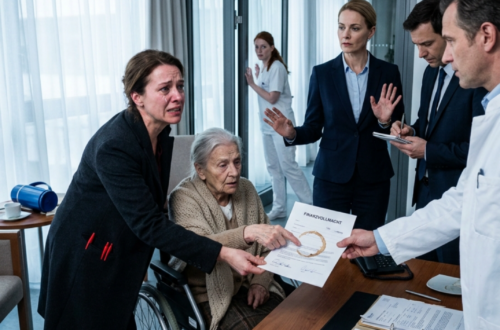
At the disciplinary meeting, Oliver’s parents sat opposite us. His mother wore pearls and a camel coat. His father, Charles Grant, had the large calm of a man used to rooms arranging themselves around him. Oliver sat between them with his tie properly knotted and his face composed into injured confusion. Lily did not look at him. Her hands twisted a tissue under the table until it tore.
Margaret began by saying everyone present shared a commitment to truth. That was the moment I began to dislike her voice. Not because it was harsh, but because it was beautiful. Low, measured, sympathetic. She could place a cruel conclusion inside a velvet sentence and make you feel rude for noticing the shape of it.
“We must consider,” she said, “whether Lily’s perception of peer dynamics has become distorted by grief and isolation.”
“My daughter has been bullied,” I said.
Charles Grant leaned forward. “With respect, Mrs. Ward, accusation is not evidence.”
“With respect,” I said, though there was none in me, “neither is a printout if someone else used her account.”
Margaret gave me a small patient smile. “The system requires individual login credentials. Lily’s account printed the documents at 2:13 a.m. Camera footage places Lily in the corridor at 2:17. We also have the anonymous forum post, whose phrasing resembles language Lily used in counseling and written reflections.”
“You’re using her counseling notes against her.”
“We are using all available information to assess risk.”
Lily made a small sound beside me. I turned and saw tears sitting in her eyes without falling. I hated myself then, because some ugly, exhausted part of me wondered whether grief had tangled her memory. Maybe she had written something in anger. Maybe she had gone sleepwalking through fear and shame. Maybe the school’s neat files knew my child better than I did. I hate admitting that now, but it is true. Institutions do not only persuade other people. They persuade you against yourself.
Margaret must have seen the doubt move across my face, because she softened. “Mrs. Ward, no one is saying Lily is bad. We believe she needs help. A more therapeutic setting may serve her better than St. Anselm at this time.”
At this time. That phrase meant removed quietly, scholarship gone, record stained, future narrowed. I looked at Lily’s shoes under the table, scuffed at the toes because I had bought them secondhand and polished them twice a week. Then I looked at Oliver’s shoes, perfect black leather, not a crease across the front.
Lily spoke for the first time. “I didn’t write them.”
Margaret turned to her with theatrical sadness. “Lily, this is an opportunity to begin repairing trust.”
“I didn’t write them.”
Oliver sighed. It was barely audible, but Lily flinched as if he had shouted.
After the meeting, in the corridor outside Margaret’s office, Oliver’s mother touched my arm. “I do feel for you,” she said. Her perfume smelled like white flowers and money. “But sometimes children in pain do things even they don’t understand.”
I pulled my arm away. “Do not pretend this is compassion.”
Her face closed. “I was trying to be kind.”
That was the trouble. Maybe she was. There are people who can only be kind from above.
At home, Lily refused dinner. I had made pasta with tinned tomatoes and too much garlic because garlic made cheap food seem more intentional. The kitchen window steamed up, and rain tapped at the glass in small hard bursts. I told her we would fight the decision, that I would request records, that someone had to know what happened. She stared at the table.
“You shouldn’t have sent me there,” she said.
The words landed quietly. That made them worse.
“I thought it was a chance,” I said.
“For who?”
“For you.”
“For you too,” she said. “So you could think Dad dying didn’t ruin everything.”
I wanted to say she was being cruel. I wanted to say I had sold my ring, my weekends, my sleep, parts of myself I did not know could be sold, all so she could walk through gates that had been closed to people like us. Instead I stood at the sink and rinsed a clean plate because my hands needed something to do. She began crying behind me, and I turned too late. That is another thing I regret: how often I let exhaustion make me slow to tenderness.
The first person willing to speak to me was not a teacher or parent. It was a former pupil named Hannah Price, who found me through a message I posted in a local parents’ group. The post was careful. Too careful, probably. I asked whether anyone had experience challenging St. Anselm disciplinary records. Within an hour, three people warned me to delete it before I “hurt Lily’s prospects further.” Hannah sent a private message instead: Ask about girls in 214.
We met at a café near Bath Spa station. The place smelled of burnt espresso and wet umbrellas. Hannah was twenty-two, with cropped hair and tired eyes that made her look older when she was not smiling. She had been a bursary student too, though she left before final year after what the school called an anxiety crisis. Room 214 had been hers for one term.
“They don’t always use the same method,” she said, stirring tea she did not drink. “But they know which girls no one will fight for.”
“Who is they?”
She laughed once. “That’s the clever part. It’s never one person when you try to prove it. A boy starts it. Girls repeat it. Staff call it adjustment. Parents call it jealousy. Then you become difficult, unstable, ungrateful.”
“Was Oliver there then?”
“Too young. But his brother was.” She looked toward the window, where rain blurred passing buses. “St. Anselm protects families, not children.”
She had no documents, only memory. Memory matters, but it trembles under cross-examination. Still, she told me something useful: the school stored print-job logs by device, not only by student account, and access-card records showed which doors had been opened after hours. She knew because she had once worked in the admin office for pocket money. “They’ll tell you data protection prevents disclosure,” she said. “Say you want everything used to discipline Lily. Not everything. Everything used.”
I sent the request that night. Margaret replied within six hours, which should have warned me. The packet she provided was polished: screenshots, selected camera stills, a print log showing Lily’s username, counseling extracts, incident reports, and a dormitory supervision note. It looked complete because it had been arranged to look complete. There was no original camera file. There was no device-level printer metadata. There were no access-card logs.
When I asked for those, the school solicitor answered.
That was when I knew pleading had ended.
The solicitor’s letter said St. Anselm had acted in accordance with safeguarding obligations and would consider further contact through formal channels. It warned against defamatory statements involving pupils or staff. It reminded me that Lily’s scholarship was conditional on conduct. I read the letter at the hospital during my break, sitting beside a vending machine that hummed and refused to drop the crisps I had paid for. My phone shook in my hand, not because I was frightened only, but because fear and rage can share the same muscles.
Marta Kowalska found me three days later. Or maybe I found her. It depends how you count a person standing where she knows you will pass. She waited outside the side entrance of the sports complex, wearing a brown coat and holding a plastic shopping bag. Cold rain shone on the pavement. A group of girls in hockey kit ran past, laughing, their studs clicking against stone.
“Mrs. Ward,” she said.
I stopped. “You’re the cleaner from the east dorm.”
“Was.”
“Why were you moved?”
She looked over her shoulder, though no one was near enough to hear. “They say rota change.”
“Was it?”
Her mouth tightened. “No.”
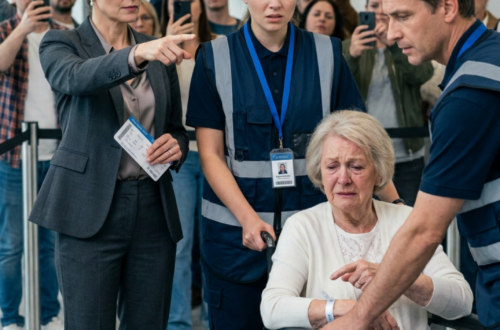
We walked down the lane beyond the school grounds, past a low wall slick with moss. Marta’s English was careful, practical, and better than she seemed to believe. She told me she cleaned the east dormitory after lights-out three evenings a week. She saw what staff did not see because students looked through her. She had seen Lily standing outside Room 214 at nearly midnight, soaked from rain, wearing only her uniform blouse and skirt. Her hair was wet, her hands shaking, her lips almost blue.
“Why was she outside?” I asked.
“Door locked,” Marta said.
“Her own door?”
“Yes. She say key card not work. She knock, but girls laughing down corridor. Then door click.” Marta touched her own chest, as if feeling the sound there. “Not from her side.”
I remembered Lily saying they laughed after the door clicked. I had thought she meant her door closing. I had been wrong.
Marta had taken a clean navy coat from the lost-property rail and left it folded outside Room 214 because Lily would not let her stay. “She say please go, please, if they see, worse.” Marta’s eyes filled but did not spill. “I leave coat. I think small thing. Next morning Mrs. Voss ask why I interfere.”
“How did she know?”
Marta looked at me then. “That is question.”
She also told me about the fire door at the rear stairwell. On the night the threats were printed, she found it wedged with a cleaning cloth. Not one of the blue cloths used in the dormitory. A red one, from the staff wing. St. Anselm’s cleaning cloths were color-coded by building area because Margaret insisted on hygiene protocols being documented for inspections. I almost missed the importance of it. Marta did not.
“Students have no red cloths,” she said.
“Could they steal one?”
“From locked cupboard in staff corridor. Need staff card.”
The wind moved through the bare trees beside the lane, and somewhere behind us a whistle blew from the sports field. I thought of Margaret’s calm office, her folders, her careful welfare language. I thought of Lily outside her own room in the cold, too frightened even to accept help openly. The clean coat had looked like pity. It was proof someone had known Lily was not inventing fear.
“Will you say this officially?” I asked.
Marta’s hand tightened around the shopping bag. Inside, I could see a loaf of bread and a carton of milk. Ordinary things. Rent things. Life things. “I have job,” she said.
“My daughter has a record now.”
“I know.” She looked ashamed, then angry at being ashamed. “I meet you again. Not here.”
That evening, Lily and I argued. Not loudly at first. She heard me on the phone to Hannah and Marta and came into the kitchen with her face closed.
“You promised you wouldn’t make it worse.”
“It is already worse.”
“For me,” she said. “Not for you. You get to be angry and then go to work. I have to be the girl everyone thinks wrote threats.”
“I’m trying to clear your name.”
“I didn’t ask you to send me back there.”
The radiator in our flat clicked, and she flinched before she could stop herself. That tiny movement ended the argument more thoroughly than any apology could have. I stepped toward her, and she stepped back. Not because she feared me, I do not think, but because fear had trained her body to make space before it knew who was in front of it.
I slept badly that night. Around four, I sat at the kitchen table and opened the school’s evidence packet again. The printer screenshot showed Lily’s account. The hallway still showed Lily at 2:17 near the bathroom corridor. The anonymous forum post included phrases from her counseling work. Alone. Angry. Nobody listens. It was convincing if you wanted it to be convincing. That was the cruelty of it. Lies built from pieces of truth do not look like lies from a distance.
At sunrise, I noticed the report date.
Margaret’s disciplinary summary had been signed at 8:42 a.m. on the Monday the threats were found. The official discovery time listed on the incident form was 9:10 a.m.
I sat there in the gray kitchen light, listening to the kettle begin its low tremble on the hob. The school’s own paperwork had placed the conclusion before the investigation. It was not enough by itself. But it was the first time Margaret’s obsession with documentation had turned its face toward her.
PART 3
Once I saw the time on Margaret’s report, I began reading every document as if it were a person trying not to blink. That is not as dramatic as it sounds. Mostly it meant sitting at the kitchen table after work, smelling of hospital disinfectant, with Lily asleep in the next room and bills pushed under a fruit bowl full of bruised apples. I made columns in a notebook: school claim, document used, missing piece, question. My handwriting grew smaller as the pages filled. Anger had become something I could hold steady.
The print logs were the next crack. St. Anselm had given me a screenshot showing Lily’s username and the time of printing, but not the printer location metadata. Hannah told me each printer had an internal device code. The east dorm printer was E-DORM-02. The staff wing printer was ADM-RED-01. I sent three requests and received three delays. On the fourth, I copied the school board and used the phrase evidence relied upon in disciplinary action. That phrase did what motherhood had not. It made them answer.
The metadata showed the threats had been printed from ADM-RED-01 at 2:13 a.m.
I stared at those letters so long they stopped looking like letters. The staff wing printer. Not the student printer near the dorm bathrooms. Lily’s account had been used, yes, but from a machine she could not access without staff credentials and a door card. I phoned Margaret’s office immediately, which was foolish, because fury should not be allowed near telephones without supervision.
Her assistant said Dr. Voss was unavailable.
“Tell her the printer was in the staff wing,” I said.
A pause. “I’m not sure what you mean.”
“She will.”
Margaret called back twenty minutes later. Her voice was as calm as ever. “Mrs. Ward, I understand you are distressed by technical data you may not be interpreting correctly.”
“Was Lily in the staff wing at 2:13?”
“The relevant issue is account usage.”
“No. The relevant issue is access.”
“Students have occasionally entered administrative areas.”
“At two in the morning?”
“We cannot speculate without a full review.”
I almost laughed. “You signed the full review before the threats were officially found.”
That silence was different from the others. It had weight.
“Mrs. Ward,” she said, slowly, “I advise you to be careful.”
“I have been careful for thirteen years,” I said. “It has not protected my daughter.”
Marta met me again in a church hall during a Saturday jumble sale because she said crowded places made private conversations safer. The room smelled of old books, instant coffee, and damp coats. Children chased each other between tables stacked with chipped mugs and used puzzles. Marta carried an envelope inside a cookbook she bought for fifty pence. She handed both to me without looking directly at my face.
Inside were photographs of the cleaning rota, a maintenance log for the rear stairwell fire door, and a copy of a note instructing staff to report “unauthorised parent contact” after the incident. The maintenance log showed the fire door alarm had been disabled for inspection on Friday and reactivated Monday afternoon. The cloth Marta found wedging the door open had been red, from the staff wing. She had photographed it in the bin because, she said, “I learn from my mother. When rich people ask you forget, take picture first.”
I wanted to hug her. I did not, because she did not look like a person who wanted to be hugged in a church hall beside a table of used saucepans.
“Why help us?” I asked.
She looked at the cookbook in my hand. “My son was clever. In Poland, teacher say he is trouble because we are poor and I clean houses. He stop raising hand. I know this thing.” She shrugged, but her mouth trembled. “Also Lily say thank you for coat. Many children do not.”
The former pupils came slowly. Hannah contacted two. One contacted another. They did not all have proof, and not all stories matched neatly. Real harm leaves crooked records. But the pattern was clear enough to chill me: scholarship pupils in certain rooms, private complaints reframed as emotional instability, incidents involving wealthy children minimized, quiet removals before inspections or donor events. Room 214 appeared three times in six years. Margaret had not created cruelty from nothing. She had learned how to file it.
Lily did not want to hear most of it. She said it made her feel less alone and more doomed at the same time. I understood. If what happened to you is part of a pattern, you are not mad. But you are also not special enough to have been spared. That is a bitter comfort.
One night she came into the kitchen while I was comparing camera timestamps. She stood in Daniel’s jumper, hair messy from sleep, and watched me for a while. Rain pressed against the window. The radiator clicked under the sill.
“Do you think Dad would have known what to do?” she asked.
I could have lied kindly. Instead I said, “No. I think he would have pretended for your sake, then panicked in the bathroom.”
She smiled for the first time in days. It was small, but it belonged to her.
“I don’t want to go back,” she said.
“I know.”
“But I don’t want them to keep my record like that.”
“Then we fight for the record, not the school.”
She came closer and looked at the notebook. “Your handwriting is getting weird.”
“I’m becoming a detective.”
“You’re becoming scary.”
“Good scary or bad scary?”
She thought about it. “Tired scary.”
That was fair.
The camera evidence was more difficult. The school had provided stills from the east dorm hallway: Lily leaving Room 214 at 2:17, Lily near the bathroom corridor at 2:19, Lily returning at 2:24. They did not provide the rear stairwell footage, claiming the original file was corrupted during an eighteen-minute window. According to their timeline, that missing footage did not matter because Lily had been seen elsewhere. According to Marta, the rear stairwell door was how someone could enter the dorm corridor unseen after using the staff wing.
Hannah found a parent on the board willing to speak off the record. His daughter had left St. Anselm after an eating disorder was handled badly, and he had remained on the board out of guilt or cowardice, perhaps both. He would not give me documents, but he told me to ask about the inspection archive. Schools, he said, preserved more footage than they admitted when inspectors were due. St. Anselm had an inspection scheduled the same month as Lily’s suspension.
So I asked.
The solicitor replied that no additional footage relevant to Lily’s matter existed.
At the next meeting, Margaret made her mistake.
It was supposed to be a final review before the board decided whether Lily’s suspension would become permanent removal. We sat in a smaller conference room this time, not Margaret’s office. There was a long table, a jug of water, and biscuits no one touched. Outside the windows, cold rain silvered the lawns. Oliver was not present. His parents were, along with two governors and the school solicitor. Lily had chosen not to attend. I was relieved and ashamed of being relieved.
Margaret summarized the school’s position. Lily had motive, access through her account, emotional instability, and opportunity. I presented the staff-wing printer metadata, the red cloth, the pre-signed report time, and witness information from former pupils. The solicitor called much of it speculative. He was not entirely wrong. Institutions survive by making each piece of evidence look lonely.
Then Margaret said, “Mrs. Ward, even if one accepts your theory, the rear stairwell footage shows no adult entering the corridor during the relevant period.”
The room went quiet inside me.
I looked at the solicitor. He looked at Margaret. One governor looked down at her notes.
“I thought the rear stairwell footage was corrupted,” I said.
Margaret’s expression did not change fast enough. That was all. A fraction of a second, the mask finding its place. “I meant the available corridor footage.”
“No,” I said. “You said rear stairwell.”
The solicitor intervened, but the sentence had already entered the room. Margaret had referenced a detail from a missing file before acknowledging the file existed. She could explain it later. She would explain it carefully. But for the first time, I saw someone else notice the gap between her language and the truth.
After that meeting, things moved faster and slower at once. The sympathetic governor requested an internal audit of the evidence archive. The school resisted. I contacted a journalist at a regional paper, not one who wanted a scandal headline, but one Hannah trusted because she had written about school exclusions before without turning children into spectacle. Her name was Priya Shah, and she asked for documents before she asked for tears. I liked her immediately and resented her for being necessary.
Priya spoke to Marta, Hannah, two former pupils, the governor, and eventually one junior IT contractor who had been hired to update St. Anselm’s security system. He confirmed that the rear stairwell file had not corrupted naturally. It had been exported, trimmed, and overwritten in the parent-facing archive. The original remained in an inspection backup folder because Margaret’s compliance policy required redundant storage. That was the irony that would have been funny if my daughter had not been living inside it. Margaret’s need to document control had preserved the evidence of her control.
The original footage did not show Oliver printing threats. It was not that simple. It showed a staff door opening at 2:08 a.m. A figure in a dark coat entered the rear stairwell using an adult access card, face partly obscured by the angle. At 2:14, the same figure wedged the fire door with something small and pale enough to be seen only when Priya’s technician brightened the frame. At 2:16, two students entered the corridor from the stairwell. One was Oliver Grant. The other was a girl named Sophie Bell, a prefect whose mother chaired the fundraising committee.
They did not go into Lily’s room. That mattered. The threats were already printed. The aim was not merely to plant paper. It was to create movement, fear, and a timeline. Lily’s key card had been temporarily disabled from the dorm lock through the maintenance panel, forcing her into the corridor when she woke cold and frightened after her door would not open properly from the outside latch. That part took longer to understand. The laughter after the door clicked was not someone closing Lily in. It was someone confirming she had been locked out, then let back in, exactly long enough to appear in the hallway footage.
Oliver had not acted alone. That was the truth and the frustration. A boy’s cruelty had been protected by girls seeking approval, staff avoiding conflict, and a headmistress turning mess into narrative before morning assembly.
When Priya asked Margaret for comment, St. Anselm issued a statement saying it could not discuss individual pupils but took all welfare matters seriously. They announced an independent review on a Friday afternoon, which is when institutions release things they hope people will forget by Monday. But the article ran Sunday. It did not name Lily without our consent. It did not show her face. It described a scholarship pupil in Room 214, altered records, staff-wing print metadata, and a cleaner moved after assisting a distressed child. The clean coat became the image everyone remembered.
By Monday, parents were calling for answers. Some because they cared. Some because they feared their own children’s records might be questioned. Some because scandal lowers the value of prestige if left untreated too long. Motives were mixed, as they usually are. I had stopped needing everyone on our side to be pure.
Charles Grant’s lawyers sent a letter denying Oliver had authored threats or harmed Lily. Technically, it avoided denying he had been in the corridor. Sophie Bell’s family claimed she had been pressured by peers. Margaret took leave “for health reasons” while the review proceeded. The school board invited me to a public meeting.
Lily read the invitation at the kitchen table. The smell of toast had burned because I forgot it under the grill.
“Do I have to go?” she asked.
“No.”
“Do you want me to?”
“Yes,” I said, then corrected myself. “No. I want you to have the choice. Those are different.”
She touched the edge of the letter. “Will they believe you?”
“I don’t know.”
“What if they don’t?”
I looked at her then, really looked, not as a problem to solve but as a child who had lost too much of childhood to adult cowardice. “Then they will still hear me say it.”
That was the only promise I could keep.
PART 4
The board meeting took place in the main hall, under wooden beams polished by a century of ceremonies. I had seen that hall in prospectus photos, filled with flowers, prize tables, and girls in white dresses singing hymns. That night it smelled of wet coats, old varnish, and anxious bodies. Parents filled the rows. Staff stood along the walls. Marta sat near the back with her hands folded around her handbag. Lily chose to come but sat beside Hannah, not beside me, which hurt until I understood it was a way of staying in the room without being displayed.
Margaret was there too. She had returned from leave for the meeting, wearing a dark suit and the same calm face. When she entered, some parents looked relieved, as if the presence of a polished woman might restore the old order by force of posture. Others turned away. I watched her pause near the front and glance at the old school crest above the stage. For a moment she looked tired rather than powerful. I remembered the framed photograph in her office, the young teacher who had once perhaps believed schools saved children. That human flicker did not excuse her. It made the waste of her more complete.
The chair of governors opened with language about transparency and learning. Priya sat in the press section, pen ready. The independent reviewer summarized preliminary findings: incomplete disclosure, improper use of counseling notes, altered camera archives, staff-access inconsistencies, and a disciplinary conclusion drafted before evidence review. Each phrase was careful. Each phrase still struck.
Then I was invited to speak.
I had written notes, but my hands were shaking enough that the paper made a small sound. I began with Lily because that was the only way not to begin with rage.
“My daughter came here because she believed what St. Anselm said about opportunity,” I said. “So did I. I believed the gates, the quiet corridors, the careful words. I believed this place would protect her better than I could because it had more money, more staff, and better shoes.”
A few people shifted. Someone coughed.
“When Lily said girls laughed outside Room 214, I asked politely. When she said someone knocked at her door, I accepted reassurance. When she begged me not to report it, I thought the danger was a few cruel children. I was wrong. The danger was adults who preferred a tidy story to an inconvenient child.”
Margaret looked at me then. Her expression did not harden. It emptied.
I described the clean coat. Not dramatically. Just the fact of it. A thirteen-year-old girl, wet and cold, locked out of her room, too afraid to let a cleaner stay beside her. A woman with no authority leaving warmth folded on the floor because the people with authority had made warmth risky. I described the red cleaning cloth from the staff wing, the printer metadata, the report signed before discovery, the missing footage that was not missing enough. I did not call Margaret evil. I did not need to. Documents can be colder than accusations.
Charles Grant stood during questions. He said his family had been vilified and that Oliver was also a child. He was right about one thing. Oliver was a child. A child who had learned from adults that consequence was negotiable if your family paid for beautiful buildings. I said none of that aloud. Another parent did, which was better because it meant I was no longer the only difficult woman in the room.
Marta spoke after me. She did not want to, but she did. Her voice shook, and she held a typed statement in both hands. She said she had found Lily outside Room 214. She said she had reported concerns informally and been told not to dramatize “normal dormitory friction.” She said she was moved the next morning after Margaret asked why she had interfered. When someone asked why she had not come forward sooner, Marta looked at the governors and said, “Because people who clean know what happens when important people are embarrassed.”
No one had an answer to that. Not a useful one.
Other students came forward in the weeks after the meeting. Not all in public. Some wrote statements. Some sent old messages. One girl admitted she had laughed outside Lily’s door because Sophie told her Lily was “playing poor orphan for attention.” Another said Oliver had shown boys screenshots from Lily’s counseling extracts, though he claimed he did not know where they came from. The source of that leak was never proven. That remains one of the unresolved pieces. I suspect several people know. Silence, like blame, can be shared until no one feels its full weight.
Lily’s disciplinary mark was removed. The school issued a formal apology to her and to me, though the first draft apologized for “distress caused by procedural shortcomings,” and I sent it back with three sentences underlined. The final version said Lily had been wrongly accused. It said evidence had been mishandled. It said her counseling history should never have been used as character evidence. It did not say the school had chosen reputation over a child, but by then everyone could read what was absent.
Margaret resigned at the end of term. Her statement spoke of a lifetime in education and the need for St. Anselm to heal. I saw a photograph of her leaving campus in a newspaper article, one hand raised against cameras, her face smaller than I remembered. Part of me wanted satisfaction. Part of me felt only tired. People expected me to celebrate, but a woman resigning did not give Lily back the nights she spent listening to laughter outside Room 214. It did not return my wedding ring or my lost shifts or my daughter’s trust in doors that locked.
Oliver was withdrawn by his parents before any school sanction could be finalized. That angered many people, including me, but not in the clean way public anger likes. I did not want him destroyed. I wanted him made to understand, and I am not sure elite families specialize in that lesson. Sophie Bell lost her prefect role and wrote Lily an apology so polished I doubted she had written it alone. Lily read it once, folded it, and put it in the bin under tea bags and apple peels.
“Do you want to reply?” I asked.
“No,” she said. “She can wonder.”
That was the first time Lily sounded older in a way I admired rather than feared.
The question of returning to St. Anselm took longer. The board offered to restore her place, renew her scholarship, and move her to another house. They promised new safeguarding procedures, independent reporting channels, and staff training. All of that mattered. None of it erased the corridor. Lily visited once, on a clear afternoon when the lawns were too green and the buildings looked innocent in sunlight. We walked past the east dormitory but did not go in. A gardener was trimming hedges. Somewhere a piano lesson stumbled through scales.
“Do you hate it?” I asked.
She considered. Lily always considered when adults expected a simple feeling. “I hate Room 214.”
“That’s fair.”
“I don’t hate the library.” She looked toward the old wing, not the new one Grant money had been meant to build. “I don’t hate Miss Allen exactly. She was useless, but I think she was scared.”
“You don’t have to be generous.”
“I’m not.” She put her hands in her coat pockets. “I’m deciding accurately.”
In the end, she did not return. She chose a smaller day school nearer home, one with chipped paint near the science rooms and a headteacher who spoke too loudly but looked Lily in the eye. St. Anselm agreed to fund the transition and provide a corrected academic reference. Some people told me she was giving up an opportunity. I stopped explaining. Not every open door is an invitation. Some are exits.
Money remained hard. That is another thing endings often smooth away. I did not become a campaigner with a book deal. I kept my hospital job and reduced my bakery hours only after Lily’s new school settled. The ring stayed sold. The apples stayed bruised. But something in our flat changed. Not happiness exactly. Space. Lily began doing homework at the kitchen table again. She added birds to her notebook. She slept through more nights.
One evening in November, almost a year after the first midnight call, we were making soup from tired vegetables when Lily asked whether I still blamed myself for St. Anselm. The question came without warning. Rain tapped at the window. The flat smelled of onions, carrots, and the hospital soap I could never fully wash from my hands.
“Yes,” I said.
She stirred the pot. “You’re supposed to say no.”
“I know. But yes, sometimes. Less than before.”
“I blamed you too,” she said. “At first.”
“I know.”
“I don’t now.”
I had to turn away and open a cupboard we did not need opened. There are mercies that hurt on the way in.
Years later, people who hear the story usually want to know about Margaret. Did she ever apologize? No. Not to us. A letter came from her solicitor acknowledging the review’s findings without admitting personal liability. I sometimes think about the photograph in her office from her first year teaching. I think she must have loved children once, or at least loved the idea of saving them. Then she loved the school more. Then she loved the version of herself the school reflected back. That is not forgiveness. It is just the shape of the tragedy as I understand it.
They also ask about Marta. She stayed at St. Anselm another year, then left for a hospital cleaning post with better pay and less polished cruelty. Lily and I visited her once with flowers, and she scolded us for spending money on them, then put them in a jam jar anyway. She kept no copy of the article. “I remember,” she said, tapping her forehead. “Enough.”
The clean navy coat was never returned to lost property. Marta had taken it after the review, washed it, and brought it to Lily in a carrier bag. It was too large for her, with sleeves that covered her knuckles, but she wore it through that winter. At first I hated seeing it. It reminded me of her standing outside Room 214, wet and frightened, waiting for adults to become brave. Later, I began to see something else. Warmth can arrive quietly. Help can be folded and left where a child can reach it.
The last time we went near St. Anselm was for the final records meeting. Lily had to sign a form acknowledging receipt of her corrected file. We did not enter through the front gates. We used the side office near the car park, where rainwater gathered in shallow puddles and cigarette ends floated near the drain. The new deputy head gave us the papers and spoke with careful respect. Lily read every page before signing. I watched her pen move and thought of Margaret’s signature at 8:42 a.m., written before the truth had been allowed into the room.
On our way out, we passed the east dormitory from a distance. A window on the second floor was open. I do not know if it was Room 214. I could be wrong about the angle. From somewhere inside came the faint ticking of an old radiator warming up, that uneven metal sound Lily once listed in the back of her maths notebook. She stopped walking. I did too, but I did not touch her.
The sound ticked again.
Lily breathed in, slow. Then she pulled the clean navy coat tighter around herself and kept walking toward the bus stop, where rain glittered on the pavement and ordinary traffic hissed along the road. She did not look unhurt. That would be too neat. But she did not flinch as much as before, and sometimes survival announces itself in exactly that small a way.