As the vibrant blooms of early summer begin to fade, many gardeners might think the pollinator party is winding down. But hold on! Late summer is a crucial time for our buzzing and fluttering friends. Just like us, bees, butterflies, and other pollinators need a steady supply of nectar and pollen to build up their energy reserves for migration, hibernation, or simply to raise the next generation. Neglecting our gardens during this period can leave these tiny heroes hungry and vulnerable.
Think of it as preparing a grand finale feast. By intentionally planting flowers that bloom late in the season, you’re not just adding beauty to your yard; you’re providing vital sustenance that can make all the difference for local ecosystems. It’s a simple act of neighborly kindness, extended to the natural world right outside your door.
Why Late Summer Pollinators Need Our Help
During late summer and early fall, many of the flowers that bloomed in spring and early summer have finished their cycle. This creates a ‘nectar gap’ – a period where food sources become scarce. For pollinators, this gap can be devastating:
- Honeybees: They need to store enough honey to survive the winter. A lack of late-season forage means less honey, weakening the hive.
- Migratory Butterflies: Species like Monarchs are fueling up for epic journeys south. Without abundant nectar, they won’t have the energy to complete their migration.
- Native Bees: Many native bee species are preparing for overwintering, either as adults or in larval stages. Proper nutrition at this time is key to their survival.
- New Generations: Some pollinators have multiple generations in a season. Late summer flowers support the final broods, ensuring a strong population for the following year.
By providing a consistent buffet, we contribute to healthier, more resilient pollinator populations and, by extension, a healthier environment for all of us.
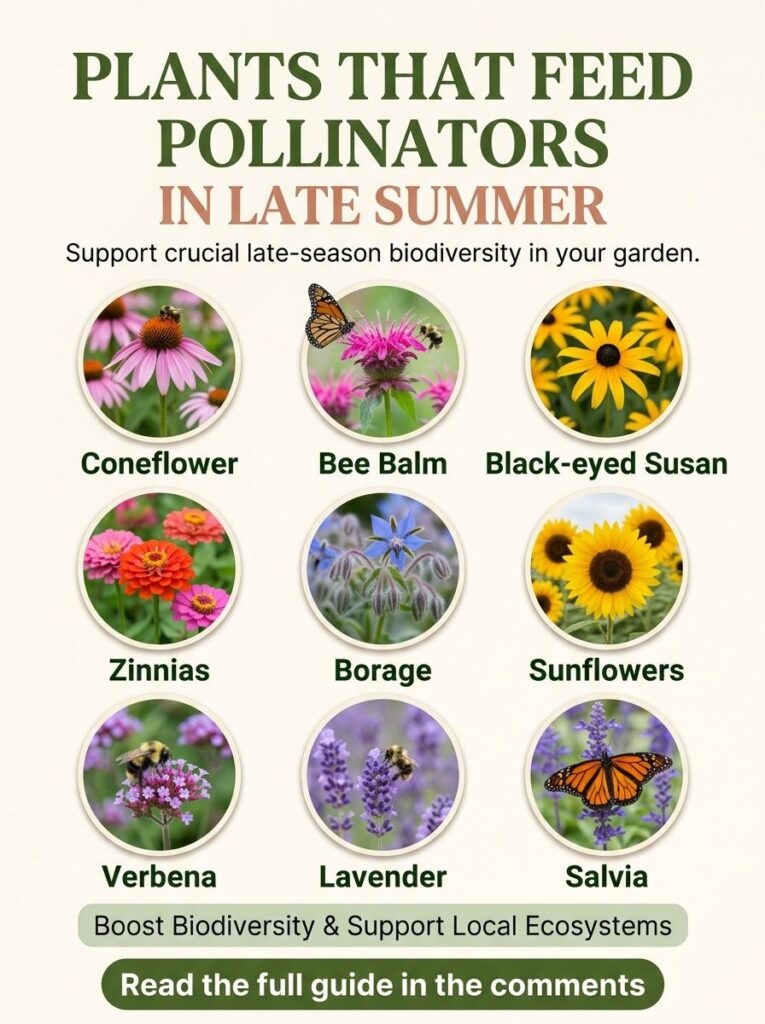 A variety of plants offer crucial support to pollinators as summer wanes.
Choosing Your Late Summer Pollinator Stars
So, what kind of plants should you invite to your late-season garden party? The best choices are often those that offer abundant nectar and pollen, have long blooming periods, and are well-adapted to your local climate. Here are some characteristics to look for:
Long-Lasting Blooms
Many late-season flowers are known for their ability to keep blooming right up until the first frost. This extended flowering period ensures a consistent food source for weeks, sometimes even months.
Nectar and Pollen Richness
Focus on flowers that are known to be particularly generous with their offerings. Tubular flowers are often great for butterflies with long proboscises, while flat, open flowers are easily accessible for many types of bees.
Native is Best
Whenever possible, choose native plants for your region. Native plants are perfectly evolved to support local wildlife, including pollinators, and are often more resilient to local weather conditions and pests. They require less water and fertilizer once established, making them a sustainable choice for any gardener. For those in the USA, looking up your specific USDA Plant Hardiness Zone and consulting your local extension office or native plant society can provide invaluable guidance.
Top Picks for Your Late Summer Pollinator Oasis
While specific plant availability varies by region, here are some widely beneficial types of plants that commonly shine in late summer and early fall:
Asters (Symphyotrichum spp.)
These cheerful, daisy-like flowers come in shades of purple, pink, and white, blanketing fields and gardens as summer fades. They are absolute magnets for bees and butterflies, providing a crucial late-season nectar source. There are many varieties, including New England Asters and Smooth Blue Asters, perfect for various garden styles.
Goldenrod (Solidago spp.)
Often misunderstood and unfairly blamed for seasonal allergies (ragweed is the real culprit!), goldenrod is a powerhouse for pollinators. Its bright yellow plumes are a beacon for a huge array of bees, butterflies, and other beneficial insects. Many native varieties are available that won’t aggressively spread in a garden setting.
Coneflowers (Echinacea spp.)
While some coneflowers start blooming earlier, many varieties continue strong into late summer. Their sturdy petals and prominent central cone provide both nectar and pollen. Bees and butterflies adore them, and the dried seed heads offer food for birds in winter.
Sedum (Hylotelephium spectabile, formerly Sedum spectabile)
Also known as ‘Stonecrop,’ these succulent plants feature dense clusters of tiny flowers that explode with color – often pink, red, or white – in late summer. They are incredibly drought-tolerant and provide an easily accessible landing pad for many pollinators, especially smaller bees and butterflies.
Zinnias (Zinnia elegans)
For a burst of color and a butterfly haven, zinnias are hard to beat. These annuals bloom prolifically from summer until frost, offering a rainbow of hues. Choose single-flowered varieties over double ones, as their nectar and pollen are more accessible to pollinators.
Bee Balm (Monarda spp.)
As its name suggests, bee balm is a pollinator favorite. Its unique, shaggy flowers come in shades of pink, purple, and red, attracting not only bees but also hummingbirds and butterflies. It’s a fantastic native choice for many regions and thrives in sunny, moist conditions.
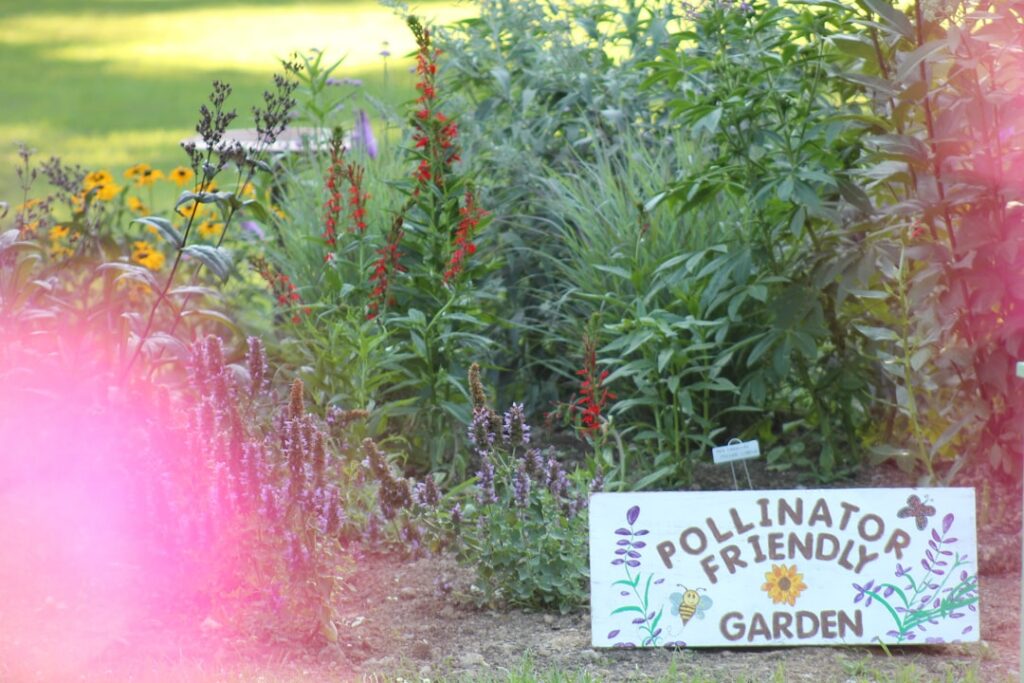 A diverse array of late summer blooms creates a feast for visiting pollinators.
Practical Tips for a Thriving Pollinator Garden
Beyond choosing the right plants, a few simple practices can make your garden even more welcoming to pollinators:
1. Plant in Groups
Pollinators are more efficient when they can find large patches of the same flower. Planting drifts or clusters of 3-5 (or more!) of the same plant creates a visual target and helps them gather food more quickly.
2. Provide Water
A shallow dish of water with stones for landing spots can be a lifesaver for bees and butterflies, especially during hot, dry spells. Bird baths can also work if they have a shallow edge.
3. Avoid Pesticides
Even “organic” pesticides can harm pollinators. Focus on building healthy soil and choosing pest-resistant plants. A thriving ecosystem will often manage pests naturally.
4. Embrace “Messiness”
Many native bees nest in hollow stems or in the ground. Leaving some leaf litter, dead stems, or patches of bare soil can provide crucial nesting and overwintering sites.
5. Research Your Local Ecosystem
Understanding which pollinators are native to your area will help you select the most effective plants. Your local university extension service or native plant societies are excellent resources.
Making a Difference, One Flower at a Time
It’s truly amazing how much impact a single garden, no matter its size, can have on our local environment. By dedicating even a small corner of your yard to late-season pollinator plants, you’re not just growing flowers; you’re nurturing life, supporting biodiversity, and connecting with the rhythm of nature. It’s a rewarding journey that enriches your garden, your community, and the world around you.
So, as summer begins to wind down, let’s keep the buzz alive! Your garden can be a beacon of hope and sustenance for the industrious bees, the graceful butterflies, and all the tiny creatures that make our world go round. Happy planting!