The Ultimate Gardening Guide: Companion Planting, Regrowing Kitchen Scraps, Trellises, Flowers & More
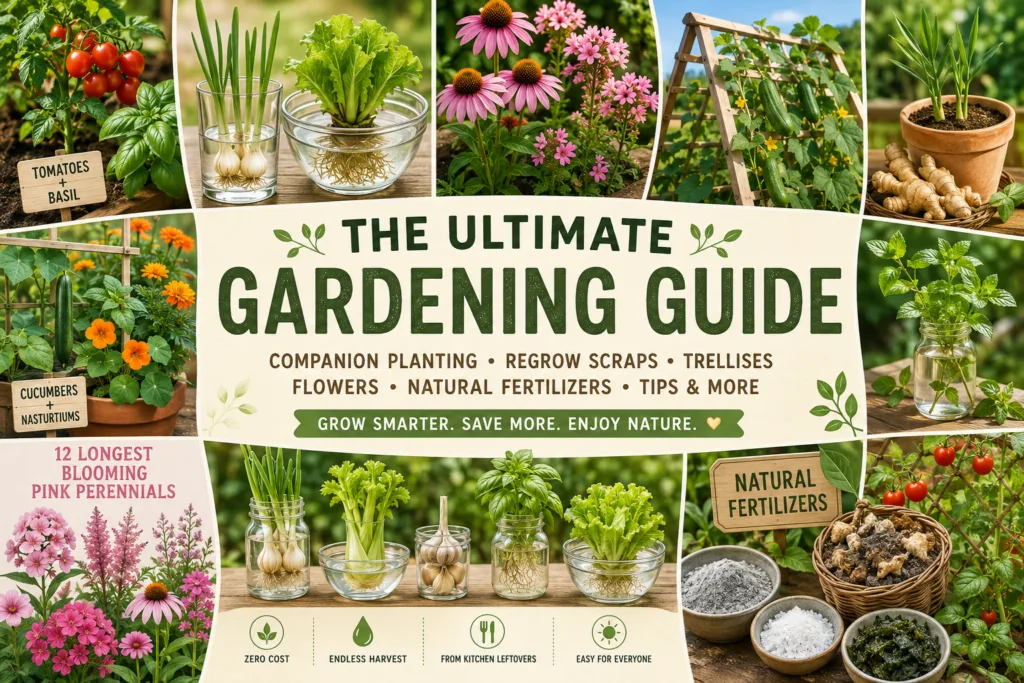
Whether you’re growing vegetables on a balcony, in raised beds, or in a backyard garden, there are countless simple techniques that can help you harvest more food, grow healthier plants, and create a beautiful outdoor space. Many experienced gardeners rely on companion planting, vertical gardening, kitchen scrap regrowth, and carefully selected flowers to naturally improve plant health without expensive products.
In this guide, you’ll discover practical gardening ideas that are beginner-friendly, budget-friendly, and easy to apply in almost any climate.
1. Companion Planting: Let Your Plants Help Each Other
One of the oldest gardening techniques is companion planting.
Instead of growing vegetables randomly, certain plants naturally benefit each other by improving soil health, attracting pollinators, reducing pests, or making better use of available space.
A well-planned garden often grows stronger with fewer chemicals.
Great Vegetable Pairings
🍅 Tomatoes + Basil
One of the most popular combinations.
Benefits:
- Basil may help confuse insects that target tomatoes.
- Tomatoes provide light shade for basil during hot afternoons.
- Both enjoy similar watering schedules.
🥕 Carrots + Bush Beans
Beans naturally fix nitrogen into the soil.
Carrots benefit from the richer soil while using a different root depth, reducing competition.
🥬 Lettuce + Radishes
Radishes mature quickly while lettuce develops more slowly.
This allows gardeners to harvest radishes first and leave extra room for lettuce.
🌶️ Peppers + Onions
Onions help maximize space and may discourage certain insects thanks to their strong scent.
🍓 Strawberries + Spinach
Spinach acts as living mulch, helping retain moisture around strawberry plants.
🍆 Eggplant + Thyme
Thyme attracts beneficial insects while helping cover bare soil around eggplants.
🥒 Cucumbers + Nasturtiums
Nasturtiums are famous as a “trap crop.”
Many aphids prefer nasturtiums over cucumbers, helping protect the main crop.
🎃 Zucchini + Marigolds
Marigolds brighten the garden while attracting pollinators and helping reduce certain soil pests.
🫛 Pole Beans + Lettuce
Beans grow vertically while lettuce thrives in the cool shade beneath them.
This maximizes limited garden space.
2. Grow More in Small Spaces with Trellises
Vertical gardening is one of the easiest ways to double your harvest without increasing garden size.
Growing upward improves:
- Air circulation
- Sunlight exposure
- Harvesting
- Disease prevention
String Trellis
Perfect for:
- Pole Beans
- Peas
- Cucumbers
- Nasturtiums
A simple string trellis costs very little but supports vigorous climbing plants.
Lean-To Trellis
Excellent for:
- Cucumbers
- Small Melons
- Cherry Tomatoes
This design keeps fruit off the soil, reducing rot.
Arch Trellis
Beautiful and productive.
Ideal for:
- Pumpkins
- Gourds
- Luffa
- Melons
Walking underneath a tunnel filled with hanging fruit creates both shade and visual appeal.
Florida Weave
One of the easiest support systems for tomatoes.
Plants remain upright while fruit stays cleaner and easier to harvest.
3. Regrow Vegetables from Kitchen Scraps
Did you know many vegetables can regrow using nothing more than water?
Instead of throwing scraps away, give them a second life.
Green Onions
Simply place the white roots in a glass of water.
Fresh green shoots usually appear within a week.
Lettuce
Keep the base after cutting.
Place it in shallow water.
New leaves begin growing within one to two weeks.
Celery
The base of celery produces fresh leaves from the center.
Transfer to soil after new roots develop.
Garlic
Individual cloves often sprout edible garlic greens.
These have a mild garlic flavor perfect for salads and stir-fries.
Basil
Cut healthy stems just below a leaf node.
Place them in water.
Roots typically appear within 7–10 days.
Mint
Mint roots extremely easily.
Once rooted, move it into a pot to enjoy endless fresh herbs.
Bok Choy
The bottom stem can produce new leaves after several days in water.
Potatoes
Allow eyes to sprout before planting in soil.
Each healthy eye can become a new potato plant.
4. Grow Ginger at Home
Fresh ginger is surprisingly easy to grow.
Step 1
Choose healthy ginger with visible buds.
Step 2
Cut into sections.
Each piece should contain at least one growth bud.
Step 3
Soak overnight if desired.
Step 4
Plant shallowly with buds facing upward.
Step 5
Keep soil consistently moist but not soggy.
Step 6
Harvest after leaves naturally yellow and die back.
You’ll discover fresh ginger growing beneath the soil.
5. Flowers You Can Root in Water
Many beautiful flowers can be propagated without soil.
Simply place healthy cuttings into clean water until roots appear.
Popular choices include:
- Geranium
- Fuchsia
- Impatiens
- Chrysanthemum
- Hydrangea
- Salvia
- Verbena
- Petunia
- Dahlia
- Lantana
Use clean containers, indirect sunlight, and refresh the water every few days.
6. Beautiful Pink Perennials That Bloom for Months
Long-lasting flowers make every garden more colorful.
Excellent pink bloomers include:
- Coneflower
- Daylily
- Astilbe
- Garden Phlox
- Bleeding Heart
- Bee Balm
- Sedum
- Dianthus
- Yarrow
- Gaura
- Coral Bells
- Peony
Many of these attract bees, butterflies, and hummingbirds while providing blooms from spring through fall.
7. Plants That Thrive Without Soil
Not every plant needs traditional potting soil.
Several species grow happily in water or air.
Popular examples include:
- Lucky Bamboo
- Pothos
- Peace Lily
- Spider Plant
- Chinese Evergreen
- Hyacinth
- English Ivy
- Air Plants
- Tillandsia
- Orchids
- String of Pearls
- Staghorn Fern
These make excellent indoor plants with minimal maintenance.
8. Natural Fertilizers You Already Have
Many everyday household items contain valuable nutrients for plants.
Use them wisely to improve soil health.
Wood Ash
Rich in potassium and calcium.
Best for:
- Garlic
- Carrots
- Lavender
- Clematis
Avoid using around acid-loving plants.
Epsom Salt
Contains magnesium.
Often used for:
- Roses
- Tomatoes
- Peppers
- Strawberries
Use sparingly rather than routinely.
Cooking Water
Unsalted vegetable cooking water contains trace nutrients.
Allow it to cool completely before watering plants.
Seaweed
Excellent natural source of micronutrients.
Great for:
- Potatoes
- Corn
- Fruit Trees
- Dahlias
Mushroom Compost
Improves soil texture while adding organic matter.
Suitable for:
- Herbs
- Rhubarb
- Asparagus
- Perennial flowers
9. Vegetables to Start in July
July is still a productive planting month in many regions.
Depending on your climate, consider planting:
- Tomatoes
- Peppers
- Eggplants
- Pumpkins
- Watermelons
- Okra
- Marigolds
- Parsley
- Sunflowers
Always adjust planting schedules based on your local growing zone and expected frost dates.
10. Gardening Tips Every Beginner Should Know
Successful gardens don’t require expensive tools.
Instead, focus on consistent habits.
✔ Water deeply rather than frequently.
✔ Add compost regularly.
✔ Mulch exposed soil.
✔ Grow flowers to attract pollinators.
✔ Rotate crops each season.
✔ Harvest vegetables regularly to encourage continued production.
✔ Use companion planting instead of relying heavily on pesticides.
✔ Grow vertically whenever possible.
✔ Observe your plants often—early detection prevents bigger problems.
Final Thoughts
Gardening is one of the most rewarding hobbies you can start. Whether you’re regrowing vegetables from kitchen scraps, planting companion crops, building a simple trellis, or filling your garden with colorful flowers, small improvements can lead to healthier plants and bigger harvests.
Remember that every garden is unique. Experiment with different combinations, observe what works best in your climate, and enjoy the process of learning from each growing season. With patience and a few proven techniques, you’ll soon have a thriving, productive garden that’s both beautiful and sustainable.