When people talk about brain health, they often jump straight to a few famous “superfoods” like salmon or walnuts. But in real life, a brain supportive diet is not built around one single food. It comes from the way you build your meals every day: enough omega-3s, antioxidant rich produce, steady energy foods, fiber, B vitamins, choline, and healthy fats.
That is exactly why this list is so useful. These foods are not just “healthy” in a vague way. Each one brings something specific to the table when it comes to focus, memory, mental clarity, and long-term nervous system support.
What many people overlook is this: the brain does not just need energy, it needs stable energy. A diet built around refined carbs, sugary snacks, skipped meals, or too little nutrient density can leave you feeling foggy, tired, unfocused, and constantly reaching for another quick fix.
Why Food Matters for Brain Health
The brain is one of the most energy-demanding organs in the body. But it does not function best when you simply pour in more sugar or caffeine. What it actually needs is a steady supply of supportive nutrients, including:
- Omega-3 fats to support nerve cell membranes
- Choline to help with neurotransmitter production
- B vitamins and folate to support energy metabolism and nervous system function
- Antioxidants to help protect cells from oxidative stress
- Fiber and gut-supportive foods because the gut-brain connection is very real
- Quality carbohydrates for more stable energy delivery
That is why a truly brain-friendly plate is usually not extreme. It is just balanced, colorful, and built with intention.
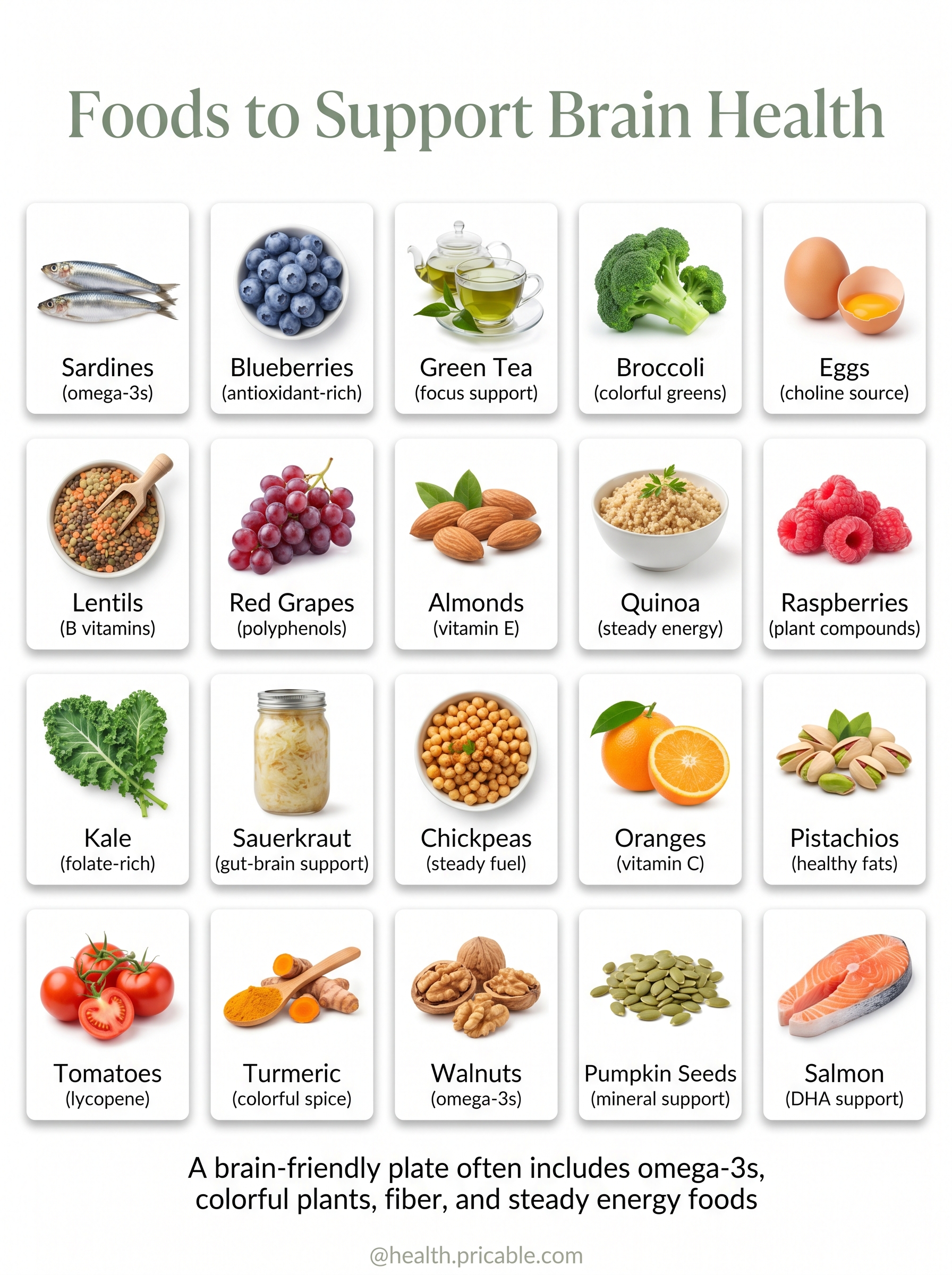
The Most Helpful Foods for a Brain Supportive Diet
1. Omega-3 Foods: Sardines, Salmon, Walnuts
Sardines and salmon are two of the strongest foods on this list because they provide omega-3 fats, especially the types most associated with brain and nervous system support, such as DHA.
Walnuts are also a smart addition, especially for people who do not eat fish often. They do not provide the same form of omega-3 as fatty fish, but they still add valuable fats and overall nutritional quality to the diet.
Easy way to eat them:
Aim to include salmon or sardines a few times per week. Walnuts are easy to add to oatmeal, yogurt, salads, or snack plates with fruit.
2. Antioxidant-Rich Foods: Blueberries, Raspberries, Red Grapes, Tomatoes, Oranges
Berries like blueberries and raspberries are especially popular in brain-health conversations because they are rich in antioxidant compounds and polyphenols. They are not magic, but they are absolutely worth including more often if you want a higher-quality diet.
Red grapes, tomatoes, and oranges add to this picture beautifully. Tomatoes provide lycopene, oranges bring vitamin C, and red grapes contain polyphenols that support overall dietary quality.
Smart way to eat them:
Skip the juice when possible. Whole fruit gives you fiber, slows digestion, and helps support steadier energy. Add berries or citrus to yogurt, oats, chia pudding, or a simple snack plate.
3. Steady Energy Foods: Quinoa, Lentils, Chickpeas
The brain tends to work better when your meals do not send blood sugar sharply up and down. That is why quinoa, lentils, and chickpeas are so useful. They offer better-quality carbohydrates along with fiber and some protein.
Lentils also bring B vitamins, which are involved in energy metabolism. Chickpeas can help meals feel more grounding and stable than highly refined snack foods.
How to use them:
Build lunch or dinner bowls with quinoa, lentils, or chickpeas plus vegetables and protein. This style of meal often supports steadier focus better than a lunch based mostly on white bread or sugary snacks.
4. Choline and Nervous System Support: Eggs, Broccoli, Kale
Eggs are especially helpful because they provide choline, a nutrient involved in neurotransmitter function. They are also practical, affordable, and easy to use for breakfast, lunch, or dinner.
Broccoli and kale bring folate, fiber, and a wide range of helpful plant compounds. Leafy greens do not just support heart and gut health. They are also an important part of a brain-supportive eating pattern.
Easy combination:
Eggs plus greens is a very strong formula. For example, eggs with sautéed broccoli or kale and a side of quinoa or whole-grain toast makes a simple, smart meal.
5. Healthy Fats and Mineral Support: Almonds, Pistachios, Pumpkin Seeds
Almonds provide vitamin E. Pistachios offer healthy fats. Pumpkin seeds add important minerals that support normal body and nervous system function.
One of the best things about this group is that it works well for snacks, toppings, and quick meal upgrades. They are nutrient-dense, though, so moderate portions make the most sense.
How to eat them well:
Sprinkle them over yogurt, oatmeal, salads, or grain bowls. They also pair well with fruit for a more balanced snack.
6. Gut-Brain Support and Daily Extras: Sauerkraut, Green Tea, Turmeric
Sauerkraut is an interesting addition because it points to the gut-brain connection. Fermented foods are not miracle foods, but they can support diet variety and may help round out a more gut-friendly eating pattern.
Green tea can be a helpful choice when you want a gentler lift than coffee. Turmeric is not a cure-all, but it is a worthwhile spice to use regularly because it helps add color and plant compounds to meals.
Simple ways to use them:
Drink green tea in the morning or early afternoon. Add turmeric to soups, lentils, eggs, or warm grain dishes. Serve a small amount of sauerkraut alongside savory meals.
How to Build a Brain Friendly Plate
A good brain supportive meal does not need to be complicated. A practical formula looks like this:
Include one good protein source
Examples: eggs, salmon, sardines, lentils, chickpeas
Add one steady-energy carbohydrate source
Examples: quinoa, legumes, whole fruit
Include colorful plant foods
Examples: broccoli, kale, tomatoes, blueberries, oranges
Add a source of healthy fat
Examples: walnuts, almonds, pistachios
This kind of meal usually works much better than one built mostly around refined carbs or sugary snacks.
Easy Ways to Combine These Foods Through the Day
Breakfast
Greek yogurt or eggs with berries and a small handful of almonds or walnuts.
Lunch
A quinoa bowl with salmon or chickpeas, plus broccoli, kale, tomatoes, and olive oil.
Snack
An orange or blueberries with pistachios, or green tea with a small handful of nuts.
Dinner
Sardines or eggs with cooked greens, plus lentils or chickpeas.
When Might You Notice a Difference?
You probably will not feel like your brain is suddenly transformed after one meal. But many people do notice early changes like more stable energy, fewer cravings, and better focus through the middle of the day when meals become more balanced.
The bigger benefits usually come after a few weeks of more consistent eating, especially when good nutrition is paired with enough sleep, movement, hydration, and stress management.
Final Takeaway
If you want to eat in a way that supports your brain, do not chase just one superfood. Focus on building a pattern that includes omega-3s, colorful produce, whole fruit, fiber, quality protein, and more stable energy foods.
Foods like sardines, blueberries, green tea, broccoli, eggs, lentils, red grapes, almonds, quinoa, raspberries, kale, sauerkraut, chickpeas, oranges, pistachios, tomatoes, turmeric, walnuts, pumpkin seeds, and salmon can all contribute to that bigger picture.
Related nutrition note: A brain-friendly diet usually emphasizes omega-3 fats, colorful plant foods, fiber-rich choices, quality protein, and carbohydrate sources that support steadier energy rather than sharp highs and crashes.