A healthier garden rarely comes from fighting every insect. It comes from building balance. That is where companion planting becomes one of the most practical tools a gardener can use. When the right crops share the same space, they can help confuse pests, attract beneficial insects, improve airflow, and make each bed more resilient over time.
This matters whether you manage a backyard kitchen garden, a small homestead plot, or a mixed ornamental-edible border. Natural pest control is not about one miracle flower or one secret herb. It is about designing plant communities that support the garden as a living system. Once that shift happens, your daily routine changes. You stop reacting to every pest problem in panic. You begin planting with intention, observing more closely, and solving problems earlier.
Below are nine practical companion plant pairs that can help reduce pest pressure while making the garden more productive, more beautiful, and easier to manage.
Why companion planting helps with natural pest control
Companion planting works best when you understand what it can and cannot do. It does not guarantee a pest-free garden. It does, however, help create conditions that make pest outbreaks less severe and easier to manage.
A good plant pairing may do one or more of these things:
- add scent that helps mask a crop from pests
- attract pollinators and beneficial insects
- fill open soil and reduce plant stress
- improve spacing and bed diversity
- make the garden less predictable to pest insects that prefer monocultures
This is why companion planting is most effective when paired with strong basic practices: healthy soil, correct spacing, steady watering, crop rotation, and regular observation.
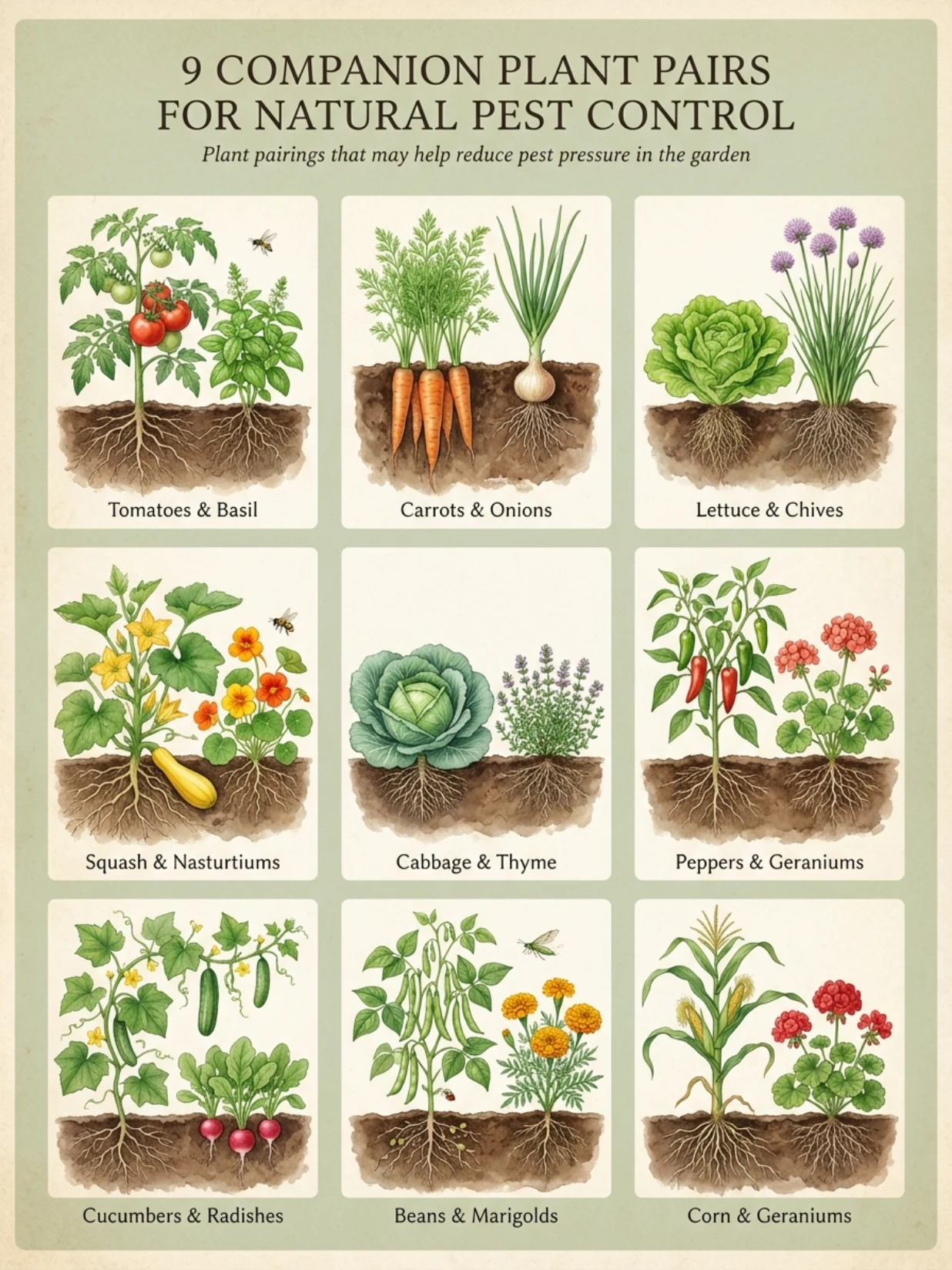
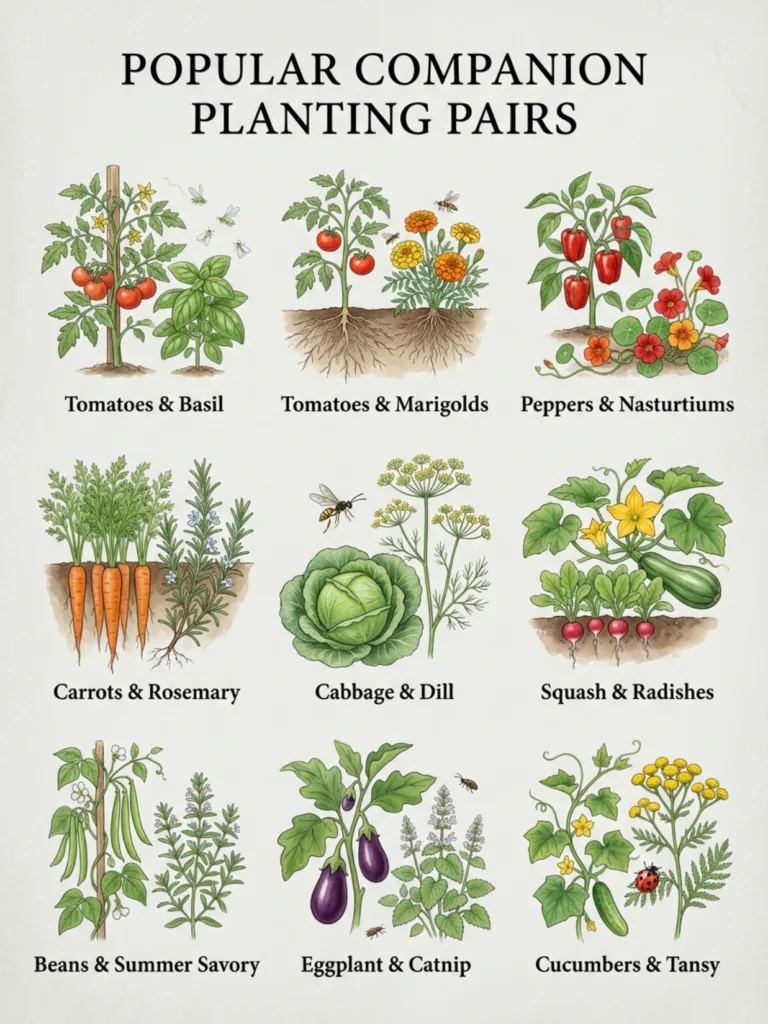
1. Tomatoes and Basil
Tomatoes and basil are one of the best-known garden pairings, and for good reason. They grow well in similar summer conditions, make efficient use of space, and create a fuller, more layered bed.
Why this pairing works
Basil helps fill the lower zone around tomatoes without becoming too competitive when spaced well. The mixed planting also creates more diversity in the bed, which is often better than leaving tomatoes isolated in bare soil.
Practical care tip
Do not crowd basil directly against the tomato stem. Keep a clear space at the base of the tomato so airflow stays open and watering is easier.
Best use
Raised beds, kitchen gardens, sunny patio plots, and intensive summer vegetable rows.
2. Carrots and Onions
Carrots and onions are a classic root-zone partnership. They use space differently above ground and bring contrasting scent and structure into the same bed.
Why this pairing works
Carrots have fine, feathery foliage and deeper root development, while onions grow upright and compact. This makes them an efficient pairing in smaller spaces.
Practical care tip
Keep thinning and weeding gentle. Both crops are easy to disturb when young, and early root disruption can slow them down.
Best use
Cool-season or shoulder-season beds, especially in neat rows or intensive raised bed layouts.
3. Lettuce and Chives
Lettuce and chives make a very useful combination for gardeners who want a compact bed with quick harvests and low visual clutter.
Why this pairing works
Lettuce stays low and leafy while chives add a narrow vertical element and a stronger scent profile. This makes the bed look fuller without becoming crowded.
Practical care tip
Harvest outer lettuce leaves often instead of waiting for every head to mature fully. This keeps airflow moving and reduces the chance of dense, damp growth.
Best use
Spring beds, part-season succession planting, and smaller kitchen gardens.
4. Squash and Nasturtiums
Squash can take over a bed quickly, so pairing it with the right companion matters. Nasturtiums are especially useful because they spread attractively, flower heavily, and support pollinator activity.
Why this pairing works
Nasturtiums help cover open ground near the outer edge of the squash bed while bringing color and insect activity into the area. They also make the whole planting feel more intentional rather than like one oversized crop dominating the space.
Practical care tip
Guide nasturtiums outward instead of letting them smother the squash crown. Squash needs clear airflow and open access for pollinators to find the flowers.
Best use
Raised beds, pollinator-friendly vegetable gardens, and mixed edible-flower plantings.
5. Cabbage and Thyme
Cabbage benefits from calm, clean planting around it. Thyme is an excellent partner because it stays low, aromatic, and tidy while leaving the cabbage as the clear main crop.
Why this pairing works
This combination uses different layers well. Cabbage fills the center and thyme softens the surrounding soil surface. The bed becomes more diverse without becoming crowded.
Practical care tip
Do not overwater the thyme just because the cabbage is thirsty. Water deeply where needed, but keep drainage in mind so the thyme stays healthy too.
Best use
Cool-season brassica beds, raised beds, and mixed herb-vegetable gardens.
6. Peppers and Geraniums
Peppers are productive, but they benefit from companion plants that do not overwhelm them. Geraniums can be a useful partner because they add color, pollinator support, and a different leaf texture.
Why this pairing works
Peppers have an upright, fruiting form, while geraniums bring mounding color nearby. This makes the planting more diverse and visually easier to read.
Practical care tip
Keep geraniums near the edge of the bed or slightly offset from the pepper row. Peppers still need strong light and good movement around the foliage to set fruit well.
Best use
Sunny ornamental-edible borders, containers with enough room, and mixed summer beds.
7. Cucumbers and Radishes
This is one of the smartest companion planting pairs when you want to use time and space efficiently.
Why this pairing works
Radishes mature quickly while cucumbers are still establishing. That means the radishes can use the bed early, then be harvested before cucumber vines fully spread.
Practical care tip
Sow radishes early and harvest on time. If you leave them too long, they become woody and stop contributing useful value to the bed.
Best use
Small-space gardens, raised beds, and succession-planted summer beds.
8. Beans and Marigolds
Beans and marigolds make a practical partnership because the beans bring food production and the marigolds bring color, insect activity, and a more layered planting structure.
Why this pairing works
Beans often leave visible soil at the base early in the season. Marigolds help fill some of that visual gap and make the planting more diverse.
Practical care tip
Keep marigolds at the bed edge or in pockets between bean groups, not so thick that harvesting beans becomes awkward.
Best use
Vegetable gardens, pollinator-friendly kitchen plots, and beginner-friendly raised beds.
9. Corn and Geraniums
Corn is often grown in blocks, which can create a lot of uniformity. Adding flowering companions like geraniums near the edges can help make the planting more varied and useful.
Why this pairing works
Corn brings height and heavy feeding needs, while geraniums bring lower flowering color and insect interest along the perimeter. This is especially useful in gardens where you want food production without turning the whole space into a plain field.
Practical care tip
Keep companion flowers at the edges rather than inside the densest corn zone. Corn needs strong light, root space, and easy access for watering.
Best use
Larger garden beds, mixed homestead plots, and decorative-edible plantings.
How to use companion planting effectively in real gardens
Give the main crop first priority
The biggest mistake in companion planting is forgetting which plant is the anchor crop. Tomatoes still need tomato spacing. Cabbage still needs room to head up. Squash still needs air and pollinator access. Companions should support that crop, not compete with it.
A simple rule helps: place the food crop first, then fit the companion into the remaining space with purpose.
Think in layers, not clutter
Good companion planting usually works because plants occupy different layers:
- upright crop plus low herb
- broad-leaved crop plus airy flower
- slow crop plus fast crop
- main harvest plus insect-support plant
This creates efficiency without congestion.
Use companions to guide your observation
One hidden benefit of companion planting is that it makes you inspect your beds more often. When you harvest basil near tomatoes, cut chives near lettuce, or deadhead marigolds beside beans, you naturally notice leaf damage, pest activity, and watering issues sooner.
That small increase in attention often prevents larger problems later.
Practical pest-control habits that make these pairings work better
Start with healthy soil
Stressed plants attract more trouble. Compost, proper drainage, and balanced fertility give crops the strength to handle minor pest pressure better.
Avoid overcrowding
Too much plant density leads to trapped moisture and weaker growth. Companion planting should increase balance, not create a tangled bed.
Inspect twice a week
Check leaf undersides, new growth, and stems regularly. Natural pest control works best when you catch small issues early.
Encourage beneficial insects
Leave room for flowers, avoid spraying unnecessarily, and keep some bloom in the garden through the season. Beneficial insects need habitat, not just one emergency invitation.
Rotate crops where possible
Even great companion pairs cannot fix repeated planting of the same crop in the same spot year after year.
A garden with fewer pests starts with better relationships between plants
Natural pest control is not about perfection. It is about building a garden that is less inviting to problems and more supportive of balance. Tomatoes with basil, carrots with onions, lettuce with chives, squash with nasturtiums, cabbage with thyme, peppers with geraniums, cucumbers with radishes, beans with marigolds, and corn with geraniums all show the same lesson: a smarter bed is often a healthier bed.
When you begin planting this way, your garden changes. Beds feel fuller but more organized. Pest problems become easier to spot and manage. Pollinators visit more often. Your daily routine becomes less reactive and more skillful.
That is the real strength of companion planting. It teaches you to garden with relationships, not just rows.