As gardeners, we pour our hearts and souls into nurturing our plants, hoping for vibrant blooms, bountiful harvests, and a lush, green sanctuary. Yet, sometimes, despite our best efforts, we battle stubborn weeds, struggle with inconsistent soil moisture, or find our plants just not reaching their full potential. What if there was one simple, natural practice that could dramatically improve all these aspects and more? Enter the unsung hero of the garden: mulch.
Mulch isn’t just about making your garden look tidy; it’s a powerhouse of benefits that can transform your daily gardening routine into a sustainable, thriving practice. It’s the secret weapon that empowers you to grow healthier, more resilient plants while reducing your workload. Let’s dive deep into the world of mulch and discover how this incredible resource can revolutionize your garden.
What is Mulch and Why Does Your Garden Absolutely Need It?
At its core, mulch is simply a layer of material, typically organic, applied to the surface of the soil around plants. This protective layer acts as a natural shield, working tirelessly behind the scenes to create an optimal environment for root growth and overall plant vigor. Here’s why every gardener, from novice to seasoned pro, should be embracing mulch:
- Weed Suppression: One of the most cherished benefits! A good layer of mulch blocks sunlight, preventing weed seeds from germinating and smothering existing young weeds. This means significantly less time spent pulling weeds, freeing you up for more enjoyable garden tasks.
- Moisture Retention: Mulch acts as an insulating blanket, reducing evaporation from the soil surface. This is particularly crucial during hot, dry spells, meaning your plants need less frequent watering – a huge water-saving benefit and a relief for your watering schedule.
- Soil Temperature Regulation: It keeps soil cooler in summer and warmer in winter, protecting delicate roots from extreme temperature fluctuations. This stable environment is ideal for consistent plant growth.
- Soil Enrichment: Organic mulches (like wood chips or shredded leaves) decompose over time, adding valuable organic matter and nutrients back into the soil. This improves soil structure, aeration, and fertility, feeding the beneficial microbial life beneath the surface.
- Erosion Control: A layer of mulch protects exposed soil from the harsh impacts of rain and wind, preventing soil compaction and erosion, especially on slopes.
Choosing the Right Mulch for Your Plants: A Tailored Approach
Just like plants have different needs, so too do different types of mulch offer unique benefits. Selecting the right mulch is crucial for maximizing its effectiveness and ensuring your plants truly thrive. Let’s explore some popular organic mulches and their ideal pairings:
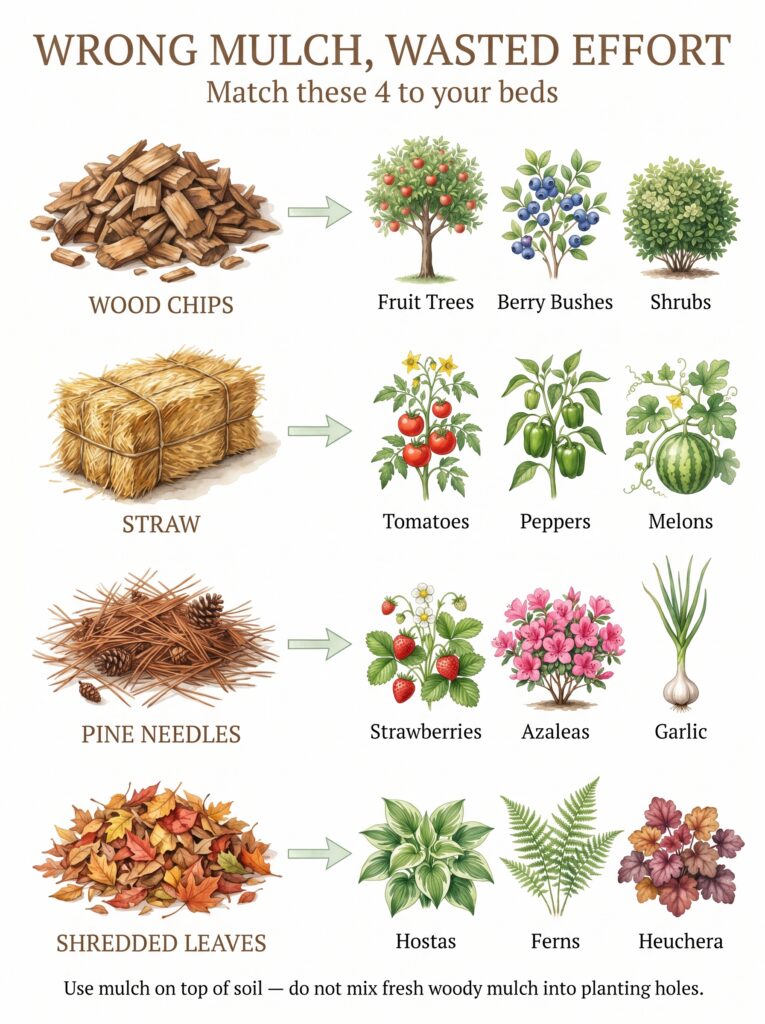 Matching the right mulch to your plants can make all the difference in their health and your gardening success.
Wood Chips
- Characteristics: Coarse, long-lasting, slow to decompose. They come in various sizes and colors.
- Best For: Fruit trees, berry bushes, shrubs, perennial beds, and permanent landscape plantings. Their slow decomposition rate makes them ideal for areas where you don’t want to replenish mulch frequently.
- Tip: Avoid fresh wood chips directly against young, sensitive plants, as they can temporarily draw nitrogen from the soil during initial decomposition. Aged wood chips are often preferred.
Straw (Not Hay!)
- Characteristics: Lightweight, good insulator, decomposes relatively quickly, improves soil structure. Ensure you use straw (dried stalks of grain) and not hay (which contains seeds and can introduce weeds).
- Best For: Vegetable gardens, annual flower beds, strawberry patches. It’s excellent for keeping fruits and vegetables clean and off the soil.
- Tip: Great for layering over garden beds in fall to protect soil and add organic matter.
Pine Needles (Pine Straw)
- Characteristics: Slow to decompose, creates an attractive, natural look, and adds acidity to the soil as it breaks down.
- Best For: Acid-loving plants such as blueberries, azaleas, rhododendrons, camellias, and conifer beds.
- Tip: They interlock, making them less prone to blowing away on windy days.
Shredded Leaves
- Characteristics: Free, incredibly rich in nutrients, decomposes readily, improves soil tilth.
- Best For: An all-purpose champion! Use them around garden beds, at the base of trees, under shrubs, or incorporate them into your compost pile.
- Tip: Shredding leaves helps them decompose faster and prevents them from matting together and blocking water and air.
Mulch Application: Do’s and Don’ts for Success
Even with the right mulch, improper application can hinder its benefits. Follow these guidelines for optimal results:
The Do’s:
- Weed and Water First: Before applying mulch, ensure the area is free of weeds and the soil is adequately watered. Mulch will then help retain that moisture.
- Apply the Right Depth: Aim for a 2-4 inch layer of organic mulch for most applications. Too thin, and it won’t be effective; too thick, and it can suffocate roots or create a haven for pests.
- Maintain Distance from Stems and Trunks: Create a small, clear ring (1-2 inches) around the base of plant stems and tree trunks. This prevents moisture buildup that can lead to rot, disease, and pest problems.
- Replenish as Needed: Organic mulches break down over time. Check your mulch depth seasonally and top it off when it gets below 1-2 inches.
The Don’ts:
- Avoid the “Mulch Volcano”: Piling mulch high against the trunk of a tree is a common mistake. This traps moisture, encourages disease, and invites pests. Remember, a thin, even layer is key.
- Don’t Mix Fresh Woody Mulch into Planting Holes: This is a crucial tip! Fresh woody mulches can temporarily tie up nitrogen in the soil as they decompose, starving your newly planted additions. Always apply mulch on top of the soil after planting.
- Don’t Over-Mulch: While good, more isn’t always better. Excessive mulch can reduce oxygen to the root zone, creating anaerobic conditions.
Mulching in Different USA Zones and for Specific Plant Characteristics
While the principles of mulching are universal, how you approach it can be subtly influenced by your local climate and the specific needs of your plants:
- Hot, Arid Zones (e.g., Southwest US): Thicker layers of mulch (up to 4 inches) are incredibly beneficial for maximum moisture retention, reducing stress on plants during intense heat and drought conditions. Light-colored mulches can also reflect some heat, keeping soil slightly cooler.
- Cool, Temperate Zones (e.g., Northeast, Midwest US): Mulch is vital for winter protection, insulating roots from freezing and thawing cycles. In spring, consider raking back some mulch to allow the soil to warm up faster before reapplying.
- Humid Zones (e.g., Southeast US): Ensure good air circulation when mulching to prevent fungal issues. Consider slightly less dense mulches or thinner layers if you notice persistent dampness.
- For Heavy Feeders (e.g., many vegetables, roses): Incorporate compost as a base layer before adding other mulches, or use mulches known for quicker decomposition and nutrient release like shredded leaves.
- For Drought-Tolerant Plants: Mulch is still beneficial for weed suppression and soil temperature, but ensure excellent drainage.
Embrace the Mulch Revolution
Mulch is truly one of the simplest yet most effective tools in a gardener’s arsenal. By understanding the different types and applying them correctly, you’re not just covering soil; you’re investing in the long-term health and vitality of your garden ecosystem. You’ll spend less time weeding and watering, and more time enjoying the beauty and bounty that sustainable gardening practices bring.
So, take a moment to assess your garden’s needs, choose the right mulch, and apply it with confidence. Watch as your plants respond with renewed vigor, your soil flourishes, and your connection with nature deepens. Happy mulching!