Every gardener eventually encounters a ‘soggy spot’ – an area of the yard that just won’t dry out. Whether it’s a low-lying section, a patch near a downspout, or a natural depression, perpetually wet soil can be a frustrating challenge. It leads to poor plant growth, root rot, and often, an unsightly mess. But what if you could turn this problem into an opportunity, creating a thriving, beautiful landscape feature?
Welcome to ‘The Soggy Spot Solution’ – a guide dedicated to transforming those damp, troublesome areas into vibrant, water-loving havens. Instead of battling nature, we’ll show you how to work with it, selecting plants that don’t just tolerate wet feet, but actually thrive in them.
 Turn problem areas into beautiful, functional garden features.
Understanding Your Soggy Spot
Before you start planting, it’s crucial to understand why your spot is soggy. Is it poor drainage due to compacted soil? Is it a natural low point where water collects? Or is it simply an area receiving too much runoff from your roof or patio?
- Low Spots: Natural depressions where water accumulates after rain.
- Downspout Runoff Areas: Where rainwater is directed from your roof, often overwhelming the soil.
- Rain Gardens: Designed depressions in the landscape that capture and filter stormwater runoff, allowing it to slowly infiltrate the ground rather than running into storm sewers.
Identifying the cause helps you choose the right approach and, more importantly, the right plants.
The Power of Rain Gardens and Wetland Plants
The concept of a rain garden or a dedicated wet-soil planting is simple yet powerful. Instead of trying to drain away all the water, you embrace it. You select plants that are naturally adapted to moist or even saturated conditions. These plants not only survive but also help manage the water, often by absorbing it and improving soil structure over time.
Benefits of planting for soggy spots:
- Natural Drainage: Plants’ root systems help absorb excess water, reducing standing puddles.
- Improved Water Quality: Roots and soil microbes filter pollutants from stormwater runoff.
- Habitat Creation: Attracts beneficial insects, birds, and other wildlife.
- Erosion Control: Plants stabilize soil in areas prone to washouts.
- Reduced Flooding: Minimizes the amount of water reaching storm drains and local waterways.
- Aesthetic Beauty: Transforms a problem area into a unique, visually appealing part of your garden.
Key Characteristics of Plants for Wet Soil
When selecting plants for your soggy spot, look for species that possess some of these traits:
- Wet Feet Tolerance: The ability to survive in saturated soil for extended periods without rotting.
- Aeration Adaptations: Some plants can transport oxygen to their roots even in oxygen-poor, waterlogged soil.
- Deep Root Systems: Helps with water absorption and anchors the plant firmly.
- Drought Tolerance (Optional but a bonus): Many wetland plants can also handle drier periods once established, making them versatile.
Top Plants for Your Soggy Spot Solution
While specific plant availability varies by region and USDA Hardiness Zone, here are categories and common examples of plants that excel in wet conditions. Remember to check local nurseries for varieties best suited to your climate!
1. Flowering Perennials for Vibrant Color
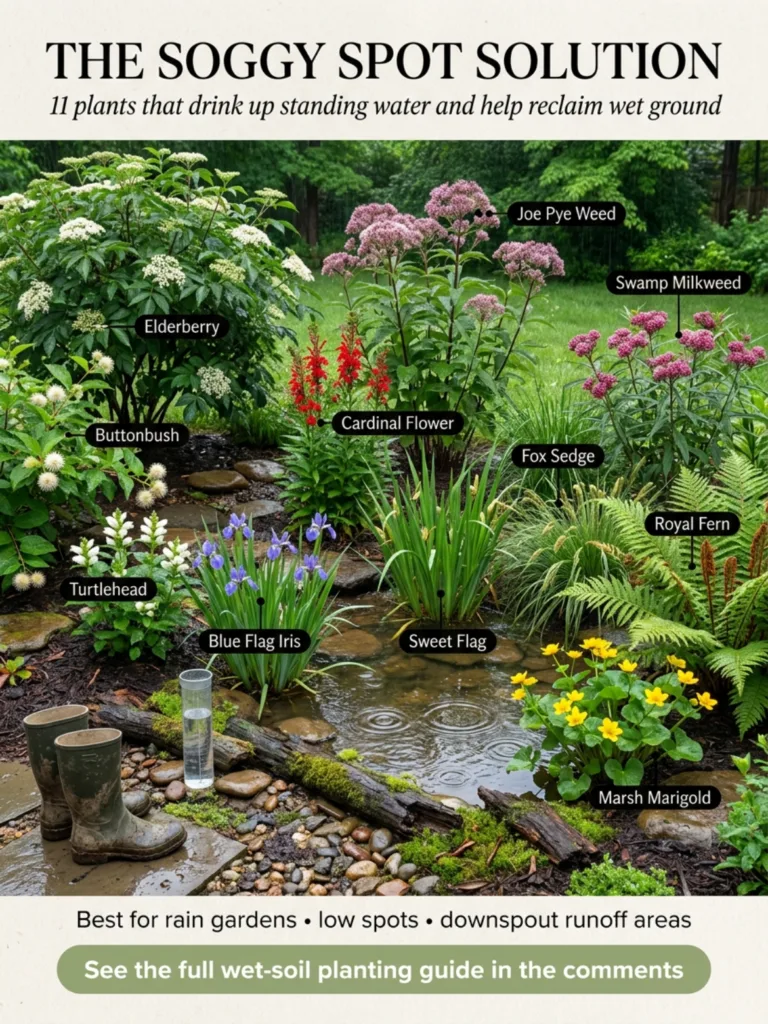
- Iris (Siberian Iris, Blue Flag Iris): Stunning flowers that thrive in moist to wet soil. They offer beautiful vertical accents.
- Cardinal Flower (Lobelia cardinalis): Known for its brilliant red spires, a hummingbird magnet. Prefers consistently moist conditions.
- Joe Pye Weed (Eutrochium purpureum): Tall, stately plants with large clusters of purple-pink flowers, attracting butterflies.
- Swamp Milkweed (Asclepias incarnata): Essential for Monarch butterflies, produces lovely pink flowers in wet areas.
- Marsh Marigold (Caltha palustris): Bright yellow, buttercup-like flowers in early spring, perfect for very wet, boggy spots.
2. Ornamental Grasses and Sedges for Texture
- Switchgrass (Panicum virgatum): A versatile native grass that tolerates both wet and dry conditions once established.
- River Oats (Chasmanthium latifolium): Features unique, flattened seed heads that shimmer in the breeze, doing well in moist shade.
- Carex (Various species like Carex muskingumensis – Palm Sedge): Many sedges are naturally found in wet areas, offering fine texture.
3. Shrubs for Structure and Year-Round Interest
- Red Twig Dogwood (Cornus sericea): Famous for its vibrant red winter stems, beautiful white flowers in spring, and tolerance for wet soil.
- Buttonbush (Cephalanthus occidentalis): Unique, spherical white flowers attract pollinators, thrives in very wet conditions.
- Willow (Dwarf Willows, Pussy Willow): Many willow species are excellent for extremely wet areas, offering fast growth.
4. Ferns for Shady, Damp Spots
- Ostrich Fern (Matteuccia struthiopteris): Tall, graceful fronds that spread easily, perfect for moist, shady areas.
- Cinnamon Fern (Osmundastrum cinnamomeum): Distinctive cinnamon-colored fertile fronds, preferring consistently damp, acidic soil.
Designing and Planting Your Wet-Soil Garden
Once you’ve chosen your plants, consider the design. Think about varying heights, textures, and bloom times to create year-round interest. For a rain garden, ensure the depression is shallow, gently sloped, and well-mulched to retain moisture and suppress weeds.
Installation Tips:
- Assess Drainage: Dig a test hole to understand how quickly water drains. This helps refine your plant choices.
- Soil Preparation: While wetland plants tolerate wet soil, improving compacted clay with some compost can aid initial establishment and overall health.
- Planting: Dig holes slightly wider than the root ball. Place plants, backfill gently, and water thoroughly, even in wet soil, to settle.
- Mulching: Apply a layer of organic mulch (like shredded bark or straw) to help retain moisture, regulate soil temperature, and suppress weeds.
Ongoing Care for Your Soggy Spot Solution
Wet-soil gardens are often low-maintenance once established. However, some initial care is important:
- Watering: Paradoxically, newly planted wet-soil plants may need regular watering during dry spells until their root systems are fully developed.
- Weeding: Keep an eye on weeds, especially in the first year, as they compete for resources.
- Pruning: Trim back spent flowers or damaged foliage as needed to encourage healthy growth and maintain appearance.
- Observation: Monitor your plants. If a particular spot remains excessively soggy, or unusually dry, you may need to adjust your plant selection or consider minor landscape modifications.
Conclusion: Embrace the Moisture!
Don’t let a soggy spot dampen your gardening spirits. By understanding the unique conditions and selecting the right plants, you can transform a challenging area into a flourishing, environmentally beneficial landscape feature. ‘The Soggy Spot Solution’ isn’t just about planting; it’s about seeing opportunity where others see a problem, creating beauty and resilience in your garden one water-loving plant at a time.