Imagine stepping into your backyard, not just to a quiet patch of green, but to a lively symphony of nature. Picture vibrant butterflies dancing among colorful blooms, delicate hummingbirds sipping nectar, and cheerful songbirds flitting from branch to flower. Sound like a dream? It’s an achievable reality! With a little planning and the right plant choices, you can transform your garden into a buzzing, fluttering haven for local wildlife.
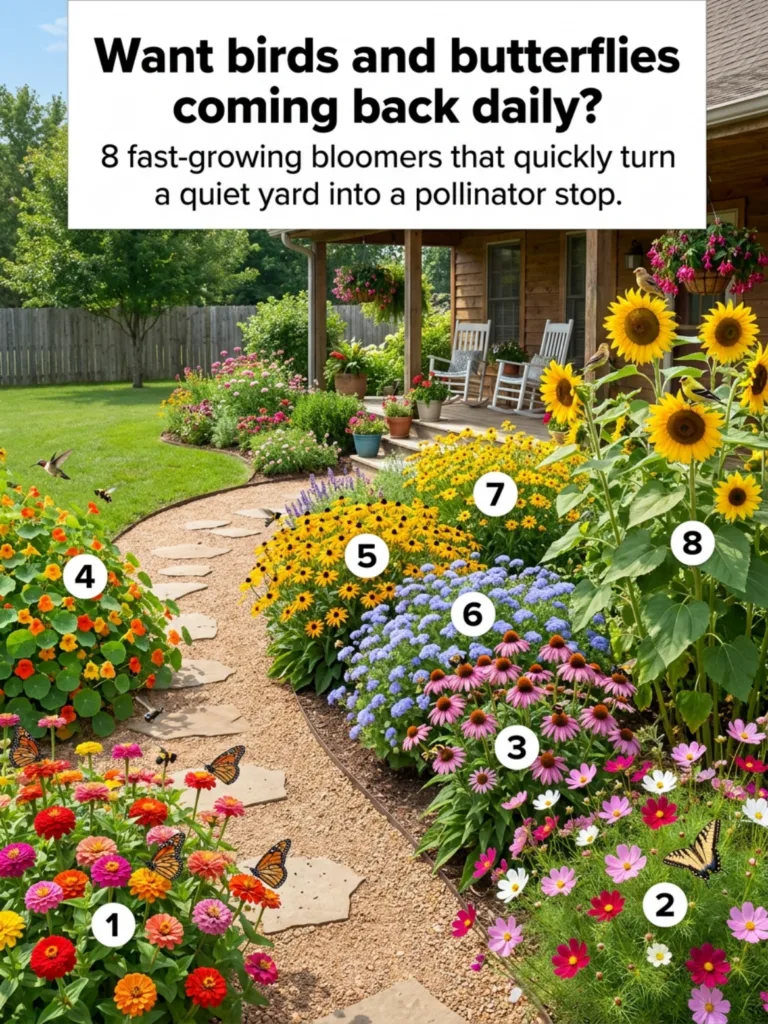 Turn your quiet yard into a bustling pollinator stop with the right fast-growing bloomers.
The secret lies in choosing plants that are not only beautiful but also irresistible to pollinators. And the best part? You don’t have to wait years for your garden to mature. Many stunning, pollinator-friendly flowers are fast-growing, quickly turning a quiet yard into a vibrant ecosystem. We’ve identified 8 such bloomers that will have birds and butterflies flocking to your garden daily, creating a spectacular display of nature’s beauty right outside your door.
Why a Pollinator-Friendly Garden Matters
Beyond the sheer joy of watching wildlife, creating a pollinator garden offers significant ecological benefits. Birds, bees, butterflies, and other pollinators are vital for healthy ecosystems, playing a crucial role in the reproduction of many plants, including those that produce our food. By providing nectar, pollen, seeds, and shelter, your garden contributes to biodiversity and supports the health of these essential creatures, whose populations are often under threat.
Moreover, a garden teeming with life adds immense aesthetic value and a sense of tranquility to your home. It’s a dynamic, ever-changing landscape that connects you directly with the natural world.
8 Fast-Growing Flowers That Attract Birds and Butterflies
Ready to get started? Here are eight incredible, fast-growing flowers that will quickly establish your garden as a hotspot for feathered and winged visitors:
1. Zinnias (Zinnia elegans)
- Why they attract: Zinnias are butterfly magnets! Their bright, long-lasting blooms in various shapes and sizes offer abundant nectar. Smaller birds, like finches, also enjoy their seeds once the flowers fade.
- Growth habit: Extremely fast-growing from seed, blooming within weeks and continuing until the first frost.
- Care tips: Full sun, well-draining soil. Deadhead regularly to encourage more blooms.
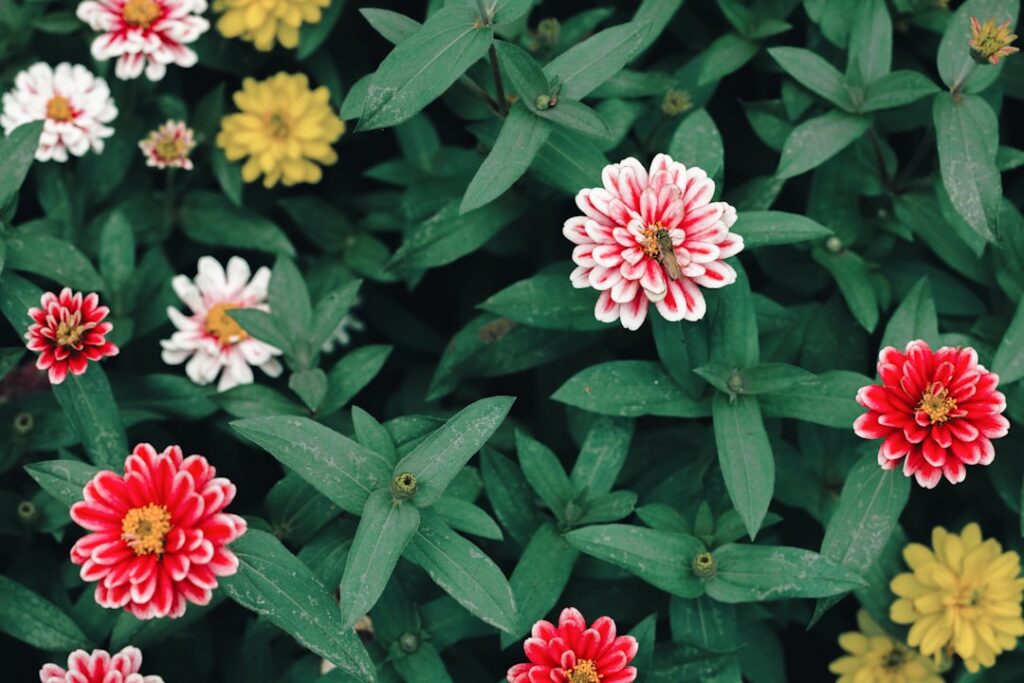 Zinnias offer a kaleidoscope of colors and are a favorite nectar source for butterflies.
2. Cosmos (Cosmos bipinnatus)
- Why they attract: Cosmos feature charming, daisy-like flowers that are highly attractive to butterflies and bees. Their feathery foliage adds delicate texture to the garden.
- Growth habit: Rapid growers that self-seed readily, providing continuous blooms throughout the summer and fall.
- Care tips: Full sun, average to poor soil (too rich soil can lead to leggy growth). Drought-tolerant once established.
3. Coneflowers (Echinacea purpurea)
- Why they attract: A North American native, Coneflowers are a powerhouse for pollinators. Butterflies adore their nectar, and their prominent central cones provide seeds that finches, especially goldfinches, absolutely love in late summer and fall.
- Growth habit: While establishing their root system takes a bit longer than annuals, they grow quickly in their first season and become robust, long-lived perennials.
- Care tips: Full sun, well-draining soil. Tolerant of heat and drought.
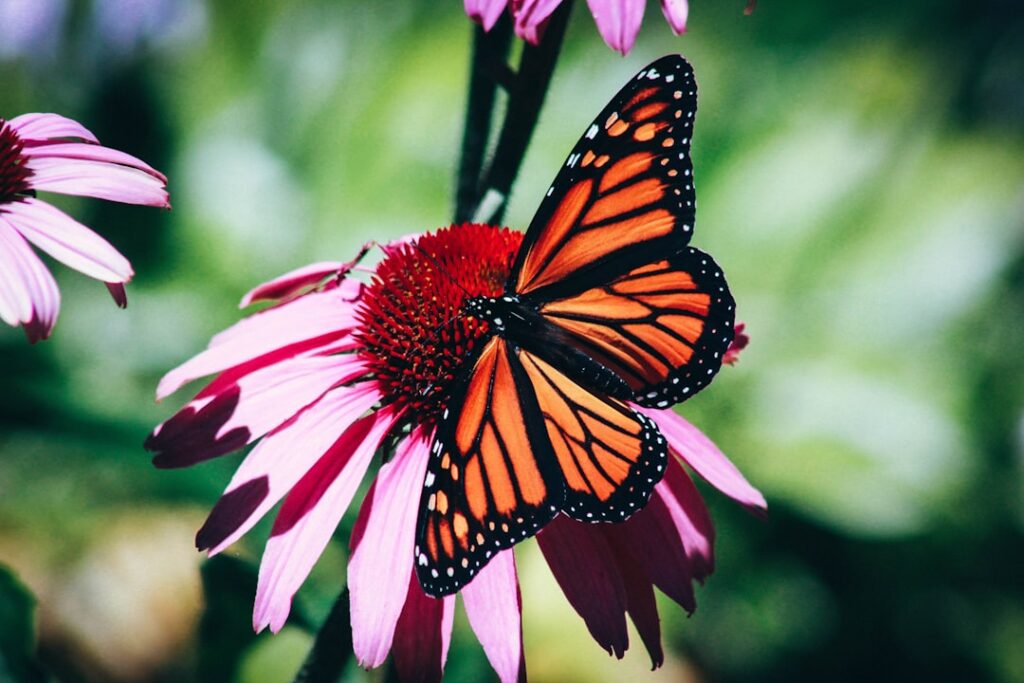 Coneflowers are a sturdy native favorite for butterflies and seed-eating birds like goldfinches.
4. Black-Eyed Susans (Rudbeckia hirta)
- Why they attract: Similar to Coneflowers, these cheerful yellow blooms with dark centers are a magnet for butterflies and provide essential seeds for birds.
- Growth habit: Fast-growing annuals, biennials, or short-lived perennials that bloom profusely from summer to fall.
- Care tips: Full sun, adaptable to various soil types. Very resilient and low-maintenance.
5. Lavender (Lavandula spp.)
- Why they attract: While perhaps better known for its fragrance, lavender is a huge draw for bees and beneficial insects, and many butterflies also visit its dense flower spikes.
- Growth habit: Grows quickly into a mature shrub in the first few years, providing continuous blooms.
- Care tips: Full sun, well-draining soil (prefers sandy, less fertile soil). Prune after flowering to maintain shape and encourage new growth.
6. Salvia (Salvia spp.)
- Why they attract: With a vast array of species, Salvias (or Sages) are phenomenal for hummingbirds, bees, and butterflies. Their tubular flowers are perfectly shaped for hummingbirds’ long beaks.
- Growth habit: Many varieties are fast-growing annuals or perennials that bloom over a long season.
- Care tips: Full sun is generally preferred, well-draining soil. Drought-tolerant options are common.
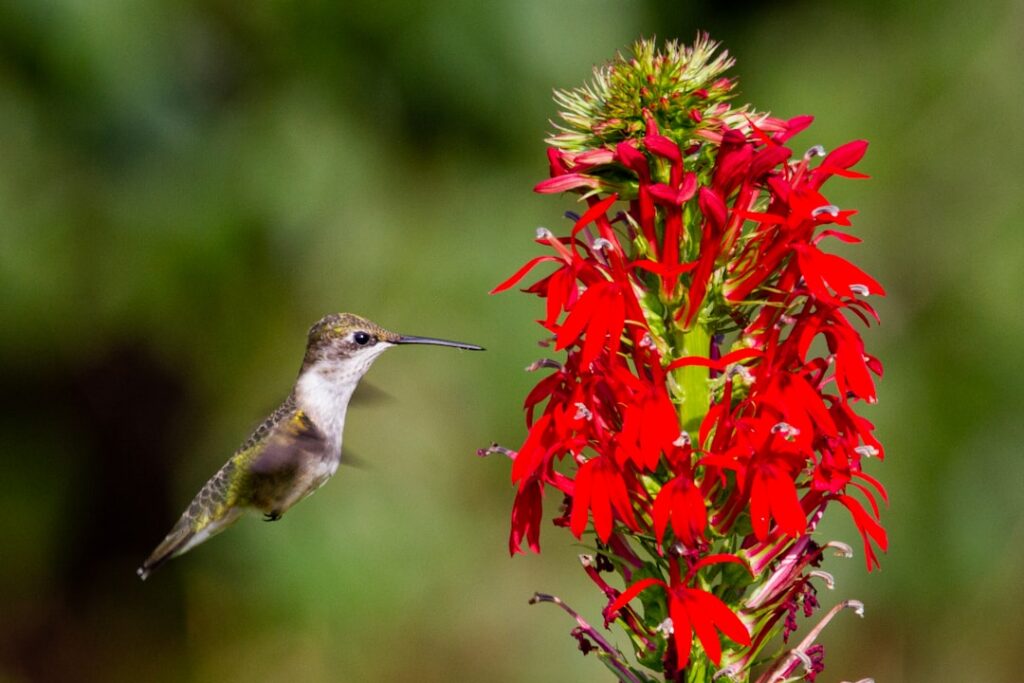 Salvias, with their tubular blooms, are a hummingbird’s delight.
7. Sunflowers (Helianthus annuus)
- Why they attract: Beyond their iconic beauty, sunflowers are a feast for the eyes and for wildlife. Bees and butterflies love their pollen and nectar, and once the seeds mature, they become a prime food source for a variety of birds, including finches, jays, and nuthatches.
- Growth habit: Exceptionally fast-growing, reaching towering heights and producing large blooms within a single season.
- Care tips: Full sun, rich, well-draining soil. May need staking as they grow tall.
8. Nasturtiums (Tropaeolum majus)
- Why they attract: These vibrant, edible flowers attract butterflies (especially the Cabbage White butterfly, but also others) and are a good source of nectar. Their unique shape and peppery flavor add an interesting dimension to the garden.
- Growth habit: Very fast-growing and easy to cultivate from seed, either as trailing plants or bushy mounds.
- Care tips: Full sun to partial shade, average to poor soil (too rich soil can result in more foliage than flowers).
General Tips for an Irresistible Pollinator Garden
Planting the right flowers is a fantastic start, but a truly thriving wildlife garden incorporates a few more elements:
- Provide a Water Source: A shallow bird bath or a small, gently trickling fountain provides essential drinking and bathing spots for birds and butterflies.
- Skip the Pesticides: Even “organic” pesticides can harm beneficial insects. Embrace a healthy ecosystem where natural predators help control pests.
- Offer Shelter: Include native shrubs, small trees, or even a brush pile to provide safe nesting sites and refuge from predators and harsh weather.
- Succession Planting: Plan for continuous blooms from spring to fall. When one plant finishes flowering, another should be ready to take its place, ensuring a steady food supply.
- Plant in Drifts: Large groups of the same plant are more noticeable and appealing to pollinators than single scattered plants.
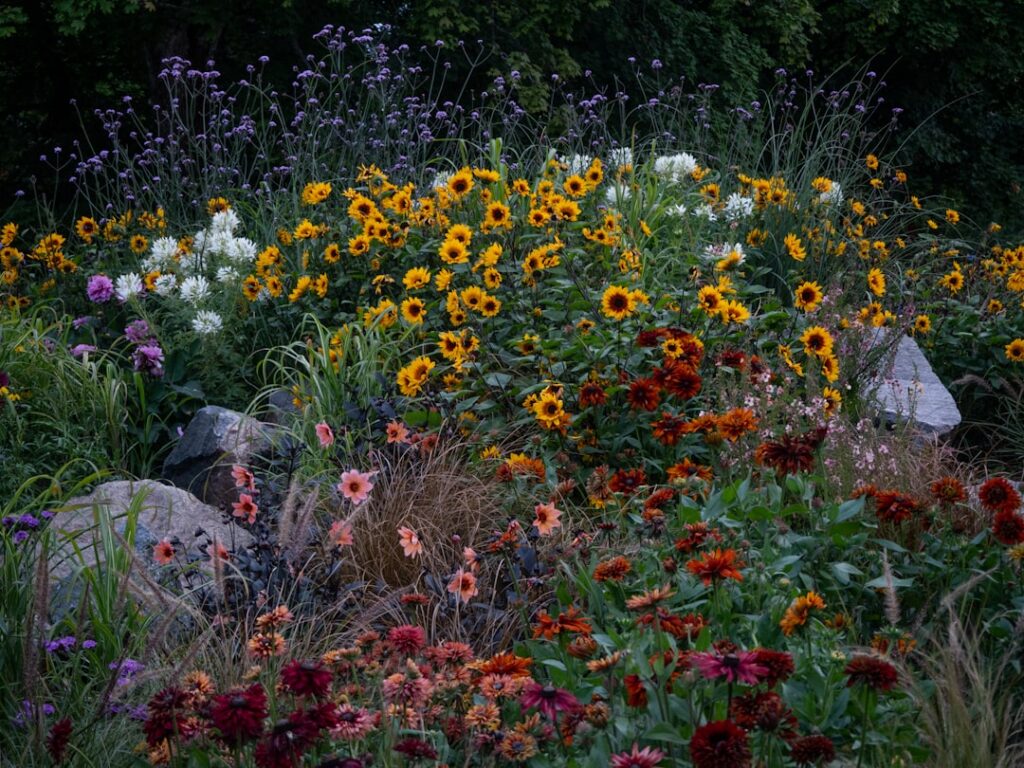 Beyond flowers, offering water and shelter creates a complete sanctuary for birds and butterflies.
Start Your Pollinator Paradise Today!
Transforming your garden into a haven for birds and butterflies is one of the most rewarding gardening endeavors. With these 8 fast-growing, pollinator-friendly flowers, you’re well on your way to creating a vibrant, dynamic, and ecologically rich space. Not only will you enjoy the constant show of nature, but you’ll also be contributing to the health of our planet, one beautiful bloom at a time. So, grab your gardening gloves, sow some seeds, and watch your yard come alive!