Tired of battling pesky weeds that seem to pop up faster than you can pull them? Imagine a garden where your plants thrive, your soil stays healthy, and you spend less time weeding and more time enjoying the beauty around you. Sounds like a dream, right? Well, it’s more achievable than you think with the magic of ground covers!
Ground covers are like nature’s living blanket for your garden beds. They spread across bare soil, creating a dense mat that chokes out weeds, retains moisture, prevents erosion, and adds a beautiful layer of texture and color. They’re true garden superheroes, helping you reclaim your weekends and transform your outdoor space into a low-maintenance paradise.
Let’s dive into how these amazing plants work and discover some fantastic varieties that will make your garden sing, all while keeping those unwanted invaders at bay!
Why Ground Covers Are Your Garden’s Best Friend
Beyond simply keeping weeds at bay, ground covers offer a host of benefits that contribute to a healthier, happier garden:
- Weed Suppression: This is their superpower! By forming a dense canopy, they block sunlight from reaching weed seeds, making it difficult for them to germinate and grow.
- Moisture Retention: Their foliage shades the soil, reducing evaporation and keeping your garden beds moist, which means less watering for you.
- Erosion Control: On slopes or areas prone to washing away, ground covers hold the soil in place with their root systems, protecting against wind and water erosion.
- Soil Health Improvement: As they grow and eventually decompose, ground covers add organic matter to the soil, improving its structure and fertility over time.
- Aesthetic Appeal: From vibrant flowers to interesting foliage, ground covers add a lush, finished look to your landscape, unifying garden beds and softening hard edges.
- Reduced Maintenance: Less weeding, less watering, less mulching—ground covers significantly cut down on the chores!
Choosing the Perfect Ground Cover for Your Space
Just like any plant, ground covers have specific needs. To ensure success, consider these factors before planting:
1. Sun Exposure
Is your chosen area full sun (6+ hours), partial shade (3-6 hours), or full shade (less than 3 hours)? Matching the plant to its light requirements is crucial. Many ground covers thrive in specific conditions.
2. Soil Type and Drainage
While many ground covers are adaptable, some prefer well-drained soil, while others can tolerate wetter conditions. Understanding your soil will help you pick a winner.
3. Hardiness Zone
The USA is divided into different plant hardiness zones. Always check your USDA Hardiness Zone to ensure the ground cover you choose can survive your local winter temperatures. Most plant tags or online descriptions will list the appropriate zones.
4. Spread Rate
How quickly does it grow? Some ground covers are vigorous spreaders and can quickly fill large areas, while others are slower. Consider the size of the area you want to cover and how much you want the plant to spread.
5. Foot Traffic Tolerance
If the area will see occasional foot traffic (like between stepping stones), opt for a variety that can handle it, such as Creeping Thyme or Irish Moss.
Meet Your Weed-Fighting Allies: Popular Ground Covers
Now, let’s introduce you to some fantastic ground cover plants known for their ability to keep weeds away, complete with their unique characteristics and care tips:
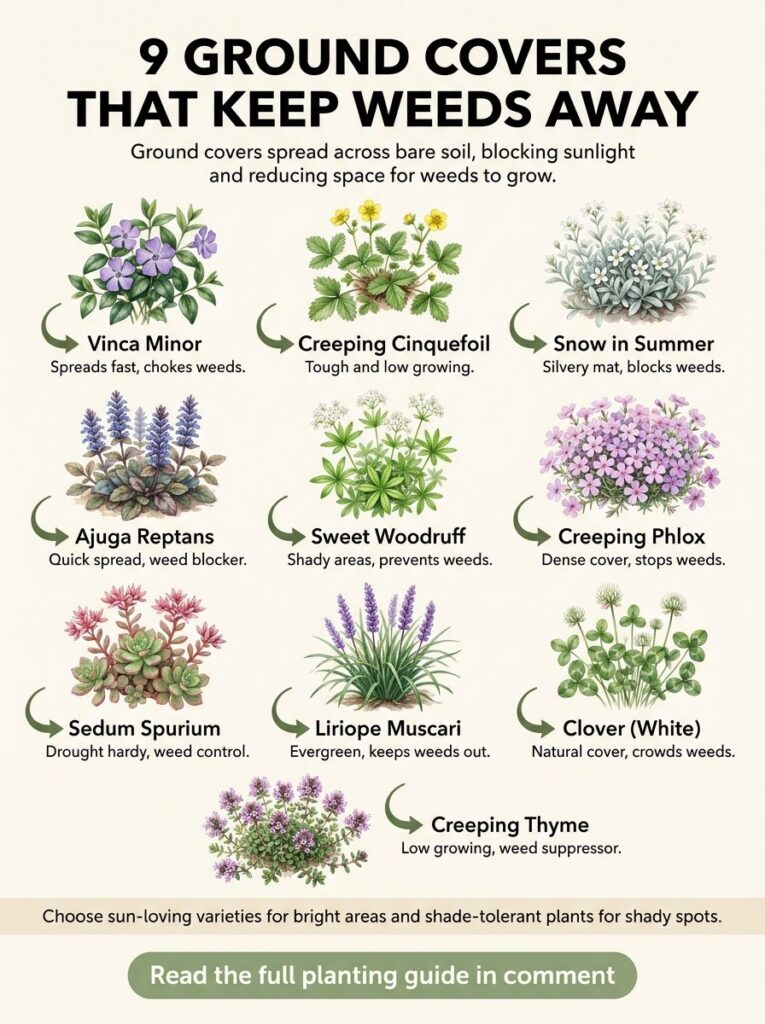
Vinca Minor (Periwinkle)
Vinca Minor is a true superstar in the ground cover world. It’s an evergreen perennial with glossy green leaves and charming periwinkle-blue (sometimes white or purple) flowers in spring. It’s incredibly vigorous, spreading quickly to form a dense mat that effectively smothers weeds. It thrives in partial to full shade and tolerates a range of soil conditions once established. Ideal for shady spots where other plants struggle.
- Hardiness Zones: 4-8
- Care Tip: Water regularly until established. Can be trimmed back if it spreads too aggressively.
Creeping Thyme (Thymus serpyllum)
If you’re looking for a fragrant, low-growing ground cover that can even handle a little foot traffic, Creeping Thyme is your answer. This delightful plant forms a tight mat of tiny green leaves, bursting with clusters of small pink, purple, or white flowers in late spring to early summer. It loves full sun and well-drained soil, making it perfect for rock gardens, between stepping stones, or along pathways. The aroma when brushed against is an added bonus!
- Hardiness Zones: 4-9
- Care Tip: Plant in full sun with excellent drainage. Drought-tolerant once established.
Sedum (Stonecrop)
Sedum, especially low-growing varieties like ‘Dragon’s Blood’ or ‘Angelina’, are succulents known for their drought tolerance and varied foliage colors. They form dense mats, providing excellent weed suppression in sunny, dry areas where other plants might wilt. Their fleshy leaves come in shades of green, red, gold, and even purple, often changing color with the seasons. They also produce clusters of starry flowers in summer or fall.
- Hardiness Zones: 3-9 (varies by species)
- Care Tip: Prefers full sun and very well-drained soil. Avoid overwatering.
Liriope (Lilyturf)
Liriope is a versatile, grass-like ground cover that forms neat clumps and spreads slowly to create a solid mass. It’s incredibly tough and tolerant of various conditions, from full sun to deep shade. It produces spikes of purple or white flowers in late summer, followed by attractive black berries. Liriope is excellent for defining borders, planting under trees, or stabilizing slopes.
- Hardiness Zones: 5-10
- Care Tip: Very low maintenance. Can be trimmed in late winter to encourage new growth.
Ajuga (Bugleweed)
Ajuga is a fantastic choice for partial to full shade, known for its beautiful, often colorful foliage (bronze, burgundy, variegated) and spikes of blue, purple, or pink flowers in spring. It spreads by stolons, forming a dense carpet that effectively keeps weeds out. It’s perfect for adding interest under trees or in woodland gardens.
- Hardiness Zones: 3-9
- Care Tip: Prefers consistently moist soil. Can be divided to control spread.
Pachysandra (Japanese Spurge)
Pachysandra is a classic evergreen ground cover for shady areas. It forms a dense, uniform mat of glossy green leaves and produces small white flowers in spring. It’s incredibly effective at suppressing weeds in difficult shady spots where many other plants struggle, like under mature trees. It’s low maintenance and provides year-round greenery.
- Hardiness Zones: 4-8
- Care Tip: Thrives in acidic, well-drained soil. Can be slow to establish but is very persistent once settled.
General Planting and Care Tips for Success
- Prepare the Soil: Just like any planting, start with good soil. Clear the area of existing weeds thoroughly. Amend heavy clay or sandy soils with compost to improve drainage and fertility.
- Proper Spacing: Don’t plant too far apart, or you’ll leave gaps for weeds. Check the plant’s mature spread and space them accordingly to create a solid cover within a season or two.
- Watering: Water regularly and deeply after planting to help establish the root system. Once established, many ground covers are quite drought-tolerant.
- Mulch Initially: A light layer of mulch around new plantings can help retain moisture and keep weeds down until your ground cover fills in.
- Occasional Maintenance: While low-maintenance, some ground covers might need occasional trimming to control their spread or to remove spent flower stalks.
- Fertilizing: Most ground covers don’t require heavy feeding. A balanced slow-release fertilizer in spring or a layer of compost can be beneficial.
Cultivate a Thriving, Sustainable Garden
Embracing ground covers is more than just a trick for weed control; it’s a step towards creating a more sustainable, beautiful, and enjoyable garden. You’ll spend less time on tedious tasks and more time appreciating the natural beauty you’ve cultivated. Your soil will be healthier, your plants happier, and your connection with nature deepened.
So, which of these garden superheroes will you invite into your landscape this season? Start small, observe, and enjoy the transformation as your garden flourishes with less effort and more joy!