There’s a special kind of calm that comes with keeping ducks on a homestead. Early mornings, soft rustling in the grass, and the quiet splash of webbed feet in a small water tub. Unlike the noisy barnyard stereotype many people imagine, some duck breeds are surprisingly quiet and neighbor-friendly, making them perfect for backyard gardens and small urban farms.
For gardeners practicing organic gardening and sustainable farming, ducks are more than charming animals – they’re hardworking partners. They forage for slugs, beetles, and insects that damage crops, while their manure enriches the soil naturally.
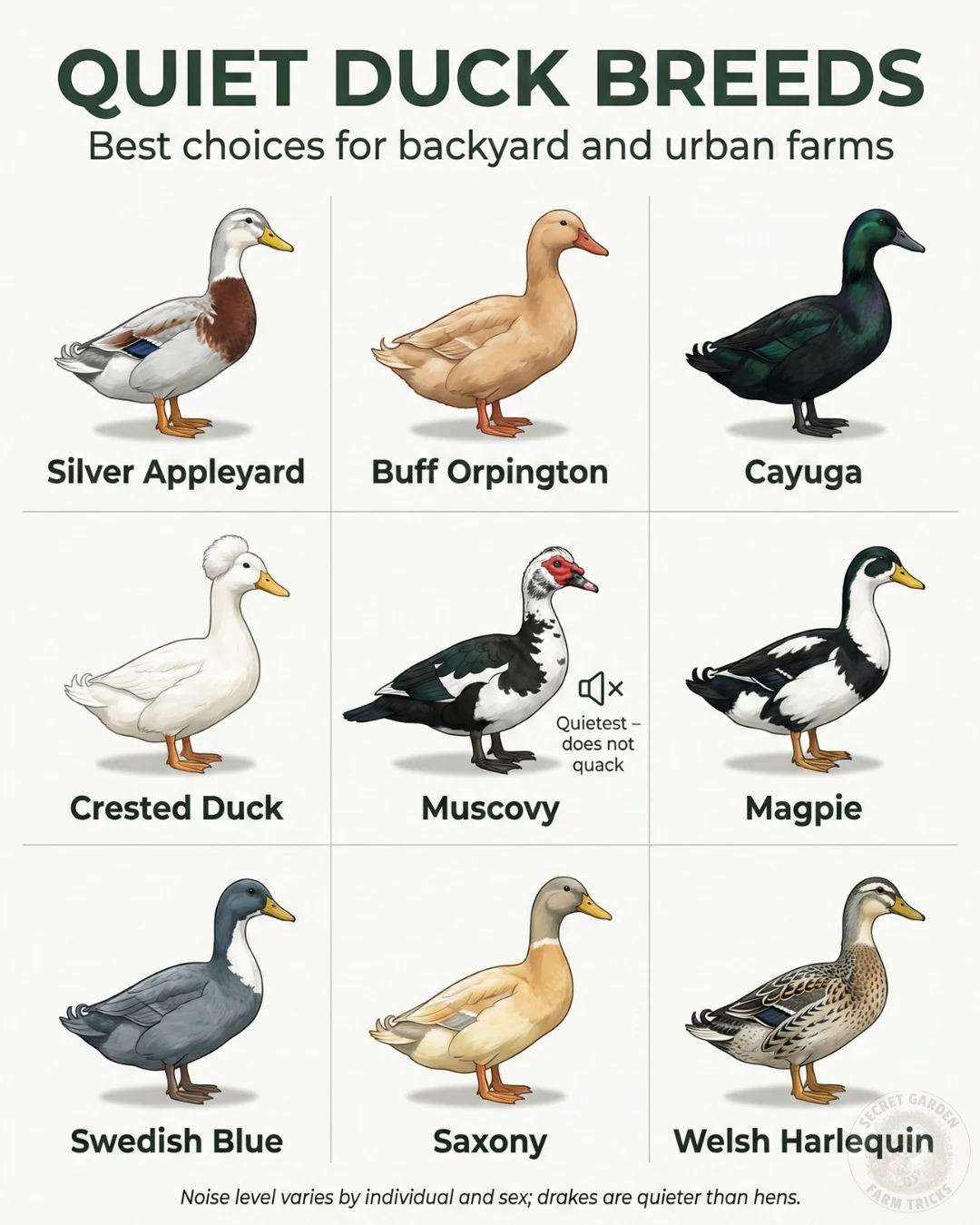
There are several quiet duck breeds that are well suited for backyard settings. Understanding which breeds are calm, how to care for them properly, and how to integrate them into your farm care routine can turn a simple yard into a productive and balanced ecosystem.
Why Choose Quiet Duck Breeds?
Not all ducks are equally vocal. Some breeds produce frequent, loud quacks – particularly female ducks while others communicate more softly or rarely vocalize at all.
Choosing quieter breeds offers several advantages:
- More peaceful backyard environments
- Better relationships with neighbors
- Reduced stress for animals and farmers
- Easier integration into small urban farms
Even quieter ducks remain active foragers, meaning they still contribute significantly to livestock management and pest control within a garden system.
One important note: drakes (male ducks) are typically quieter than hens, regardless of breed.
1. Silver Appleyard: Productive and Balanced
Silver Appleyards are a favorite among small farmers because they combine calm temperaments with excellent productivity.
They are known for:
-
Good egg production
-
Friendly personalities
-
Moderate noise levels
Primary Use: Dual-Purpose (Meat & Eggs)
Body Type: Heavy
Size (Drakes): ~9–10 lbs
Size (Females): ~8 lbs
Egg Production (Annual): 200–270 eggs
Starts Laying: Around 24–26 weeks
Egg Size: Large
Egg Color: White to Light Green
Origin: United Kingdom
Conservation Status: Watch
Farm Insight: Silver Appleyards are excellent foragers, making them ideal partners for gardeners who want ducks to help control slugs and insects naturally.
These ducks adapt well to mixed farm systems, where poultry, vegetables, and composting all interact. Their foraging habits help reduce insects in vegetable beds, particularly around leafy crops like lettuce and spinach.

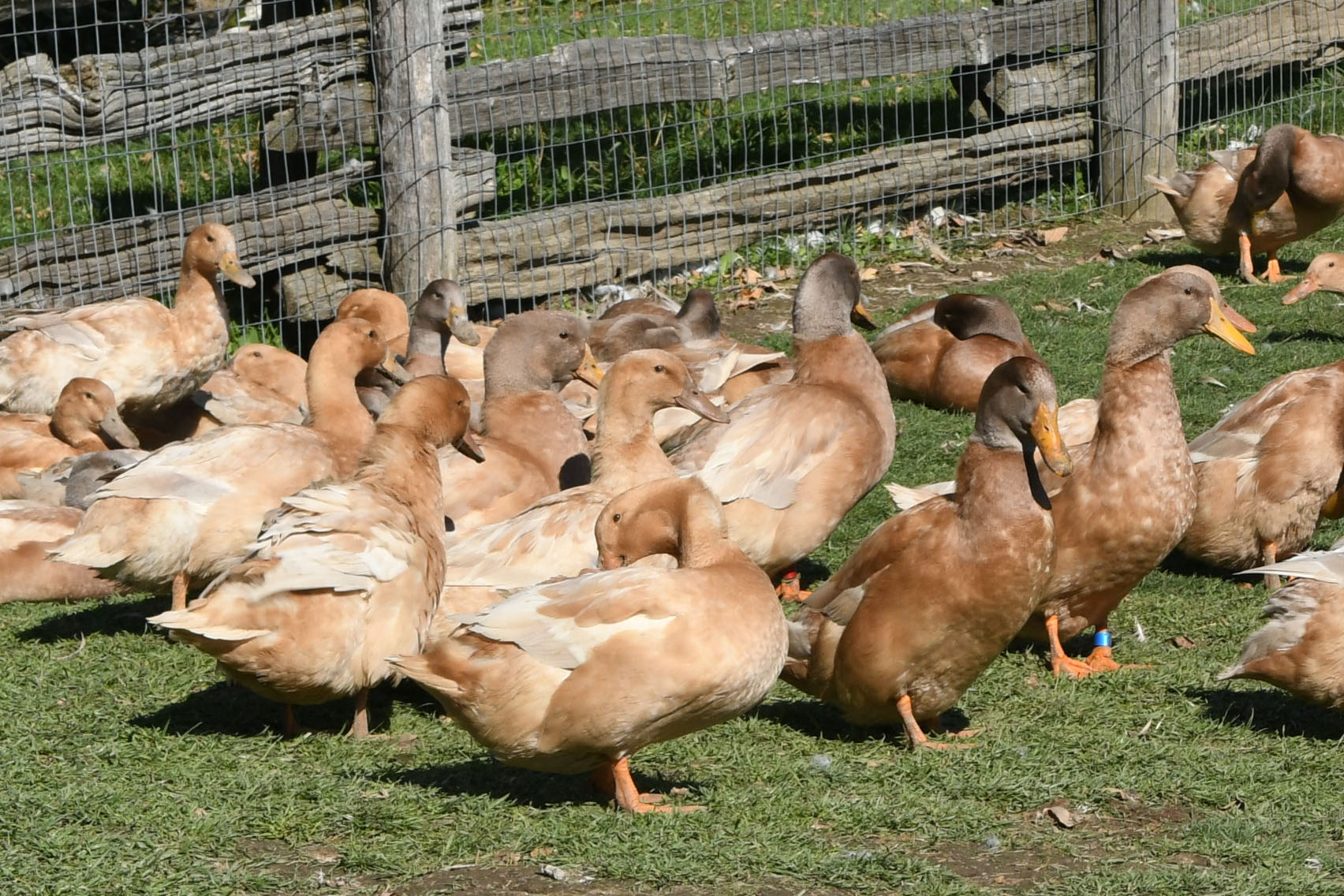
2. Buff Orpington Ducks: Gentle and Reliable
Buff Orpington ducks share many qualities with their chicken counterparts – docile behavior and reliable egg production.
Primary Use: Dual-Purpose
Body Type: Heavy
Size (Drakes): ~8 lbs
Size (Females): ~7 lbs
Egg Production (Annual): 180–220 eggs
Starts Laying: Around 24 weeks
Egg Size: Large
Egg Color: White or Cream
Origin: United Kingdom
Conservation Status: Threatened
These ducks are well suited for:
- Families
- Backyard farms
- Beginner duck keepers
Farm Insight: Buff Orpington ducks are known for their friendly personalities, making them perfect for beginner duck keepers and families with backyard farms.
Because they are calm and easygoing, they integrate smoothly into daily farm care routines, especially when raised alongside chickens or other poultry.
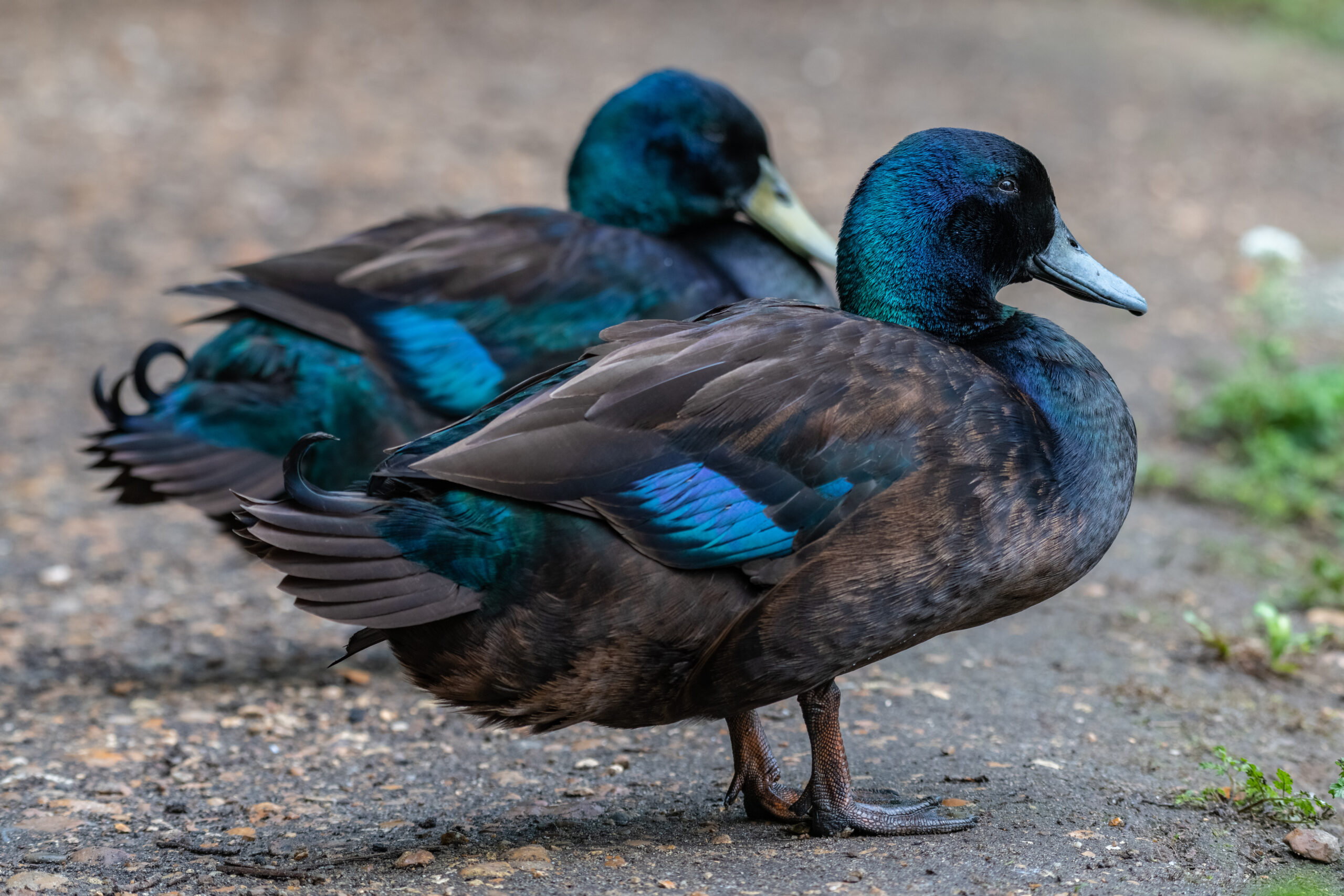
3. Cayuga Ducks: Quiet and Beautiful
Cayuga ducks are admired for their striking dark plumage with iridescent green highlights.
Primary Use: Dual-Purpose
Body Type: Medium
Size (Drakes): ~8 lbs
Size (Females): ~7 lbs
Egg Production (Annual): 150–200 eggs
Starts Laying: Around 24–28 weeks
Egg Size: Large
Egg Color: Dark Gray to Black (early season), later light gray
Origin: New York, United States
Conservation Status: Watch
Beyond appearance, they are valued for:
- Quiet temperament
- Cold-weather resilience
- Good egg production
Farm Insight: Cayuga ducks are striking with their iridescent black feathers and tend to be quieter than many other breeds, making them great for urban farms or suburban homesteads. Their calm nature makes them excellent choices for gardeners who want pest control without constant noise.
4. Crested Ducks: Unique and Gentle
Crested ducks are easy to recognize by the soft feather crest on their heads.
Primary Use: Ornamental / Egg Production
Body Type: Medium
Size (Drakes): ~7 lbs
Size (Females): ~6 lbs
Egg Production (Annual): 100–130 eggs
Starts Laying: Around 24 weeks
Egg Size: Medium to Large
Egg Color: White or Cream
Origin: Europe (exact origin uncertain)
Conservation Status: Stable
Although they are often kept for ornamental purposes, they also contribute to garden ecosystems by:
- Foraging for insects
- Consuming garden pests
- Providing manure for compost
Farm Insight: Crested ducks are easily recognized by the fluffy crest on their heads. While they’re often raised for appearance, they still contribute to pest control in gardens. Their gentle demeanor makes them pleasant additions to backyard settings.

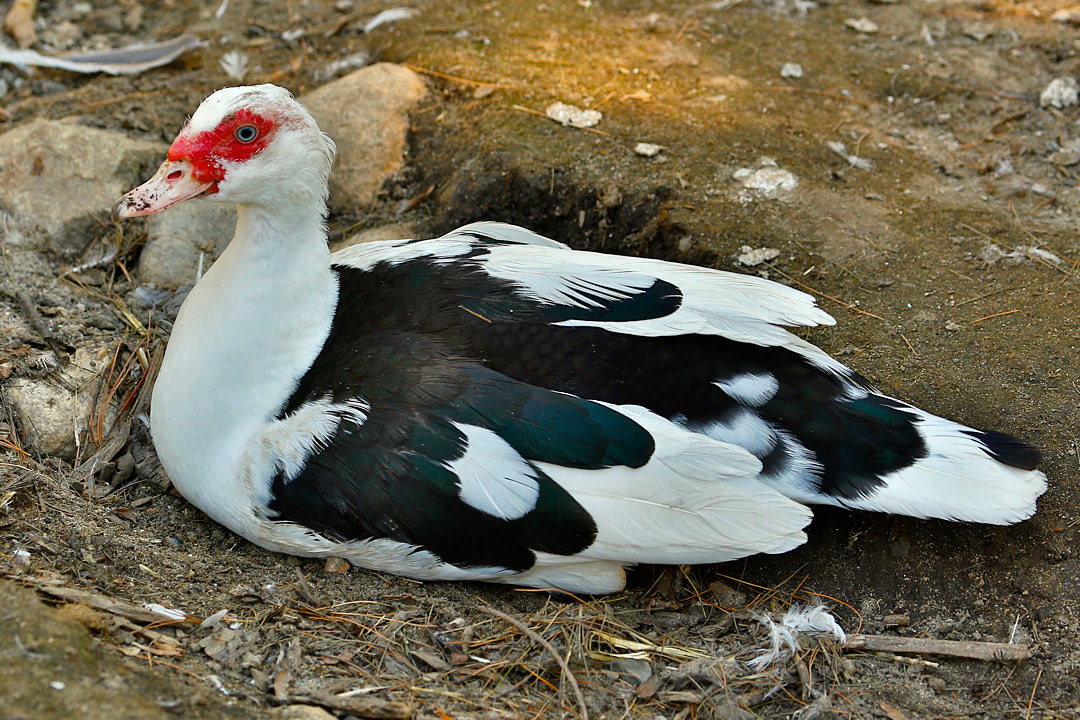
5. Muscovy Ducks: The Quietest of All
Among duck breeds, Muscovy ducks are famous for their silence.
Unlike most ducks, they do not quack loudly. Instead, they communicate with soft hissing sounds.
Primary Use: Meat Production / Pest Control
Body Type: Heavy
Size (Drakes): 10–15 lbs
Size (Females): 6–8 lbs
Egg Production (Annual): 120–180 eggs
Starts Laying: Around 28 weeks
Egg Size: Large
Egg Color: Creamy White
Origin: Central and South America
Conservation Status: Domestic Breed (Stable)
Muscovies also provide major benefits for sustainable farming:
- Exceptional pest control
- Strong flying ability
- Lean meat production
- Minimal noise
Because they hunt flies and insects so efficiently, many farmers consider them a natural alternative to chemical pest control.
Farm Insight: Muscovy ducks are the quietest ducks you can raise. They do not quack like typical ducks but instead make soft hissing sounds. They are exceptional hunters of flies and insects.
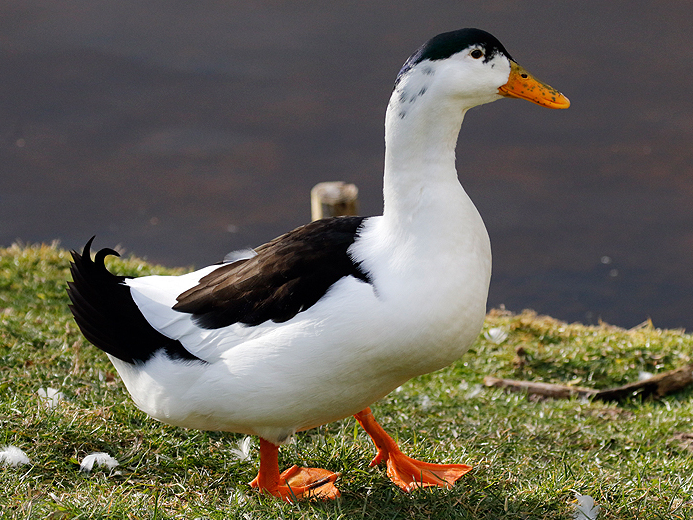
6. Magpie Ducks: Active Foragers
Magpie ducks are energetic but generally quiet birds.
Primary Use: Egg Production
Body Type: Lightweight
Size (Drakes): ~6 lbs
Size (Females): ~5 lbs
Egg Production (Annual): 220–290 eggs
Starts Laying: Around 22–24 weeks
Egg Size: Medium to Large
Egg Color: White
Origin: Wales, United Kingdom
Conservation Status: Critical
Their strengths include:
- Strong foraging instincts
- Adaptability to small farms
- Attractive black-and-white feather patterns
Farm Insight: Magpie ducks are energetic foragers and excellent egg layers, making them valuable for small farms focused on egg production and pest control. These ducks are particularly useful in gardens where slug control is needed.
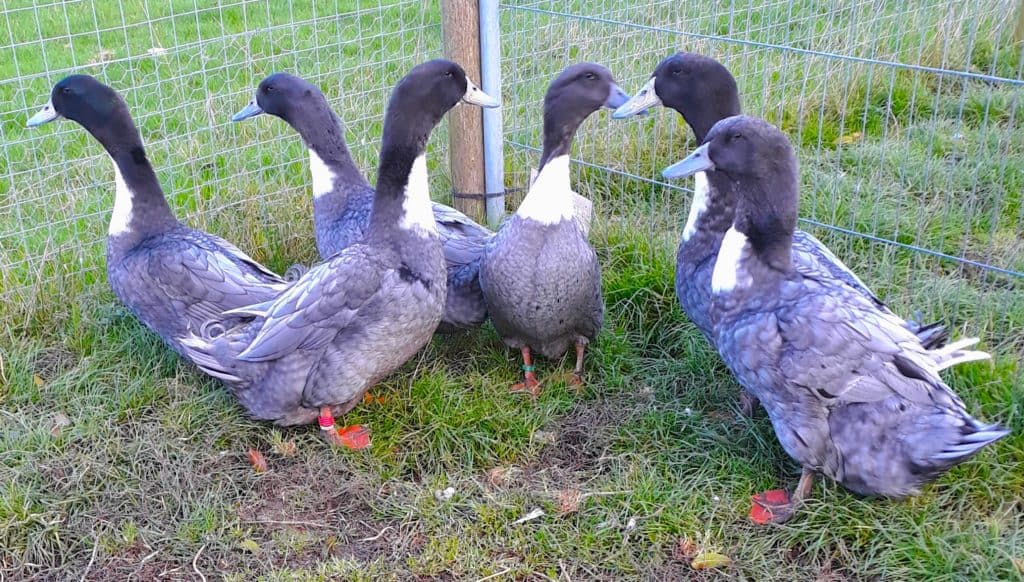
7. Swedish Blue Ducks: Hardy and Calm
Swedish Blue ducks are robust birds that handle various climates well.
Primary Use: Dual-Purpose
Body Type: Medium
Size (Drakes): ~8 lbs
Size (Females): ~7 lbs
Egg Production (Annual): 150–180 eggs
Starts Laying: Around 24 weeks
Egg Size: Large
Egg Color: White or Cream
Origin: Sweden
Conservation Status: Threatened
Farm Insight: Swedish Blue ducks are hardy birds well suited for colder climates and outdoor farming environments.
They are known for:
- Calm behavior
- Strong egg production
- Good meat yield
Because they tolerate cooler conditions, they are often raised in northern regions where sustainable farming systems depend on hardy livestock.
8. Saxony Ducks: Friendly and Productive
Saxony ducks are large, friendly birds known for their gentle personalities.
Primary Use: Dual-Purpose (Meat & Eggs)
Body Type: Heavy
Size (Drakes): ~9 lbs
Size (Females): ~8 lbs
Egg Production (Annual): 200–240 eggs
Starts Laying: Around 26 weeks (6 months)
Egg Size: Large to Extra Large
Egg Color: White to Pale Blue-Green
Origin: Saxony, Germany
Conservation Status: Threatened
Farm Insight: Saxony ducks are known for their calm temperament and beautiful plumage. Because they’re both productive egg layers and good meat birds, they’re a favorite among small homesteads practicing sustainable farming.
They are excellent for:
- Family farms
- Egg production
- Meat production
Their calm temperament also makes them easier to manage in backyard environments.
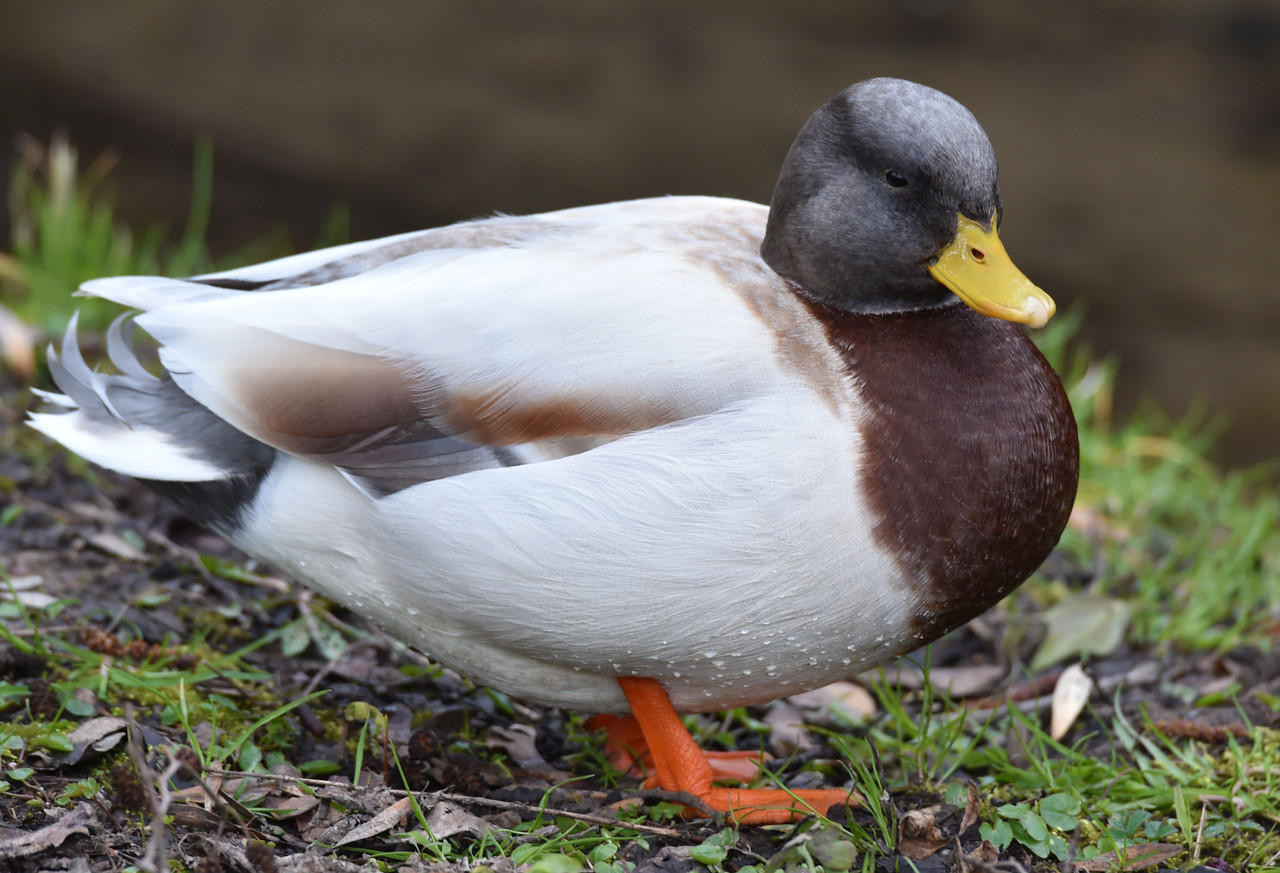
9. Welsh Harlequin Ducks: Quiet Egg Layers
Welsh Harlequins are one of the best egg-laying duck breeds available.
Primary Use: Egg Production
Body Type: Lightweight
Size (Drakes): ~5.5 lbs
Size (Females): ~4.5 lbs
Egg Production (Annual): 240–300 eggs
Starts Laying: Around 20–24 weeks
Egg Size: Large
Egg Color: White to Light Blue-Green
Origin: Wales, United Kingdom
Conservation Status: Watch
Farm Insight: Welsh Harlequins are among the best egg-laying duck breeds and are known for their calm personalities and efficient feed conversion.
They are appreciated for:
- Quiet personalities
- Excellent egg production
- Efficient feed conversion
For gardeners focused on self-sufficiency, Welsh Harlequins provide a steady supply of eggs while helping control insects in the yard.

Step-by-Step Duck Care for Healthy, Happy Birds
Regardless of breed, proper duck care is essential for maintaining healthy animals and a balanced farm ecosystem.
1. Provide Clean Water
Ducks need water not only for drinking but also for rinsing their bills and eyes.
A small kiddie pool or shallow tub works perfectly. Clean water daily to prevent disease.
2. Offer Shade and Dry Bedding
Ducks tolerate cold well but need protection from heat and damp conditions.
Provide:
- Straw or wood shavings for bedding
- Shade structures or trees
- Good airflow in shelters
3. Secure Housing at Night
Predators are the biggest threat to backyard ducks.
Safe housing should include:
- Predator-proof fencing
- Locked nighttime shelters
- Covered runs when possible
This is a critical part of responsible livestock management.
Ducks as Garden Helpers
One of the greatest advantages of raising ducks is their ability to assist with pest control.
Ducks naturally hunt:
- Slugs
- Beetles
- Snails
- Garden insects
For organic gardeners, this behavior supports chemical-free pest management.
Unlike chickens, ducks rarely scratch up soil aggressively, making them safer around many vegetable crops.
Integrating Ducks Into Sustainable Farming
In a well-planned farm ecosystem, ducks contribute to multiple cycles.
They:
- Eat pests that damage crops
- Produce manure for compost
- Provide eggs and meat
- Add biodiversity to the farm environment
This integration reduces waste and strengthens the resilience of the entire system.
Final Thoughts: Peaceful Ducks, Productive Gardens
Quiet duck breeds offer a beautiful balance for gardeners and farmers seeking harmony between animals and plants.
With the right breeds, proper care, and thoughtful integration into your garden, ducks become more than livestock – they become partners in sustainable farming.
Their gentle waddles through the grass, their quiet presence in the yard, and their natural pest-control abilities remind us that sometimes the best farm tools are living ones.
And when the sun sets and the ducks settle quietly into their shelter, the garden rests too ready for another day of growth, balance, and peaceful productivity.