Embrace the Enchantment of Your Night Garden
As the sun sets and the day’s warmth fades, a hidden world awakens in our gardens. While daytime pollinators like bees and butterflies get most of the attention, a crucial and captivating cast of characters emerges under the cover of darkness: night pollinators. These nocturnal visitors, primarily moths, bats, and even some beetles, play a vital role in our ecosystem, ensuring the reproduction of many beautiful and fragrant plants. By strategically choosing plants that attract night pollinators, you can transform your garden into a mesmerizing haven of scents and sights long after dusk.
Imagine stepping into your garden on a moonlit evening, greeted by the intoxicating fragrance of blooming flowers and the gentle flutter of moth wings. Creating a moon garden specifically designed to appeal to these nighttime guests is not only an enriching experience for gardeners but also a wonderful way to support local biodiversity. Let’s delve into the fascinating world of nocturnal pollination and discover how you can invite these mysterious helpers into your outdoor space.
Why Night Pollinators Are Essential for a Healthy Ecosystem
Just like their daytime counterparts, night pollinators are critical for the reproduction of countless plant species. Many plants have evolved to bloom exclusively at night, relying entirely on nocturnal creatures for pollen transfer. Without them, these plants would struggle to produce seeds and perpetuate their species, leading to a decline in biodiversity. Moths, in particular, are incredibly efficient pollinators, often traveling long distances between flowers, ensuring genetic diversity.
Furthermore, supporting night pollinators contributes to a healthier overall ecosystem. A diverse range of pollinators indicates a balanced environment, capable of supporting a wider array of wildlife. By planting for both day and night visitors, you create a robust habitat that thrives around the clock.
Characteristics of Plants That Attract Night Pollinators
Nocturnal plants have developed unique strategies to attract their nighttime guests. Understanding these characteristics can help you select the best additions for your moon garden:
- Fragrance: This is perhaps the most significant attractant. Many night-blooming flowers release a strong, sweet, and often heady perfume that can travel long distances in the still night air, guiding pollinators to their source.
- Color: Unlike bright, showy daytime flowers, nocturnal blooms are typically white, pale yellow, or light pink. These lighter colors stand out against the darkness, reflecting moonlight and starlight, making them visible to pollinators.
- Shape: Many night flowers have tubular or trumpet shapes, perfectly designed to accommodate the long proboscises (feeding tubes) of moths and the snouts of bats.
- Nectar Production: They often produce abundant nectar, providing a rich energy source for active night pollinators.
Top Plants to Attract Night Pollinators to Your Garden
Ready to invite some nocturnal magic into your garden? Here are some of the most popular and effective plants that attract night pollinators:
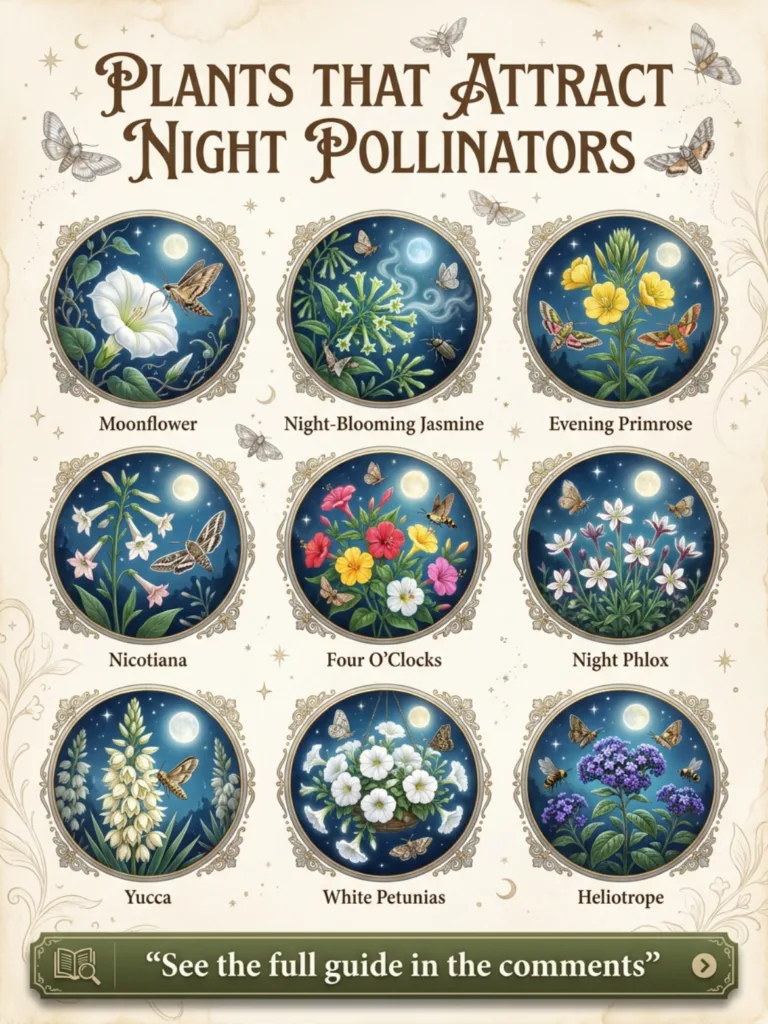 Discover the beauty of nocturnal blooms and their mysterious visitors.
1. Moonflower (Ipomoea alba)
- Description: A truly spectacular vine, Moonflower produces large, pure white, trumpet-shaped blooms that unfurl dramatically at dusk.
- Attracts: Sphinx moths (also known as hawk moths).
- Care: Thrives in full sun and needs a trellis or support to climb.
2. Evening Primrose (Oenothera biennis)
- Description: Known for its delicate yellow flowers that open in the late afternoon or early evening, releasing a lemony fragrance.
- Attracts: Moths, especially hawk moths.
- Care: Very adaptable, prefers full sun to partial shade, and well-drained soil.
3. Nicotiana (Flowering Tobacco)
- Description: Many varieties offer trumpet-shaped flowers in white, lime green, or pale pink, emitting a potent, sweet fragrance at night.
- Attracts: Moths.
- Care: Grow in full sun to partial shade; some varieties can reseed readily.
4. Night-Scented Stock (Matthiola longipetala)
- Description: While its flowers are modest and unassuming during the day, they release an incredibly sweet, clove-like fragrance at night.
- Attracts: Moths.
- Care: Prefers full sun and well-drained soil. Plant near seating areas to fully appreciate its scent.
5. Four O’Clocks (Mirabilis jalapa)
- Description: These charming, fragrant flowers bloom in the late afternoon (around 4 PM, hence the name) and stay open through the night. Available in various colors, often variegated.
- Attracts: Moths, especially sphinx moths.
- Care: Easy to grow from seed, tolerates a wide range of conditions, full sun to partial shade.
6. Datura (Angel’s Trumpet)
- Description: Large, showy, trumpet-shaped flowers that hang downwards, often white or pale yellow, with a strong, intoxicating fragrance at night. (Note: All parts of Datura are poisonous if ingested.)
- Attracts: Moths, particularly hawk moths.
- Care: Prefers full sun and rich, well-drained soil.
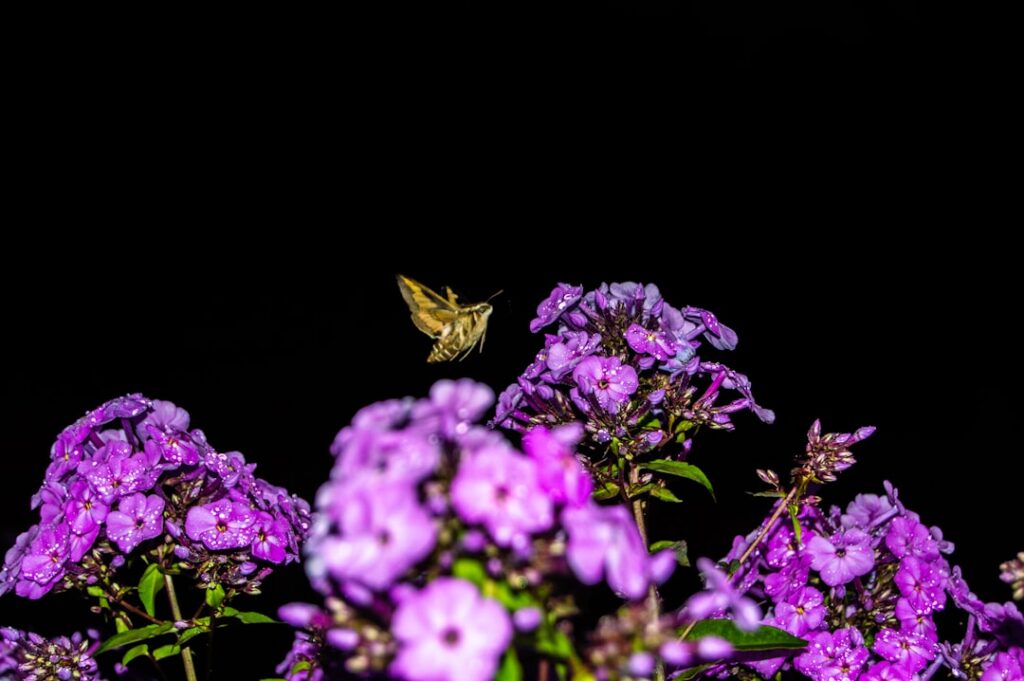 Sphinx moths are key pollinators for many fragrant, tubular night blooms.
Designing Your Own Moon Garden for Night Pollinators
Creating a garden that shines after dark is simpler than you might think. Here are some tips:
- Choose the Right Location: Select an area visible from your porch or a window, or near a patio where you can enjoy the evening spectacle.
- Incorporate Pale Colors: Focus on white, silver, and pale-colored flowers and foliage. These colors will glow under the moonlight.
- Prioritize Fragrance: Plant highly fragrant species close to pathways or seating areas.
- Layer Plant Heights: Use a mix of tall plants (like Moonflower vines), medium-sized shrubs, and ground covers to create depth and interest.
- Add Reflective Elements: A birdbath, gazing ball, or light-colored stones can reflect moonlight and add sparkle.
- Consider Night Lighting: Use subtle, low-voltage path lights or solar lights to highlight features without overpowering the natural moonlight and scaring away pollinators.
- Provide Water: A shallow birdbath or water feature can also attract thirsty night visitors.
Conclusion: Unleash the Nighttime Beauty of Your Garden
By thoughtfully integrating plants that attract night pollinators, you can unlock a whole new dimension of gardening pleasure and ecological contribution. From the enchanting fragrance of Night-Scented Stock to the dramatic unfurling of Moonflowers, your moon garden will become a vibrant hub of nocturnal life, offering a serene and magical experience after the sun goes down. Start experimenting with these fascinating plants today and watch your garden come alive with the gentle buzz and flutter of its secret night shift.