A garden can have good seed, decent weather, and careful watering and still disappoint for one simple reason: the crop and the soil were never a good match. This is where many seasons quietly go wrong. Gardeners blame themselves, pests, or bad luck, when the real issue starts under their feet.
Soil is not just the place roots sit. It controls drainage, air flow, nutrient holding, root shape, and how quickly plants recover from heat, rain, or dry spells. Once you learn to match crops to your soil type, gardening becomes more efficient and far less frustrating. Roots grow better. Watering makes more sense. Harvests improve. And the garden starts to feel like a system you understand, not a puzzle you are always trying to solve.
This guide walks through four common soil types: sandy, clay, loam, and silty soil and shows how to use each one more wisely. If you have ever wondered why carrots fork, tomatoes stall, or lettuce bolts too fast, this is where better growing begins.
Why soil matching matters more than most gardeners realize
Every crop has a root style and a stress tolerance pattern. Some need loose ground to grow straight and smooth. Some prefer steady moisture and cooler roots. Some need excellent drainage to avoid rot. Others can push into heavier ground and still produce well.
When the soil and crop fit each other, daily care becomes easier:
- roots develop faster
- nutrients are used more efficiently
- water stays available at the right pace
- plants suffer less stress during weather swings
- yields become more predictable
This is not about having “perfect” soil everywhere. It is about knowing what each part of your garden does best.
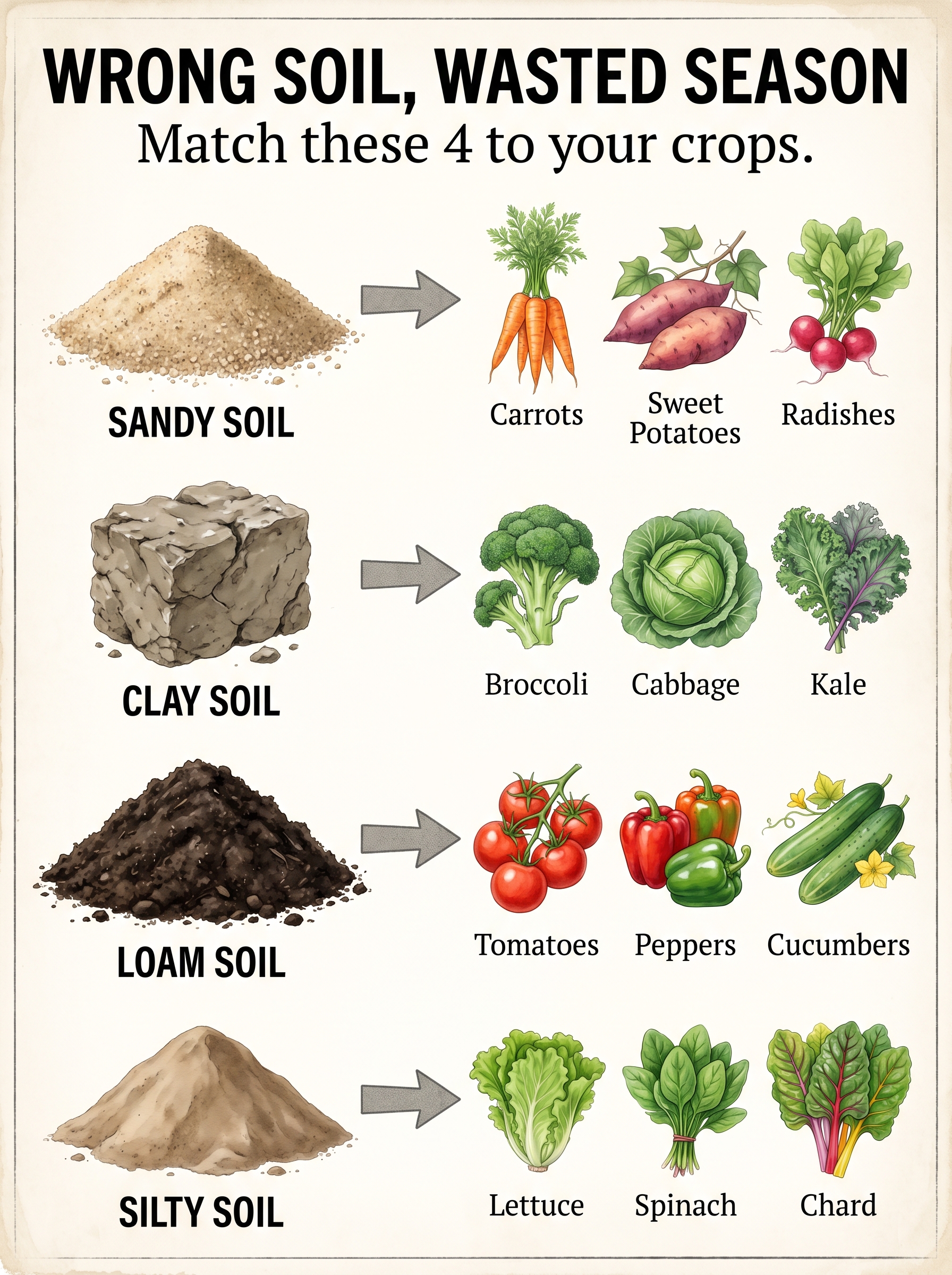
The four common soil types at a glance
Sandy soil
Drains quickly, warms fast, feels loose and gritty, and is easy for roots to move through. It does not hold water or nutrients for long.
Clay soil
Dense, heavy, slow-draining, and rich in mineral content. It can hold nutrients well, but roots may struggle if it is compacted or wet.
Loam soil
The gold standard for many gardens. It balances drainage, moisture retention, and structure well.
Silty soil
Soft, smooth, moisture-holding, and often fertile. It can be very productive, though it may compact if overworked.
Sandy soil: best for roots that need room and warmth
Sandy soil is often underestimated because it dries fast. But for the right crops, it is a real advantage. It is loose, open, and easy for roots to expand through, which makes it especially useful for root vegetables and underground crops that need clean shape and minimal resistance.
Best crops for sandy soil
Carrots
Carrots are one of the clearest examples of a crop that rewards loose soil. In sandy ground, roots can grow long, straight, and smooth without fighting compaction.
Practical tip: Keep the top layer consistently moist during germination. Sandy soil dries quickly at the surface, and carrot seed needs steady moisture early.
Sweet potatoes
Sweet potatoes appreciate warmth and loose soil. Sandy ground helps the tubers expand and makes harvest easier and cleaner.
Practical tip: Do not overwater once the plants are established. Sweet potatoes prefer steady growth, not soggy conditions.
Radishes
Radishes mature quickly and benefit from soil that lets roots swell fast without resistance.
Practical tip: Sow in short succession every 7 to 10 days if temperatures are mild. In sandy soil, quick repeat sowings often work beautifully.
How to improve sandy soil without ruining its strengths
Do not try to turn sandy soil into heavy garden mud. Improve it by adding compost to help it hold moisture and nutrients longer, but keep its loose structure intact. Mulch also matters here. A light organic mulch layer helps reduce rapid drying without making the soil dense.
Clay soil: powerful when matched with the right crops
Clay soil gets a bad reputation, but it is not poor soil. It is strong soil that needs smart handling. It holds nutrients well and can be very productive once you stop forcing delicate root crops into it. The real key with clay is choosing plants that can handle heavier ground and benefit from its moisture-holding power.
Best crops for clay soil
Broccoli
Broccoli likes fertile soil and steady moisture. Clay can support strong leafy growth if drainage is managed reasonably well.
Practical tip: Add compost before planting, but avoid working clay when it is wet. Wet clay compacts badly and forms hard clods later.
Cabbage
Cabbage performs surprisingly well in heavier soils because it appreciates consistent moisture and nutrient availability.
Practical tip: Keep growth steady. Big swings between dry and soaked conditions can lead to stress and poor head formation.
Kale
Kale is one of the most forgiving crops for clay-ground gardeners. It handles cool conditions well and can root into heavier soil better than many delicate crops.
Practical tip: Use mulch to moderate surface crusting. Kale does not mind firm ground, but young plants still establish better if the surface stays workable.
How to manage clay soil wisely
Never dig clay when it is sticky. That one mistake can damage structure for weeks or months. Work it when it is moist but not wet. Add compost regularly, not once in desperation. Over time, that improves structure, airflow, and drainage without throwing away clay’s natural fertility.
Loam soil: the easiest match for hungry summer crops
Loam is what most gardeners hope for because it gives you flexibility. It holds moisture well enough to support vigorous growth, but drains well enough to avoid most root problems. This makes it ideal for larger fruiting crops that need both nutrition and oxygen around the roots.
Best crops for loam soil
Tomatoes
Tomatoes love deep, fertile, well-structured soil. Loam gives them the balance they need for strong roots and steady summer production.
Practical tip: Plant deeply and support early. Loam helps tomatoes grow fast, so get cages or stakes in place before the plants become unruly.
Peppers
Peppers benefit from consistent moisture and warmth without soggy roots. Loam delivers that balance well.
Practical tip: Do not overfeed with nitrogen. In rich loam, peppers can become leafy at the expense of fruit if fed too heavily.
Cucumbers
Cucumbers grow fast and use a lot of water, but they hate stagnant soil. Loam supports both quick growth and healthy drainage.
Practical tip: Mulch once the soil is warm. This helps cucumbers keep even moisture, which improves fruit quality and reduces bitterness.
How to keep loam productive
Loam is good, but it is not indestructible. Avoid walking on growing beds, keep organic matter cycling in, and rotate crops so one group does not drain the same nutrients year after year. Good soil stays good through habits, not luck.
Silty soil: excellent for leafy vegetables that like steady moisture
Silty soil often feels soft and fertile. It holds water better than sandy soil and is easier to work than heavy clay when managed well. It is especially useful for leafy crops that need consistent moisture and quick, tender growth.
Best crops for silty soil
Lettuce
Lettuce thrives when moisture stays even and roots do not dry out too quickly. Silty soil can create exactly that kind of steady growing environment.
Practical tip: Harvest often and mulch lightly. Lettuce grows best when the root zone stays cool and the surface does not crust hard.
Spinach
Spinach appreciates fertile soil and regular moisture. Silty soil supports lush leaf growth, especially in spring and fall.
Practical tip: Avoid letting the soil swing from soggy to dry. Spinach responds best to consistency.
Chard
Swiss chard is one of the best long-season leafy crops for richer soils. It keeps producing when handled with a steady watering rhythm and regular picking.
Practical tip: Harvest outer leaves first. Silty soil can support months of growth if you let the center keep pushing new leaves.
How to manage silty soil well
Silty soil can compact if it is overworked or left bare after heavy rain. That means surface care matters. Use mulch, avoid digging when very wet, and keep roots in the soil as much as possible to maintain structure.
How to tell what soil you actually have
A simple hand test is surprisingly useful.
- Sandy soil feels gritty and falls apart quickly.
- Clay soil feels sticky when wet and can be rolled into a ribbon.
- Loam soil feels balanced, slightly crumbly, and holds shape lightly.
- Silty soil feels smooth and flour-like when dry, soft when moist.
Many gardens are not purely one type. You may have sandy loam, silty clay, or different soil in different beds. That is normal. The goal is not to label it perfectly. The goal is to notice how it behaves.
A smart planting strategy for mixed soil gardens
If your garden has more than one soil type, stop treating every bed the same.
Put carrots, radishes, and sweet potatoes where the ground is loosest. Use heavier ground for broccoli, cabbage, and kale. Reserve your best loam for tomatoes, peppers, and cucumbers. Use moisture-holding silt for lettuce, spinach, and chard while weather is mild.
That one decision changes everything. Instead of constantly correcting poor matches, you start working with the strengths already on your land.
Final thoughts: the best gardeners grow with the soil, not against it
A productive season begins long before the first harvest. It begins when you look at your soil honestly and choose crops that can truly thrive there.
Sandy soil can grow beautiful carrots and sweet potatoes. Clay can hold strong brassicas like broccoli, cabbage, and kale. Loam can power heavy summer crops like tomatoes, peppers, and cucumbers. Silty soil can turn out tender lettuce, spinach, and chard.
That is the kind of knowledge that transforms gardening. It makes your effort count more. It reduces disappointment. And it helps every bed, row, and season work closer to its full potential.